
Implement Transparent Redistricting Education in Lake Washington Schools
The Issue
As a high school student actively involved in civic activities and working alongside government officials, I've often found myself in the dark about the intricacies of essential processes like redistricting. It's a stark gap in our education system that leaves students like me—those aspiring to engage in public service or simply be informed voters—at a disadvantage. We cannot afford to let another generation graduate without a robust understanding of the mechanisms that shape our political landscape.
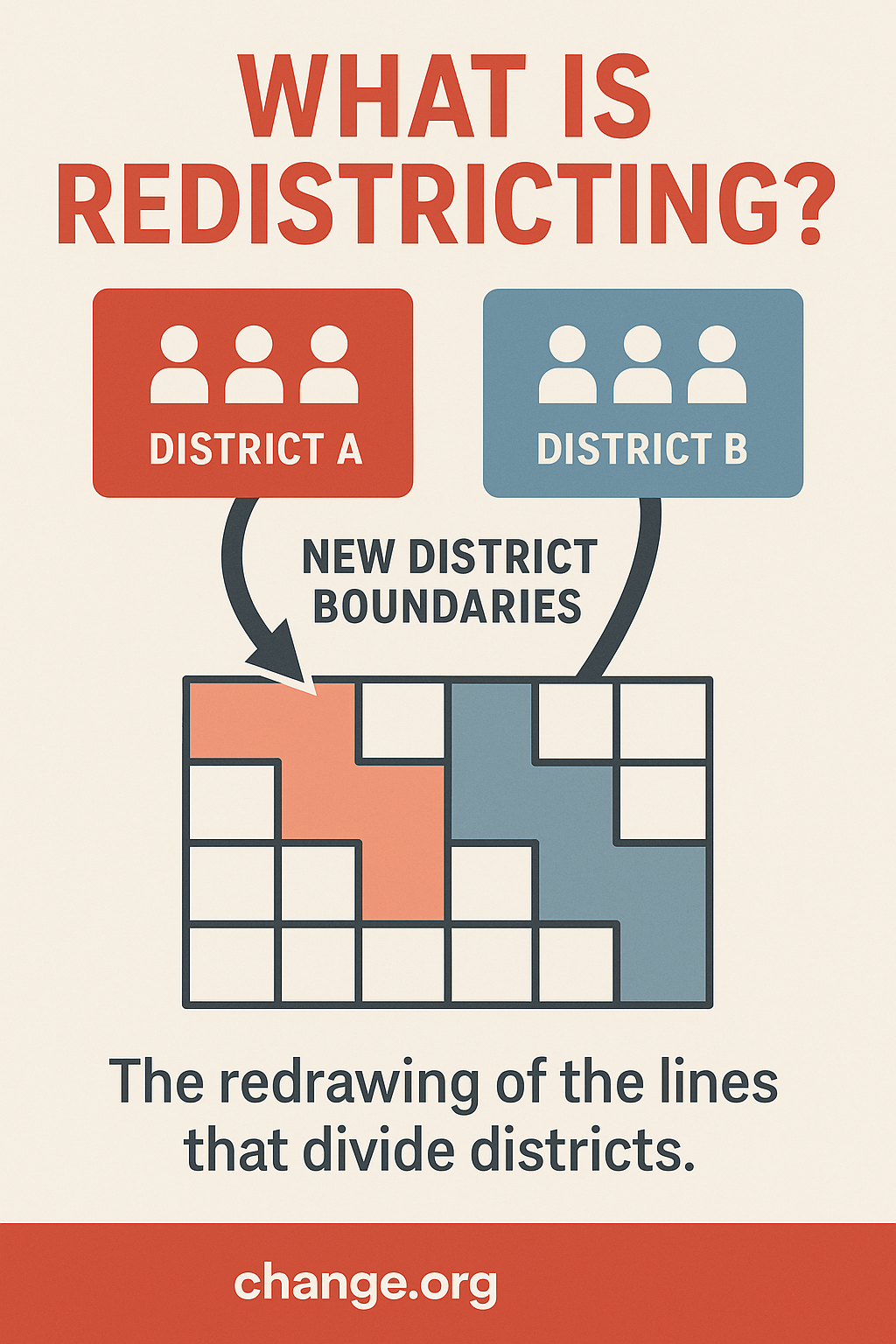
In Sammamish, WA, and across the nation, redistricting plays a vital role in determining how communities are represented in government. However, few students are equipped with the knowledge necessary to participate in or even critically examine these processes. Transparent redistricting education in public schools would give students the opportunity to analyze data, ask questions, and think critically about how representation works—without pushing any agenda.
My research with the Institute for Mathematics and Democracy (IMD) inspired me to take action in Washington, and my fellow IMD team members are working to advance similar initiatives in their own districts across the country. The goal is to start small, with low-cost modules or even after-school clubs that use open data and tools like Google Sheets. A pilot could be as simple as three or four lessons in a government or economics class—running a mock ranked-choice election, comparing district maps, or reading polarization charts. If successful, other schools could adapt it to their own contexts: a rural Montana school might emphasize turnout and geography, while a Washington district could focus on overlapping boundaries and youth participation.
It is critical that every student, regardless of their background or zip code, be afforded the same foundational knowledge in civics. According to the Center for Civic Education, only 39% of Americans can name all three branches of government. This statistic is indicative of a larger issue where a lack of civic education undermines the efficacy of our democracy.
Implementing transparent redistricting education in this flexible, data-driven way will empower younger generations to become thoughtful participants in their government. It will ensure that, as future voters and public servants, students can contribute meaningfully to democratic processes. By including these lessons in our schools, we can nurture a more informed and engaged populace, equipped to uphold the principles of representative democracy.
We urge the Lake Washington School District and Washington state educators to prioritize this vital aspect of civics education. Let's bridge the educational gap that holds back our youth from assuming their rightful place as knowledgeable participants in our democratic system. Sign the petition to support transparent redistricting education for a stronger, more equitable future for all students in Sammamish.
47
The Issue
As a high school student actively involved in civic activities and working alongside government officials, I've often found myself in the dark about the intricacies of essential processes like redistricting. It's a stark gap in our education system that leaves students like me—those aspiring to engage in public service or simply be informed voters—at a disadvantage. We cannot afford to let another generation graduate without a robust understanding of the mechanisms that shape our political landscape.
In Sammamish, WA, and across the nation, redistricting plays a vital role in determining how communities are represented in government. However, few students are equipped with the knowledge necessary to participate in or even critically examine these processes. Transparent redistricting education in public schools would give students the opportunity to analyze data, ask questions, and think critically about how representation works—without pushing any agenda.
My research with the Institute for Mathematics and Democracy (IMD) inspired me to take action in Washington, and my fellow IMD team members are working to advance similar initiatives in their own districts across the country. The goal is to start small, with low-cost modules or even after-school clubs that use open data and tools like Google Sheets. A pilot could be as simple as three or four lessons in a government or economics class—running a mock ranked-choice election, comparing district maps, or reading polarization charts. If successful, other schools could adapt it to their own contexts: a rural Montana school might emphasize turnout and geography, while a Washington district could focus on overlapping boundaries and youth participation.
It is critical that every student, regardless of their background or zip code, be afforded the same foundational knowledge in civics. According to the Center for Civic Education, only 39% of Americans can name all three branches of government. This statistic is indicative of a larger issue where a lack of civic education undermines the efficacy of our democracy.
Implementing transparent redistricting education in this flexible, data-driven way will empower younger generations to become thoughtful participants in their government. It will ensure that, as future voters and public servants, students can contribute meaningfully to democratic processes. By including these lessons in our schools, we can nurture a more informed and engaged populace, equipped to uphold the principles of representative democracy.
We urge the Lake Washington School District and Washington state educators to prioritize this vital aspect of civics education. Let's bridge the educational gap that holds back our youth from assuming their rightful place as knowledgeable participants in our democratic system. Sign the petition to support transparent redistricting education for a stronger, more equitable future for all students in Sammamish.
The Decision Makers

Supporter Voices
Petition Updates
Share this petition
Petition created on September 8, 2025