

IGP Dog Sport is not attack dog training.
The issue
We, the united and concerned dog owners and advocates for animal welfare, stand in strong opposition to the proposed legislation amendment that seeks to define IGP (Internationale Gebrauchshund Prüfungsordnung) as “attack dog training” in South Australia.
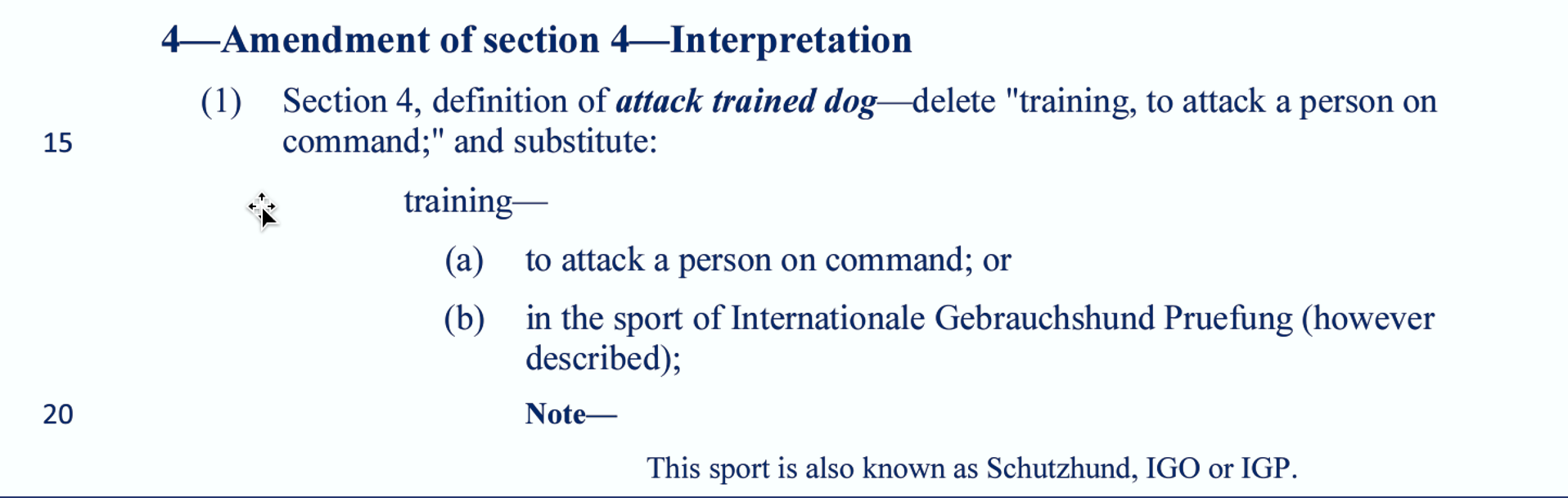
This misguided proposal threatens to stigmatise responsible dog owners and their IGP-trained companions and does so unfairly. It undermines our collective efforts to foster positive human-animal relationships.
IGP dog sport is an internationally recognised FCI (Fédération Cynologique Internationale) sport used to promote the welfare of working dog breeds, fostering discipline, teamwork and obedience. It is highly regulated, demonstrating a dog's working capabilities, physical and mental soundness, trainability, and willingness to follow commands. IGP focuses on harnessing the power of positive reinforcement to cultivate control, responsiveness, and reliability in dogs, all while actively discouraging aggression. IGP competitions adhere to strict rules and guidelines to ensure the welfare of participating dogs and emphasise responsible ownership and training practices.
A Victorian court and the South Australian government have previously reviewed IGP.
In a 1998 court case involving a dangerous dog decision by the Victorian Casey City Council (Burns vs. Casey City Council), an IGP-trained dog had its initial classification as dangerous set aside. The judge described the training as "a sterile and hollow sport", concluding that it was far removed from "attack dog training" and ruled the dog not to be dangerous.
The South Australian government reviewed IGP in 2010 and 2016. It concluded that it does not fall under the definition of attack dog training. However, the South Australian government is now positioning the sport as a form of "attack training" to reduce dog bite incidents.
While we acknowledge the need to address any increase in bite incidences, any legislative action must be grounded in concrete evidence linking IGP-trained dogs to such incidents. There is currently no substantial evidence to substantiate this claim. Furthermore, the South Australian government's failure to consult three longstanding Australian IGP organisations disregards the expertise and insights of those directly involved in the sport.
By inaccurately labelling IGP-trained dogs as "attack trained," the proposed legislation perpetuates harmful stereotypes and unjustly targets responsible dog owners who participate in this sport. The misguided view of IGP dog sport, which results in attack-trained dogs, needs to acknowledge the rigorous standards and regulations that govern this sport, which are more than 120 years old and align with modern dog training practices.
We urge the South Australian government to engage in meaningful dialogue with Australian IGP organisations to gain a comprehensive understanding of the sport and its practices. This collaborative approach is essential to ensure that any legislative decisions are evidence-based and considerate of the welfare of both dogs and their owners.
In conclusion, the South Australian government must uphold due process in legislative amendments and thoroughly examine all IGP dog sport facts. Decisions must be based on rational considerations and supported by evidence rather than unfounded assumptions or biases. It is incumbent upon the South Australian government to ensure fairness and transparency in its approach to regulating dog-related activities, including IGP dog sport.

Victory
The issue
We, the united and concerned dog owners and advocates for animal welfare, stand in strong opposition to the proposed legislation amendment that seeks to define IGP (Internationale Gebrauchshund Prüfungsordnung) as “attack dog training” in South Australia.
This misguided proposal threatens to stigmatise responsible dog owners and their IGP-trained companions and does so unfairly. It undermines our collective efforts to foster positive human-animal relationships.
IGP dog sport is an internationally recognised FCI (Fédération Cynologique Internationale) sport used to promote the welfare of working dog breeds, fostering discipline, teamwork and obedience. It is highly regulated, demonstrating a dog's working capabilities, physical and mental soundness, trainability, and willingness to follow commands. IGP focuses on harnessing the power of positive reinforcement to cultivate control, responsiveness, and reliability in dogs, all while actively discouraging aggression. IGP competitions adhere to strict rules and guidelines to ensure the welfare of participating dogs and emphasise responsible ownership and training practices.
A Victorian court and the South Australian government have previously reviewed IGP.
In a 1998 court case involving a dangerous dog decision by the Victorian Casey City Council (Burns vs. Casey City Council), an IGP-trained dog had its initial classification as dangerous set aside. The judge described the training as "a sterile and hollow sport", concluding that it was far removed from "attack dog training" and ruled the dog not to be dangerous.
The South Australian government reviewed IGP in 2010 and 2016. It concluded that it does not fall under the definition of attack dog training. However, the South Australian government is now positioning the sport as a form of "attack training" to reduce dog bite incidents.
While we acknowledge the need to address any increase in bite incidences, any legislative action must be grounded in concrete evidence linking IGP-trained dogs to such incidents. There is currently no substantial evidence to substantiate this claim. Furthermore, the South Australian government's failure to consult three longstanding Australian IGP organisations disregards the expertise and insights of those directly involved in the sport.
By inaccurately labelling IGP-trained dogs as "attack trained," the proposed legislation perpetuates harmful stereotypes and unjustly targets responsible dog owners who participate in this sport. The misguided view of IGP dog sport, which results in attack-trained dogs, needs to acknowledge the rigorous standards and regulations that govern this sport, which are more than 120 years old and align with modern dog training practices.
We urge the South Australian government to engage in meaningful dialogue with Australian IGP organisations to gain a comprehensive understanding of the sport and its practices. This collaborative approach is essential to ensure that any legislative decisions are evidence-based and considerate of the welfare of both dogs and their owners.
In conclusion, the South Australian government must uphold due process in legislative amendments and thoroughly examine all IGP dog sport facts. Decisions must be based on rational considerations and supported by evidence rather than unfounded assumptions or biases. It is incumbent upon the South Australian government to ensure fairness and transparency in its approach to regulating dog-related activities, including IGP dog sport.
The Decision Makers

Supporter voices
Petition Updates
Share this petition
Petition created on 19 May 2024