
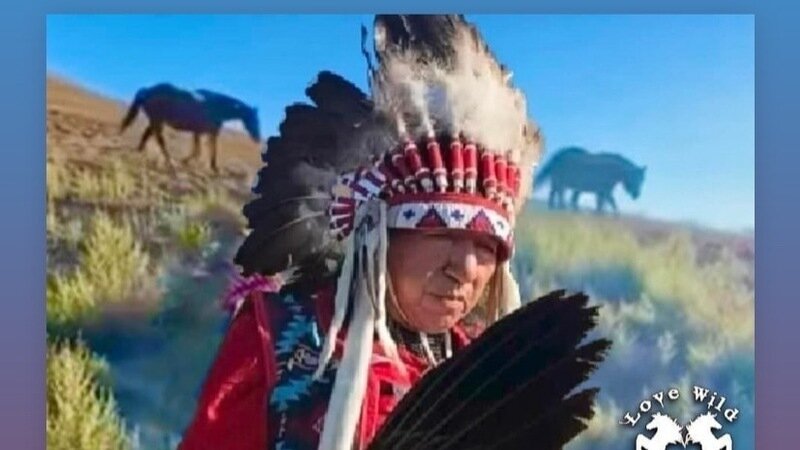
Gathering & Empowering Native Voices to Save Tens of Thousands of Horses from Slaughter
The Issue
If you are of Native American descent and hold horses as sacred and are opposed to their slaughter- Also if you are opposed to new horse slaughter houses being created-on your tribal lands that would put the health of your community, waters, and air quality at risk -To Help Protect Horses and Tribal lands and communities -will you please consider signing this petition and doing a quick 30 -60 second video sharing your opinion-for Congress?
Suggested Speaking Points & If you’d like to add your own words that would be great:
“My name is_____. I'm a member of the _____ tribe and I do not support the slaughter of horses and I do not want a slaughterhouse on our land that would put our people at risk by contaminating our waters, our air quality and exposing us to drugs in the blood of many of these animals!
Thank you “
Please email your video to:heartofsky@lovewildhorses.org
We invite you to please consider joining -this rare opportunity to save tens of thousands of horses from being shipped across US Borders to be tortured to death via slaughter by passing the SAFE Act -
What’s Happening:
There is a small group in opposition of ending horse slaughter export -lobbying and threatening this desperately needed Act that will ban the export of America’s horses to other countries and for barbaric slaughter.
A false narrative is being created that all Native Americans as a majority want the export of domestic and wild equines for slaughter to continue- further that Native people as a majority are in agreement to build slaughter plants for horses and burros - on reservation tribal lands.
We know what is being said isn’t true as we have many native friends all of which hold horses as sacred and are against harming and the deliberate desecration of these magnificent beings- however Congress doesn’t know- and needs to know that many tribes and tribal members, for example the Oglala-Lakota and Lakota Nations recognize horses as their relatives and relations, and therefore treat them with honor and respect.
Yet -We are being told in Congress, that all tribes as a people are in agreement and are behind the few Tribal Leaders lobbying in Washington DC for Slaughter Plants to open on Reservations and are opposed to SAFE Act HR.3475 S.2037- This bill permanently prohibits the slaughter of equines (e.g., horses and mules) for human consumption. (Current law prohibits the slaughter of dogs and cats for human consumption. This bill extends the prohibition to equines.)
We need a short quick video from as many tribal members as possible to show congress that native people as a whole, DO NOT support horse slaughter
In your video please include your name and tribal association, where your from and why it’s important to you to stop horse slaughter export and to not return the slaughter of horses.
Your voice is of great value-
Please email your video to: heartofsky@lovewildhorses.org
Please sign this petition and include the tribe you identify and your affiliation with this tribe and your ancestral place of origin.
Thank you in advance for sharing you opinion and for creating and sending a quick video to protect the horses, tribal communities and Mother Earth.
The Love Wild Horses Foundation
Oglala-Lakota Chief Lee Plenty Wolf
Below are some of the Dire and Gruesome consequences from creating a horse slaughter plant on reservation lands and for communities:
slaughterhouse waste contaminates too many rivers and streams in rural America with pathogens, oxygen-depleting pollutants like nitrogen and phosphorus, and other contaminants like sulfates and chlorides. When released into waterways in high concentrations, these pollutants drive excess algae growth, feed “dead zones” that suffocate aquatic life and turn waterways into bacteria-laden public health hazards.
Meat of Horses coming from the United States, are contaminated with the drugs we inject our horses with… drugs that never fully leave the body and contaminate the meat….
If slaughterhouses open on tribal lands, the kill buyers here will be shipping the horses to your lands for slaughter, exposing and contaminating your communities.
The negative environmental impacts of horse slaughter plants are numerous. Horse slaughter plants pollute local water, decrease property values, permeate the air with a foul stench and are economically draining and environmentally damaging. Areas affected the most are ground and drinking water supplies, air quality, and infrastructure systems, particularly sewage/ waste water. The presence and odor of manure, offal piles, urine, feces, heads, hooves and blood attract carrion, vermin, wild animals and wandering domestic pets. The opportunity for spreading disease and unwanted breeding is obvious.Horse processing plants are renowned for having more waste then typical livestock processing facilities.
A horse produces twice as much blood as a cow.
Cows are raised for human consumption therefore their blood can be utilized for fertilizer as it contains no toxins harmful to humans. Horses are not raised for food and their systems are often tainted with drugs banned by the FDA and USDA for animals raised for human consumption such as painkillers, de-wormers and other toxic drugs rendering their blood useless as fertilizer.
This excess blood is treated by processing facilities as waste and is absorbed into the natural environment surrounding the facility contaminating surface and ground water.
Fertilizer companies don’t want horse blood for the same reason US prepared-foods companies later stopped fertilizing mushrooms with horse manure: drugs in the horses’ systems are toxic to humans.
Tainted horsemeat puts those consuming it at risk.
The last three horse slaughter plants in the U.S. (all of which were foreign owned) amassed numerous EPA violations and overwhelmed the waste water infrastructures due to dumping of blood, entrails, urine, feces, heads and hooves. One of these slaughter plants, located in Texas had 481 EPA violations within 19 months in 2004-2005. The local governance spent 20% of its property tax revenue just handling legal issues brought on by EPA violations.
• In the 1980s, the Dallas Crown horse slaughterhouse, located in Kaufman, Texas, pumped so much blood through the city sewer system that the pipes burst, backing horse blood and tissue up into residents’ taps/bathtubs and bubbling up through city streets.
o In2000,thefacility"accidentallypumpedbloodintothecreek"
o In2001,was“notifiedthatwastewaterwasflowingintoadjacentproperties and into the creek”. When Dallas Crown was told they needed to create a mandatory “sludge control plan” they dragged their feet for eleven months before submitting it. The city’s water treatment plant was on the verge of a forced $6 million upgrade in order to manage the amount of blood and offal produced by the plant when the slaughter-house was shut down. Dallas Crown’s property taxes paid for only about half of the legal fees related to enforcing these penalties; the penalties were never paid. Meat and profits went overseas; the blood stayed in Kaufman.
Similarly, the Sanitation Group of DeKalb, IL, where Cavel International was located, identified the incomparable hazard associated with the discharge from horse slaughter facilities. "This hazard is uniquely acute for horse slaughter because of the wide range of drugs given to horses that are clearly labeled NOT FOR USE INTENDED FOR HUMAN CONSUMPTION.”
Horse slaughter
• Is inhumane
• Is a health risk to humans
Is harmful to our environment Must be stopped.
327
The Issue
If you are of Native American descent and hold horses as sacred and are opposed to their slaughter- Also if you are opposed to new horse slaughter houses being created-on your tribal lands that would put the health of your community, waters, and air quality at risk -To Help Protect Horses and Tribal lands and communities -will you please consider signing this petition and doing a quick 30 -60 second video sharing your opinion-for Congress?
Suggested Speaking Points & If you’d like to add your own words that would be great:
“My name is_____. I'm a member of the _____ tribe and I do not support the slaughter of horses and I do not want a slaughterhouse on our land that would put our people at risk by contaminating our waters, our air quality and exposing us to drugs in the blood of many of these animals!
Thank you “
Please email your video to:heartofsky@lovewildhorses.org
We invite you to please consider joining -this rare opportunity to save tens of thousands of horses from being shipped across US Borders to be tortured to death via slaughter by passing the SAFE Act -
What’s Happening:
There is a small group in opposition of ending horse slaughter export -lobbying and threatening this desperately needed Act that will ban the export of America’s horses to other countries and for barbaric slaughter.
A false narrative is being created that all Native Americans as a majority want the export of domestic and wild equines for slaughter to continue- further that Native people as a majority are in agreement to build slaughter plants for horses and burros - on reservation tribal lands.
We know what is being said isn’t true as we have many native friends all of which hold horses as sacred and are against harming and the deliberate desecration of these magnificent beings- however Congress doesn’t know- and needs to know that many tribes and tribal members, for example the Oglala-Lakota and Lakota Nations recognize horses as their relatives and relations, and therefore treat them with honor and respect.
Yet -We are being told in Congress, that all tribes as a people are in agreement and are behind the few Tribal Leaders lobbying in Washington DC for Slaughter Plants to open on Reservations and are opposed to SAFE Act HR.3475 S.2037- This bill permanently prohibits the slaughter of equines (e.g., horses and mules) for human consumption. (Current law prohibits the slaughter of dogs and cats for human consumption. This bill extends the prohibition to equines.)
We need a short quick video from as many tribal members as possible to show congress that native people as a whole, DO NOT support horse slaughter
In your video please include your name and tribal association, where your from and why it’s important to you to stop horse slaughter export and to not return the slaughter of horses.
Your voice is of great value-
Please email your video to: heartofsky@lovewildhorses.org
Please sign this petition and include the tribe you identify and your affiliation with this tribe and your ancestral place of origin.
Thank you in advance for sharing you opinion and for creating and sending a quick video to protect the horses, tribal communities and Mother Earth.
The Love Wild Horses Foundation
Oglala-Lakota Chief Lee Plenty Wolf
Below are some of the Dire and Gruesome consequences from creating a horse slaughter plant on reservation lands and for communities:
slaughterhouse waste contaminates too many rivers and streams in rural America with pathogens, oxygen-depleting pollutants like nitrogen and phosphorus, and other contaminants like sulfates and chlorides. When released into waterways in high concentrations, these pollutants drive excess algae growth, feed “dead zones” that suffocate aquatic life and turn waterways into bacteria-laden public health hazards.
Meat of Horses coming from the United States, are contaminated with the drugs we inject our horses with… drugs that never fully leave the body and contaminate the meat….
If slaughterhouses open on tribal lands, the kill buyers here will be shipping the horses to your lands for slaughter, exposing and contaminating your communities.
The negative environmental impacts of horse slaughter plants are numerous. Horse slaughter plants pollute local water, decrease property values, permeate the air with a foul stench and are economically draining and environmentally damaging. Areas affected the most are ground and drinking water supplies, air quality, and infrastructure systems, particularly sewage/ waste water. The presence and odor of manure, offal piles, urine, feces, heads, hooves and blood attract carrion, vermin, wild animals and wandering domestic pets. The opportunity for spreading disease and unwanted breeding is obvious.Horse processing plants are renowned for having more waste then typical livestock processing facilities.
A horse produces twice as much blood as a cow.
Cows are raised for human consumption therefore their blood can be utilized for fertilizer as it contains no toxins harmful to humans. Horses are not raised for food and their systems are often tainted with drugs banned by the FDA and USDA for animals raised for human consumption such as painkillers, de-wormers and other toxic drugs rendering their blood useless as fertilizer.
This excess blood is treated by processing facilities as waste and is absorbed into the natural environment surrounding the facility contaminating surface and ground water.
Fertilizer companies don’t want horse blood for the same reason US prepared-foods companies later stopped fertilizing mushrooms with horse manure: drugs in the horses’ systems are toxic to humans.
Tainted horsemeat puts those consuming it at risk.
The last three horse slaughter plants in the U.S. (all of which were foreign owned) amassed numerous EPA violations and overwhelmed the waste water infrastructures due to dumping of blood, entrails, urine, feces, heads and hooves. One of these slaughter plants, located in Texas had 481 EPA violations within 19 months in 2004-2005. The local governance spent 20% of its property tax revenue just handling legal issues brought on by EPA violations.
• In the 1980s, the Dallas Crown horse slaughterhouse, located in Kaufman, Texas, pumped so much blood through the city sewer system that the pipes burst, backing horse blood and tissue up into residents’ taps/bathtubs and bubbling up through city streets.
o In2000,thefacility"accidentallypumpedbloodintothecreek"
o In2001,was“notifiedthatwastewaterwasflowingintoadjacentproperties and into the creek”. When Dallas Crown was told they needed to create a mandatory “sludge control plan” they dragged their feet for eleven months before submitting it. The city’s water treatment plant was on the verge of a forced $6 million upgrade in order to manage the amount of blood and offal produced by the plant when the slaughter-house was shut down. Dallas Crown’s property taxes paid for only about half of the legal fees related to enforcing these penalties; the penalties were never paid. Meat and profits went overseas; the blood stayed in Kaufman.
Similarly, the Sanitation Group of DeKalb, IL, where Cavel International was located, identified the incomparable hazard associated with the discharge from horse slaughter facilities. "This hazard is uniquely acute for horse slaughter because of the wide range of drugs given to horses that are clearly labeled NOT FOR USE INTENDED FOR HUMAN CONSUMPTION.”
Horse slaughter
• Is inhumane
• Is a health risk to humans
Is harmful to our environment Must be stopped.
The Decision Makers

Supporter Voices
Petition Updates
Share this petition
Petition created on July 28, 2024