

FOR THE CITY OF BAKERSFIELD TO AGAIN BECOME A TREE CITY
FOR THE CITY OF BAKERSFIELD TO AGAIN BECOME A TREE CITY
The Issue
Background: The City of Bakersfield lost its “Tree City” designation from the Arbor Day Foundation in 2016. The City continues to lose its tree coverage/tree canopy—which is now less than 10%. Note: During FY 2020-2021, 2021-2022 and 2022-2023 the city’s contractor removed over 2,300 trees. Attached are recommendations of the Sierra Club, Kern-Kaweah Chapter.
Comparison: Bakersfield’s less than 10% tree canopy coverage compares unfavorably with the City of Fresno (a “Tree City”) which has coverage of 14.6%--with a goal of 20% by 2030. The City of Fresno now has a 153 page Urban Forest Management Plan adopted on May 23, 2024. Funding of $250,000 was obtained through a grant.
Benefits of trees: (a) shade can cool cities by 10 degrees or more, (b) trees can lower air-conditioning costs, (c) better air quality because of the removal of carbon, nitrogen dioxide, and sulfur dioxide, (d) Water conservation—by avoiding unnecessary runoff, and (e) beauty.
GOALS:
1. That the City of Bakersfield take steps to again become a “Tree City.”
2. For every tree the City of Bakersfield removes, a new tree needs to be planted.
3. The City of Bakersfield set a goal of 15% tree canopy coverage by 2030.
Additional information
Letter to the Bakersfield City Council, July 10, 2024
Mayor K. Goh and Members of the Bakersfield City Council 1600 Truxtun Avenue, Bakersfield, CA, 93301
Dear Mayor Goh and Council Members:
The Sierra Club, Kern-Kaweah Chapter, sent the City of Bakersfield a letter on April 30, 2024, regarding habitat destruction along the Kern River Parkway and closely related issues. Permit us to review and add to our concerns with additional details. Our foci are quality of life issues for our city.
We have nine specific recommendations:
1. A three month pause of current tree removal (except in emergency situations) and tree “trimming” by all City of Bakersfield departments and by the contracted firm General Tree Service.
This recommendation is based upon avoiding the loss of additional healthy trees in our City which cool the earth during extended hot periods, for shade, for esthetics and for simple enjoyment of public spaces in our city.
2. We are again recommending that commitments made by the former City Water Resources Department Director on August 5, 2022, be honored. This was the commitment made (and widely shared):
“A formal written habitat protection and restoration plan along the secondary flood plain of the Kern River Parkway will be developed. This will be developed jointly by the City Water Resources Department, City Code Enforcement and City Parks and Recreation Departments. Such an agreement would involve the Kern River Parkway Foundation as it is developed and formalized and regular opportunities for the Foundation (and other interested members of the public) to review its implementation. Such an agreement will address the unnecessary trimming of trees along the Truxtun Extension and bulldozing of habitat in and near Truxtun Lakes and other areas along the Kern River (which are routinely bulldozed during Kern River clean-ups).”
3. Based upon observed and continuing unnecessary tree trimming by City staff and/or General Tree Service that shortens the life span of trees and reduces natural carbon capture and shade, we are now recommending additional written procedures including justifications for all tree removal/tree trimming performed by City staff and/or General Tree before any tree trimming or removal is carried out. Note: the City of Bakersfield should not use bobcats or bulldozers to remove homeless encampments on city sidewalks or in city parks. The fragile habitat along the Kern River needs as much protection as city sidewalks or city parks.
Tree trimming and removal procedures need to follow American National Standards Institute A300 pruning standards and added to any existing or further City of Bakersfield contract with General Tree Service. Supervision and training of crews is an essential part of these standards [1].
4. As a part of written procedures and practices we are recommending:
(a) one or more City Park Rangers to be dedicated to patrolling the Kern River Parkway and nearby parks—preferable from a new substation located at San Miguel Grove—a substation which could operate from a mobile unit, (b) the use of commercial vacuum-type equipment for picking up items such as needles and broken glass—thereby reducing or eliminating the need for bobcats or bulldozers during clean-ups. Regular patrolling by rangers will aid in preventing camp infestations and will reduce clean-up efforts.
5. Trees removed by the City of Bakersfield or by General Tree Services need to be replaced in an equal number and in appropriate public spaces (preferably along the Kern River Parkway and in city parks) by appropriate native trees—identified by The California Native Plant Society [2].
For FY 2021-2022 and FY 2022-24 and FY 2023-24, the number of trees that “need” to be replaced in the City of Bakersfield would be approximately 2,385 trees, based on the contracts with General Tree [Appendix, Figure A]. We recommend that for every tree removed in a public space a tree needs to be planted.
This recommendation is consistent with a July 6, 2024, story on KBAK/Fox 58 regarding the removal of two trees in downtown Bakersfield [3]. As part of that story comments made at the July 3, 2024, Bakersfield City Council meeting by Vice- Mayor Andrae Gonzales indicated that the City intended to “replace” those two trees. This practice would be consistent with the “Keep Bakersfield Beautiful Project.”
For reference, in the 2021-2022 contract year General Tree Services was contracted to remove 795 trees in various sizes—150 trees from “O dhb to 7.” 200 trees “greater than 7” dbh to 17 dbh,” 200 trees from “25” dbh to 36 dbh,” 100 trees from 25” dhb to 36” duh,” and 45 trees “Greater than 36” dhb.”
In addition, the contract called for the trimming of 6,500 trees of various sizes—example: 2,000 trees to be trimmed from “0 dbh to 7 dhb.”
The contracted costs for this tree removal and tree trimming $627,300—with the total contract amount for that year at $860,000. The contract revision signed on August 9, 2023, increased payments to General Tree Service, Incorporated from $860,000 for the preceding two years (FY 2021-2022 and FY 2022-23) to $1,000,000 for FY 2023-204 [Appendix].
6. All City of Bakersfield Departments use the resources compiled by the California Native Plant Society regarding the selection of trees appropriate for a public spaces-
-with special consideration of native oak trees (as were planted along the Kern River Bike Path by the Park at Riverwalk) and other native California trees [2].
7. Given the documented damage to existing trees, all City staff involved in any tree trimming (whether along the Kern River or in City parks) and contracted staff need special training regarding American National Standards Institute A300 pruning standards. In addition, all projects need to be supervised by a certified arborist. This is a requirement following these standards [4].
To protect the bird population (which is on decline) tree trimming should not occur during the breeding season (March through August) as recommended by Ornithologists and the California Department of Fish and Wildlife, following California Code, Fish and Game Code - FGC § 3503.5 [5,6].
8. Detailed quarterly reports need to be prepared and provided to the Bakersfield City Council and made available to the public regarding the number of trees trimmed and removed.
9. Plans and/or information about the re-population of native trees need to be included in the Bakersfield General Plan.
BACKGROUND:
1. Many mature and healthy trees (primarily Populus fremontii) around Truxtun Lake were removed or severely trimmed (Appendix Figure B). This action was witnessed on March 27, 2024--during bird breeding season. By casual observations to any careful observer, it was obvious that trees lost more than 25% of their canopy—contrary to American National Standards Institute A300 pruning standards.
The same severe cutting (“trimming”) of trees is observable in many City parks. One example was provided during May 26, 2024, comments which included a picture of trees severely trimmed in Jastro Park (Appendix, Figure C).
Again, this severe cutting is detrimental both to the trees and the public (walkers, joggers, picnickers, or those using the Kern River Parkway Bike Path).
2. The City of Bakersfield contract with General Tree Services (Amendment No. 2 signed on August 9, 2023) was extended for another year in Agreement NO. 2021-180 for FY 2023-24). This contract extension provided for a compensation increase to
$1,000,000 (from the previous annual compensation of $860,000) “to allow the
continuance of supplying tree trimming services.” This contract includes the following language (page 4):
“COMPLIANCE WITH ALL LAWS: CONTRACTOR shall,
at CONTRACTOR’S sale cost, comply with all the requirements of Municipal,State and Federal authorities now in force . . .”
With regard to work along the Kern River which includes the destruction of fragile habitat along the Kern River on March 27, 2024, and as previously documented and reported, it would appear that General Tree Services and City of Bakersfield personnel (who supervise all General Tree Services work) would seem to be in clear violation of the following Kern County Ordinance: “Kern County Zoning Ordinance Chapter 19.73.110, page 391 requires that "native vegetation . . . remain undisturbed.”
Without careful, systematic monitoring of such work performed by General Services as well as by City of Bakersfield staff, the unwarranted and potentially illegal practices we are documenting will continue (see also Appendix Figure D and E).
3. The area around Truxtun Lake as well as the secondary floodplains of the Kern River is confirmed habitat of the endangered San Joaquin Kit Fox (Vulpes macrotis mutica) and two kangaroo rat species. Destroying Kit Fox habitat and kangaroo rat habitat is a clear violation of the federal Endangered Species Act.
A research project conducted at CSU Bakersfield in the spring of 2024, not only confirmed the presence of San Joaquin Kit Foxes along the secondary floodplains of the river between the Bakersfield Environmental Studies Area (BESA) and the Truxtun lake location, but also detected 2 endangered kangaroo species at the BESA, Heermann’s Kangaroo Rat (Dipodomys heermanni) and Tipton Kangaroo Rat (D. nitratoides nitratoides) (Figures 1 and 2). Both species are protected in California. Only small populations survived in fragmented habitat separated by urban landscape in the San Joaquin Valley. Detecting these species in the secondary floodplains of the river, which are similar to alkali flats, their prime habitat, provides hope that the river floodplains may be used as a migration corridor to increase their genetic diversity, preventing inbreeding. These small rodents are also preferred prey.
![Figure 1. Map showing Kit Fox Habitat Suitability based on Cypher et al. 2013, available at Maps | Data Basin [7]. This interactive map shows Kit Fox habitat suitability scores for different areas. Shown is a part of the Kern River area with Truxtun Lake to the east. Grassland (indicated in blue) has a score of 90 out of 100. Scores for other habitat is included in the figure.](https://assets.change.org/fe/sap-rich-media-user-uploads/2024/08/15/12fbb0eb-740e-45c8-9d9d-53d64fe6f33e.jpeg)
Figure 1. Map showing Kit Fox Habitat Suitability based on Cypher et al. 2013, available at Maps | Data Basin [7]. This interactive map shows Kit Fox habitat suitability scores for different areas. Shown is a part of the Kern River area with Truxtun Lake to the east. Grassland (indicated in blue) has a score of 90 out of 100. Scores for other habitat is included in the figure.
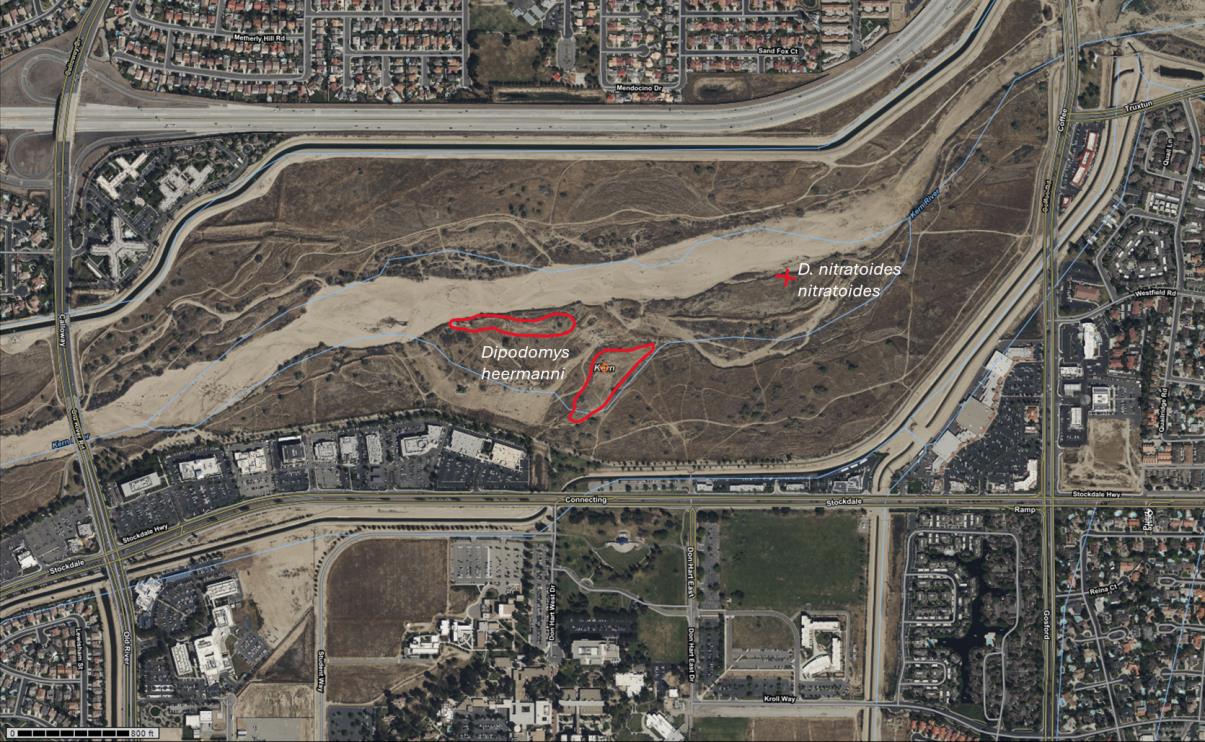
Figure 2. A dead Tipton Kangaroo Rat was found at the BESA on 04/14/2024. Scat from Heermann’s Kangaroo Rat was collected on 05/11/2024 and identified via DNA extraction and PCR with primers based on the mitochondrial gene along 2 trails. Closest match in the GenBank nucleotide database was Dipodymus heermanni, AY926436,
97.84%.
With this additional important information, our request remains the same—that a written habitat protection and restoration plan which would include the City’s Water Resources Agency, Code Enforcement and Recreation and Parks along the secondary flood plain of the Kern River Parkway (including Truxtun Lakes) be developed--with the addition that the plan also include City of Bakersfield parks.
We would add that a thorough survey along the Kern River floodplains for other endangered species will be performed at CSUB in the coming weeks and months. The results will be shared with the City of Bakersfield to support the protection of endangered species in areas where environmental management might be needed, such as removal of homeless encampments, illegal dumping of trash etc. Areas that turn out to be hot spots of endangered species, such as the BESA and Truxtun Lake need to be protected from habitat destruction. Results will also be shared with the California Department of Fish and Wildlife.
Again, these are serious quality of life issues for the residents and visitors to the City of Bakersfield. We are asking for a response to each of the nine recommendations outlined in this letter.
Thank you for your consideration.
For ease of communication, Antje Lauer’s email is: alauer@csub.edu
signed by
Dr. Antje Lauer Eddy Laine Sharon Briel
References
[1] ANSI A300 Tree Care Standards, available at: https://treecareindustryassociation.org/business-support/ansi-a300-standards/
[2] Kern Chapter of the California Native Plant Society, Local Plants - Know & Identify the Plants of Kern County, available at: https://chapters.cnps.org/kern/local-plants/
[3] Mary Paronyan, Eyewitness News Sat, July 6th 2024, Bakersfield project cuts down trees but plans replanting for shade and safety, available at: https://bakersfieldnow.com/news/local/bakersfield-project-cuts-down-trees-but-plans replanting-for-shade-and-safety
[4] American National Standard for Tree Care Operations – Tree, Shrub, and Other Woody Plant Maintenance – Standard Practices, available at: https://sullivansisland.sc.gov/sites/sullivansisland/files/Documents/Tree%20Preservation/ ANSI%20300-%20Pruning%20Standards.pdf
[5] Linda Richards. 2019. When to trim trees and protect nesting wildlife, available at: https://ifnaturecouldtalk.com/when-to-trim-trees-and-protect-nesting-wildlife
[6] Audubon California. California Department of Fish and Wildlife and California Attorney General Xavier Becerra, Advisory - Affirming California’s Protections for Migratory Birds, November 29, 2018, available at: https://ca.audubon.org/sites/default/files/20181129mbta-advisory3_1.pdf
[7] Cypher, B. L., Phillips, S. E., & Kelly, P. A. (2013). Quantity and distribution of suitable habitat for endangered San Joaquin kit foxes: conservation implications. Canid Biology and Conservation, 16(7), 25-31.
Appendix Figures A-D
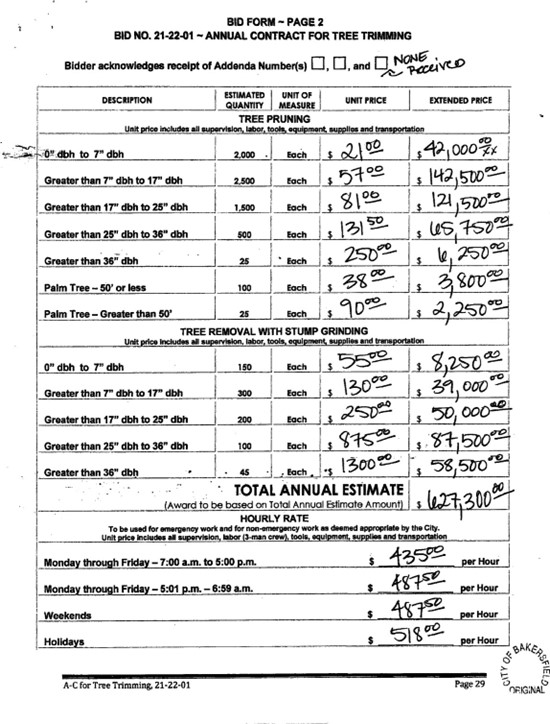
Figure A. Contract between the City of Bakersfield and General Tree Services 2021/22 to remove 795 trees and trim 6,650 over a one year period.
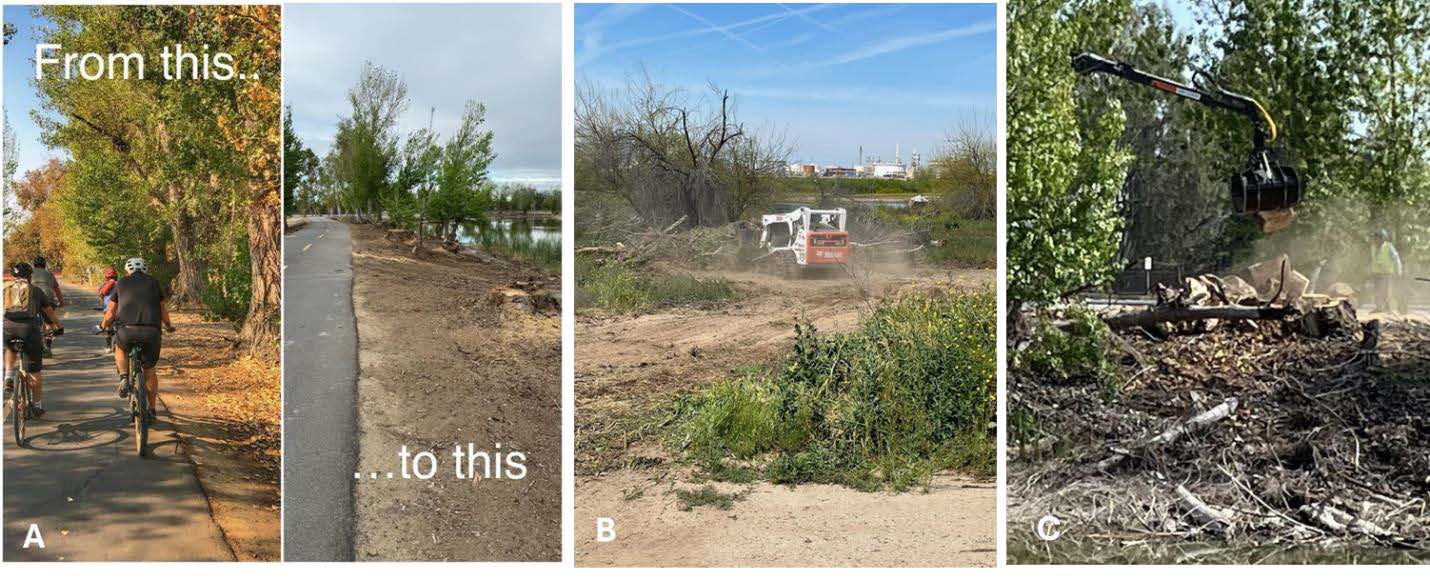
Figure B. A. Bikers enjoying the Kern River Parkway riding along the bike path at Truxtun lake, showing many decades old Cottonwood trees. B and C. Destruction of the vegetation including mature and healthy trees along Truxtun Lake and in the secondary floodplains of the Kern River in March 2024 using heavy equipment.
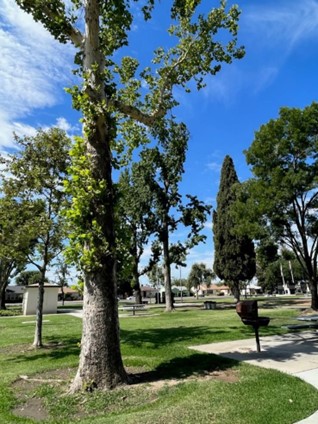
Figure C. Over trimmed tree at Jastrow Park. Not enough leading branches are left to develop a canopy.
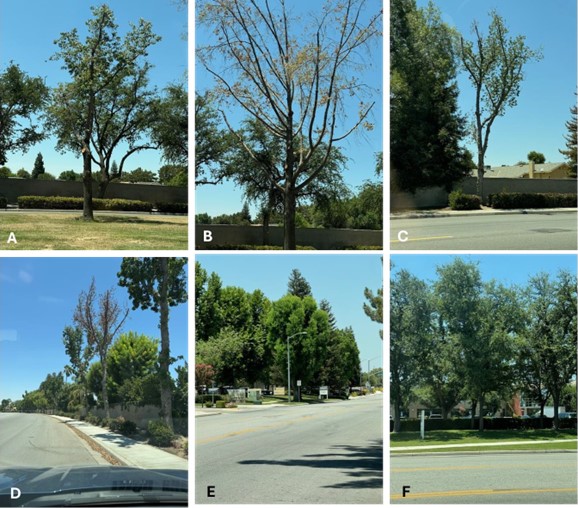
Figure D. A-D. Result of tree trimming by General Tree along Ming Ave., resulting in the loss of most of the canopy. Trees show signs of stress and do not provide shade nor are they inviting any birds to build a nest. E and F. In contrast across the street are healthy trees with dense canopy providing ecosystem services that benefit humans and animals (e.g. shade, cooling effect, natural carbon capture, nesting, and foraging opportunities for animals).
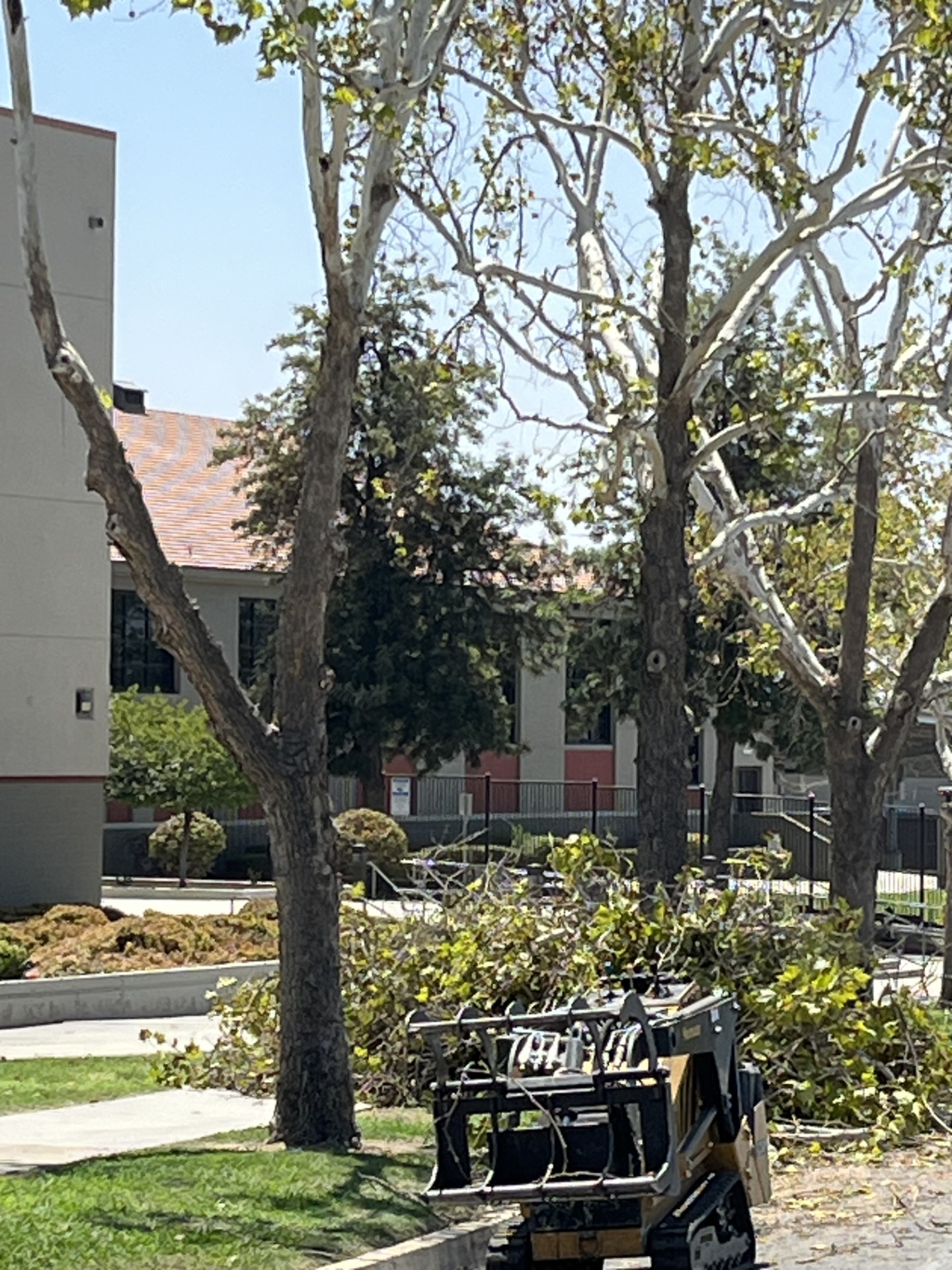
Figure E. Trees with more than 25% of their canopy removed in the City of Bakersfield, summer 2024.

331
The Issue
Background: The City of Bakersfield lost its “Tree City” designation from the Arbor Day Foundation in 2016. The City continues to lose its tree coverage/tree canopy—which is now less than 10%. Note: During FY 2020-2021, 2021-2022 and 2022-2023 the city’s contractor removed over 2,300 trees. Attached are recommendations of the Sierra Club, Kern-Kaweah Chapter.
Comparison: Bakersfield’s less than 10% tree canopy coverage compares unfavorably with the City of Fresno (a “Tree City”) which has coverage of 14.6%--with a goal of 20% by 2030. The City of Fresno now has a 153 page Urban Forest Management Plan adopted on May 23, 2024. Funding of $250,000 was obtained through a grant.
Benefits of trees: (a) shade can cool cities by 10 degrees or more, (b) trees can lower air-conditioning costs, (c) better air quality because of the removal of carbon, nitrogen dioxide, and sulfur dioxide, (d) Water conservation—by avoiding unnecessary runoff, and (e) beauty.
GOALS:
1. That the City of Bakersfield take steps to again become a “Tree City.”
2. For every tree the City of Bakersfield removes, a new tree needs to be planted.
3. The City of Bakersfield set a goal of 15% tree canopy coverage by 2030.
Additional information
Letter to the Bakersfield City Council, July 10, 2024
Mayor K. Goh and Members of the Bakersfield City Council 1600 Truxtun Avenue, Bakersfield, CA, 93301
Dear Mayor Goh and Council Members:
The Sierra Club, Kern-Kaweah Chapter, sent the City of Bakersfield a letter on April 30, 2024, regarding habitat destruction along the Kern River Parkway and closely related issues. Permit us to review and add to our concerns with additional details. Our foci are quality of life issues for our city.
We have nine specific recommendations:
1. A three month pause of current tree removal (except in emergency situations) and tree “trimming” by all City of Bakersfield departments and by the contracted firm General Tree Service.
This recommendation is based upon avoiding the loss of additional healthy trees in our City which cool the earth during extended hot periods, for shade, for esthetics and for simple enjoyment of public spaces in our city.
2. We are again recommending that commitments made by the former City Water Resources Department Director on August 5, 2022, be honored. This was the commitment made (and widely shared):
“A formal written habitat protection and restoration plan along the secondary flood plain of the Kern River Parkway will be developed. This will be developed jointly by the City Water Resources Department, City Code Enforcement and City Parks and Recreation Departments. Such an agreement would involve the Kern River Parkway Foundation as it is developed and formalized and regular opportunities for the Foundation (and other interested members of the public) to review its implementation. Such an agreement will address the unnecessary trimming of trees along the Truxtun Extension and bulldozing of habitat in and near Truxtun Lakes and other areas along the Kern River (which are routinely bulldozed during Kern River clean-ups).”
3. Based upon observed and continuing unnecessary tree trimming by City staff and/or General Tree Service that shortens the life span of trees and reduces natural carbon capture and shade, we are now recommending additional written procedures including justifications for all tree removal/tree trimming performed by City staff and/or General Tree before any tree trimming or removal is carried out. Note: the City of Bakersfield should not use bobcats or bulldozers to remove homeless encampments on city sidewalks or in city parks. The fragile habitat along the Kern River needs as much protection as city sidewalks or city parks.
Tree trimming and removal procedures need to follow American National Standards Institute A300 pruning standards and added to any existing or further City of Bakersfield contract with General Tree Service. Supervision and training of crews is an essential part of these standards [1].
4. As a part of written procedures and practices we are recommending:
(a) one or more City Park Rangers to be dedicated to patrolling the Kern River Parkway and nearby parks—preferable from a new substation located at San Miguel Grove—a substation which could operate from a mobile unit, (b) the use of commercial vacuum-type equipment for picking up items such as needles and broken glass—thereby reducing or eliminating the need for bobcats or bulldozers during clean-ups. Regular patrolling by rangers will aid in preventing camp infestations and will reduce clean-up efforts.
5. Trees removed by the City of Bakersfield or by General Tree Services need to be replaced in an equal number and in appropriate public spaces (preferably along the Kern River Parkway and in city parks) by appropriate native trees—identified by The California Native Plant Society [2].
For FY 2021-2022 and FY 2022-24 and FY 2023-24, the number of trees that “need” to be replaced in the City of Bakersfield would be approximately 2,385 trees, based on the contracts with General Tree [Appendix, Figure A]. We recommend that for every tree removed in a public space a tree needs to be planted.
This recommendation is consistent with a July 6, 2024, story on KBAK/Fox 58 regarding the removal of two trees in downtown Bakersfield [3]. As part of that story comments made at the July 3, 2024, Bakersfield City Council meeting by Vice- Mayor Andrae Gonzales indicated that the City intended to “replace” those two trees. This practice would be consistent with the “Keep Bakersfield Beautiful Project.”
For reference, in the 2021-2022 contract year General Tree Services was contracted to remove 795 trees in various sizes—150 trees from “O dhb to 7.” 200 trees “greater than 7” dbh to 17 dbh,” 200 trees from “25” dbh to 36 dbh,” 100 trees from 25” dhb to 36” duh,” and 45 trees “Greater than 36” dhb.”
In addition, the contract called for the trimming of 6,500 trees of various sizes—example: 2,000 trees to be trimmed from “0 dbh to 7 dhb.”
The contracted costs for this tree removal and tree trimming $627,300—with the total contract amount for that year at $860,000. The contract revision signed on August 9, 2023, increased payments to General Tree Service, Incorporated from $860,000 for the preceding two years (FY 2021-2022 and FY 2022-23) to $1,000,000 for FY 2023-204 [Appendix].
6. All City of Bakersfield Departments use the resources compiled by the California Native Plant Society regarding the selection of trees appropriate for a public spaces-
-with special consideration of native oak trees (as were planted along the Kern River Bike Path by the Park at Riverwalk) and other native California trees [2].
7. Given the documented damage to existing trees, all City staff involved in any tree trimming (whether along the Kern River or in City parks) and contracted staff need special training regarding American National Standards Institute A300 pruning standards. In addition, all projects need to be supervised by a certified arborist. This is a requirement following these standards [4].
To protect the bird population (which is on decline) tree trimming should not occur during the breeding season (March through August) as recommended by Ornithologists and the California Department of Fish and Wildlife, following California Code, Fish and Game Code - FGC § 3503.5 [5,6].
8. Detailed quarterly reports need to be prepared and provided to the Bakersfield City Council and made available to the public regarding the number of trees trimmed and removed.
9. Plans and/or information about the re-population of native trees need to be included in the Bakersfield General Plan.
BACKGROUND:
1. Many mature and healthy trees (primarily Populus fremontii) around Truxtun Lake were removed or severely trimmed (Appendix Figure B). This action was witnessed on March 27, 2024--during bird breeding season. By casual observations to any careful observer, it was obvious that trees lost more than 25% of their canopy—contrary to American National Standards Institute A300 pruning standards.
The same severe cutting (“trimming”) of trees is observable in many City parks. One example was provided during May 26, 2024, comments which included a picture of trees severely trimmed in Jastro Park (Appendix, Figure C).
Again, this severe cutting is detrimental both to the trees and the public (walkers, joggers, picnickers, or those using the Kern River Parkway Bike Path).
2. The City of Bakersfield contract with General Tree Services (Amendment No. 2 signed on August 9, 2023) was extended for another year in Agreement NO. 2021-180 for FY 2023-24). This contract extension provided for a compensation increase to
$1,000,000 (from the previous annual compensation of $860,000) “to allow the
continuance of supplying tree trimming services.” This contract includes the following language (page 4):
“COMPLIANCE WITH ALL LAWS: CONTRACTOR shall,
at CONTRACTOR’S sale cost, comply with all the requirements of Municipal,State and Federal authorities now in force . . .”
With regard to work along the Kern River which includes the destruction of fragile habitat along the Kern River on March 27, 2024, and as previously documented and reported, it would appear that General Tree Services and City of Bakersfield personnel (who supervise all General Tree Services work) would seem to be in clear violation of the following Kern County Ordinance: “Kern County Zoning Ordinance Chapter 19.73.110, page 391 requires that "native vegetation . . . remain undisturbed.”
Without careful, systematic monitoring of such work performed by General Services as well as by City of Bakersfield staff, the unwarranted and potentially illegal practices we are documenting will continue (see also Appendix Figure D and E).
3. The area around Truxtun Lake as well as the secondary floodplains of the Kern River is confirmed habitat of the endangered San Joaquin Kit Fox (Vulpes macrotis mutica) and two kangaroo rat species. Destroying Kit Fox habitat and kangaroo rat habitat is a clear violation of the federal Endangered Species Act.
A research project conducted at CSU Bakersfield in the spring of 2024, not only confirmed the presence of San Joaquin Kit Foxes along the secondary floodplains of the river between the Bakersfield Environmental Studies Area (BESA) and the Truxtun lake location, but also detected 2 endangered kangaroo species at the BESA, Heermann’s Kangaroo Rat (Dipodomys heermanni) and Tipton Kangaroo Rat (D. nitratoides nitratoides) (Figures 1 and 2). Both species are protected in California. Only small populations survived in fragmented habitat separated by urban landscape in the San Joaquin Valley. Detecting these species in the secondary floodplains of the river, which are similar to alkali flats, their prime habitat, provides hope that the river floodplains may be used as a migration corridor to increase their genetic diversity, preventing inbreeding. These small rodents are also preferred prey.
Figure 1. Map showing Kit Fox Habitat Suitability based on Cypher et al. 2013, available at Maps | Data Basin [7]. This interactive map shows Kit Fox habitat suitability scores for different areas. Shown is a part of the Kern River area with Truxtun Lake to the east. Grassland (indicated in blue) has a score of 90 out of 100. Scores for other habitat is included in the figure.
Figure 2. A dead Tipton Kangaroo Rat was found at the BESA on 04/14/2024. Scat from Heermann’s Kangaroo Rat was collected on 05/11/2024 and identified via DNA extraction and PCR with primers based on the mitochondrial gene along 2 trails. Closest match in the GenBank nucleotide database was Dipodymus heermanni, AY926436,
97.84%.
With this additional important information, our request remains the same—that a written habitat protection and restoration plan which would include the City’s Water Resources Agency, Code Enforcement and Recreation and Parks along the secondary flood plain of the Kern River Parkway (including Truxtun Lakes) be developed--with the addition that the plan also include City of Bakersfield parks.
We would add that a thorough survey along the Kern River floodplains for other endangered species will be performed at CSUB in the coming weeks and months. The results will be shared with the City of Bakersfield to support the protection of endangered species in areas where environmental management might be needed, such as removal of homeless encampments, illegal dumping of trash etc. Areas that turn out to be hot spots of endangered species, such as the BESA and Truxtun Lake need to be protected from habitat destruction. Results will also be shared with the California Department of Fish and Wildlife.
Again, these are serious quality of life issues for the residents and visitors to the City of Bakersfield. We are asking for a response to each of the nine recommendations outlined in this letter.
Thank you for your consideration.
For ease of communication, Antje Lauer’s email is: alauer@csub.edu
signed by
Dr. Antje Lauer Eddy Laine Sharon Briel
References
[1] ANSI A300 Tree Care Standards, available at: https://treecareindustryassociation.org/business-support/ansi-a300-standards/
[2] Kern Chapter of the California Native Plant Society, Local Plants - Know & Identify the Plants of Kern County, available at: https://chapters.cnps.org/kern/local-plants/
[3] Mary Paronyan, Eyewitness News Sat, July 6th 2024, Bakersfield project cuts down trees but plans replanting for shade and safety, available at: https://bakersfieldnow.com/news/local/bakersfield-project-cuts-down-trees-but-plans replanting-for-shade-and-safety
[4] American National Standard for Tree Care Operations – Tree, Shrub, and Other Woody Plant Maintenance – Standard Practices, available at: https://sullivansisland.sc.gov/sites/sullivansisland/files/Documents/Tree%20Preservation/ ANSI%20300-%20Pruning%20Standards.pdf
[5] Linda Richards. 2019. When to trim trees and protect nesting wildlife, available at: https://ifnaturecouldtalk.com/when-to-trim-trees-and-protect-nesting-wildlife
[6] Audubon California. California Department of Fish and Wildlife and California Attorney General Xavier Becerra, Advisory - Affirming California’s Protections for Migratory Birds, November 29, 2018, available at: https://ca.audubon.org/sites/default/files/20181129mbta-advisory3_1.pdf
[7] Cypher, B. L., Phillips, S. E., & Kelly, P. A. (2013). Quantity and distribution of suitable habitat for endangered San Joaquin kit foxes: conservation implications. Canid Biology and Conservation, 16(7), 25-31.
Appendix Figures A-D
Figure A. Contract between the City of Bakersfield and General Tree Services 2021/22 to remove 795 trees and trim 6,650 over a one year period.
Figure B. A. Bikers enjoying the Kern River Parkway riding along the bike path at Truxtun lake, showing many decades old Cottonwood trees. B and C. Destruction of the vegetation including mature and healthy trees along Truxtun Lake and in the secondary floodplains of the Kern River in March 2024 using heavy equipment.
Figure C. Over trimmed tree at Jastrow Park. Not enough leading branches are left to develop a canopy.
Figure D. A-D. Result of tree trimming by General Tree along Ming Ave., resulting in the loss of most of the canopy. Trees show signs of stress and do not provide shade nor are they inviting any birds to build a nest. E and F. In contrast across the street are healthy trees with dense canopy providing ecosystem services that benefit humans and animals (e.g. shade, cooling effect, natural carbon capture, nesting, and foraging opportunities for animals).
Figure E. Trees with more than 25% of their canopy removed in the City of Bakersfield, summer 2024.
331
Supporter Voices
Petition Updates
Share this petition
Petition created on August 15, 2024