
"Fish Smart, Catch more: Prevent annihilation by Protecting our marine population"
The Issue
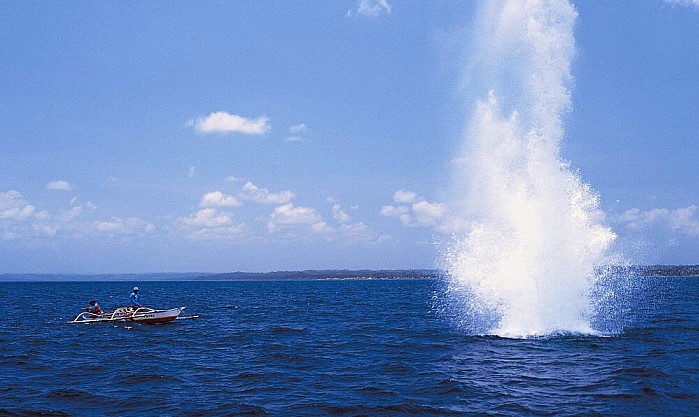
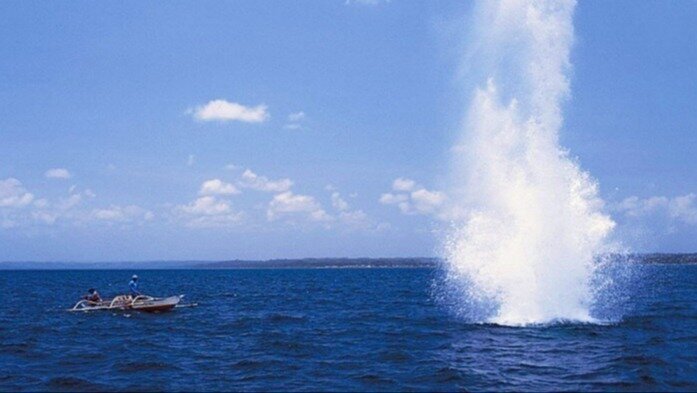
Dynamite fishing, also called bomb fishing or blast fishing, is one of the destructive fishing practices that uses explosive to stun or kill schools of fish (Katikiro & Mahenge, 2016). In the Philippines, the first dynamite is commonly prepared in a powder from consisting of 75% potassium chlorate, 15% charcoal, and 10% sulfur or cornstarch (Naughton, 1985). The commonly used blast fishing in the country is the use of dynamite or ammonium nitrate (Rubec, 1988).
Anecdotal evidence shows that in the Philippines, an alternative to dynamite such as the use of locally available resources, like fertilizers (ammonium nitrate or sodium nitrate), prepared and mixed with kerosene or gasoline, and the explosive mixture is poured into an empty glass bottle. A makeshift fuse is created, stuck in the bottle, and sealed with a rubber part of a flip-flop sandal around the fuse. As part of its operation, the explosive bottle is tied to a steel rod or similar heavy material to sink quickly. In the local fishing ground, explosive bottles with sinkers are thrown at schools of fish or in coral reefs areas. A few minutes after the explosion, the fishers dive and start collecting dead and stunned fish with the aid of a scoop net and compressor.
In the Philippines, explosive fishing is common. About 70,000 fishermen, or 12% of all catch fishermen in the nation, are thought to participate in blast fishing, according to one estimate. There are always blast fishermen in every bay and gulf; there is always a village that is know to be home to blast fishermen in every fishing ground; and there is always at least one story of misfortune in every village about a blast fisher or another individual who was killed or maimed by the explosion.
To really ensure that dynamite fishing does not happen in fishery we must implement the monitoring or patrolling of the areas where fishery takes place. Legislation against the practice should be implemented and enforced. The most effective enforcement would involve persons who live in the communities from where the fishermen originate. These people would need to be made aware of the risks that this form of fishing has to fish populations' long-term viability.
Educate the people about the existing law, Republic Act No. 10654, An Act to prevent, deter and eliminate illegal, unreported and unregulated fishing, or known as "Philippine Fisheries Code of 1998" implements that, any individual found found responsible for the actual use of explosives, noxious or poisonous substances faces the following penalties: confiscation of all catch, including those that were not illegally caught if they were mixed with those that were: confiscation of explosives and noxious or poisonous substances; confiscation of electrofishing devices and paraphernalia and gear; and an administrative fine equal to five (5) times the value of the catch or the amount of fine.
We must also implement putting signages to these areas so that people are aware that dynamite fishing is really prohibited due to its destructive effects to our ocean such as devastating coral reefs and indiscriminately kills animals in the blast areas including fish eggs to whales and dolphins.
Another option is by sharing through social media platforms regarding the illegal usage of explosives when fishing could also be a great help for our people to be aware. It includes the possible effects of marine life which also affect our lives as humans. These information could help the people that are not able to attain this knowledge about utilizing explosives as an easy catch for fishes.
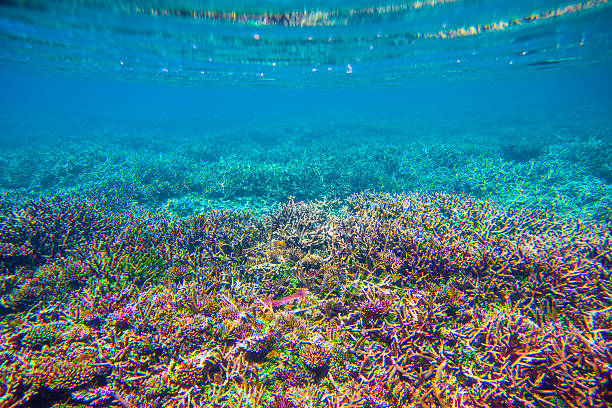
Let this petition act as a reminder that the ocean supplies the air we breathe and regulates our climate. We get our food from the water. It generates revenue and jobs. Economic progress is aided by the ocean. We cannot exist without a healthy ocean. Therefore, to maintain a healthy habitat for the ecosystem and marine life, stop using dynamites for fishing.
Sources:
E.D. Gomez, P.M. Alino, H.T., W.Y. Licuanan, A review of the status of the Philippine reefs, Marine Pollution Bulletin, Volume 29, issues 1-3, 1994
Republic Act No. 10654. (n.d.). https://republicact.com/widget/provision/202975
Tahiluddin, A.B., & Sarri, J.H. (2022). An Overview of Destructive fishing in the Philippines. Acta Natura et Scientia, 3(2), 116-125
Human impacts on coral reefs: facts and recommendations. Antenne Museum EPHE, French Polymesia.
Generoso, Ernesto. 1998. Is the gov't helpless vs. 70,000 blast fishers? The Freeman (October 7, 1998), p.25.
Saila, S.B., V.L. Kocic and J.W. McManus. 1993. Modelling the effects of destructive fishing on tropical coral reefs. Mar. Ecol. (Prog. Ser.) 94:51-60

301
The Issue
Dynamite fishing, also called bomb fishing or blast fishing, is one of the destructive fishing practices that uses explosive to stun or kill schools of fish (Katikiro & Mahenge, 2016). In the Philippines, the first dynamite is commonly prepared in a powder from consisting of 75% potassium chlorate, 15% charcoal, and 10% sulfur or cornstarch (Naughton, 1985). The commonly used blast fishing in the country is the use of dynamite or ammonium nitrate (Rubec, 1988).
Anecdotal evidence shows that in the Philippines, an alternative to dynamite such as the use of locally available resources, like fertilizers (ammonium nitrate or sodium nitrate), prepared and mixed with kerosene or gasoline, and the explosive mixture is poured into an empty glass bottle. A makeshift fuse is created, stuck in the bottle, and sealed with a rubber part of a flip-flop sandal around the fuse. As part of its operation, the explosive bottle is tied to a steel rod or similar heavy material to sink quickly. In the local fishing ground, explosive bottles with sinkers are thrown at schools of fish or in coral reefs areas. A few minutes after the explosion, the fishers dive and start collecting dead and stunned fish with the aid of a scoop net and compressor.
In the Philippines, explosive fishing is common. About 70,000 fishermen, or 12% of all catch fishermen in the nation, are thought to participate in blast fishing, according to one estimate. There are always blast fishermen in every bay and gulf; there is always a village that is know to be home to blast fishermen in every fishing ground; and there is always at least one story of misfortune in every village about a blast fisher or another individual who was killed or maimed by the explosion.
To really ensure that dynamite fishing does not happen in fishery we must implement the monitoring or patrolling of the areas where fishery takes place. Legislation against the practice should be implemented and enforced. The most effective enforcement would involve persons who live in the communities from where the fishermen originate. These people would need to be made aware of the risks that this form of fishing has to fish populations' long-term viability.
Educate the people about the existing law, Republic Act No. 10654, An Act to prevent, deter and eliminate illegal, unreported and unregulated fishing, or known as "Philippine Fisheries Code of 1998" implements that, any individual found found responsible for the actual use of explosives, noxious or poisonous substances faces the following penalties: confiscation of all catch, including those that were not illegally caught if they were mixed with those that were: confiscation of explosives and noxious or poisonous substances; confiscation of electrofishing devices and paraphernalia and gear; and an administrative fine equal to five (5) times the value of the catch or the amount of fine.
We must also implement putting signages to these areas so that people are aware that dynamite fishing is really prohibited due to its destructive effects to our ocean such as devastating coral reefs and indiscriminately kills animals in the blast areas including fish eggs to whales and dolphins.
Another option is by sharing through social media platforms regarding the illegal usage of explosives when fishing could also be a great help for our people to be aware. It includes the possible effects of marine life which also affect our lives as humans. These information could help the people that are not able to attain this knowledge about utilizing explosives as an easy catch for fishes.
Let this petition act as a reminder that the ocean supplies the air we breathe and regulates our climate. We get our food from the water. It generates revenue and jobs. Economic progress is aided by the ocean. We cannot exist without a healthy ocean. Therefore, to maintain a healthy habitat for the ecosystem and marine life, stop using dynamites for fishing.
Sources:
E.D. Gomez, P.M. Alino, H.T., W.Y. Licuanan, A review of the status of the Philippine reefs, Marine Pollution Bulletin, Volume 29, issues 1-3, 1994
Republic Act No. 10654. (n.d.). https://republicact.com/widget/provision/202975
Tahiluddin, A.B., & Sarri, J.H. (2022). An Overview of Destructive fishing in the Philippines. Acta Natura et Scientia, 3(2), 116-125
Human impacts on coral reefs: facts and recommendations. Antenne Museum EPHE, French Polymesia.
Generoso, Ernesto. 1998. Is the gov't helpless vs. 70,000 blast fishers? The Freeman (October 7, 1998), p.25.
Saila, S.B., V.L. Kocic and J.W. McManus. 1993. Modelling the effects of destructive fishing on tropical coral reefs. Mar. Ecol. (Prog. Ser.) 94:51-60
Petition Updates
Share this petition
Petition created on October 17, 2024