FINISH WHAT WE STARTED: BAN THE SALE OF BIRDS IN SAN FRANCISCO PET STORES
The Issue
To the San Francisco Board of Supervisors and Mayor's Office
In 2017, San Francisco did something kind. The Board of Supervisors voted unanimously to stop pet stores from selling commercially bred cats and dogs, sparing countless animals from the cruelty of the mills that churn them out. It was a proud day for a city that prides itself on compassion.
But when that door closed for cats and dogs, it was left wide open for someone else.
The birds stayed on the shelves.
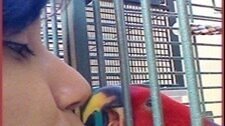
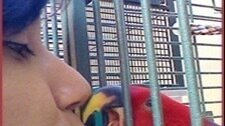
Today, parrots, cockatiels, parakeets, and finches are still sold as merchandise in San Francisco pet stores -- boxed into cages barely larger than their wingspan, sold to anyone with a credit card, often with a pamphlet of bad advice and no idea what they've just taken home. We are asking you to finish the work you started in 2017 and end the retail sale of birds in San Francisco pet stores.
THE BIRDS WERE LEFT OUT ONCE BEFORE.
San Francisco has been here before. Years before the 2017 ban, the city's Commission of Animal Control and Welfare championed a far broader measure -- the "Humane Pet Acquisition Proposal" -- that would have ended the retail sale of nearly all live animals, birds included. But the effort stalled. As it expanded to cover almost every animal, down to goldfish, it drew ridicule and fierce pushback from pet-store owners who argued it would put them out of business -- and the advisory commission had no power to enact a ban on its own. The measure was tabled and never became law.
When a retail-sale ban finally did pass in 2017, it had been pared all the way down to just dogs and cats. The birds were left behind -- not because they suffer less, but because they were the easiest to quietly drop. We are asking you to correct that omission now.
THESE ARE NOT "STARTER PETS." THEY ARE SOME OF THE MOST INTELLIGENT BEINGS WE SHARE THE PLANET WITH.
We grew up being told "bird-brained" was an insult. Science has spent the last forty years proving us wrong. Researchers studying African grey parrots have found they can grasp concepts like color, shape, number, and even the idea of "none" -- abilities that match or outperform nonhuman primates and human children up to roughly six years old, depending on the task. Parrot brains are so densely packed with neurons that some species carry more than primates with far larger heads.
Think about what that means. The bird in that pet-store cage has the emotional and cognitive life of a small child -- a child who can feel boredom, loneliness, grief, and fear, but who cannot tell you, and cannot leave. When that intelligence is left with nothing to do, birds famously unravel: they scream, they pluck themselves bald, they self-mutilate. We are selling brilliant minds into solitary confinement.
THEY WERE NEVER OURS TO DOMESTICATE.
Dogs and cats spent thousands of years evolving alongside us. The parrot in the pet store did not. These birds are, at most, a generation or two removed from the wild -- essentially wild animals wearing the costume of a pet. They are built to fly miles a day, to forage, to mate for life, to live in flocks of dozens. None of that fits in a living room. The concern is serious enough that even Petco, under pressure, agreed years ago to stop selling large parrots -- with an animal-welfare advocate plainly calling parrots wild animals that are unsuitable as pets and can easily outlive their owners. We are not adopting a domesticated companion; we are caging a wild creature and asking it to be grateful.
A BIRD IS A LIFETIME -- OFTEN LONGER THAN THE BUYER'S.
Many parrots live 50, 60, even 80 years. A bird bought on impulse on a Saturday afternoon may well outlive the person who bought it. This is exactly why birds are among the most surrendered, re-homed, and abandoned pets in existence. Local rescues are already drowning in unwanted birds -- surplus from the same breeding pipeline these stores feed. Every bird sold over a counter today is a bird a volunteer may be begging someone to take in ten years from now.
BRED AND SOLD INTO DISEASE.
The birds in these stores often come from exactly the kind of crowded breeding and aviary conditions where the most devastating parrot diseases spread -- and a bird can look perfectly healthy on the shelf while already carrying one. Three are especially damning:
- Proventricular Dilatation Disease (PDD), historically known as "macaw wasting disease," is a progressive neurological illness linked to avian bornavirus. It slowly destroys a bird's ability to digest its food, and it is incurable and fatal once symptoms appear. It has been documented in more than 50 parrot species, and infected birds can shed the virus while still appearing completely normal.
- Psittacine Beak and Feather Disease (PBFD), caused by a circovirus, is highly contagious and often fatal, and it hits young birds hardest -- the very age sold in stores. It deforms the beak and feathers and cripples the immune system. There is no cure and no commercial vaccine, and the virus is so stable it lingers in the environment on dust and surfaces for long periods. Researchers point to the global parrot trade itself as a primary engine spreading this disease around the world.
- Avian polyomavirus kills baby parrots, often with sudden death and little or no warning.
These are not freak occurrences. They are the predictable result of mass-breeding sensitive, long-lived wild animals for a retail counter. Every bird boxed up for sale is a gamble -- for that bird, and for every other bird it is ever housed near.
SAN FRANCISCO IS ALREADY READY FOR THIS.
This is not a radical or lonely idea. Most pet stores in San Francisco already sell no live animals at all -- chains like Pet Food Express and dozens of independent shops have built thriving businesses around supplies and rescue partnerships instead. When the city banned cat and dog sales, stores simply pivoted to featuring adoptable shelter animals. They know how to do this. Only a handful of stores in the entire city still sell live animals, and in 2026 the city's own Commission of Animal Control and Welfare voted unanimously to urge the Board of Supervisors to end live-animal retail sales for good.
The infrastructure exists. The public support exists. The only thing missing is the law.
WHAT WE'RE ASKING
We call on the San Francisco Board of Supervisors and the Mayor to pass an ordinance prohibiting the retail sale of birds in pet stores, and to encourage stores -- exactly as they did for cats and dogs -- to partner with rescues and sanctuaries to home the thousands of birds already waiting.
We finished the job for cats and dogs. The birds were left behind. Let's bring them home too.
Please sign and share. Give San Francisco's birds the same mercy we gave its cats and dogs.
-----------------------------------------------------------------
SOURCES
On parrot intelligence:
- Audubon Society -- "How Irene Pepperberg Revolutionized Our Understanding of Bird Intelligence":
https://www.audubon.org/news/how-irene-pepperberg-revolutionized-our-understanding-bird-intelligence
On diseases bred and sold into birds (PDD, PBFD, avian polyomavirus):
- Merck (MSD) Veterinary Manual -- "Viral Diseases of Pet Birds":
https://www.msdvetmanual.com/exotic-and-laboratory-animals/pet-birds/viral-diseases-of-pet-birds
On the earlier, broader SF proposal that included birds and was dropped:
- NBC Bay Area -- "SF Pet-Sale Ban Would Crack a Bigger Egg" (2011), describing the Humane Pet Acquisition Proposal covering everything "from cats and dogs to goldfish and birds":
https://www.nbcbayarea.com/news/local/proposed-sf-pet-sale-ban-cracks-a-deeper-egg/1899067/
- CBS News San Francisco / AP -- "Proposal to Ban SF Pet Sales Moves Forward," reporting the measure was tabled after pet-store owners argued it would put them out of business:
https://www.cbsnews.com/sanfrancisco/news/proposal-to-ban-sf-pet-sales-moves-forward/
On large parrots as wild animals that outlive their owners:
- NBC News -- "Petco agrees to stop large-bird sales":
https://www.nbcnews.com/health/health-news/petco-agrees-stop-large-bird-sales-flna1c9443687

392
The Issue
To the San Francisco Board of Supervisors and Mayor's Office
In 2017, San Francisco did something kind. The Board of Supervisors voted unanimously to stop pet stores from selling commercially bred cats and dogs, sparing countless animals from the cruelty of the mills that churn them out. It was a proud day for a city that prides itself on compassion.
But when that door closed for cats and dogs, it was left wide open for someone else.
The birds stayed on the shelves.
Today, parrots, cockatiels, parakeets, and finches are still sold as merchandise in San Francisco pet stores -- boxed into cages barely larger than their wingspan, sold to anyone with a credit card, often with a pamphlet of bad advice and no idea what they've just taken home. We are asking you to finish the work you started in 2017 and end the retail sale of birds in San Francisco pet stores.
THE BIRDS WERE LEFT OUT ONCE BEFORE.
San Francisco has been here before. Years before the 2017 ban, the city's Commission of Animal Control and Welfare championed a far broader measure -- the "Humane Pet Acquisition Proposal" -- that would have ended the retail sale of nearly all live animals, birds included. But the effort stalled. As it expanded to cover almost every animal, down to goldfish, it drew ridicule and fierce pushback from pet-store owners who argued it would put them out of business -- and the advisory commission had no power to enact a ban on its own. The measure was tabled and never became law.
When a retail-sale ban finally did pass in 2017, it had been pared all the way down to just dogs and cats. The birds were left behind -- not because they suffer less, but because they were the easiest to quietly drop. We are asking you to correct that omission now.
THESE ARE NOT "STARTER PETS." THEY ARE SOME OF THE MOST INTELLIGENT BEINGS WE SHARE THE PLANET WITH.
We grew up being told "bird-brained" was an insult. Science has spent the last forty years proving us wrong. Researchers studying African grey parrots have found they can grasp concepts like color, shape, number, and even the idea of "none" -- abilities that match or outperform nonhuman primates and human children up to roughly six years old, depending on the task. Parrot brains are so densely packed with neurons that some species carry more than primates with far larger heads.
Think about what that means. The bird in that pet-store cage has the emotional and cognitive life of a small child -- a child who can feel boredom, loneliness, grief, and fear, but who cannot tell you, and cannot leave. When that intelligence is left with nothing to do, birds famously unravel: they scream, they pluck themselves bald, they self-mutilate. We are selling brilliant minds into solitary confinement.
THEY WERE NEVER OURS TO DOMESTICATE.
Dogs and cats spent thousands of years evolving alongside us. The parrot in the pet store did not. These birds are, at most, a generation or two removed from the wild -- essentially wild animals wearing the costume of a pet. They are built to fly miles a day, to forage, to mate for life, to live in flocks of dozens. None of that fits in a living room. The concern is serious enough that even Petco, under pressure, agreed years ago to stop selling large parrots -- with an animal-welfare advocate plainly calling parrots wild animals that are unsuitable as pets and can easily outlive their owners. We are not adopting a domesticated companion; we are caging a wild creature and asking it to be grateful.
A BIRD IS A LIFETIME -- OFTEN LONGER THAN THE BUYER'S.
Many parrots live 50, 60, even 80 years. A bird bought on impulse on a Saturday afternoon may well outlive the person who bought it. This is exactly why birds are among the most surrendered, re-homed, and abandoned pets in existence. Local rescues are already drowning in unwanted birds -- surplus from the same breeding pipeline these stores feed. Every bird sold over a counter today is a bird a volunteer may be begging someone to take in ten years from now.
BRED AND SOLD INTO DISEASE.
The birds in these stores often come from exactly the kind of crowded breeding and aviary conditions where the most devastating parrot diseases spread -- and a bird can look perfectly healthy on the shelf while already carrying one. Three are especially damning:
- Proventricular Dilatation Disease (PDD), historically known as "macaw wasting disease," is a progressive neurological illness linked to avian bornavirus. It slowly destroys a bird's ability to digest its food, and it is incurable and fatal once symptoms appear. It has been documented in more than 50 parrot species, and infected birds can shed the virus while still appearing completely normal.
- Psittacine Beak and Feather Disease (PBFD), caused by a circovirus, is highly contagious and often fatal, and it hits young birds hardest -- the very age sold in stores. It deforms the beak and feathers and cripples the immune system. There is no cure and no commercial vaccine, and the virus is so stable it lingers in the environment on dust and surfaces for long periods. Researchers point to the global parrot trade itself as a primary engine spreading this disease around the world.
- Avian polyomavirus kills baby parrots, often with sudden death and little or no warning.
These are not freak occurrences. They are the predictable result of mass-breeding sensitive, long-lived wild animals for a retail counter. Every bird boxed up for sale is a gamble -- for that bird, and for every other bird it is ever housed near.
SAN FRANCISCO IS ALREADY READY FOR THIS.
This is not a radical or lonely idea. Most pet stores in San Francisco already sell no live animals at all -- chains like Pet Food Express and dozens of independent shops have built thriving businesses around supplies and rescue partnerships instead. When the city banned cat and dog sales, stores simply pivoted to featuring adoptable shelter animals. They know how to do this. Only a handful of stores in the entire city still sell live animals, and in 2026 the city's own Commission of Animal Control and Welfare voted unanimously to urge the Board of Supervisors to end live-animal retail sales for good.
The infrastructure exists. The public support exists. The only thing missing is the law.
WHAT WE'RE ASKING
We call on the San Francisco Board of Supervisors and the Mayor to pass an ordinance prohibiting the retail sale of birds in pet stores, and to encourage stores -- exactly as they did for cats and dogs -- to partner with rescues and sanctuaries to home the thousands of birds already waiting.
We finished the job for cats and dogs. The birds were left behind. Let's bring them home too.
Please sign and share. Give San Francisco's birds the same mercy we gave its cats and dogs.
-----------------------------------------------------------------
SOURCES
On parrot intelligence:
- Audubon Society -- "How Irene Pepperberg Revolutionized Our Understanding of Bird Intelligence":
https://www.audubon.org/news/how-irene-pepperberg-revolutionized-our-understanding-bird-intelligence
On diseases bred and sold into birds (PDD, PBFD, avian polyomavirus):
- Merck (MSD) Veterinary Manual -- "Viral Diseases of Pet Birds":
https://www.msdvetmanual.com/exotic-and-laboratory-animals/pet-birds/viral-diseases-of-pet-birds
On the earlier, broader SF proposal that included birds and was dropped:
- NBC Bay Area -- "SF Pet-Sale Ban Would Crack a Bigger Egg" (2011), describing the Humane Pet Acquisition Proposal covering everything "from cats and dogs to goldfish and birds":
https://www.nbcbayarea.com/news/local/proposed-sf-pet-sale-ban-cracks-a-deeper-egg/1899067/
- CBS News San Francisco / AP -- "Proposal to Ban SF Pet Sales Moves Forward," reporting the measure was tabled after pet-store owners argued it would put them out of business:
https://www.cbsnews.com/sanfrancisco/news/proposal-to-ban-sf-pet-sales-moves-forward/
On large parrots as wild animals that outlive their owners:
- NBC News -- "Petco agrees to stop large-bird sales":
https://www.nbcnews.com/health/health-news/petco-agrees-stop-large-bird-sales-flna1c9443687
The Decision Makers


Supporter Voices
Petition Updates
Share this petition
Petition created on June 19, 2026