

Eradicate The Death Penalty in The United States
The Issue
Why This Petition Matters
“Why do we kill people who are killing people, to show that killing people is wrong?” - Holly Near
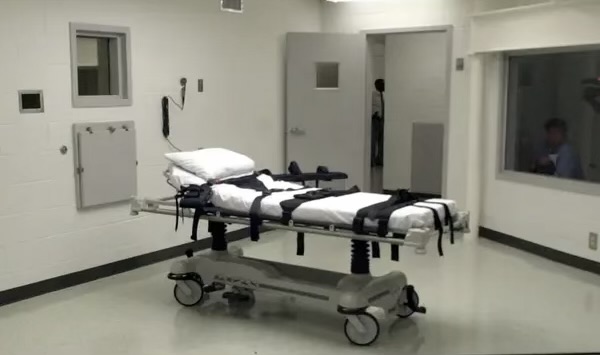
The death penalty has recently come under scrutiny following the execution of Kenneth Smith. Upon receiving his death sentence, Mr. Smith endured capital punishment twice, having previously survived a failed lethal injection attempt (Hoffman, 2024). Mr. Smith was successfully executed via nitrous gas in January of this year, and it is stated that as he neared his second execution date, he began experiencing severe PTSD symptoms. Despite state attorneys stating that Smith would be unconscious in seconds, in reality, Smith did not draw his last breath until 32 minutes after the gas was first administered. Observers stated that Smith was alert for several minutes, followed by him shaking and writhing for approximately 2 minutes. While this type of death is both cruel and unusual, according to the eighth amendment it is also unconstitutional.
While the Kenneth Smith case sheds light on recent disturbing news regarding the death penalty, there are many other factors that play into why it should be abolished. The death penalty has deep-rooted bias and discrimination factors that cause more harm than good to society. The death penalty sentence targets the most vulnerable, marginalized individuals in our society. It is common that bias is used when sentencing innocent individuals to the death penalty. We need to ask ourselves, is it ethical to carry out death sentences if even one person is executed who is innocent? The death penalty comes with the inherent risk of executing someone who is innocent. Since 1973, at least 197 individuals have been exonerated (Innocence Database). 192 of these cases were due to, misidentification, insufficient evidence, perjury, false accusations, official misconduct, and inadequate legal defense (Innocence Database). In these cases, a thorough investigation from an unbiased party could have prevented these sentences. Potentially sentencing an innocent individual to death is a cruel and unjust punishment.
The death penalty has significant racial disparities that need to be addressed. The racial disparities within the death penalty began hundreds of years ago, but the bias trend gets increasingly worse. Two-thirds of people executed in the 1930s were Black, and by 1950, the population of African Americans in the South dropped to just 22% (Death Penalty, 2024). More recently in the United States, Black individuals make up approximately 41% of death row inmates despite making up only 12.4% of the U.S. population (Jones et al., 2022). A comprehensive study on the death penalty in North Carolina also indicated that the odds of being sentenced to the death penalty were 3.5 times higher when the victim of the crime is white (Facts about the Death Penalty, 2016). People of Color are more likely to be prosecuted for capital murder, given the death penalty, and executed, especially if the victim in the case is white (Death Penalty, 2024). Anti-discrimination bills, federal anti-lynching laws, and eradicating the death penalty are just a few ways we can work towards ending the racial discrimination associated with the death penalty and begin to right the wrongs of the past.
The death penalty has proven time and time again to be unethical, unjust, and biased towards People of Color. All three of those reasons should be more than enough evidence to abolish this punishment from the criminal justice system, but unfortunately it is not. An often-unspoken downside to the death penalty is the financial burden it causes for the American people. It has been found that approximately $40,000 of American taxpayers’ money is spent per execution (Records..., 2021). How can the American government allow American citizens to waste their hard-earned money on a system that is proven to be unethical, unjust, biased, and not accurate?
With all of this being said, the majority of Americans do support the death penalty. It is important to acknowledge this because it highlights a significant disparity. Many individuals endorse the death penalty on the grounds of moral fairness- the belief that those who take a life should face a similar fate. However, at the same time, there is widespread recognition of the inherent risks (such as innocent deaths, racial disparities, and cost) associated with capital punishment, a sentiment shared by 78% of Americans. Our intention with this petition is not to delve into a moral debate over whether someone deserves to die for committing murder. Instead, we aim to emphasize the widely acknowledged risks which occur in our current system. Consequently, we argue that due to these recognized risks, there is a compelling need to abolish the current state of the death penalty. This petition is not only calling for support from those who do not morally endorse the death penalty, but for those that may agree with the death penalty in theory yet recognize its risks and acknowledge that as the death penalty stands as a practice in the United States, it cannot continue to exist.
76
The Issue
Why This Petition Matters
“Why do we kill people who are killing people, to show that killing people is wrong?” - Holly Near
The death penalty has recently come under scrutiny following the execution of Kenneth Smith. Upon receiving his death sentence, Mr. Smith endured capital punishment twice, having previously survived a failed lethal injection attempt (Hoffman, 2024). Mr. Smith was successfully executed via nitrous gas in January of this year, and it is stated that as he neared his second execution date, he began experiencing severe PTSD symptoms. Despite state attorneys stating that Smith would be unconscious in seconds, in reality, Smith did not draw his last breath until 32 minutes after the gas was first administered. Observers stated that Smith was alert for several minutes, followed by him shaking and writhing for approximately 2 minutes. While this type of death is both cruel and unusual, according to the eighth amendment it is also unconstitutional.
While the Kenneth Smith case sheds light on recent disturbing news regarding the death penalty, there are many other factors that play into why it should be abolished. The death penalty has deep-rooted bias and discrimination factors that cause more harm than good to society. The death penalty sentence targets the most vulnerable, marginalized individuals in our society. It is common that bias is used when sentencing innocent individuals to the death penalty. We need to ask ourselves, is it ethical to carry out death sentences if even one person is executed who is innocent? The death penalty comes with the inherent risk of executing someone who is innocent. Since 1973, at least 197 individuals have been exonerated (Innocence Database). 192 of these cases were due to, misidentification, insufficient evidence, perjury, false accusations, official misconduct, and inadequate legal defense (Innocence Database). In these cases, a thorough investigation from an unbiased party could have prevented these sentences. Potentially sentencing an innocent individual to death is a cruel and unjust punishment.
The death penalty has significant racial disparities that need to be addressed. The racial disparities within the death penalty began hundreds of years ago, but the bias trend gets increasingly worse. Two-thirds of people executed in the 1930s were Black, and by 1950, the population of African Americans in the South dropped to just 22% (Death Penalty, 2024). More recently in the United States, Black individuals make up approximately 41% of death row inmates despite making up only 12.4% of the U.S. population (Jones et al., 2022). A comprehensive study on the death penalty in North Carolina also indicated that the odds of being sentenced to the death penalty were 3.5 times higher when the victim of the crime is white (Facts about the Death Penalty, 2016). People of Color are more likely to be prosecuted for capital murder, given the death penalty, and executed, especially if the victim in the case is white (Death Penalty, 2024). Anti-discrimination bills, federal anti-lynching laws, and eradicating the death penalty are just a few ways we can work towards ending the racial discrimination associated with the death penalty and begin to right the wrongs of the past.
The death penalty has proven time and time again to be unethical, unjust, and biased towards People of Color. All three of those reasons should be more than enough evidence to abolish this punishment from the criminal justice system, but unfortunately it is not. An often-unspoken downside to the death penalty is the financial burden it causes for the American people. It has been found that approximately $40,000 of American taxpayers’ money is spent per execution (Records..., 2021). How can the American government allow American citizens to waste their hard-earned money on a system that is proven to be unethical, unjust, biased, and not accurate?
With all of this being said, the majority of Americans do support the death penalty. It is important to acknowledge this because it highlights a significant disparity. Many individuals endorse the death penalty on the grounds of moral fairness- the belief that those who take a life should face a similar fate. However, at the same time, there is widespread recognition of the inherent risks (such as innocent deaths, racial disparities, and cost) associated with capital punishment, a sentiment shared by 78% of Americans. Our intention with this petition is not to delve into a moral debate over whether someone deserves to die for committing murder. Instead, we aim to emphasize the widely acknowledged risks which occur in our current system. Consequently, we argue that due to these recognized risks, there is a compelling need to abolish the current state of the death penalty. This petition is not only calling for support from those who do not morally endorse the death penalty, but for those that may agree with the death penalty in theory yet recognize its risks and acknowledge that as the death penalty stands as a practice in the United States, it cannot continue to exist.
Petition Updates
Share this petition
Petition created on April 7, 2024