
End the Use of Rodenticides on University of Saskatchewan Grounds
The Issue
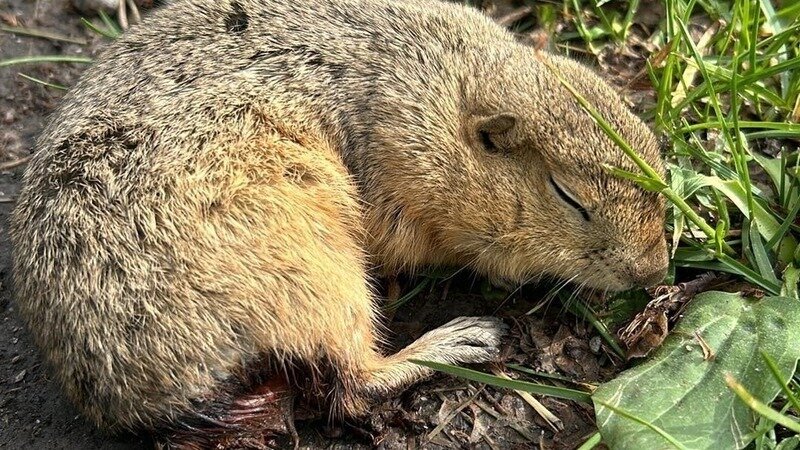
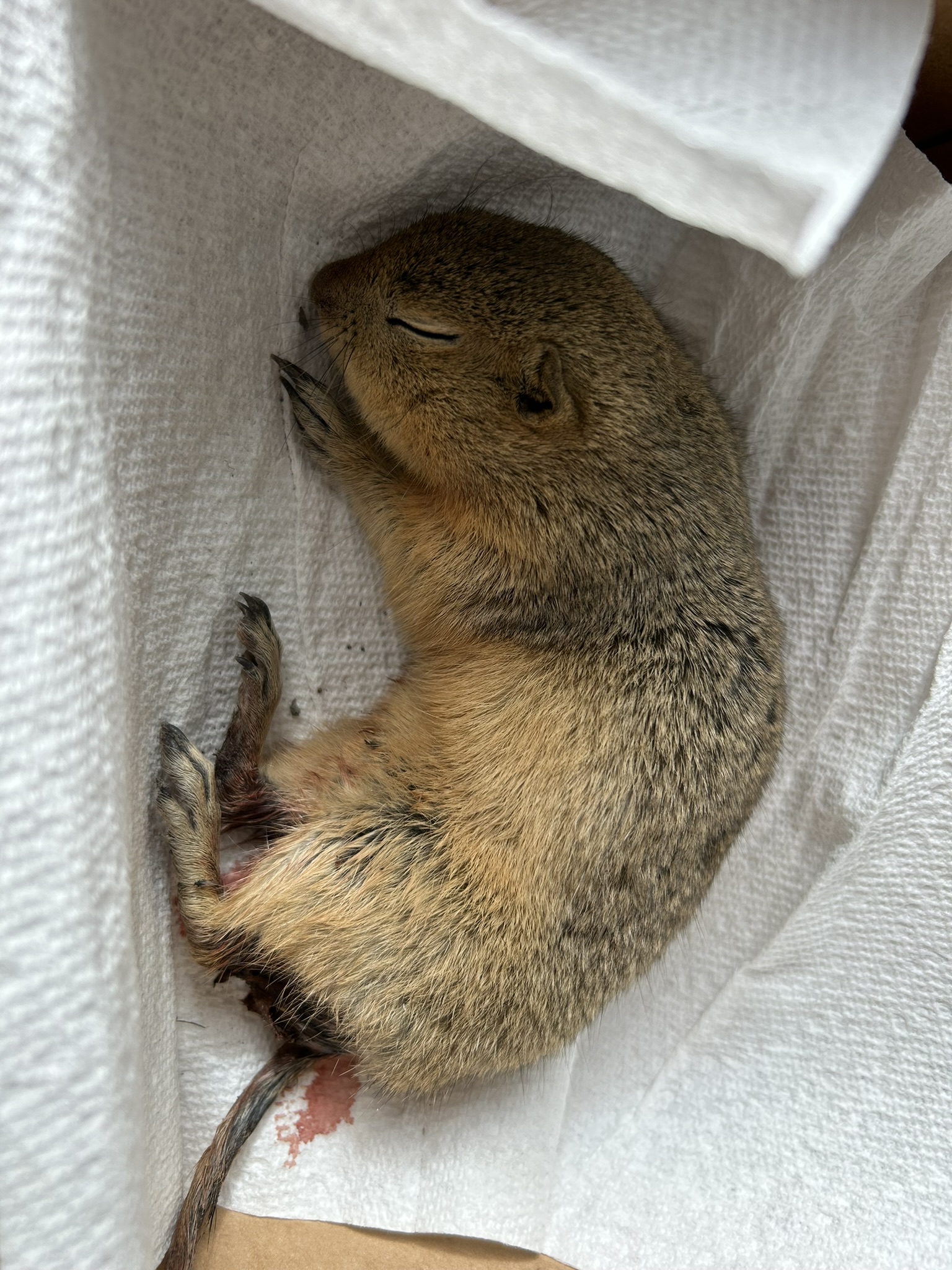
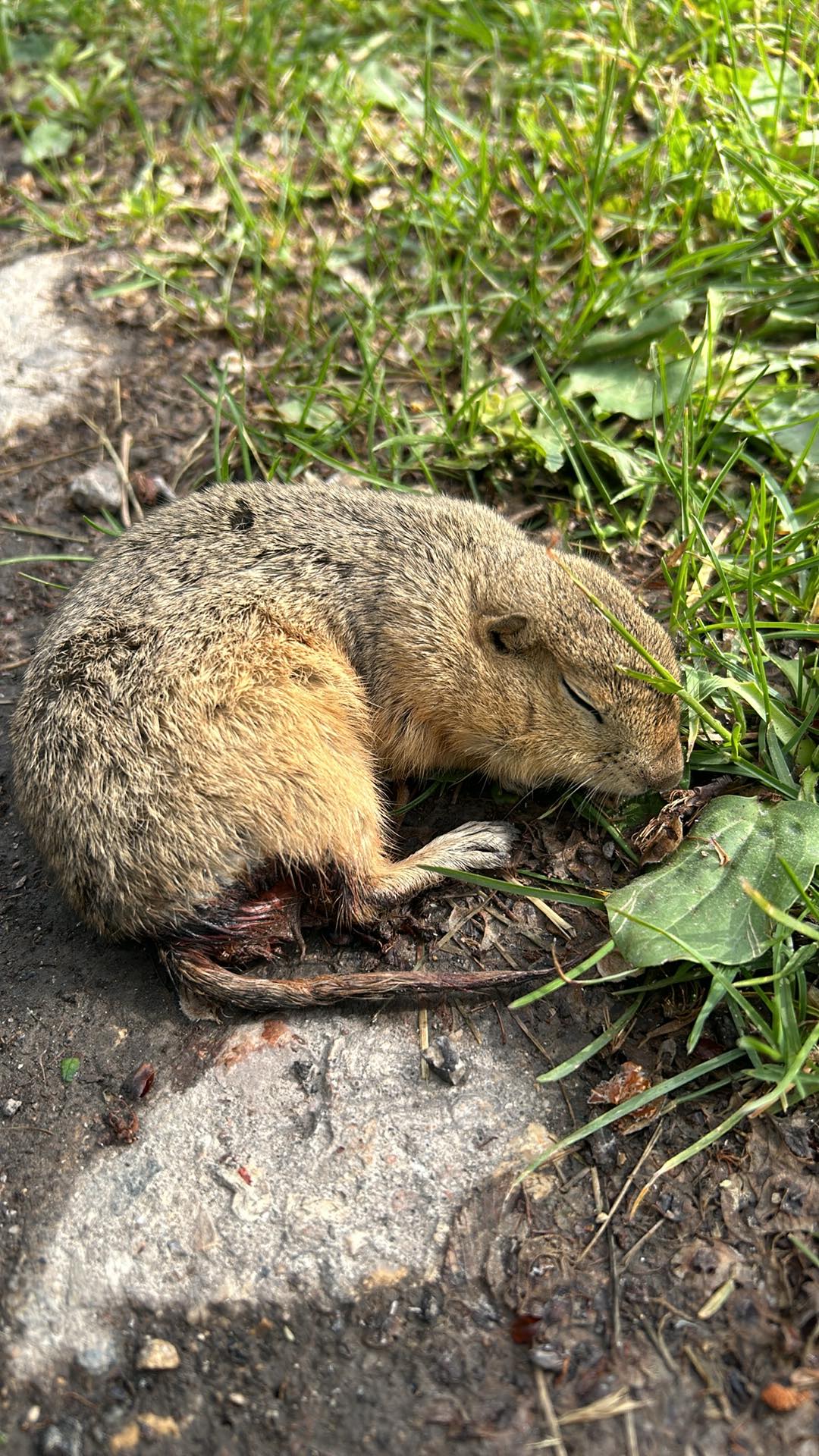
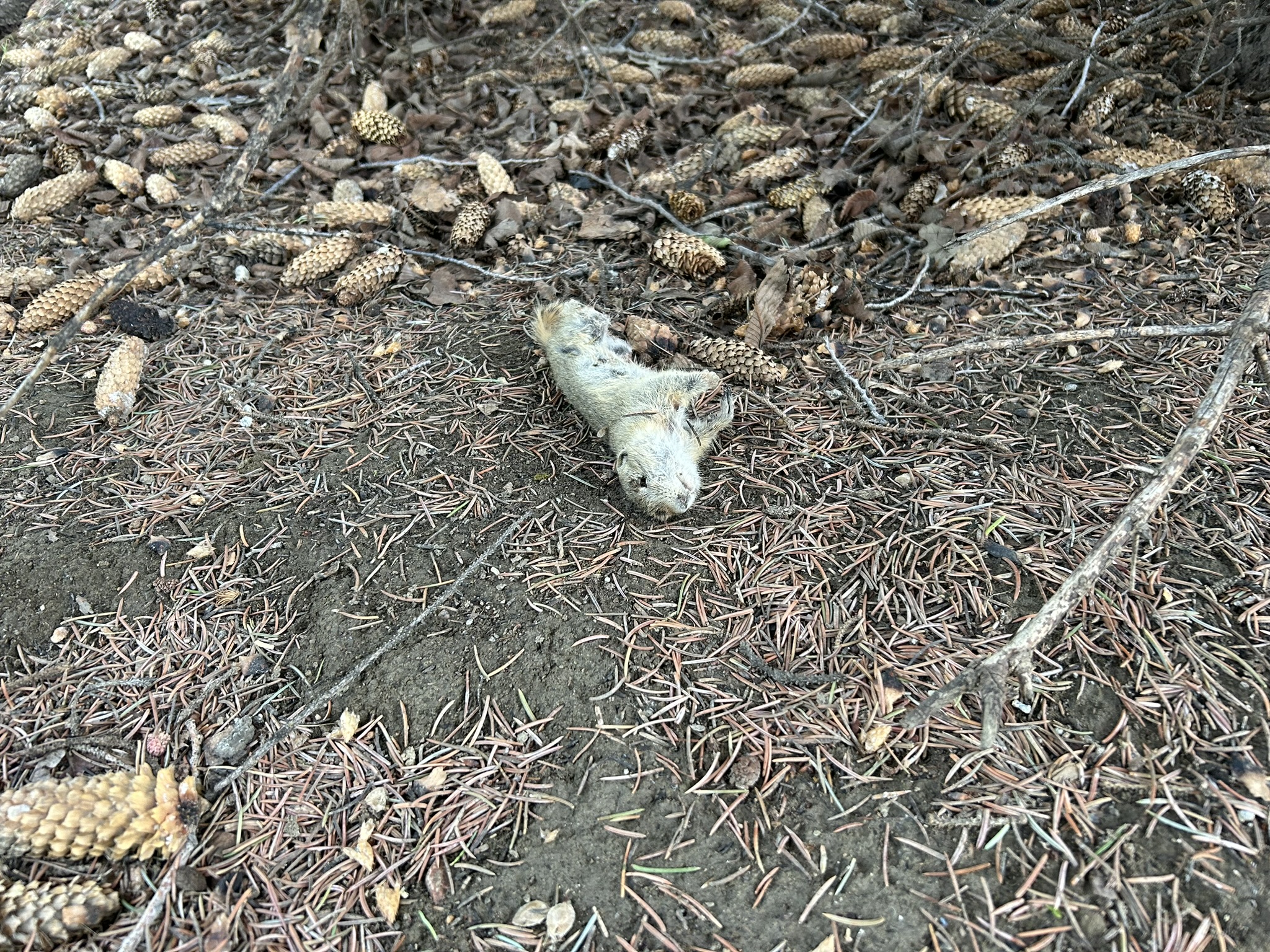
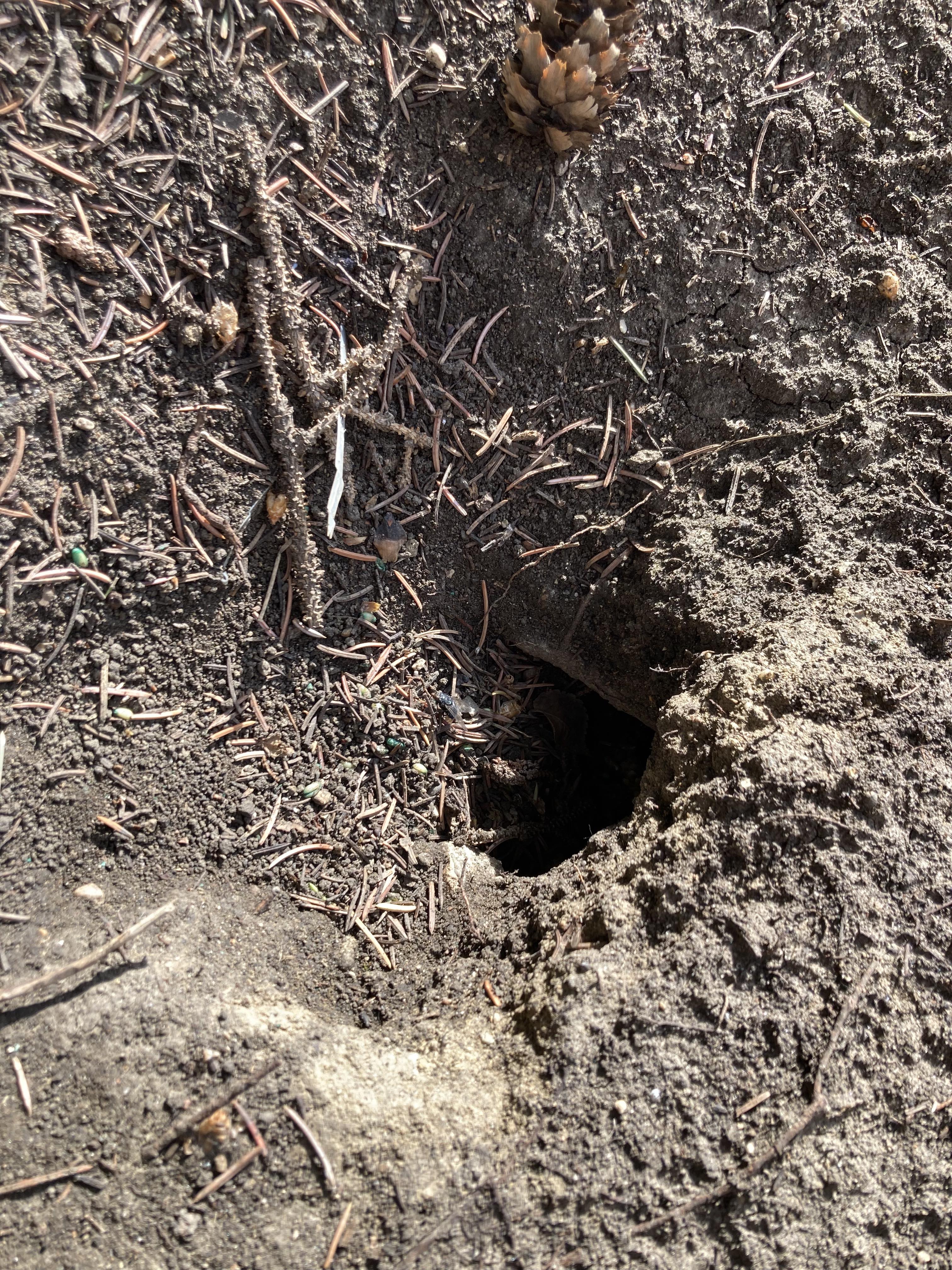
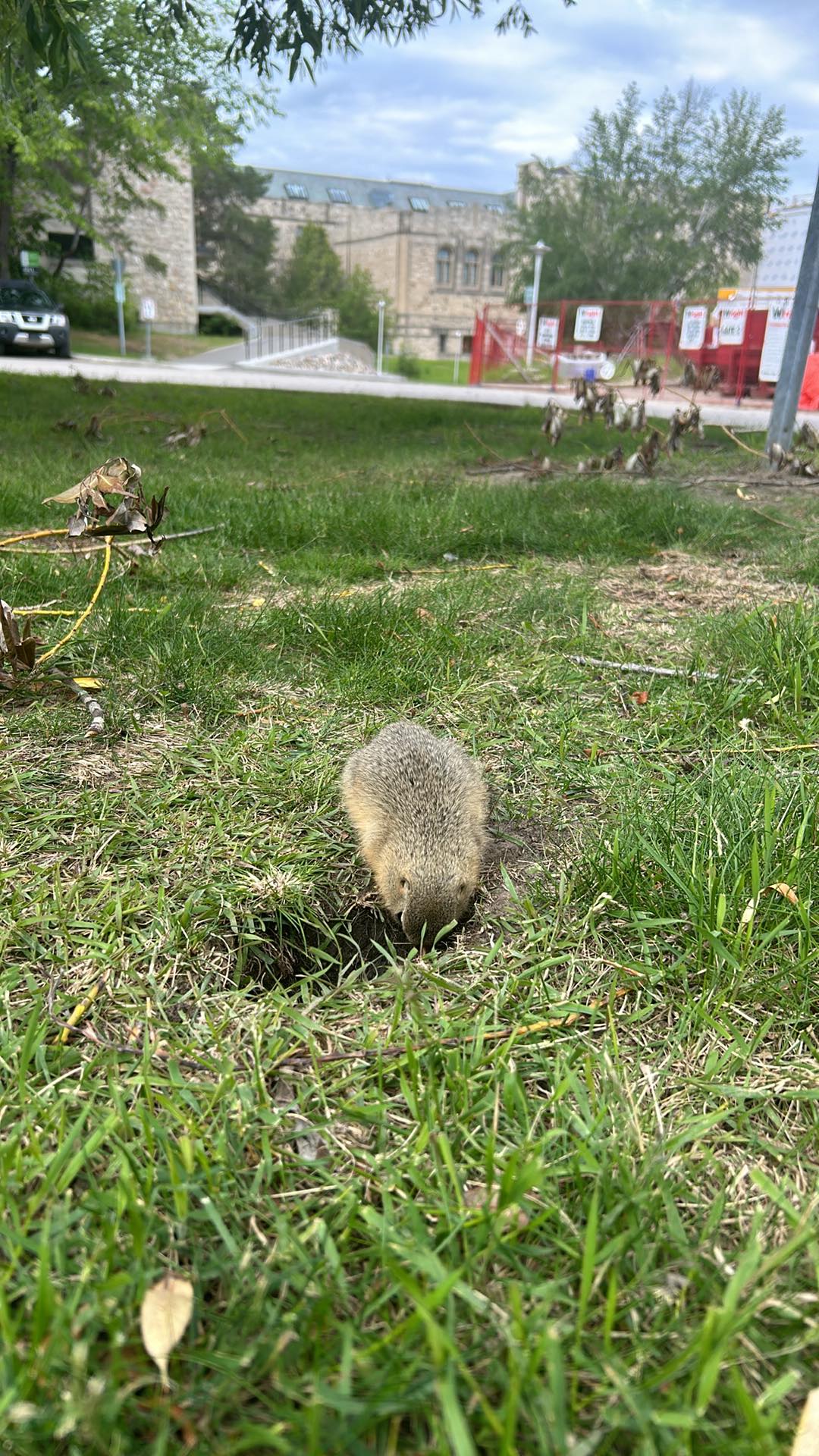
Walking through the University of Saskatchewan's serene campus environment, you hear the birds chirping and people talking; you take in the smell of flowers and fresh-cut grass, and as of lately, you see the numerous dead or writhing bodies of Richardson's ground squirrels as they succumb slowly and painfully to the rodenticide bait scattered throughout campus grounds.
You shouldn't be surprised; the use of poison bait is not new, but you should be outraged. In 2022, the University of Saskatchewan used chlorophacinone, an anticoagulant that results in internal bleeding, eventually causing a death that is neither quick nor painless. Despite the public outcry that arose against the University using these poisons on campus, the University continues to use this green, seed-like bait. Rozol, the chlorophacinone anticoagulant rodenticide used by the University of Saskatchewan, causes ataxia, muscle tremors, convulsions, internal bleeding, and, ultimately, death in any animal that consumes this poison. A 'sick' ground squirrel is easy prey for any predator. However, the predator will eventually share the fate of the ground squirrel after consuming the poisoned rodent.
Poisoned seed placed at ground squirrel burrow entrances poses a severe risk to non-target species. These species can ingest the toxin directly or through poisoned ground squirrel carcasses, leading to secondary poisoning. This indiscriminate poison endangers all animals, including pets that might encounter the bait or carcasses on campus during a moment of inattention.
There are many alternative humane methods for controlling rodent populations like Richardson’s ground squirrels, including, but not limited to, fertility control, exclusion techniques, and biological control. The most efficient tool of all is snap traps. Snap traps provide a quick and efficient death with minimal suffering and no residual effects on the surrounding environment or other wildlife/domestic animals.
The University of Saskatchewan has a responsibility to choose methods of population control that are ethical, humane and environmentally conscious. They also have the responsibility to uphold the values and goals outlined in the Office of Sustainability's Sustainable Grounds Management of Outdoor Spaces1, one of which outlines their work on Integrated Pest Management that involves "a variety of techniques and strategies … to eliminate or reduce the need for pesticides." Why would this goal not include rodenticides? The same statement consists of the University's ideals, emphasizing that "how we design, maintain, and use our outdoor spaces has sustainability implications." If their idea of sustainability includes opting for the most convenient Band-Aid solutions, I urge them to reconsider their options. The statement also mentions, "…Facilities Management Division's Grounds Department strives to maintain and develop this landscape using the most sustainable practices possible, " a standard that poison cannot meet.
It is time for the University of Saskatchewan to shift its approach and lead other universities nationwide to adopt ethical and viable solutions to population management on campus grounds. According to the University Plan 2025 Sustainability Strategy, Commitment 3, Empower to Action2, "The Sustainable Development Goals (SDGs) represent a great opportunity for research-intensive universities to enhance the cognitive realm and move beyond into other realms, unlearning some things and learning some new ways of seeing and of being. A shift in values [is needed] as, societally, we have become accustomed to living our lives based on values that are increasingly at odds with a sustainable planet (Hoffman, 2019). This shift is one of the most challenging things to achieve; it requires grassroots changes, combined with formal (rules and regulations) and informal (norms) changes, to deeply root these changes in society". It's time the University of Saskatchewan unlearns the historical ways of ground squirrel population control via poison and starts transitioning into sustainable and environmentally conscious ways of population control. Using poison on campus is at odds with living on a sustainable planet. Not only does secondary poisoning affect other animals, but the suffering of the target species is unnecessary to achieve the desired population-reducing results. Additionally, grassroots changes come locally – use and learn from the 'ordinary' people that comprise the main body of the University's populace, the surrounding communities, the public, and other organizations to come to these changes.
How can the University adhere to these statements when it minimizes its continued use of rodenticides on campus? How will changes be made when the University adopts an attitude of "not in my backyard"? Who approved the use of rodenticides? Where is the community involvement? As students, alumni, pet owners, and wildlife advocates, we refuse to accept wildlife suffering as a price for convenience in the form of rodenticide bait. We demand that the University of Saskatchewan substitute the use of rodenticides with other humane population control methods.
1 Outdoor Spaces - Office of Sustainability | University of Saskatchewan (usask.ca)
2 Sustainability Strategy - University Plan 2025 | University of Saskatchewan (usask.ca)

7,281
The Issue
Walking through the University of Saskatchewan's serene campus environment, you hear the birds chirping and people talking; you take in the smell of flowers and fresh-cut grass, and as of lately, you see the numerous dead or writhing bodies of Richardson's ground squirrels as they succumb slowly and painfully to the rodenticide bait scattered throughout campus grounds.
You shouldn't be surprised; the use of poison bait is not new, but you should be outraged. In 2022, the University of Saskatchewan used chlorophacinone, an anticoagulant that results in internal bleeding, eventually causing a death that is neither quick nor painless. Despite the public outcry that arose against the University using these poisons on campus, the University continues to use this green, seed-like bait. Rozol, the chlorophacinone anticoagulant rodenticide used by the University of Saskatchewan, causes ataxia, muscle tremors, convulsions, internal bleeding, and, ultimately, death in any animal that consumes this poison. A 'sick' ground squirrel is easy prey for any predator. However, the predator will eventually share the fate of the ground squirrel after consuming the poisoned rodent.
Poisoned seed placed at ground squirrel burrow entrances poses a severe risk to non-target species. These species can ingest the toxin directly or through poisoned ground squirrel carcasses, leading to secondary poisoning. This indiscriminate poison endangers all animals, including pets that might encounter the bait or carcasses on campus during a moment of inattention.
There are many alternative humane methods for controlling rodent populations like Richardson’s ground squirrels, including, but not limited to, fertility control, exclusion techniques, and biological control. The most efficient tool of all is snap traps. Snap traps provide a quick and efficient death with minimal suffering and no residual effects on the surrounding environment or other wildlife/domestic animals.
The University of Saskatchewan has a responsibility to choose methods of population control that are ethical, humane and environmentally conscious. They also have the responsibility to uphold the values and goals outlined in the Office of Sustainability's Sustainable Grounds Management of Outdoor Spaces1, one of which outlines their work on Integrated Pest Management that involves "a variety of techniques and strategies … to eliminate or reduce the need for pesticides." Why would this goal not include rodenticides? The same statement consists of the University's ideals, emphasizing that "how we design, maintain, and use our outdoor spaces has sustainability implications." If their idea of sustainability includes opting for the most convenient Band-Aid solutions, I urge them to reconsider their options. The statement also mentions, "…Facilities Management Division's Grounds Department strives to maintain and develop this landscape using the most sustainable practices possible, " a standard that poison cannot meet.
It is time for the University of Saskatchewan to shift its approach and lead other universities nationwide to adopt ethical and viable solutions to population management on campus grounds. According to the University Plan 2025 Sustainability Strategy, Commitment 3, Empower to Action2, "The Sustainable Development Goals (SDGs) represent a great opportunity for research-intensive universities to enhance the cognitive realm and move beyond into other realms, unlearning some things and learning some new ways of seeing and of being. A shift in values [is needed] as, societally, we have become accustomed to living our lives based on values that are increasingly at odds with a sustainable planet (Hoffman, 2019). This shift is one of the most challenging things to achieve; it requires grassroots changes, combined with formal (rules and regulations) and informal (norms) changes, to deeply root these changes in society". It's time the University of Saskatchewan unlearns the historical ways of ground squirrel population control via poison and starts transitioning into sustainable and environmentally conscious ways of population control. Using poison on campus is at odds with living on a sustainable planet. Not only does secondary poisoning affect other animals, but the suffering of the target species is unnecessary to achieve the desired population-reducing results. Additionally, grassroots changes come locally – use and learn from the 'ordinary' people that comprise the main body of the University's populace, the surrounding communities, the public, and other organizations to come to these changes.
How can the University adhere to these statements when it minimizes its continued use of rodenticides on campus? How will changes be made when the University adopts an attitude of "not in my backyard"? Who approved the use of rodenticides? Where is the community involvement? As students, alumni, pet owners, and wildlife advocates, we refuse to accept wildlife suffering as a price for convenience in the form of rodenticide bait. We demand that the University of Saskatchewan substitute the use of rodenticides with other humane population control methods.
1 Outdoor Spaces - Office of Sustainability | University of Saskatchewan (usask.ca)
2 Sustainability Strategy - University Plan 2025 | University of Saskatchewan (usask.ca)

Supporter Voices
Petition Updates
Share this petition
Petition created on July 2, 2024