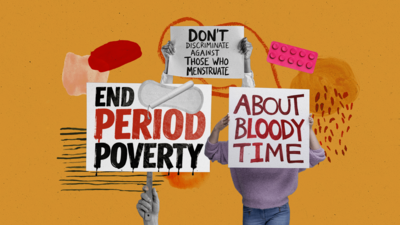

End Period Poverty: Free Menstrual Products in Texas Schools and Public Facilities
The Issue
Period poverty refers to the inability to afford or to access menstrual products as well as the education and awareness necessary for managing one's menstrual health (Jaafar et al., 2023). Pads and tampons are essential hygiene items, yet many women and girls are struggling to afford menstrual and hygiene products to simply take care of their health. The problem impacts women, in particular students, people who are homeless, and families with low incomes (UN Women, 2025). Period poverty ought to be treated not just as a personal hygiene issue but also as a health issue. When people do not have regular access to menstrual products, they end up missing school, work, appointments, or other everyday activities and some of them use the products for longer than is advised or turn to unsafe alternatives.
In the United States, two out of every five women and girls have difficulty affording and buying period products. According to the Alliance for Period Supplies, in Texas alone about 6,831,757 women and girls aged between 12 and 44 live below the federal poverty level. This means that around 1,100,712 Texans might find it hard to afford menstrual products while also having to pay for basic needs such as food, housing, and transportation. Nearly 60% of families in poverty suffer from financial difficulty and are unable to pay their bills or cope with unexpected expenses. Even though approximately 1,010,325 women in Texas between the ages of 12 and 44 get health coverage through Medicaid, Medical Assistance, or other government-supported schemes, this coverage usually does not include the materials needed for menstrual care. About 211,306 women take part in the Women, Infants, and Children Program (WIC), but WIC mainly offers nutritional support and does not cover menstrual products. This data shows that while current assistance programs can meet some health and nutritional requirements, there is still a large gap in access to essential menstrual items (Alliance for Period Supplies, 2026). Period poverty is an educational, economic, and public health issue, not merely a personal inconvenience.
Strategy To Address Social Issue
One strategy for addressing period poverty is to establish free menstrual product programs in community places such as homeless shelters, schools, and other public facilities. Rather than expecting women to find their own solutions, providing free menstrual products in public spaces can help reduce some of these barriers. This strategy makes changing the environments where people live, attend school, and access community services the main focus.
The first step in implementing the plan would be to educate the community on what period poverty is and how it affects women. Information and statistics about this issue could be shared through school and community events, flyers around the community, and social media. The goal would be to inform the community on issues that affect women and their employment, education, and their ability to participate in everyday activities. Research shows that 64.4% of high school students experienced period insecurity, and 33.6% reported missing school due to lack of adequate menstrual products Kuhlmann et al. (2024).
The next step is to expand the petition to call for schools, public facilities, and shelters to provide free period products in spaces that women will be in. The petition would identify local decision makers and organizations- such as school boards, shelter administrators, and city officials- that have the power to implement and support these programs. The request is for free product stations to be established in school bathrooms, public restrooms, and shelter facilities. A key aspect in the implementation of this strategy is to identify community partnerships that will be able to provide and maintain the products that will be placed in the public spaces. The main focus is to make products easily accessible for everyone who needs them while also reducing the stigma surrounding menstrual cycles. The products could be placed in private, convenient locations where individuals can access them, this is important for those who may feel embarrassed or uncomfortable explaining to someone that they cannot afford period products.
This petition calls upon Texas officials to create and finance a statewide menstrual product program. Publicly funded facilities, including public schools, shelters, libraries, recreation centers, and government buildings, should provide free access to pads and tampons. No Texan should miss educational or employment opportunities, experience unnecessary embarrassment, or compromise their health because they lack access to basic hygiene necessities. Expanding access to menstrual resources reduces gender-based disparities and protects individual health. Access to menstrual products is a fundamental necessity, not a privilege. Access to basic hygiene and dignity must never be treated as optional. Menstrual cycles remain a subject that many people find difficult to name directly.
References
Alliance for Period Supplies. (2026, July 21). Period poverty - Alliance for period supplies. Alliance for Period Supplies - It’s that time. *. https://allianceforperiodsupplies.org/period-poverty/?gad_source=1&gad_campaignid=14857369183&gbraid=0AAAAADvpB95ZWXWZV1aoPW8U4hnjmzqck&gclid=Cj0KCQjwk5nVBhDiARIsAHNGqafE-mL8DaKWw8LR2iVBI6z8Zq0wDNdHllyOfX5bINjuFFDc4h2Zf7YaAllgEALw_wcB
Jaafar, H., Ismail, S. Y., & Azzeri, A. (2023, July). Period poverty: A neglected public health issue. Korean journal of family medicine. https://pmc.ncbi.nlm.nih.gov/articles/PMC10372806/
Kuhlmann, A. S., Teni, M. T., Key, R., & Billingsley, C. (2024). Period product insecurity, school absenteeism, and use of school resources to obtain period products among high school students in St. Louis, Missouri. The Journal of School Nursing, 40(3), 256–264. https://doi.org/10.1177/10598405211069601
UN Women (2025, July 28). Period poverty – why millions of girls and women cannot afford their periods | UN women – headquarters. UN Women. https://www.unwomen.org/en/articles/explainer/period-poverty-why-millions-of-girls-and-women-cannot-afford-their-periods

82
The Issue
Period poverty refers to the inability to afford or to access menstrual products as well as the education and awareness necessary for managing one's menstrual health (Jaafar et al., 2023). Pads and tampons are essential hygiene items, yet many women and girls are struggling to afford menstrual and hygiene products to simply take care of their health. The problem impacts women, in particular students, people who are homeless, and families with low incomes (UN Women, 2025). Period poverty ought to be treated not just as a personal hygiene issue but also as a health issue. When people do not have regular access to menstrual products, they end up missing school, work, appointments, or other everyday activities and some of them use the products for longer than is advised or turn to unsafe alternatives.
In the United States, two out of every five women and girls have difficulty affording and buying period products. According to the Alliance for Period Supplies, in Texas alone about 6,831,757 women and girls aged between 12 and 44 live below the federal poverty level. This means that around 1,100,712 Texans might find it hard to afford menstrual products while also having to pay for basic needs such as food, housing, and transportation. Nearly 60% of families in poverty suffer from financial difficulty and are unable to pay their bills or cope with unexpected expenses. Even though approximately 1,010,325 women in Texas between the ages of 12 and 44 get health coverage through Medicaid, Medical Assistance, or other government-supported schemes, this coverage usually does not include the materials needed for menstrual care. About 211,306 women take part in the Women, Infants, and Children Program (WIC), but WIC mainly offers nutritional support and does not cover menstrual products. This data shows that while current assistance programs can meet some health and nutritional requirements, there is still a large gap in access to essential menstrual items (Alliance for Period Supplies, 2026). Period poverty is an educational, economic, and public health issue, not merely a personal inconvenience.
Strategy To Address Social Issue
One strategy for addressing period poverty is to establish free menstrual product programs in community places such as homeless shelters, schools, and other public facilities. Rather than expecting women to find their own solutions, providing free menstrual products in public spaces can help reduce some of these barriers. This strategy makes changing the environments where people live, attend school, and access community services the main focus.
The first step in implementing the plan would be to educate the community on what period poverty is and how it affects women. Information and statistics about this issue could be shared through school and community events, flyers around the community, and social media. The goal would be to inform the community on issues that affect women and their employment, education, and their ability to participate in everyday activities. Research shows that 64.4% of high school students experienced period insecurity, and 33.6% reported missing school due to lack of adequate menstrual products Kuhlmann et al. (2024).
The next step is to expand the petition to call for schools, public facilities, and shelters to provide free period products in spaces that women will be in. The petition would identify local decision makers and organizations- such as school boards, shelter administrators, and city officials- that have the power to implement and support these programs. The request is for free product stations to be established in school bathrooms, public restrooms, and shelter facilities. A key aspect in the implementation of this strategy is to identify community partnerships that will be able to provide and maintain the products that will be placed in the public spaces. The main focus is to make products easily accessible for everyone who needs them while also reducing the stigma surrounding menstrual cycles. The products could be placed in private, convenient locations where individuals can access them, this is important for those who may feel embarrassed or uncomfortable explaining to someone that they cannot afford period products.
This petition calls upon Texas officials to create and finance a statewide menstrual product program. Publicly funded facilities, including public schools, shelters, libraries, recreation centers, and government buildings, should provide free access to pads and tampons. No Texan should miss educational or employment opportunities, experience unnecessary embarrassment, or compromise their health because they lack access to basic hygiene necessities. Expanding access to menstrual resources reduces gender-based disparities and protects individual health. Access to menstrual products is a fundamental necessity, not a privilege. Access to basic hygiene and dignity must never be treated as optional. Menstrual cycles remain a subject that many people find difficult to name directly.
References
Alliance for Period Supplies. (2026, July 21). Period poverty - Alliance for period supplies. Alliance for Period Supplies - It’s that time. *. https://allianceforperiodsupplies.org/period-poverty/?gad_source=1&gad_campaignid=14857369183&gbraid=0AAAAADvpB95ZWXWZV1aoPW8U4hnjmzqck&gclid=Cj0KCQjwk5nVBhDiARIsAHNGqafE-mL8DaKWw8LR2iVBI6z8Zq0wDNdHllyOfX5bINjuFFDc4h2Zf7YaAllgEALw_wcB
Jaafar, H., Ismail, S. Y., & Azzeri, A. (2023, July). Period poverty: A neglected public health issue. Korean journal of family medicine. https://pmc.ncbi.nlm.nih.gov/articles/PMC10372806/
Kuhlmann, A. S., Teni, M. T., Key, R., & Billingsley, C. (2024). Period product insecurity, school absenteeism, and use of school resources to obtain period products among high school students in St. Louis, Missouri. The Journal of School Nursing, 40(3), 256–264. https://doi.org/10.1177/10598405211069601
UN Women (2025, July 28). Period poverty – why millions of girls and women cannot afford their periods | UN women – headquarters. UN Women. https://www.unwomen.org/en/articles/explainer/period-poverty-why-millions-of-girls-and-women-cannot-afford-their-periods
The Decision Makers

Supporter Voices
Petition Updates
Share this petition
Petition created on September 27, 2026