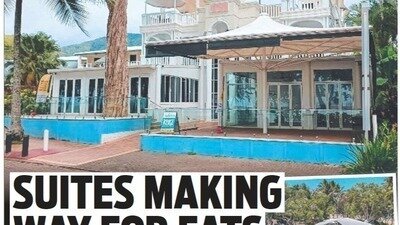

DON’T LET ONE DEVELOPMENT CHANGE PALM COVE FOREVER!
The issue
95% of our community wants Palm Cove’s village character retained. The proposed Sarayi redevelopment will adversely impact the peaceful, low-rise character that makes our village unique.
THIS IS HOW PALM COVE CHANGES.
One inappropriate development at a time.
Chief Executive Officer
Cairns Regional Council
PO Box 359
Cairns QLD 4870
Attn: Dan O’Connor, Senior Planning Officer
Re: Development Application 14172/2026 – Material Change of Use for Hotel
95–97 Williams Esplanade, Palm Cove – Lot 23 on RP245585
Dear Mr O’Connor,
We, the undersigned residents, ratepayers, business owners and visitors with an interest in Palm Cove, write to express our strong opposition to Development Application 14172/2026 for a Material Change of Use to “Hotel” at 95–97 Williams Esplanade, Palm Cove (Sarayi).
We acknowledge that the application is code assessable. However, we respectfully request that Council take these representations, and the attached petition, into account when deciding whether the proposal satisfies the applicable assessment benchmarks under Cairns Plan 2016, the Planning Act 2016, the Planning Regulation 2017 and the Far North Queensland Regional Plan 2026.
Our concerns relate to:
• whether the application is properly made, given the proposed use of State‑owned road reserve;
• the scale and intensity of the proposed Hotel use and its compatibility with the Tourist Accommodation Zone; and
• unresolved impacts on parking, traffic, noise and public land in a sensitive beachfront tourist area.
1.Properly made application and road reserve
The proposal incorporates about 116 m² of Williams Esplanade road reserve (outdoor dining) into the Hotel use. As the State owns this land, written landowner consent is required under s51 of the Planning Act 2016 for development involving use of road reserve beyond normal access. We understand no such consent has been provided.
Unless and until State consent is obtained and documented, the application appears not to be properly made and therefore not capable of lawful decision. In any event, intensifying private commercial use of this public beachfront land raises important questions about legal authority, accessibility, liquor licensing, development intensity, parking calculations and whether ongoing occupation remains in the public interest.
2. Conflict with Tourist Accommodation Zone and tourism character
Palm Cove’s success depends on its low‑scale, landscaped, relaxed village character. The Far North Queensland Regional Plan 2026 recognises the Northern Beaches as key tourism assets and seeks development that protects and enhances the destination performance of tourism villages.
The site is in the Tourist Accommodation Zone, intended primarily for short‑term accommodation, with only small‑scale supporting uses that do not detract from amenity. Relevant outcomes (including PO3, PO4 and PO7) require that non‑residential uses be of appropriate scale, serve the local community and not adversely affect tropical, tourist and residential character through traffic, noise or other impacts.
The proposal would convert a facility with about 300 m² of shop/restaurant use and 26 suites into an 816 m² Hotel (GFA plus outdoor/licensed area) with 22 suites and 13 parking spaces. This appears to function as a destination drinking and entertainment venue rather than a modest, ancillary facility for on‑site guests, and therefore conflicts with the stated intent of the zone.
3. Noise and amenity of surrounding accommodation
The application proposes extensive rooftop and outdoor Hotel areas with amplified music and entertainment, but provides no Noise Impact Assessment. The site is closely surrounded by sensitive uses (short‑term accommodation, resorts, residences and beachfront public spaces) that rely on a quiet, restful environment.
Under the Environmental Performance Code (including PO3 and PO7), development must be designed and operated to avoid or suitably mitigate noise impacts on sensitive uses, including by limiting operating hours. Without an independent acoustic assessment of realistic worst‑case scenarios (simultaneous use of all Hotel areas, peak patronage and late‑night operations), there is no evidentiary basis to conclude that noise impacts can be managed or that enforceable conditions could ensure compliance.
4. Parking, traffic and transport network impacts
Using Cairns Plan’s Parking and Access Code rates, the existing use would nominally require around 31.5 spaces, while the proposed Hotel (816 m² licensed GFA plus 22 suites) would require approximately 70.9 spaces. Only 13 spaces (8 onsite and 5 on‑street) are identified, implying a shortfall of about 58 spaces—over 80% below the scheme requirement—with no detailed justification.
Such a deficit strongly suggests that the site cannot support the proposed intensity of use without exporting parking demand into surrounding streets and public areas, contrary to the purpose of the Parking and Access Code.
This shortfall directly affects traffic outcomes. A larger Hotel is likely to increase private vehicle trips, taxis/rideshare movements, deliveries, staff trips and late‑night circulation as drivers seek scarce parking. While previous intensifications on this site have required a Traffic Impact Assessment, none has been provided for this substantially larger Hotel proposal.
Under the Transport Network Overlay Code (including PO1 and AO1.2), development must support the road hierarchy and not compromise the safety and efficiency of the transport network. Given the constrained nature of Williams Esplanade, the absence of a Traffic Impact Assessment, and the extant approval for an additional 33 short‑term accommodation units, it has not been demonstrated that these requirements are met.
5. Strategic and cumulative impacts
The recently adopted Far North Queensland Regional Plan 2026, not yet fully integrated into Cairns Plan, highlights the need to protect the character and performance of tourism villages along the Northern Beaches. Palm Cove’s appeal depends on its village character, pedestrian‑friendly beachfront, high‑quality public realm and manageable traffic and parking.
Council should consider the cumulative effect of incremental intensification along the beachfront—especially from large licensed Hotel uses—on noise, parking pressure, traffic circulation and visitor experience. Those cumulative effects risk undermining the very tourism amenity that planning policy seeks to protect.
Conclusion and request
For these reasons, we request that Cairns Regional Council:
Refuses the Development Application 14172/2026 in its present form, on the basis that it has not demonstrated compliance with key assessment benchmarks, including:
- the Tourist Accommodation Zone Code (PO3, PO4, PO7 and related overall outcomes);
- the Parking and Access Code, given the substantial shortfall against the calculated requirement;
- the Environmental Performance Code, in the absence of a Noise Impact Assessment for nearby sensitive uses;
- the Transport Network Overlay Code, in the absence of a Traffic Impact Assessment; and
- the Far North Queensland Regional Plan 2026, which seeks to protect the character and destination performance of Palm Cove.
If Council is not minded to refuse the application outright, we request that it at least require comprehensive, independent expert assessments of parking, traffic and noise under realistic maximum operating scenarios, and critically consider whether any conditions could genuinely resolve the identified conflicts.
We support appropriate tourism and hospitality investment in Palm Cove. However, new development should enhance the village and fit within its planning framework—not impose impacts that the site itself cannot reasonably accommodate.
Yours faithfully,
Palm Cove Residents, Business Owners and Tourists
[Petition signatures attached]
Please sign this petition to demand transparency and community involvement in the development process

433
The issue
95% of our community wants Palm Cove’s village character retained. The proposed Sarayi redevelopment will adversely impact the peaceful, low-rise character that makes our village unique.
THIS IS HOW PALM COVE CHANGES.
One inappropriate development at a time.
Chief Executive Officer
Cairns Regional Council
PO Box 359
Cairns QLD 4870
Attn: Dan O’Connor, Senior Planning Officer
Re: Development Application 14172/2026 – Material Change of Use for Hotel
95–97 Williams Esplanade, Palm Cove – Lot 23 on RP245585
Dear Mr O’Connor,
We, the undersigned residents, ratepayers, business owners and visitors with an interest in Palm Cove, write to express our strong opposition to Development Application 14172/2026 for a Material Change of Use to “Hotel” at 95–97 Williams Esplanade, Palm Cove (Sarayi).
We acknowledge that the application is code assessable. However, we respectfully request that Council take these representations, and the attached petition, into account when deciding whether the proposal satisfies the applicable assessment benchmarks under Cairns Plan 2016, the Planning Act 2016, the Planning Regulation 2017 and the Far North Queensland Regional Plan 2026.
Our concerns relate to:
• whether the application is properly made, given the proposed use of State‑owned road reserve;
• the scale and intensity of the proposed Hotel use and its compatibility with the Tourist Accommodation Zone; and
• unresolved impacts on parking, traffic, noise and public land in a sensitive beachfront tourist area.
1.Properly made application and road reserve
The proposal incorporates about 116 m² of Williams Esplanade road reserve (outdoor dining) into the Hotel use. As the State owns this land, written landowner consent is required under s51 of the Planning Act 2016 for development involving use of road reserve beyond normal access. We understand no such consent has been provided.
Unless and until State consent is obtained and documented, the application appears not to be properly made and therefore not capable of lawful decision. In any event, intensifying private commercial use of this public beachfront land raises important questions about legal authority, accessibility, liquor licensing, development intensity, parking calculations and whether ongoing occupation remains in the public interest.
2. Conflict with Tourist Accommodation Zone and tourism character
Palm Cove’s success depends on its low‑scale, landscaped, relaxed village character. The Far North Queensland Regional Plan 2026 recognises the Northern Beaches as key tourism assets and seeks development that protects and enhances the destination performance of tourism villages.
The site is in the Tourist Accommodation Zone, intended primarily for short‑term accommodation, with only small‑scale supporting uses that do not detract from amenity. Relevant outcomes (including PO3, PO4 and PO7) require that non‑residential uses be of appropriate scale, serve the local community and not adversely affect tropical, tourist and residential character through traffic, noise or other impacts.
The proposal would convert a facility with about 300 m² of shop/restaurant use and 26 suites into an 816 m² Hotel (GFA plus outdoor/licensed area) with 22 suites and 13 parking spaces. This appears to function as a destination drinking and entertainment venue rather than a modest, ancillary facility for on‑site guests, and therefore conflicts with the stated intent of the zone.
3. Noise and amenity of surrounding accommodation
The application proposes extensive rooftop and outdoor Hotel areas with amplified music and entertainment, but provides no Noise Impact Assessment. The site is closely surrounded by sensitive uses (short‑term accommodation, resorts, residences and beachfront public spaces) that rely on a quiet, restful environment.
Under the Environmental Performance Code (including PO3 and PO7), development must be designed and operated to avoid or suitably mitigate noise impacts on sensitive uses, including by limiting operating hours. Without an independent acoustic assessment of realistic worst‑case scenarios (simultaneous use of all Hotel areas, peak patronage and late‑night operations), there is no evidentiary basis to conclude that noise impacts can be managed or that enforceable conditions could ensure compliance.
4. Parking, traffic and transport network impacts
Using Cairns Plan’s Parking and Access Code rates, the existing use would nominally require around 31.5 spaces, while the proposed Hotel (816 m² licensed GFA plus 22 suites) would require approximately 70.9 spaces. Only 13 spaces (8 onsite and 5 on‑street) are identified, implying a shortfall of about 58 spaces—over 80% below the scheme requirement—with no detailed justification.
Such a deficit strongly suggests that the site cannot support the proposed intensity of use without exporting parking demand into surrounding streets and public areas, contrary to the purpose of the Parking and Access Code.
This shortfall directly affects traffic outcomes. A larger Hotel is likely to increase private vehicle trips, taxis/rideshare movements, deliveries, staff trips and late‑night circulation as drivers seek scarce parking. While previous intensifications on this site have required a Traffic Impact Assessment, none has been provided for this substantially larger Hotel proposal.
Under the Transport Network Overlay Code (including PO1 and AO1.2), development must support the road hierarchy and not compromise the safety and efficiency of the transport network. Given the constrained nature of Williams Esplanade, the absence of a Traffic Impact Assessment, and the extant approval for an additional 33 short‑term accommodation units, it has not been demonstrated that these requirements are met.
5. Strategic and cumulative impacts
The recently adopted Far North Queensland Regional Plan 2026, not yet fully integrated into Cairns Plan, highlights the need to protect the character and performance of tourism villages along the Northern Beaches. Palm Cove’s appeal depends on its village character, pedestrian‑friendly beachfront, high‑quality public realm and manageable traffic and parking.
Council should consider the cumulative effect of incremental intensification along the beachfront—especially from large licensed Hotel uses—on noise, parking pressure, traffic circulation and visitor experience. Those cumulative effects risk undermining the very tourism amenity that planning policy seeks to protect.
Conclusion and request
For these reasons, we request that Cairns Regional Council:
Refuses the Development Application 14172/2026 in its present form, on the basis that it has not demonstrated compliance with key assessment benchmarks, including:
- the Tourist Accommodation Zone Code (PO3, PO4, PO7 and related overall outcomes);
- the Parking and Access Code, given the substantial shortfall against the calculated requirement;
- the Environmental Performance Code, in the absence of a Noise Impact Assessment for nearby sensitive uses;
- the Transport Network Overlay Code, in the absence of a Traffic Impact Assessment; and
- the Far North Queensland Regional Plan 2026, which seeks to protect the character and destination performance of Palm Cove.
If Council is not minded to refuse the application outright, we request that it at least require comprehensive, independent expert assessments of parking, traffic and noise under realistic maximum operating scenarios, and critically consider whether any conditions could genuinely resolve the identified conflicts.
We support appropriate tourism and hospitality investment in Palm Cove. However, new development should enhance the village and fit within its planning framework—not impose impacts that the site itself cannot reasonably accommodate.
Yours faithfully,
Palm Cove Residents, Business Owners and Tourists
[Petition signatures attached]
Please sign this petition to demand transparency and community involvement in the development process
The Decision Makers
Supporter voices
Petition Updates
Share this petition
Petition created on 8 September 2026