Don’t introduce death traps for cyclists

Don’t introduce death traps for cyclists
The Issue
It has come to our attention that in the process of resurfacing the tarmac on Albert Rd in Woodstock Cape Town, the City is making significant changes to the cycling infrastructure. The changes include more on-street parking on Albert Road (outbound lane) and the narrowing of the painted class 3 cycle lane to a 0.9 to 1 m width.
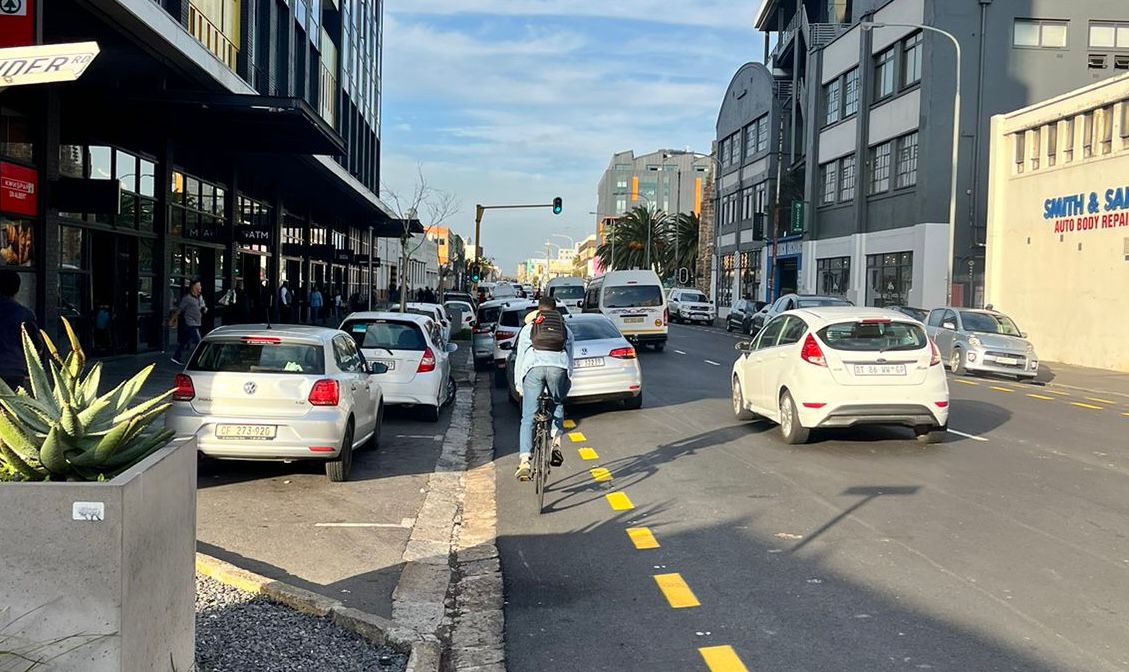
This violates the 2014 National NMT Facility guidelines and the city's guidelines (i.e. the 2021 Standards and Guidelines for Roads and Stormwater, Comprehensive Integrated Transport Plan and Municipal Spatial Development Framework visions).
The standards and guidelines specify that on a road like Albert Road with a speed limit of 60km/h, the cycle lane needs to be a minimum of 1.5m wide and separated from motorised traffic for the overall safety of cyclists. In this case, cyclists have been placed between parked vehicles and the flow of traffic, this will bring about conflicts with vehicles leaving parking bays.
In addition, this puts cyclists at risk of 'Dooring'. Dooring is the action of a driver opening their door without being aware of an incoming cyclist. It is a very common crash for riders and can cause serious injury or even death. This is very common along roads with cycle lanes that overlap the car door zone like in Albert Road. Often car also cars also park into the cycling lane or stop there for deliveries.
A 1m class 3 cycle lane is a death trap for cyclists, as most recently demonstrated by the tragic death of 17-year-old Calib de Cock who was ‘doored’ on Beach Rd in Sea Point when a passenger exited their parked car without checking for passing cyclists. The Beach Road dooring incident is not the first as there are many other incidents where cyclists have been injured.

This issue can be avoided by separating cycle lanes from vehicular traffic by adding physical barriers (bollards or raised kerbs) and adding a painted buffer zone between vehicles and cycle lanes. Given the important connection Albert Rd provides between Obz and the CBD, on-street parking should be removed and a protected class 3 cycling lane should be erected that adheres to the city's own guidelines of 1.5 metres.
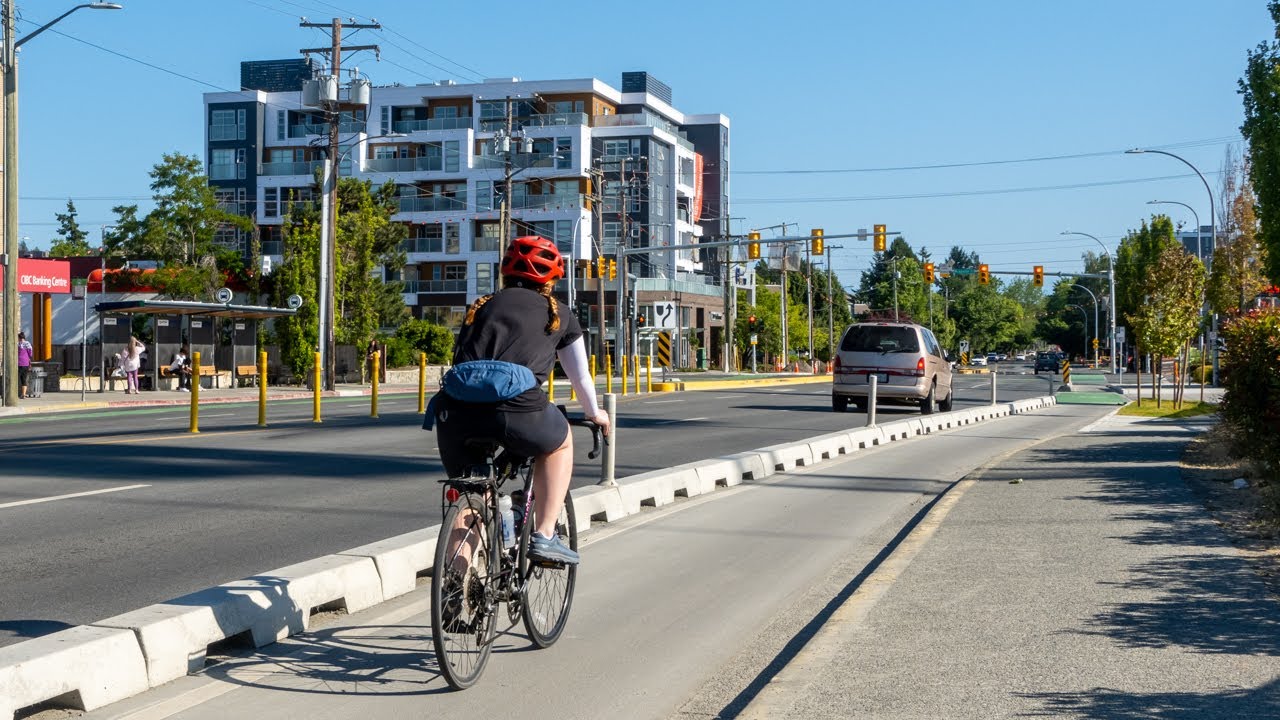
The city's own data on on-street parking has shown that parking is not used by customers to access the local businesses, but rather for all-day parking.
The City recently released their layout plans for the future NMT proposals in the Woodstock area and surrounds. The Woodstock Resident's Association and other organisations welcomed the class 2 and the protected class 3 cycling lane facilities proposed for Durham and Salt River Road that connect Victoria to Albert. During the comment, we also noted our support to see Albert also being transformed into a protected class 3 cycling lane.
The new narrow and dangerous painted cycle lane represents 10 steps backwards for the City compared to their recent progressive NMT proposals (complying with the CITP 2023-2028) that any cycling lane facility on a high-level road should have a dedicated barrier.
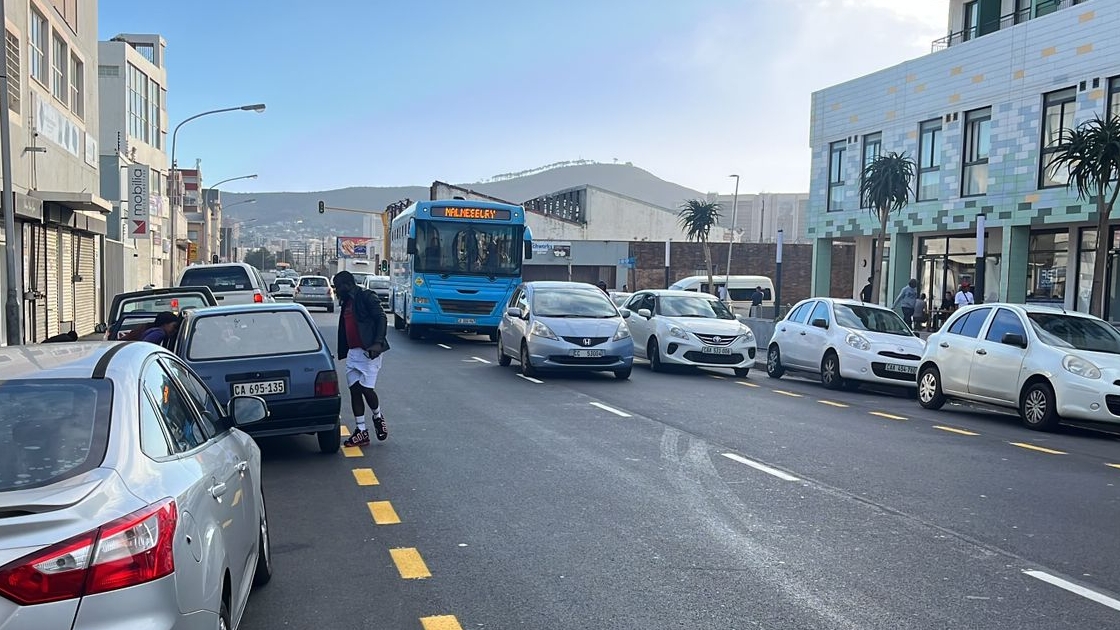
One of our main concerns is that the cycle infrastructure seen in the above images is being rolled out without any prior consultation of the public. The City needs to adhere to national guidelines and standards as well as their policies on developing more inclusive streets that are safe for all users.
We invite and challenge the Mayco member of Urban Mobility Roberto Quintas and and his officials (and contractors) and our Ward Councillor Ian McMahon to come and cycle Albert Road with on a busy weekday morning to see how unsafe it is.
Their own guidelines are there for a reason and we expect the City to adhere to them and consult the public before making changes.
Vulnerable road users deserve better!
—-
Please share widely! We will send send this petition to the City officials.
Join our WhatsApp group here.

788
The Issue
It has come to our attention that in the process of resurfacing the tarmac on Albert Rd in Woodstock Cape Town, the City is making significant changes to the cycling infrastructure. The changes include more on-street parking on Albert Road (outbound lane) and the narrowing of the painted class 3 cycle lane to a 0.9 to 1 m width.
This violates the 2014 National NMT Facility guidelines and the city's guidelines (i.e. the 2021 Standards and Guidelines for Roads and Stormwater, Comprehensive Integrated Transport Plan and Municipal Spatial Development Framework visions).
The standards and guidelines specify that on a road like Albert Road with a speed limit of 60km/h, the cycle lane needs to be a minimum of 1.5m wide and separated from motorised traffic for the overall safety of cyclists. In this case, cyclists have been placed between parked vehicles and the flow of traffic, this will bring about conflicts with vehicles leaving parking bays.
In addition, this puts cyclists at risk of 'Dooring'. Dooring is the action of a driver opening their door without being aware of an incoming cyclist. It is a very common crash for riders and can cause serious injury or even death. This is very common along roads with cycle lanes that overlap the car door zone like in Albert Road. Often car also cars also park into the cycling lane or stop there for deliveries.
A 1m class 3 cycle lane is a death trap for cyclists, as most recently demonstrated by the tragic death of 17-year-old Calib de Cock who was ‘doored’ on Beach Rd in Sea Point when a passenger exited their parked car without checking for passing cyclists. The Beach Road dooring incident is not the first as there are many other incidents where cyclists have been injured.
This issue can be avoided by separating cycle lanes from vehicular traffic by adding physical barriers (bollards or raised kerbs) and adding a painted buffer zone between vehicles and cycle lanes. Given the important connection Albert Rd provides between Obz and the CBD, on-street parking should be removed and a protected class 3 cycling lane should be erected that adheres to the city's own guidelines of 1.5 metres.
The city's own data on on-street parking has shown that parking is not used by customers to access the local businesses, but rather for all-day parking.
The City recently released their layout plans for the future NMT proposals in the Woodstock area and surrounds. The Woodstock Resident's Association and other organisations welcomed the class 2 and the protected class 3 cycling lane facilities proposed for Durham and Salt River Road that connect Victoria to Albert. During the comment, we also noted our support to see Albert also being transformed into a protected class 3 cycling lane.
The new narrow and dangerous painted cycle lane represents 10 steps backwards for the City compared to their recent progressive NMT proposals (complying with the CITP 2023-2028) that any cycling lane facility on a high-level road should have a dedicated barrier.
One of our main concerns is that the cycle infrastructure seen in the above images is being rolled out without any prior consultation of the public. The City needs to adhere to national guidelines and standards as well as their policies on developing more inclusive streets that are safe for all users.
We invite and challenge the Mayco member of Urban Mobility Roberto Quintas and and his officials (and contractors) and our Ward Councillor Ian McMahon to come and cycle Albert Road with on a busy weekday morning to see how unsafe it is.
Their own guidelines are there for a reason and we expect the City to adhere to them and consult the public before making changes.
Vulnerable road users deserve better!
—-
Please share widely! We will send send this petition to the City officials.
Join our WhatsApp group here.
788
Petition Updates
Share this petition
Petition created on 15 June 2024