

Do not make bears a "Designated Wildlife Species for Control" and take measures to prevent
The Issue
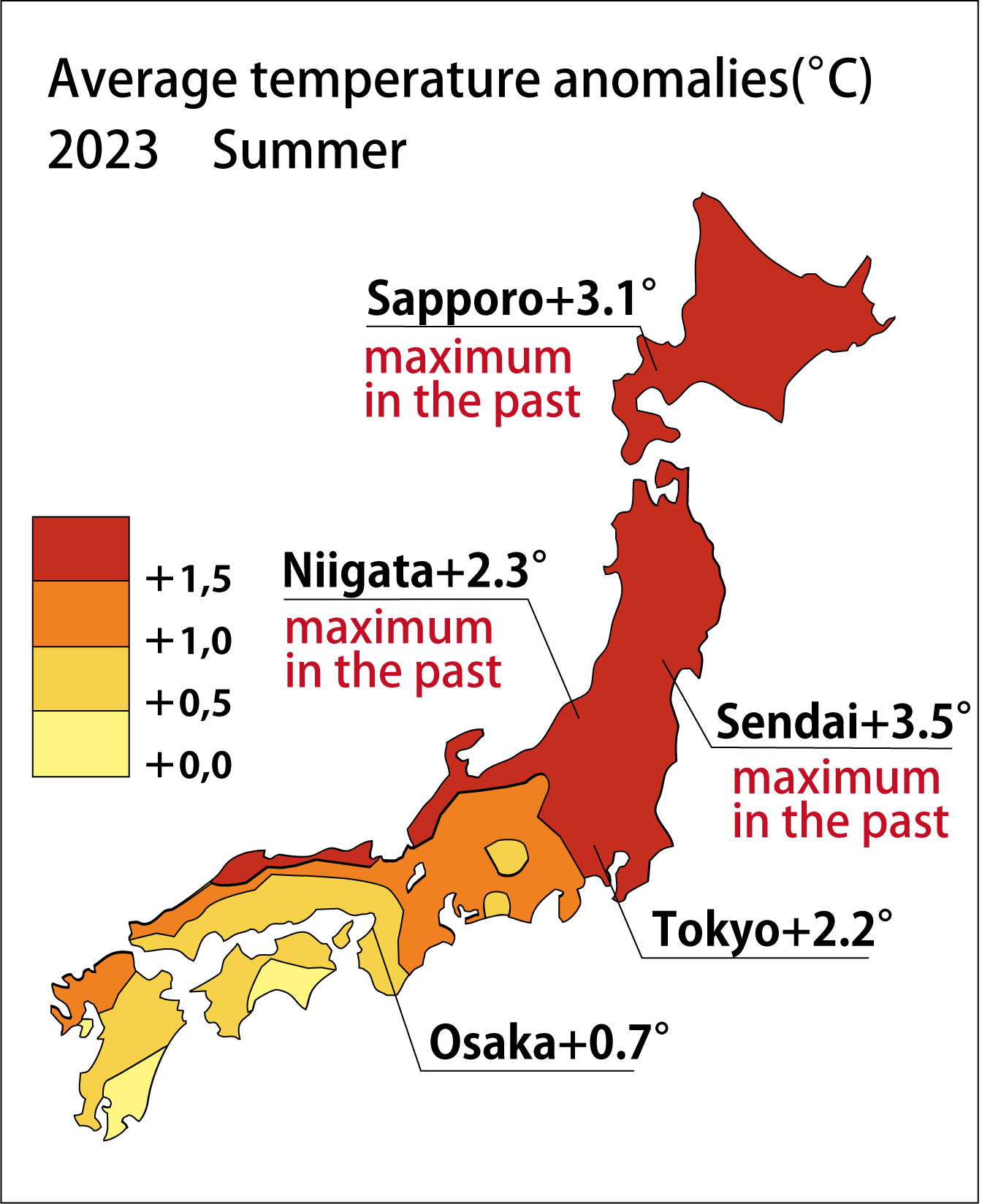
In the summer of 2023, northern Japan experienced the highest summer temperatures since 1898 (Japan Meteorological Agency, 2023). Due to THIS unnaturally high HEAT, failure in mountain crops, such as acorns was widespread. In autumn, MANY bears came out to villages, and even urban areas, in search of food before hibernation. 212 people were injured or killed by bears, making the largest number of human casualties caused by
bears in a year since 2007 (Ministry of the Environment, 2023). A RECORD-BREAKING NUMBER OF BEARS WERE EXTERMINATED, LEADING TO A SIGNIFICANT DECLINE IN THEIR POPULATION.
The governors of Hokkaido, Tohoku, and Niigata have requested that bears be DEFINED as “a designated controlled animal,” the same as deer and wild boar, to obtain subsidies for THE further trapping and killing of THEM. However, bears have weak reproductive capacity and their population is MUCH smaller than that of deer and wild boars. ANY MORE killing of bears could lead to their regional extinction. IN ADDITION, IN Akita Prefecture this year, DESPITE more than 50% of the estimated population of bears BEING trapped and killed, human casualties have still been reported. IT SEEMS THAT A BETTER STRATEGY WOULD BE TO PREVENT ENCOUNTERS BETWEEN HUMANS AND BEARS. I RESPECTFULLY PROPOSE OUR tax money should be used TO THIS END ON the following measures:
1.ASSIGN beast control specialists to municipalities to EDUCATE communities ON HOW BEST TO keep bears away FROM HUMAN HABITATION.
2.REGENERATE broadleaf forests in remote MOUNTAINOUS AREAS so that bears can return to their natural habitat.
3.FORBID THE EXTERMINATION OF bears in the mountains AND THE use OF traps containing honey or other strong attractants to lure bears out of the mountains and into the villages to be caught.
4.PUT regulations on renewable energy projects that REQUIRE THE CUTTING down of LARGE AREAS of forest, which are habitats for bears and countless other species.
Killing bears alone will NOT stop human casualties.

Why bears so important?
Bears are the umbrella species of Japanese OKUYAMA (remote mountains) forest. Protecting bears and their natural habitats means protecting many other species in the ecological community. The biodiversity of ample OKUYAMA forest is the key to rich spring water that supports our daily lives and industries.
About Japan Bear and Forest Society
The JBFS is non-profit, non-governmental, practice-oriented wildlife conservation society. Our main activities include: national trust, fieldwork (forest restoration, wild animal rescue) educational programs, and lobbying. Holding bears as our symbol, the mission of the JBFS is to restore forest and preserve its biodiversity which are the keys to rich resources that support our industries and lives of future generations.

Victory
The Issue
In the summer of 2023, northern Japan experienced the highest summer temperatures since 1898 (Japan Meteorological Agency, 2023). Due to THIS unnaturally high HEAT, failure in mountain crops, such as acorns was widespread. In autumn, MANY bears came out to villages, and even urban areas, in search of food before hibernation. 212 people were injured or killed by bears, making the largest number of human casualties caused by
bears in a year since 2007 (Ministry of the Environment, 2023). A RECORD-BREAKING NUMBER OF BEARS WERE EXTERMINATED, LEADING TO A SIGNIFICANT DECLINE IN THEIR POPULATION.
The governors of Hokkaido, Tohoku, and Niigata have requested that bears be DEFINED as “a designated controlled animal,” the same as deer and wild boar, to obtain subsidies for THE further trapping and killing of THEM. However, bears have weak reproductive capacity and their population is MUCH smaller than that of deer and wild boars. ANY MORE killing of bears could lead to their regional extinction. IN ADDITION, IN Akita Prefecture this year, DESPITE more than 50% of the estimated population of bears BEING trapped and killed, human casualties have still been reported. IT SEEMS THAT A BETTER STRATEGY WOULD BE TO PREVENT ENCOUNTERS BETWEEN HUMANS AND BEARS. I RESPECTFULLY PROPOSE OUR tax money should be used TO THIS END ON the following measures:
1.ASSIGN beast control specialists to municipalities to EDUCATE communities ON HOW BEST TO keep bears away FROM HUMAN HABITATION.
2.REGENERATE broadleaf forests in remote MOUNTAINOUS AREAS so that bears can return to their natural habitat.
3.FORBID THE EXTERMINATION OF bears in the mountains AND THE use OF traps containing honey or other strong attractants to lure bears out of the mountains and into the villages to be caught.
4.PUT regulations on renewable energy projects that REQUIRE THE CUTTING down of LARGE AREAS of forest, which are habitats for bears and countless other species.
Killing bears alone will NOT stop human casualties.
Why bears so important?
Bears are the umbrella species of Japanese OKUYAMA (remote mountains) forest. Protecting bears and their natural habitats means protecting many other species in the ecological community. The biodiversity of ample OKUYAMA forest is the key to rich spring water that supports our daily lives and industries.
About Japan Bear and Forest Society
The JBFS is non-profit, non-governmental, practice-oriented wildlife conservation society. Our main activities include: national trust, fieldwork (forest restoration, wild animal rescue) educational programs, and lobbying. Holding bears as our symbol, the mission of the JBFS is to restore forest and preserve its biodiversity which are the keys to rich resources that support our industries and lives of future generations.
Petition Updates
Share this petition
Petition created on January 17, 2024