Disclose CoI: Journal of Water Process Engineering (doi.org/10.1016/j.jwpe.2021.102478)

Disclose CoI: Journal of Water Process Engineering (doi.org/10.1016/j.jwpe.2021.102478)
The Issue
Scientists,
Pause Submitting To Journal of Water Process Engineering (JWPE)
Stop Reviewing For JWPE
Support Ethics
Sign the Petition NOW
Highlights:
· The complaint alleges that the authors and editors of the article failed to disclose their conflicts of interest (CoI), which is an ethical violation.
· Personal and professional relationships among authors and editor that could biased the peer review and the editorial decision, and compromised the integrity of the journal.
· Elsevier published a misleading corrigendum
· Elsevier has not taken any decisive action to address and rectify the issue
· The complaint urges Elsevier to publish a more accurate and comprehensive corrigendum that reflects the truth and apologizes to the readers.
This is a petition from CoI Detector, a team of researchers who are dedicated to exposing and preventing ethical violations in academic publishing. We have uncovered a serious case of undisclosed conflicts of interest (CoI) in a paper published by the Journal of Water Process Engineering (JWPE), an Elsevier journal.
We are launching this petition to urge all researchers who care about ethics and quality in academic publishing to join us in our campaign. By signing this petition, you will send a clear message to Elsevier that you do not tolerate any ethical breaches in their journals. You will also show your support for the anonymous JWPE reader who brought this issue to our attention. Together, we can hold Elsevier accountable and protect the reputation of our scientific community.
Please sign this petition and share it with your colleagues and friends. Let’s make a difference and uphold the highest standards of ethics in publishing! Thank you for your support!
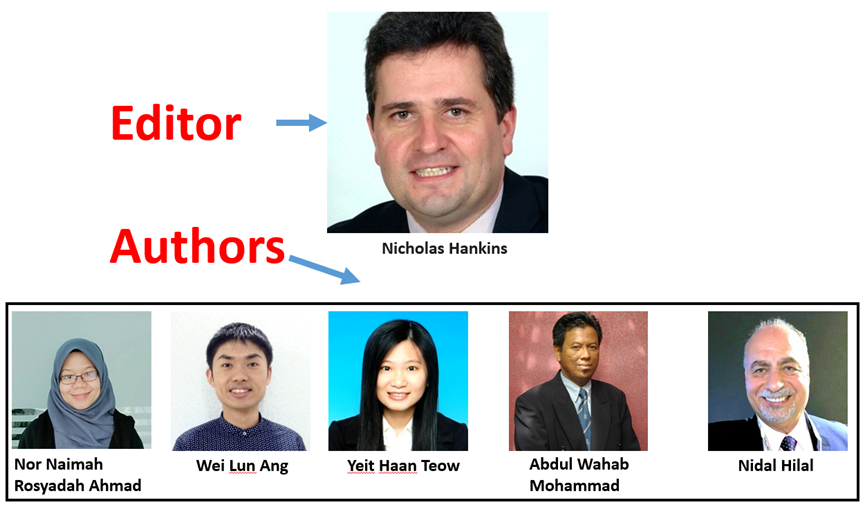
In June 2023, we submitted a complaint to Elsevier regarding the article (https://doi.org/10.1016/j.jwpe.2021.102478 ). The article was written by Nor Naimah Rosyadah Ahmad, Wei Lun Ang, Yeit Haan Teow, Abdul Wahab Mohammad, and Nidal Hilal. The handling editor was Nicholas Hankins. The complaint, which has been pending for approximately four months, alleges undisclosed conflicts of interest. Despite repeated complaints, Elsevier has shown a disturbing inaction in addressing the ethical breaches. The absence of a swift and decisive action to address and rectify these ethical breaches raises questions about Elsevier’s commitment to maintaining ethical standards.
Questions:
1- While a corrigendum was indeed published [https://doi.org/10.1016/j.jwpe.2023.104306 acknowledging a minor conflict of interest (CoI) related to Wahab’s authorship, it is concerning that the undisclosed CoIs involving Nidal, Wei, and Nicholas were overlooked. Could JWPE provide an explanation for this apparent oversight? It’s important to note that the complaint highlighted thoroughly the undisclosed conflicts of interest (CoI) involving Nidal, Wei, and Nicholas. So, why Elsevier ignored these undisclosed CoIs?
2- It’s noteworthy that the corrigendum was issued subsequent to the complaint being raised. However, it’s disconcerting that the corrigendum misleadingly suggests that Wahab suddenly remembered to report his conflict of interest (CoI). This raises a critical question: why was the complaint, which brought this issue to light, discredited by JWPE (Elsevier) in this manner?
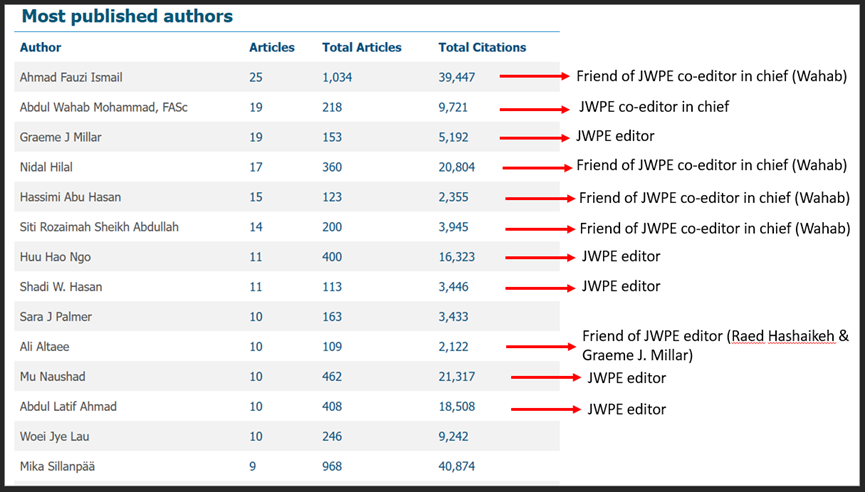
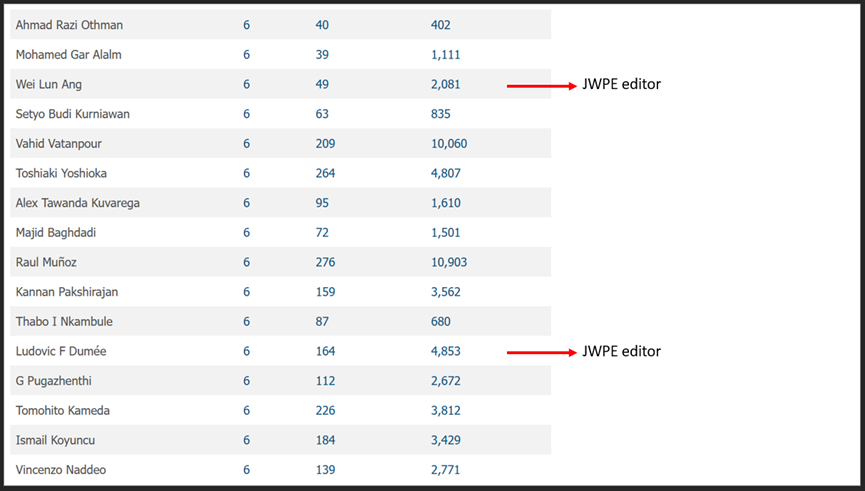
3- Wahab is doing self-publishing in his journal for a decade. One of the main roles of JWPE editorial board members is to find and report conflict of interests. However, JWPE editors have failed to find and report any issue for the 10 years of JWPE operation. This is an indication of exchanging loyalties and benefits among the JWPE editors. Regrettably, Elsevier and JWPE have not investigated this interplay among JWPE editors during the 10-years operation of JWPE, which suggest that Elsevier benefits from ethical violations by increasing publication count and manipulating impact factor. The following image shows that the top JWPE authors are JWPE editors and associates [Source: https://exaly.com/journal/20658/journal-of-water-process-engineering/prolific-authors ].
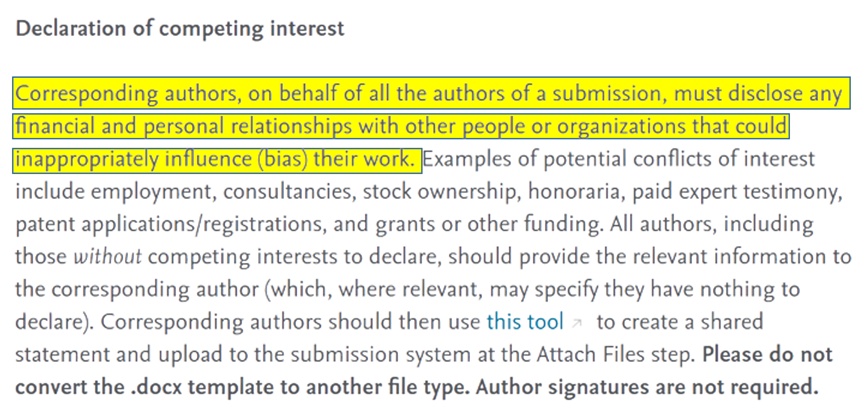
According to JWPE guide for authors, authors must disclose any financial and personal relationships with other people or organizations that could inappropriately influence (bias) their work. According to JWPE guide for authors, conflict of interests (CoI) must be disclosed at the first draft submission. There was a failure to disclose any conflicts of interest.
The recently published corrigendum [https://doi.org/10.1016/j.jwpe.2023.104306 is, misleading and contains inaccuracies. It is not reflective of the truth and is, therefore, deceptive. An immediate revision (or another corrigendum) is necessary to rectify these issues. JWPE (Elsevier) has to publish a more accurate version of the corrigendum as follows:
In June 2023, a complaint was lodged by a reader of the Journal of Water Process Engineering (JWPE) regarding an undisclosed conflict of interest (CoI) in the paper [https://doi.org/10.1016/j.jwpe.2021.102478 The complaint was thoroughly examined by the journal manager, executive publisher, and the editorial board of JWPE. In [PUT DATE], these parties confirmed the validity of the claim made in the complaint and took steps to publish this corrigendum.
We would like to express our sincere apologies for the inaccuracies present in the initial corrigendum. Contrary to what was previously stated, the editor-in-chief, Wahab, did not recall to disclose the conflict of interest (CoI). Instead, it was a vigilant reader of JWPE who brought this ethical violation to Elsevier’s attention in June 2023. Furthermore, we deeply regret the oversight in our initial response to the complaint lodge, particularly our failure to report the CoI associated with Wei, Yeit, and Wahab from Universiti Kebangsaan Malaysia, and Nidal from New York University Abu Dhabi. We apologize for this lapse and are committed to rectifying it.
On behalf of Elsevier, the journal manager, executive publisher, and the editorial board of JWPE, we extend our sincere apologies to our readers for the undisclosed conflict of interest (CoI). We would like to express our gratitude to the anonymous JWPE reader who brought this issue to our attention. If any reader witnesses an ethical violation, we encourage you to reach out to us at JWPE@elsevier.com
Here is a thorough disclosure of conflicts of interest (CoI) by the authors of the paper:
The authors of the paper disclose their personal and professional relationships with the handling editor, the co-editor-in-chief, and other editors of the Journal of Water Process Engineering (JWPE).
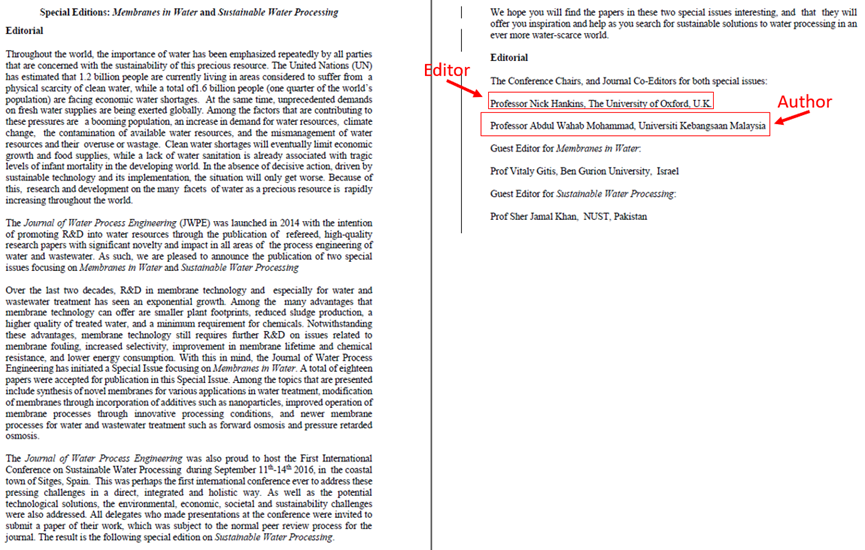
1. The handling editor, Nicholas Hankins (University of Oxford), discloses a conflict of interest (personal and professional relationships) with the paper corresponding author, Abdul Wahab Mohammad (Universiti Kebangsaan Malaysia), who is his co-editor-in-chief of JWPE and frequent collaborator in publications and editorials.
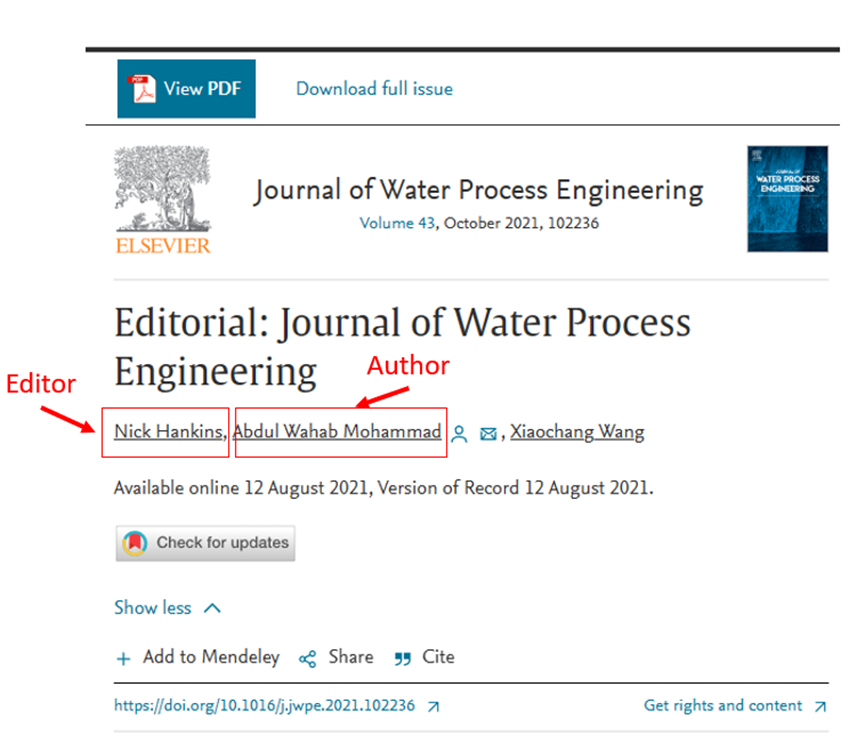
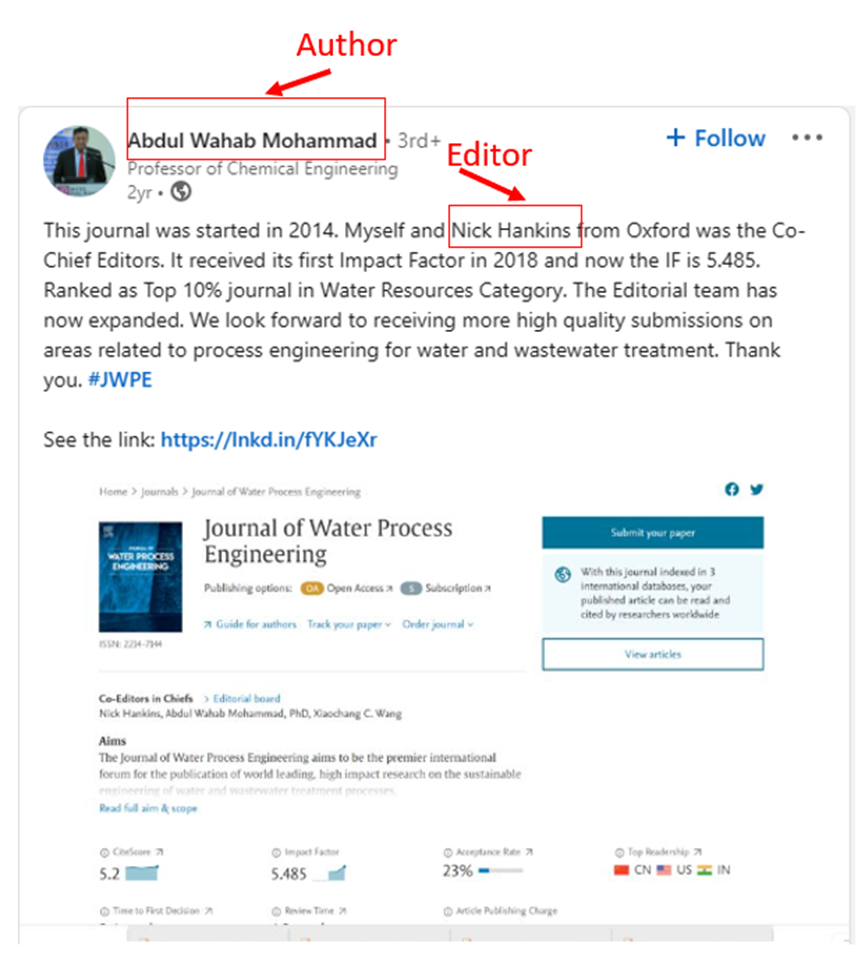
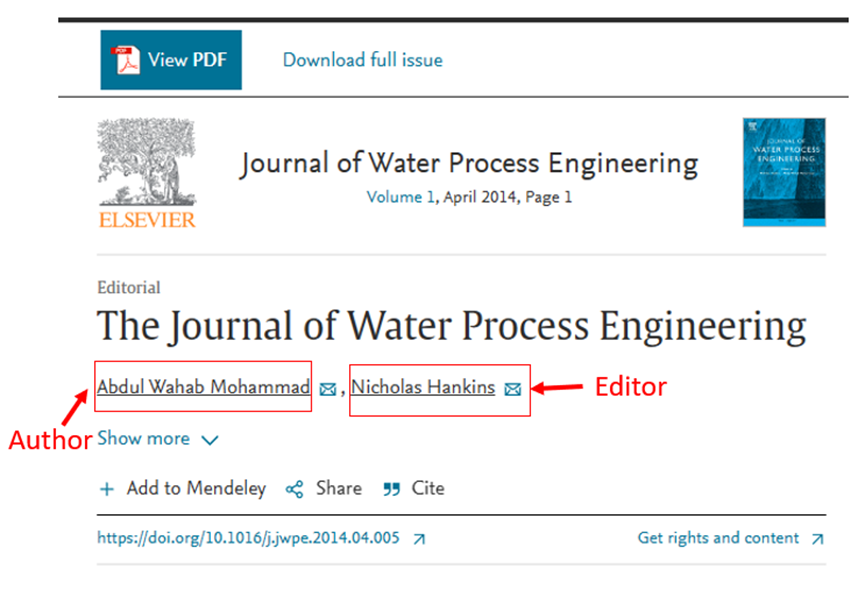
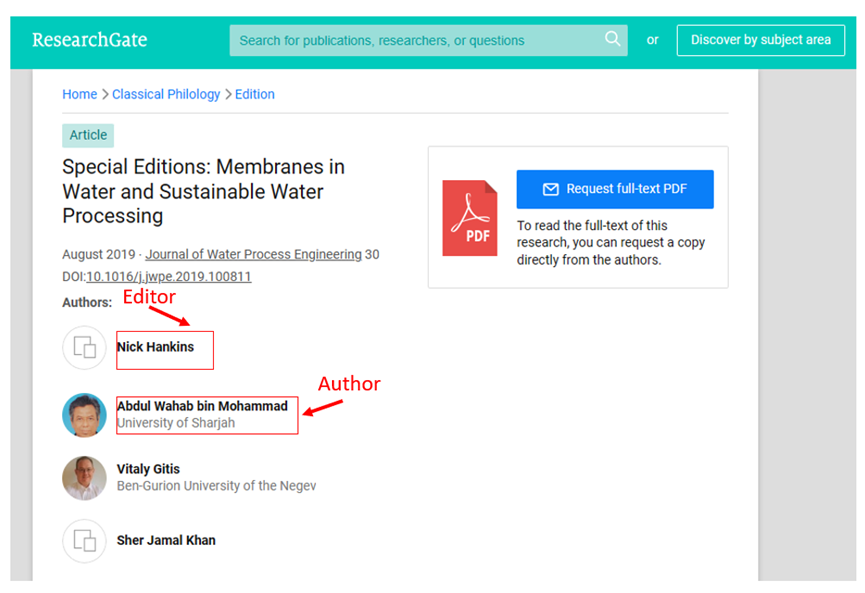
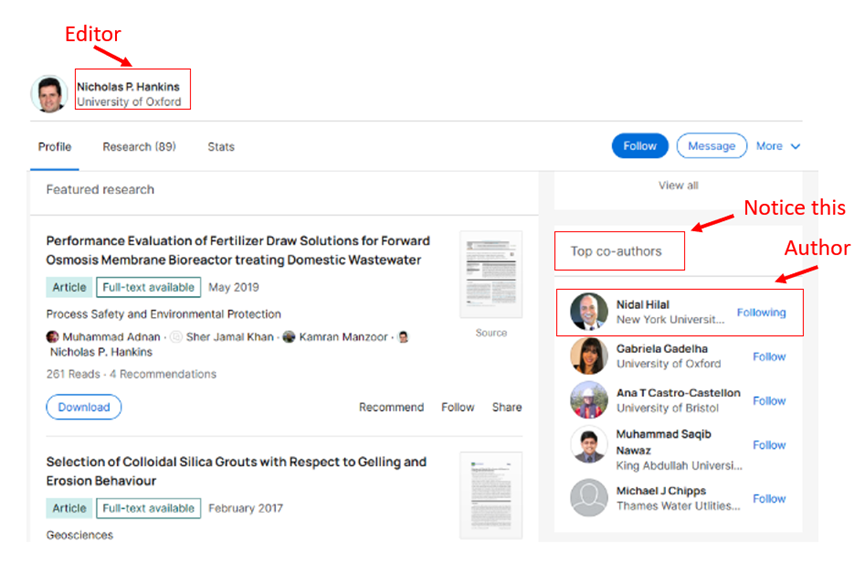
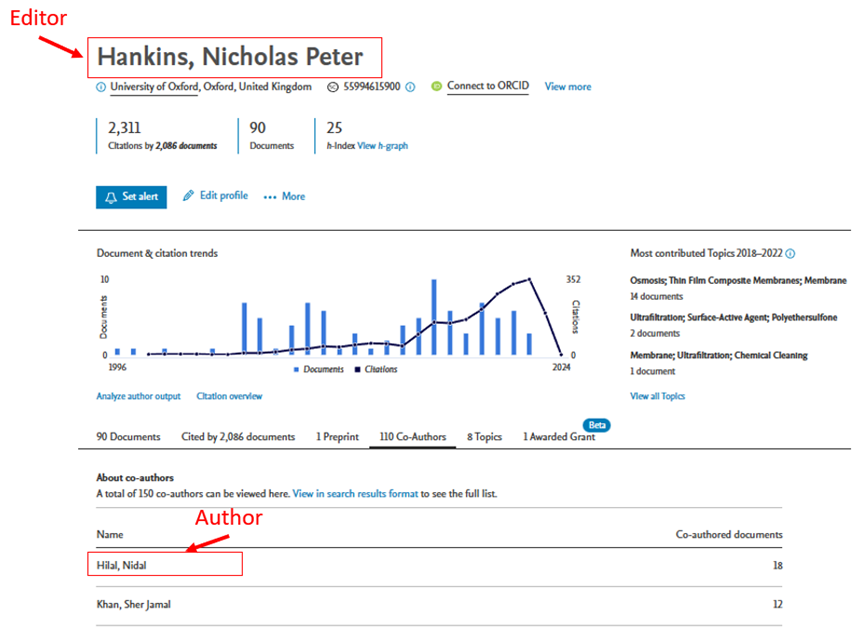
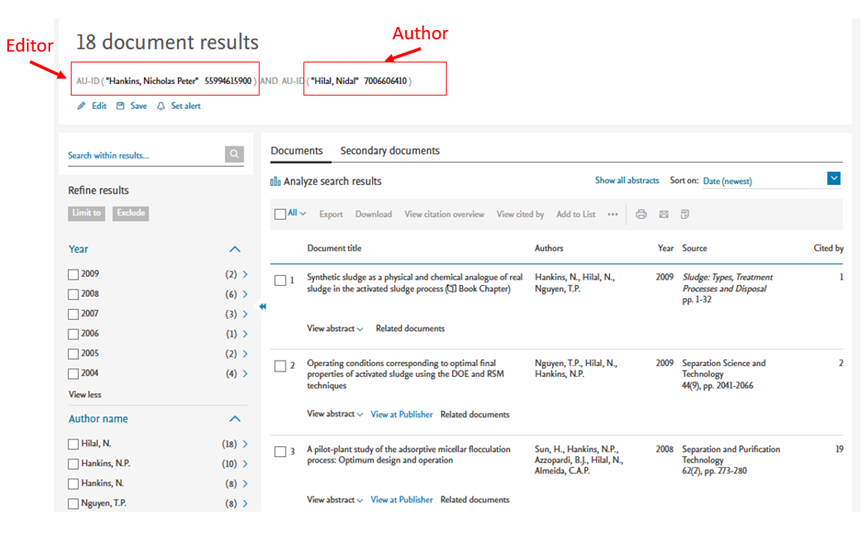
2. The handling editor discloses a conflict of interest (personal and professional relationships) with the co-author, Nidal Hilal (New York University Abu Dhabi), who is his personal friend and top co-author according to Scopus and ResearchGate.
3. The handling editor discloses another conflict of interest (personal and professional relationships) with the co-author, Wei Lun Ang (Universiti Kebangsaan Malaysia), who is also an editor of JWPE.
4. The corresponding author, Abdul Wahab Mohammad, has a conflict of interest (personal and professional relationships) with several editors of JWPE (LIST ALL OF THEM AT HERE), who are his personal associates and co-authors in various papers.
5. The corresponding author also has a conflict of interest (personal and professional relationships) with a JWPE journal staff (LIST ALL OF THEM AT HERE), who works closely with him to align the journal’s strategy with the market trends.
6. The co-author, Nidal Hilal, has a conflict of interest (personal and professional relationships) with other editors of JWPE (LIST ALL OF THEM AT HERE), who are his collaborators in various projects.
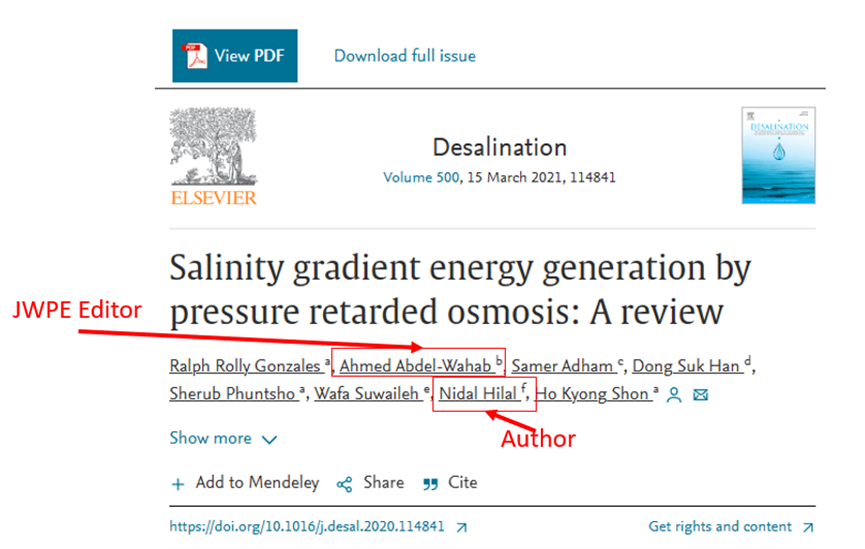
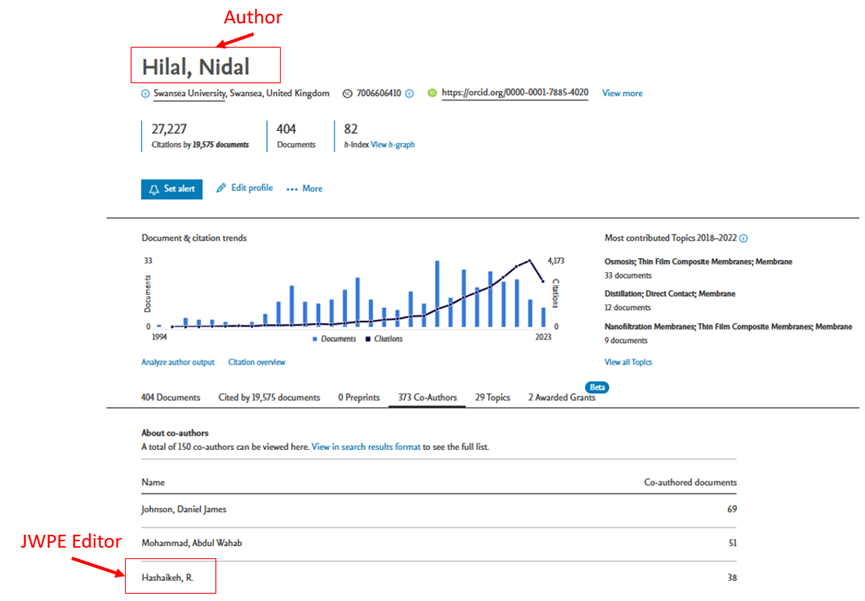
7. The co-author, Wei Lun Ang, has a role as an editor of JWPE.
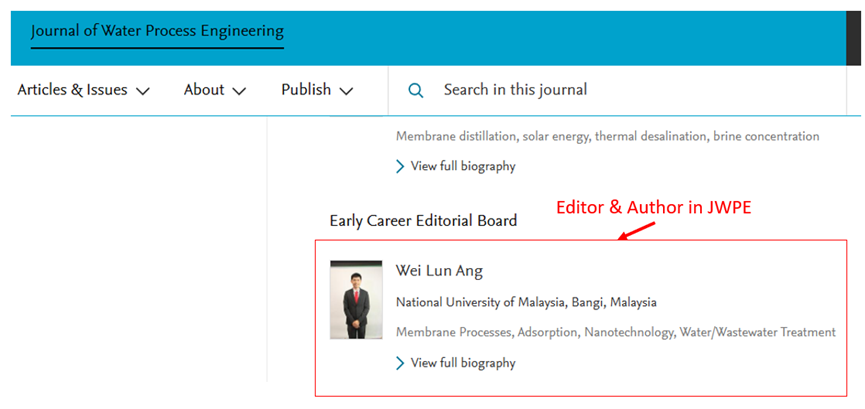
8. Wei Lun Ang (JWPE editor and paper co-author) discloses that he is an employee of JWPE (Elsevier) and he received financial transactions during his tenure.
9. Abdul Wahab Mohammad (JWPE co-editor-in-chief and paper co-author) discloses that he is an employee of JWPE (Elsevier) and he received financial transactions during his tenure.
10. Teow Yeit Haan (Universiti Kebangsaan Malaysia) discloses a conflict of interest (personal and professional relationships) with a JWPE editor (Abdul Latif bin Ahmad). Abdul Latif bin Ahmad served as a supervisor during Teow Yeit Haan’s doctoral studies and collaborated on several publications with him.
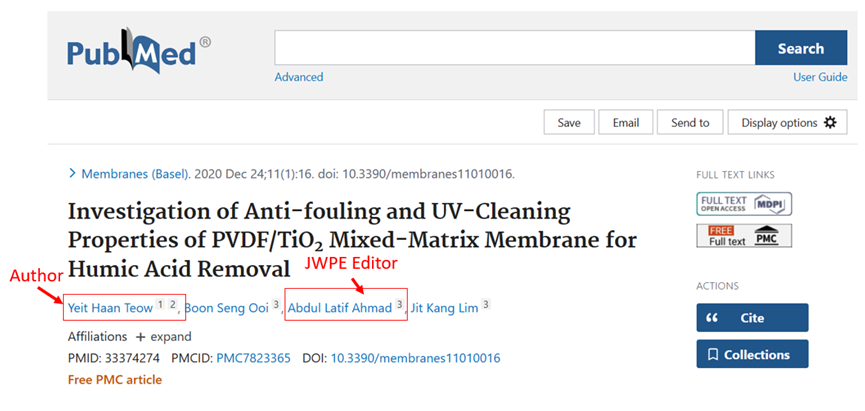
11. Journal manager (FULL NAME) of JWPE discloses a conflict of interest (personal and professional relationships) with Abdul Wahab Mohammad as they work closely to align the journal’s strategy with the market trends.
12. Executive publisher of JWPE (Luaine Bandounas) discloses a conflict of interest (personal and professional relationships) with Abdul Wahab Mohammad, Wei Lun Ang, and Nicholas Hankins as they work closely to align the journal’s strategy with the market trends.
13. Executive publisher of JWPE (Luaine Bandounas) discloses a conflict of interest (personal and professional relationships) with Nidal Hilal as they worked closely recently to align the Desalination journal’s strategy with the market trends.
14. Wei Lun Ang (JWPE editor; paper co-author) discloses a conflict of interest (personal and professional relationships) with Abdul Wahab Mohammad (JWPE editor in chief; paper corresponding author) and and Nicholas Hankins as they work closely to align the journal’s strategy with the market trends.
15. [PUT A FULL NAME], as representatives of Elsevier or any of its employees, affirm that we have not exerted any influence over the editorial decision regarding this article. The decision was made independently by the handling editor. We affirm that we have not manipulated the impact factor of JWPE and have not derived any benefits from the publication of this article. [Further information can be found at https://www.elsevier.com/about/policies/publishing-ethics ]
16. [LIST NAMES OF AUTHORS AND EDITORS] disclose that they hold stocks and investments associated with Elsevier.
17. Wei Lun Ang (JWPE editor; paper co-author) discloses a conflict of interest (personal and professional relationships) with a JWPE journal staff (LIST ALL OF THEM AT HERE), who works closely with him to align the journal’s strategy with the market trends.

The Issue
Scientists,
Pause Submitting To Journal of Water Process Engineering (JWPE)
Stop Reviewing For JWPE
Support Ethics
Sign the Petition NOW
Highlights:
· The complaint alleges that the authors and editors of the article failed to disclose their conflicts of interest (CoI), which is an ethical violation.
· Personal and professional relationships among authors and editor that could biased the peer review and the editorial decision, and compromised the integrity of the journal.
· Elsevier published a misleading corrigendum
· Elsevier has not taken any decisive action to address and rectify the issue
· The complaint urges Elsevier to publish a more accurate and comprehensive corrigendum that reflects the truth and apologizes to the readers.
This is a petition from CoI Detector, a team of researchers who are dedicated to exposing and preventing ethical violations in academic publishing. We have uncovered a serious case of undisclosed conflicts of interest (CoI) in a paper published by the Journal of Water Process Engineering (JWPE), an Elsevier journal.
We are launching this petition to urge all researchers who care about ethics and quality in academic publishing to join us in our campaign. By signing this petition, you will send a clear message to Elsevier that you do not tolerate any ethical breaches in their journals. You will also show your support for the anonymous JWPE reader who brought this issue to our attention. Together, we can hold Elsevier accountable and protect the reputation of our scientific community.
Please sign this petition and share it with your colleagues and friends. Let’s make a difference and uphold the highest standards of ethics in publishing! Thank you for your support!
In June 2023, we submitted a complaint to Elsevier regarding the article (https://doi.org/10.1016/j.jwpe.2021.102478 ). The article was written by Nor Naimah Rosyadah Ahmad, Wei Lun Ang, Yeit Haan Teow, Abdul Wahab Mohammad, and Nidal Hilal. The handling editor was Nicholas Hankins. The complaint, which has been pending for approximately four months, alleges undisclosed conflicts of interest. Despite repeated complaints, Elsevier has shown a disturbing inaction in addressing the ethical breaches. The absence of a swift and decisive action to address and rectify these ethical breaches raises questions about Elsevier’s commitment to maintaining ethical standards.
Questions:
1- While a corrigendum was indeed published [https://doi.org/10.1016/j.jwpe.2023.104306 acknowledging a minor conflict of interest (CoI) related to Wahab’s authorship, it is concerning that the undisclosed CoIs involving Nidal, Wei, and Nicholas were overlooked. Could JWPE provide an explanation for this apparent oversight? It’s important to note that the complaint highlighted thoroughly the undisclosed conflicts of interest (CoI) involving Nidal, Wei, and Nicholas. So, why Elsevier ignored these undisclosed CoIs?
2- It’s noteworthy that the corrigendum was issued subsequent to the complaint being raised. However, it’s disconcerting that the corrigendum misleadingly suggests that Wahab suddenly remembered to report his conflict of interest (CoI). This raises a critical question: why was the complaint, which brought this issue to light, discredited by JWPE (Elsevier) in this manner?
3- Wahab is doing self-publishing in his journal for a decade. One of the main roles of JWPE editorial board members is to find and report conflict of interests. However, JWPE editors have failed to find and report any issue for the 10 years of JWPE operation. This is an indication of exchanging loyalties and benefits among the JWPE editors. Regrettably, Elsevier and JWPE have not investigated this interplay among JWPE editors during the 10-years operation of JWPE, which suggest that Elsevier benefits from ethical violations by increasing publication count and manipulating impact factor. The following image shows that the top JWPE authors are JWPE editors and associates [Source: https://exaly.com/journal/20658/journal-of-water-process-engineering/prolific-authors ].
According to JWPE guide for authors, authors must disclose any financial and personal relationships with other people or organizations that could inappropriately influence (bias) their work. According to JWPE guide for authors, conflict of interests (CoI) must be disclosed at the first draft submission. There was a failure to disclose any conflicts of interest.
The recently published corrigendum [https://doi.org/10.1016/j.jwpe.2023.104306 is, misleading and contains inaccuracies. It is not reflective of the truth and is, therefore, deceptive. An immediate revision (or another corrigendum) is necessary to rectify these issues. JWPE (Elsevier) has to publish a more accurate version of the corrigendum as follows:
In June 2023, a complaint was lodged by a reader of the Journal of Water Process Engineering (JWPE) regarding an undisclosed conflict of interest (CoI) in the paper [https://doi.org/10.1016/j.jwpe.2021.102478 The complaint was thoroughly examined by the journal manager, executive publisher, and the editorial board of JWPE. In [PUT DATE], these parties confirmed the validity of the claim made in the complaint and took steps to publish this corrigendum.
We would like to express our sincere apologies for the inaccuracies present in the initial corrigendum. Contrary to what was previously stated, the editor-in-chief, Wahab, did not recall to disclose the conflict of interest (CoI). Instead, it was a vigilant reader of JWPE who brought this ethical violation to Elsevier’s attention in June 2023. Furthermore, we deeply regret the oversight in our initial response to the complaint lodge, particularly our failure to report the CoI associated with Wei, Yeit, and Wahab from Universiti Kebangsaan Malaysia, and Nidal from New York University Abu Dhabi. We apologize for this lapse and are committed to rectifying it.
On behalf of Elsevier, the journal manager, executive publisher, and the editorial board of JWPE, we extend our sincere apologies to our readers for the undisclosed conflict of interest (CoI). We would like to express our gratitude to the anonymous JWPE reader who brought this issue to our attention. If any reader witnesses an ethical violation, we encourage you to reach out to us at JWPE@elsevier.com
Here is a thorough disclosure of conflicts of interest (CoI) by the authors of the paper:
The authors of the paper disclose their personal and professional relationships with the handling editor, the co-editor-in-chief, and other editors of the Journal of Water Process Engineering (JWPE).
1. The handling editor, Nicholas Hankins (University of Oxford), discloses a conflict of interest (personal and professional relationships) with the paper corresponding author, Abdul Wahab Mohammad (Universiti Kebangsaan Malaysia), who is his co-editor-in-chief of JWPE and frequent collaborator in publications and editorials.
2. The handling editor discloses a conflict of interest (personal and professional relationships) with the co-author, Nidal Hilal (New York University Abu Dhabi), who is his personal friend and top co-author according to Scopus and ResearchGate.
3. The handling editor discloses another conflict of interest (personal and professional relationships) with the co-author, Wei Lun Ang (Universiti Kebangsaan Malaysia), who is also an editor of JWPE.
4. The corresponding author, Abdul Wahab Mohammad, has a conflict of interest (personal and professional relationships) with several editors of JWPE (LIST ALL OF THEM AT HERE), who are his personal associates and co-authors in various papers.
5. The corresponding author also has a conflict of interest (personal and professional relationships) with a JWPE journal staff (LIST ALL OF THEM AT HERE), who works closely with him to align the journal’s strategy with the market trends.
6. The co-author, Nidal Hilal, has a conflict of interest (personal and professional relationships) with other editors of JWPE (LIST ALL OF THEM AT HERE), who are his collaborators in various projects.
7. The co-author, Wei Lun Ang, has a role as an editor of JWPE.
8. Wei Lun Ang (JWPE editor and paper co-author) discloses that he is an employee of JWPE (Elsevier) and he received financial transactions during his tenure.
9. Abdul Wahab Mohammad (JWPE co-editor-in-chief and paper co-author) discloses that he is an employee of JWPE (Elsevier) and he received financial transactions during his tenure.
10. Teow Yeit Haan (Universiti Kebangsaan Malaysia) discloses a conflict of interest (personal and professional relationships) with a JWPE editor (Abdul Latif bin Ahmad). Abdul Latif bin Ahmad served as a supervisor during Teow Yeit Haan’s doctoral studies and collaborated on several publications with him.
11. Journal manager (FULL NAME) of JWPE discloses a conflict of interest (personal and professional relationships) with Abdul Wahab Mohammad as they work closely to align the journal’s strategy with the market trends.
12. Executive publisher of JWPE (Luaine Bandounas) discloses a conflict of interest (personal and professional relationships) with Abdul Wahab Mohammad, Wei Lun Ang, and Nicholas Hankins as they work closely to align the journal’s strategy with the market trends.
13. Executive publisher of JWPE (Luaine Bandounas) discloses a conflict of interest (personal and professional relationships) with Nidal Hilal as they worked closely recently to align the Desalination journal’s strategy with the market trends.
14. Wei Lun Ang (JWPE editor; paper co-author) discloses a conflict of interest (personal and professional relationships) with Abdul Wahab Mohammad (JWPE editor in chief; paper corresponding author) and and Nicholas Hankins as they work closely to align the journal’s strategy with the market trends.
15. [PUT A FULL NAME], as representatives of Elsevier or any of its employees, affirm that we have not exerted any influence over the editorial decision regarding this article. The decision was made independently by the handling editor. We affirm that we have not manipulated the impact factor of JWPE and have not derived any benefits from the publication of this article. [Further information can be found at https://www.elsevier.com/about/policies/publishing-ethics ]
16. [LIST NAMES OF AUTHORS AND EDITORS] disclose that they hold stocks and investments associated with Elsevier.
17. Wei Lun Ang (JWPE editor; paper co-author) discloses a conflict of interest (personal and professional relationships) with a JWPE journal staff (LIST ALL OF THEM AT HERE), who works closely with him to align the journal’s strategy with the market trends.
Petition Closed
Share this petition
The Decision Makers
Petition Updates
Share this petition
Petition created on 11 October 2023