
Demand Transparency in UPSC Civil Services Preliminary Exam
The Issue
I'am Siddharth Singh, Founder of Margdarshan IAS, as an educator and mentor, I am deeply impacted by the experiences of the thousands of serious aspirants I guide through the rigorous preparation for the UPSC Civil Services Preliminary Examination. Each year, I witness the immense dedication, financial sacrifices, and mental stamina these students invest as they strive to achieve their dreams of serving our nation through civil service. While the difficulty of this examination is expected and accepted by all, the escalating unpredictability and excessive ambiguity in the objective questions have raised significant concerns.
The UPSC Civil Services Preliminary Examination 2026 has raised serious concerns among lakhs of aspirants and educators due to its unprecedented and highly unpredictable pattern changes. While difficulty is a natural part of UPSC, the issue this year was not just difficulty—it was the sudden shift in the very nature of the examination.
For the first time, UPSC moved away from
- traditional Assertion-Reasoning
- standard multi-statement questions
- introduced complex relationship-based formats
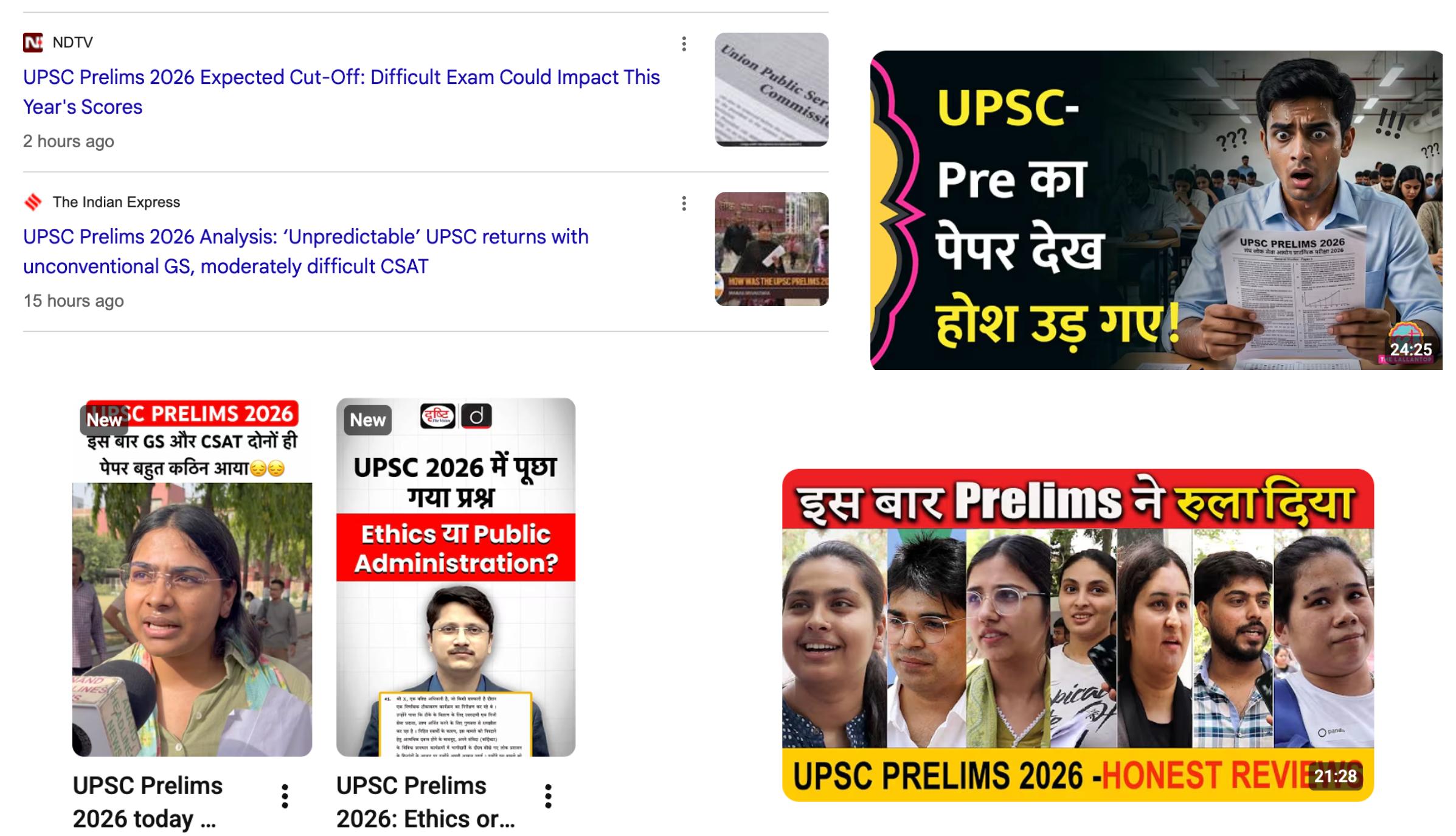
asking candidates to determine whether statements supported, contradicted, or validated each other. This significantly increased ambiguity in an objective examination. I have attached Video evidence/ proof of aspirants, mentors or teachers from UPSC CSE Fraternity, who cares that this needs attention and demand explanation from the commission
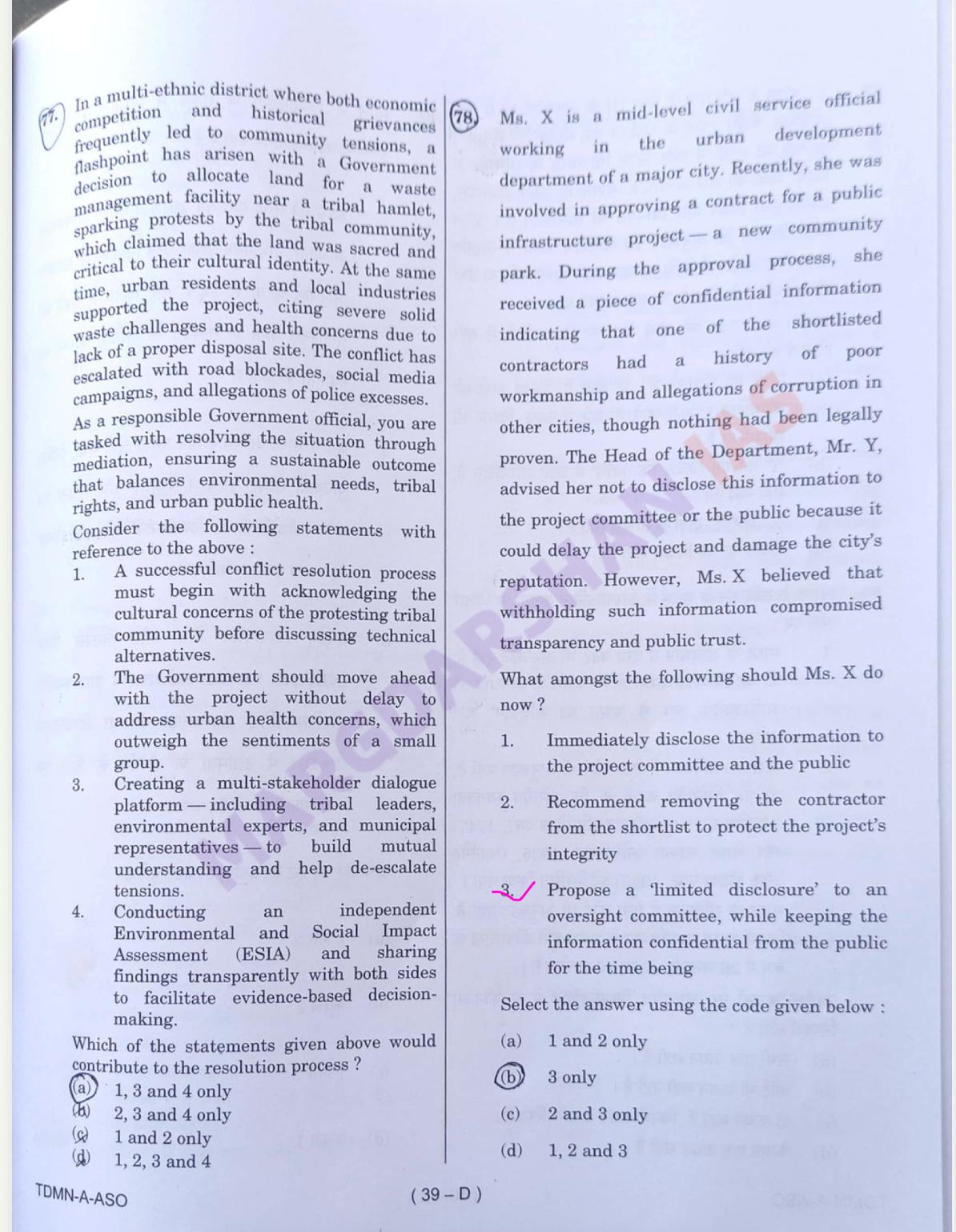
- Ethics-style administrative case studies involving corruption, governance dilemmas, and tribal protests—questions traditionally associated with GS Paper 4 Ethics in Mains, not Prelims.
- This blurred the distinction between the Preliminary and Mains stages without any prior indication.
The paper became unusually lengthy due to paragraph-sized questions and options. Many aspirants reported that despite knowing the concepts, they were unable to complete the paper within the 120-minute limit because of excessive reading and interpretation requirements.
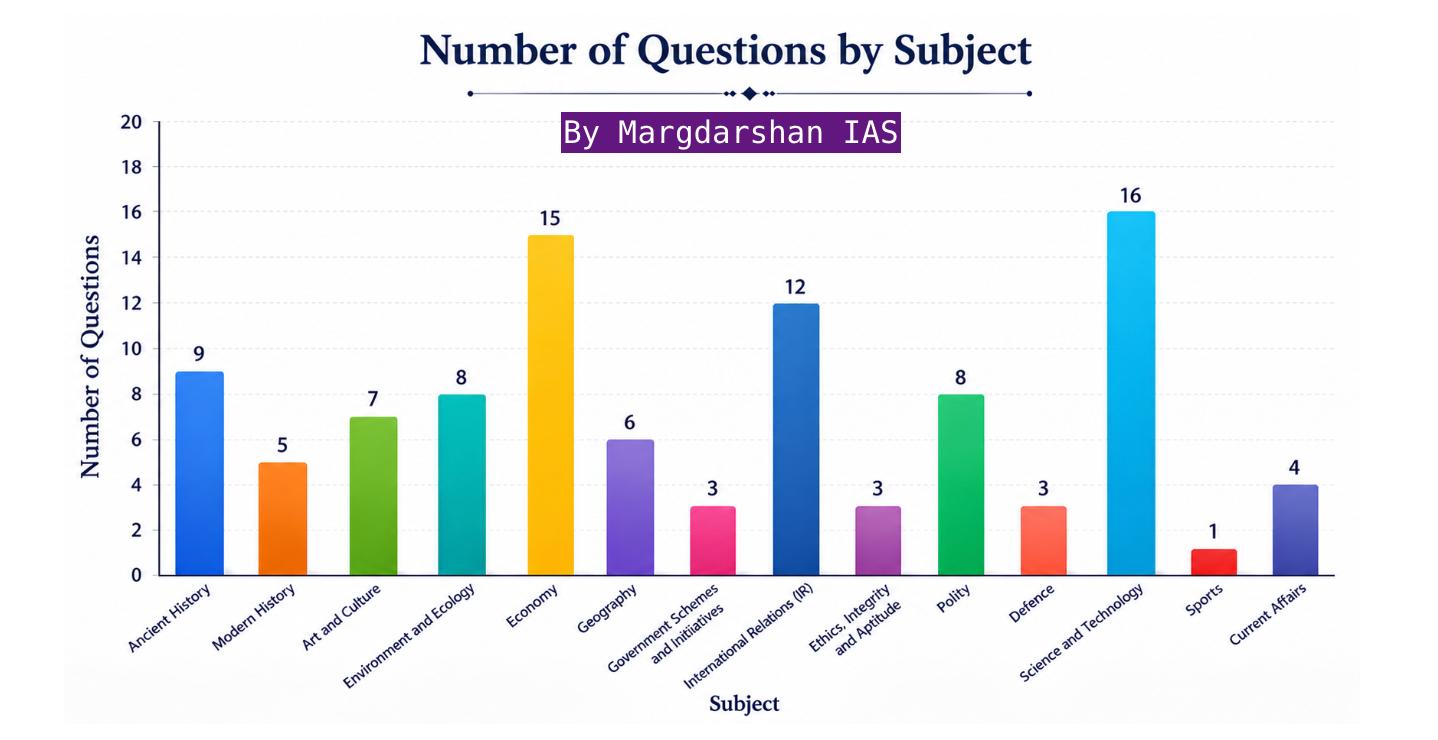
Another major concern was the drastic change in subject distribution. Traditionally important subjects like
- Polity and Geography saw reduced weightage,
- While History, Art & Culture, Science & Technology, and International Relations dominated the paper.
- Reports suggest History & Art Culture accounted for nearly 20 questions,
- While Science & Technology contributed around 17–18 questions
- Current affairs were deeply embedded inside static subjects, making preparation boundaries highly uncertain.
Questions demanded interdisciplinary interpretation rather than clear conceptual testing.
The CSAT paper further increased pressure through highly time-consuming logical puzzles, spatial visualization problems, and complex seating arrangements, turning the exam into a test of processing speed and endurance rather than balanced aptitude.
The concern is not that UPSC should not evolve. The concern is that such drastic and sudden structural shifts create excessive unpredictability, weaken preparation stability, and disadvantage sincere aspirants who spend years preparing based on the defined syllabus, PYQ trends, and established exam structure.
Through this petition, we respectfully request UPSC to maintain greater transparency, balance, and consistency in the Preliminary Examination process so that the exam continues to test genuine merit, administrative aptitude, and conceptual understanding without excessive ambiguity or arbitrary unpredictability.
It is imperative that the UPSC revisits its examination strategy and introduces greater transparency in the exam process. This includes ensuring that questions are clear, aligned with the
syllabus, and without unnecessary ambiguity.
We are not against the UPSC; instead, we seek to uphold the standards that ensure fairness and consistency in the examination process. By doing so, we protect the interests of future civil servants who will play a pivotal role in the governance of our nation.
The objective of this petition is to collectively reach out to the UPSC Chairman and the Department of Personnel & Training (DoPT) to seek transparency, clarity, and an official explanation regarding the abrupt and unprecedented changes introduced in UPSC Prelims 2026. We respectfully request a balanced and predictable examination framework so that aspirants preparing for years are not disadvantaged by excessive ambiguity and sudden pattern shifts.
Sign this petition to demand the transparency, fairness, and consistency that the UPSC Civil Services Preliminary Examination must uphold. Let us stand together for a process that respects the dedication and effort of aspirants, ensuring a merit-based assessment that truly identifies the best to serve our nation.
Jai Hind !

4,865
The Issue
I'am Siddharth Singh, Founder of Margdarshan IAS, as an educator and mentor, I am deeply impacted by the experiences of the thousands of serious aspirants I guide through the rigorous preparation for the UPSC Civil Services Preliminary Examination. Each year, I witness the immense dedication, financial sacrifices, and mental stamina these students invest as they strive to achieve their dreams of serving our nation through civil service. While the difficulty of this examination is expected and accepted by all, the escalating unpredictability and excessive ambiguity in the objective questions have raised significant concerns.
The UPSC Civil Services Preliminary Examination 2026 has raised serious concerns among lakhs of aspirants and educators due to its unprecedented and highly unpredictable pattern changes. While difficulty is a natural part of UPSC, the issue this year was not just difficulty—it was the sudden shift in the very nature of the examination.
For the first time, UPSC moved away from
- traditional Assertion-Reasoning
- standard multi-statement questions
- introduced complex relationship-based formats
asking candidates to determine whether statements supported, contradicted, or validated each other. This significantly increased ambiguity in an objective examination. I have attached Video evidence/ proof of aspirants, mentors or teachers from UPSC CSE Fraternity, who cares that this needs attention and demand explanation from the commission
- Ethics-style administrative case studies involving corruption, governance dilemmas, and tribal protests—questions traditionally associated with GS Paper 4 Ethics in Mains, not Prelims.
- This blurred the distinction between the Preliminary and Mains stages without any prior indication.
The paper became unusually lengthy due to paragraph-sized questions and options. Many aspirants reported that despite knowing the concepts, they were unable to complete the paper within the 120-minute limit because of excessive reading and interpretation requirements.
Another major concern was the drastic change in subject distribution. Traditionally important subjects like
- Polity and Geography saw reduced weightage,
- While History, Art & Culture, Science & Technology, and International Relations dominated the paper.
- Reports suggest History & Art Culture accounted for nearly 20 questions,
- While Science & Technology contributed around 17–18 questions
- Current affairs were deeply embedded inside static subjects, making preparation boundaries highly uncertain.
Questions demanded interdisciplinary interpretation rather than clear conceptual testing.
The CSAT paper further increased pressure through highly time-consuming logical puzzles, spatial visualization problems, and complex seating arrangements, turning the exam into a test of processing speed and endurance rather than balanced aptitude.
The concern is not that UPSC should not evolve. The concern is that such drastic and sudden structural shifts create excessive unpredictability, weaken preparation stability, and disadvantage sincere aspirants who spend years preparing based on the defined syllabus, PYQ trends, and established exam structure.
Through this petition, we respectfully request UPSC to maintain greater transparency, balance, and consistency in the Preliminary Examination process so that the exam continues to test genuine merit, administrative aptitude, and conceptual understanding without excessive ambiguity or arbitrary unpredictability.
It is imperative that the UPSC revisits its examination strategy and introduces greater transparency in the exam process. This includes ensuring that questions are clear, aligned with the
syllabus, and without unnecessary ambiguity.
We are not against the UPSC; instead, we seek to uphold the standards that ensure fairness and consistency in the examination process. By doing so, we protect the interests of future civil servants who will play a pivotal role in the governance of our nation.
The objective of this petition is to collectively reach out to the UPSC Chairman and the Department of Personnel & Training (DoPT) to seek transparency, clarity, and an official explanation regarding the abrupt and unprecedented changes introduced in UPSC Prelims 2026. We respectfully request a balanced and predictable examination framework so that aspirants preparing for years are not disadvantaged by excessive ambiguity and sudden pattern shifts.
Sign this petition to demand the transparency, fairness, and consistency that the UPSC Civil Services Preliminary Examination must uphold. Let us stand together for a process that respects the dedication and effort of aspirants, ensuring a merit-based assessment that truly identifies the best to serve our nation.
Jai Hind !
Petition Updates
Share this petition
Petition created on 24 May 2026