

Demand Gaming Accessibility Professionals to Acknowledge Last of Us as Israeli Propaganda
The Issue
The Last of Us: Part II, released initially in 2020, was a highly successful game at release, with a successful modernized re-release in 2024 and a continued influence on gaming culture. Notably, developer Naughty Dog invested unusually heavily into the game's accessibility features, and heavily promoted them in the press. Even to this day, The Last of Us: Part II is recognized as one of the crowning achievements in gaming accessibility, with over 60 well developed accessibility features, utilizing the work of many hard working disabled consultants, such as the late Brandon Cole, to implement revolutionary user interface design and potentially setting new standards. It is without doubt that the heavy promotion of Naughty Dog for investing heavily in disability consultants, which framed the game as doing an overall good for the world, had measurable impact on sales of the game.
The Last of Us: Part II is also unapologetic Israeli propaganda that dehumanizes and caricatures the existence of the occupied Palestinian people, and normalizes war crimes and the settler-colonizer fascist history of the formation of Israel. At a first glance, this may seem like a strong accusation, but through analyzing the plot themes, especially in the context of the events following October 7th, 2023, it becomes apparent how the depiction of the Seraphites in the game is comparable to the Israeli settler depiction of the Palestinian people.
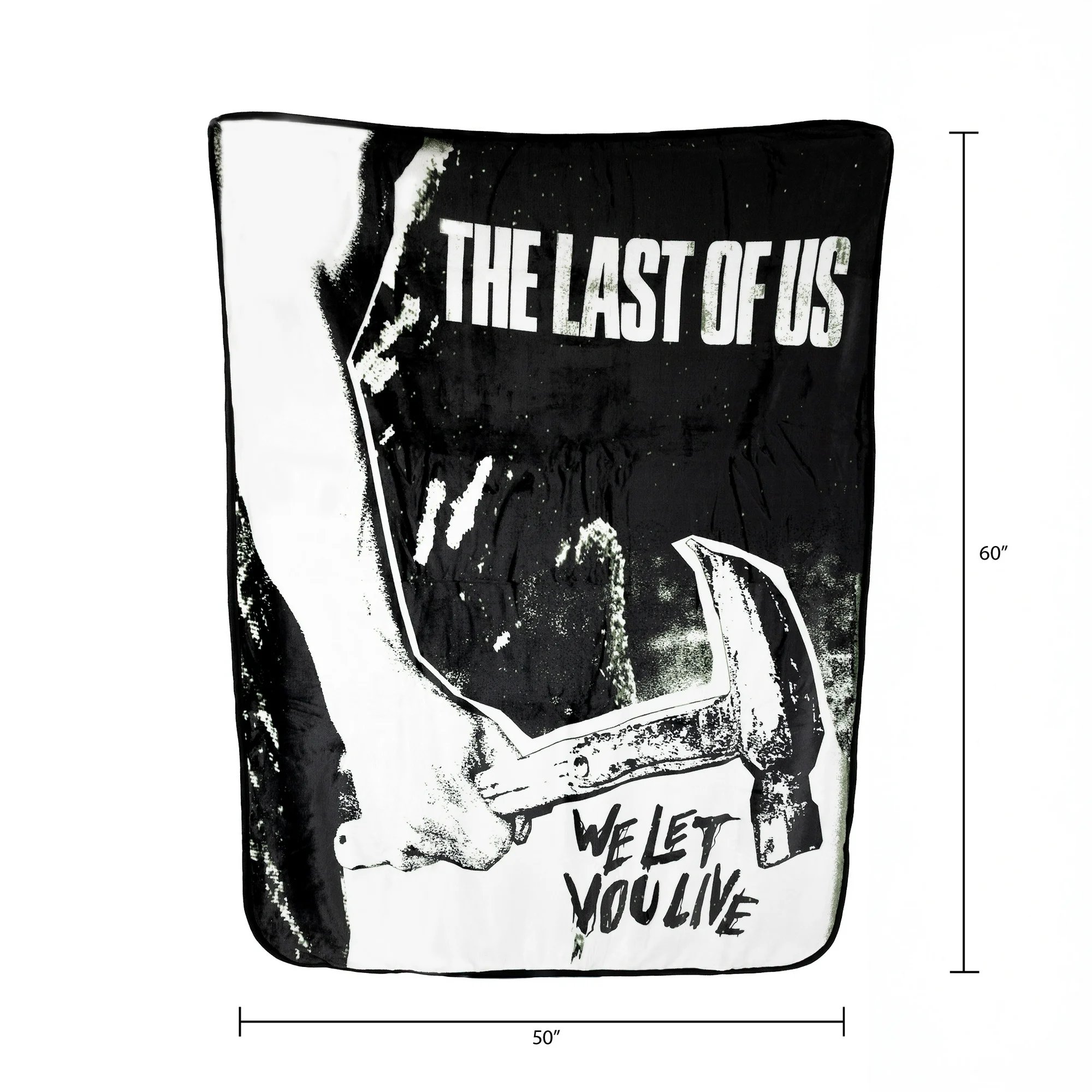
In the second game, there are two factions: The Seraphites and the Washington Liberation Front (WLF). In the game, the Seraphites were created around 2013-2014 in the Seattle area. It wasn't until 2020 when the WLF was formed and raged war against the occupation of FEDRA - a representation of FEMA - eventually driving all government power out of the city. Taking up reign behind the old FEDRA quarantine zone wall, the WLF established themselves as an occupying force of Seattle. They eventually encountered the Seraphites and thus began the war between them. The Seraphites are portrayed as a religious fanatical primitive cult who are violent for no reason other than their religious fanaticism. Unlike the WLF they fight more by moving among the land, using guerrilla based tactics as their numbers are smaller than the WLF. Despite living on the land first, the game portrays their fighting between the two groups as a "violence on both sides" scenario. The WLF uses tactics such as torture and a kill all intruders order on the Seraphites.
For context, Israel surrounds the West Bank with concrete walls, fencing, watchtowers and a constant military presence. Announced in 2016 and inaugurated with a budget of over $1.1 billion, a larger project to surround all of Gaza with a similar structure was designed to expand the project. Historically, Israel has committed human rights abuses against the occupied Palestinian people ever since the country's inception, but has accelerated since the events of October 7th, 2023, of which much of this torture committed by the WLF against the Seraphites eerily resembles the torture and war crimes that IDF soldiers have committed against Palestinians. Even the portrayal of the Seraphites is an obvious caricature of Hamas, with a particular emphasis on Hamas's military tactics - not to mention that the pointless "religious fanaticism", a symptom of anti-Middle Eastern sentiment that accelerated after the September 11th attacks, is a theme that permeates across much of Israeli settler propaganda promoting the oppression of the occupied Palestinian people. The game even goes as far as to perpetuate a "two-state solution", which is a political compromise that fails to address the illegal colonization, settling and occupation of Israel.
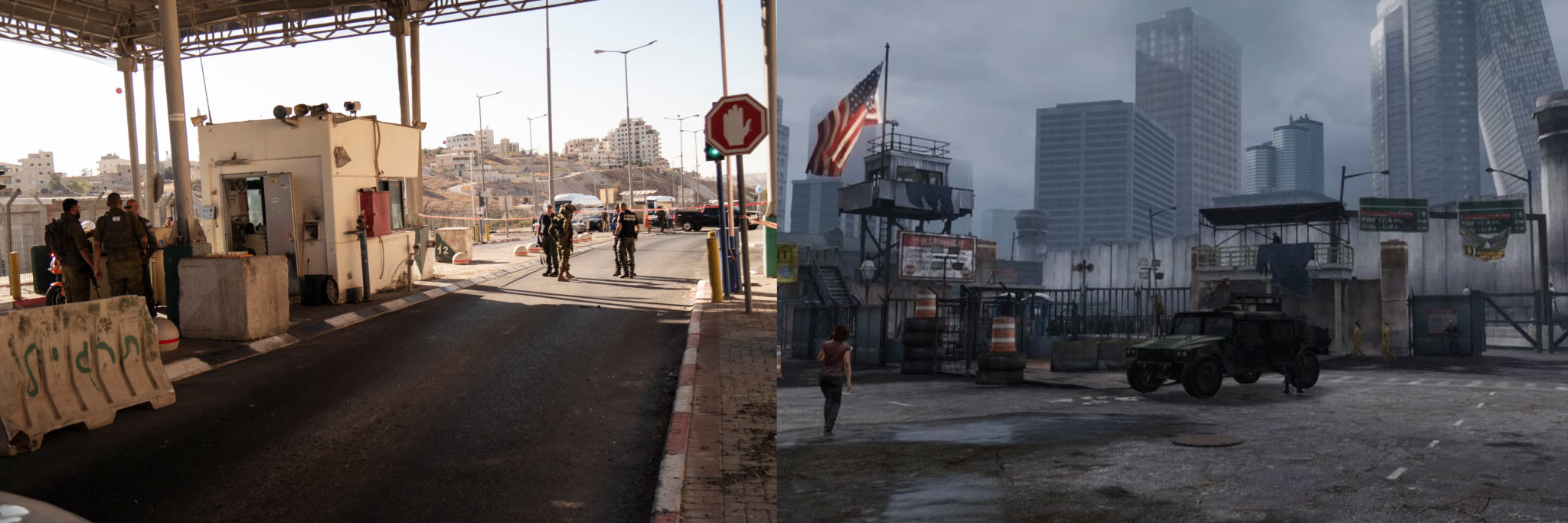
At a first glance, this may seem like a strong accusation, but it is so transparent that it has been discussed by multiple authors, including Vice, Time and others. In the Time article, Druckmann is quoted multiple times, making his intent with the game extremely clear:
"On the official PlayStation podcast for the game, Druckmann referenced the 2011 exchange of Israeli soldier Gilad Shalit for 1,027 prisoners. Druckmann said of the choice Joel makes, 'If it was to save a strange kid, maybe Joel would have made a very different decision. But when it was his tribe, his daughter, there was no question about what he was going to do.'"
"The impetus for Ellie’s trajectory in Part II came from Druckmann seeing footage as a teenager of Israeli soldiers being lynched in the West Bank. He couldn’t shake the fact that there were cheers after such violence. 'It was the cheering that was really chilling to me,' Druckmann told the Washington Post in 2020. 'In my mind, I thought ‘Oh, man, if I could just push a button and kill all these people that committed this horrible act, I would make them feel the same pain that they inflicted on these people.' "
"In a 2023 interview with Haaretz, Druckmann was keen to note that being inspired by something and basing a game on something are two different things. 'It was inspired by, not based on,' Druckmann said of The Last of Us Part II and the Israeli-Palestinian conflict. 'That’s a really important nuance, because my inspiration is like my feeling towards a cycle of violence that I’ve experienced as a child growing up in Israel, growing up in the West Bank specifically, coming to the United States and observing it then from the outside, vs. being in it.'"
It is apparent from multiple sources that this game repeats the same narrative that Israel uses to evoke continuous and ongoing genocide on the occupied Palestinian people, leading to over 100,000 deaths in the last two years alone. This does not even mention the previous horrific oppression that Israel would regularly do on the occupied Palestinian people - regularly, soldiers will kill young people for no justifiable reason, freedom of movement, commerce and access to basic supplies is heavily suppressed, and the constant oppression of the occupied people's basic human rights. These conditions come together to form what can only be described as a horrific, mass-disabling producing machine.
While the current genocide occurring in Israeli-occupied Palestinian territory largely focuses on reporting deaths, the genocide is also mass producing disabled survivors. According to the UN, the Israeli genocide on the Palestinian people has rendered over 21,000 children permanently and significantly disabled since October 7th, 2023. This marks Israel's illegal violent activity as one of the largest mass-disabling events in modern times. Furthermore, Israel continues to limit food, water and critical medical supplies to the region under accusations of "Hamas not returning enough bodies", captures peaceful international protesters and subjects them to prison torture, and continues to engage in oppressive violence against Palestinians which further escalates the situation for disabled individuals.
As a person invested in disability and accessibility, and as a disabled person myself, I think it is beyond unacceptable for multiple accessibility organizations to continue to promote the "The Last of Us" game series, with no recognition of its relationship with Israeli politics, which is very clearly and transparently represented by thin analogies that marks Palestinians as "infected" with a "cordyceps fungus" that "removes their humanity", along with other problematic themes that conflict with the interests of disability rights as an international political question.
There is a mentality within accessibility advocate circles that exists, that states that it is not our responsibility to decide what we should or should not make accessible for disabled people. However, I believe that this mentality is a consequence of a consumer-oriented, not a people-oriented approach to accessibility. I believe that accessibility requires disabled involvement on every level of production, as well as cooperation between different kinds of bodies to truly make powerful, revolutionary and useful solutions. This also means that what projects we choose to affiliate ourselves with should be also in line with a politics that promotes disability justice at large. It begs the question - should we work to make games made by Nazis, promoting white supremacy, accessible too? It is true that there are disabled racists and fascists who will be upset if we do not invest hundreds of hours of labor into making their propaganda game playable to them as well.
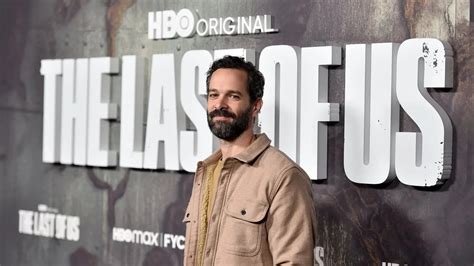
However, I also believe that we have a social responsibility to refuse to associate with fascists - even if they are disabled and potential consumers of our product. We must ask ourselves very critically what the common professional gaming accessibility philosophy of "we should expand our market to as many people as we can and accessibility is a means to do so" actually leads to - because the continued normalization of Israeli occupation of Palestine through video games such as The Last of Us: Part II normalizes the mass production of disabled people in occupied Palestine. What does it mean when we are spending significant amount of resources to promote accessibility in a game that advocates for the targeted elimination of a particular people, who obscures its true meaning through transparent abstraction and obvious caricatures? What does it say about our relationship to disability when we are promoting material that exists to normalize the mass production of disabled children? Certainly, can we not see how the production of disabled people in Palestine is not related to not just the war crimes of destroying hospitals and targeting journalists, but also how Neil Druckmann normalizes such violence through representations and passing them off as reality?
Due to the nature of this propaganda in the West, it is understandable to have been ignorant of this conflict of interest at the time of production, but it becomes increasingly questionable as time goes on and the transparency of Israel's actions against the Palestinian people reveals more human rights violations on display, especially those that target disabled Palestinians. As such, we as signers of this petition expect that the following organizations:
- Special Effect
- Ablegamers
- Access-Ability
- Can I Play That?
- Game Accessibility Nexus
- IGDA-GASIG
- A11y-Up
- GAConf
And additionally, the following figures:
- Dan Fischbach
- James Berg
- Ian Hamilton
- Morgan L. Baker
Note: Additional organizations and figures may be added later.
To meet the following demands:
- To acknowledge that the illegal genocide on Israeli-occupied Palestinian territory is mass producing disabled children and to publicly denounce Israel's actions against disabled people.
- To write a blog post or public letter denouncing the mass-disabling of children in Palestine, apologizing for previous involvement with "The Last of Us" series, and distancing oneself from Neil Druckmann. This blog post must be a part of the website - social media statements are not sufficient.
- To add a short, fully and easily accessible notice on the top of all articles featuring "The Last of Us" and any work with Neil Druckmann, to address how "The Last of Us" normalizes Israeli attitudes towards Palestinian people and Israel has been contributing towards a mass-disabling event in Israeli-occupied Palestinian territory.
- To blacklist future entries of "The Last of Us" and writer Neil Druckmann from future collaboration with your organization, and to refuse to review, offer feedback or promote "The Last of Us" series or any other work with Neil Druckmann.
- If an acknowledgement has already occurred, to communicate it so that we can share it and encourage further acknowledgement within the gaming accessibility community.
We do recognize that despite the game being a propaganda piece, that a lot of important material work was put into it by dedicated disabled people who were not involved with the writing of the game. Because of their lack of direct access to most creative input over the game's storytelling, accessibility consultants who worked on the project should not be subject to criticism - they were only trying to make the gaming industry more accessible for others, and it is the responsibility of accessibility coordinators instead to recognize the damage caused by this game. Therefore, we do not believe that taking down any pages nor criticizing the consultants is helpful, in fact it causes more harm than good. Instead, acknowledgment, recognition and change from organizations and leading members of the gaming accessibility professional community will allow us to be able to recognize the hard work of disabled people who otherwise had nothing to do with this, as well as distance the gaming accessibility community from Israel and its impact on disabled people worldwide.
Thank you for reading, I have gotten very emotional about this and I can't hold it back anymore.
102
The Issue
The Last of Us: Part II, released initially in 2020, was a highly successful game at release, with a successful modernized re-release in 2024 and a continued influence on gaming culture. Notably, developer Naughty Dog invested unusually heavily into the game's accessibility features, and heavily promoted them in the press. Even to this day, The Last of Us: Part II is recognized as one of the crowning achievements in gaming accessibility, with over 60 well developed accessibility features, utilizing the work of many hard working disabled consultants, such as the late Brandon Cole, to implement revolutionary user interface design and potentially setting new standards. It is without doubt that the heavy promotion of Naughty Dog for investing heavily in disability consultants, which framed the game as doing an overall good for the world, had measurable impact on sales of the game.
The Last of Us: Part II is also unapologetic Israeli propaganda that dehumanizes and caricatures the existence of the occupied Palestinian people, and normalizes war crimes and the settler-colonizer fascist history of the formation of Israel. At a first glance, this may seem like a strong accusation, but through analyzing the plot themes, especially in the context of the events following October 7th, 2023, it becomes apparent how the depiction of the Seraphites in the game is comparable to the Israeli settler depiction of the Palestinian people.
In the second game, there are two factions: The Seraphites and the Washington Liberation Front (WLF). In the game, the Seraphites were created around 2013-2014 in the Seattle area. It wasn't until 2020 when the WLF was formed and raged war against the occupation of FEDRA - a representation of FEMA - eventually driving all government power out of the city. Taking up reign behind the old FEDRA quarantine zone wall, the WLF established themselves as an occupying force of Seattle. They eventually encountered the Seraphites and thus began the war between them. The Seraphites are portrayed as a religious fanatical primitive cult who are violent for no reason other than their religious fanaticism. Unlike the WLF they fight more by moving among the land, using guerrilla based tactics as their numbers are smaller than the WLF. Despite living on the land first, the game portrays their fighting between the two groups as a "violence on both sides" scenario. The WLF uses tactics such as torture and a kill all intruders order on the Seraphites.
For context, Israel surrounds the West Bank with concrete walls, fencing, watchtowers and a constant military presence. Announced in 2016 and inaugurated with a budget of over $1.1 billion, a larger project to surround all of Gaza with a similar structure was designed to expand the project. Historically, Israel has committed human rights abuses against the occupied Palestinian people ever since the country's inception, but has accelerated since the events of October 7th, 2023, of which much of this torture committed by the WLF against the Seraphites eerily resembles the torture and war crimes that IDF soldiers have committed against Palestinians. Even the portrayal of the Seraphites is an obvious caricature of Hamas, with a particular emphasis on Hamas's military tactics - not to mention that the pointless "religious fanaticism", a symptom of anti-Middle Eastern sentiment that accelerated after the September 11th attacks, is a theme that permeates across much of Israeli settler propaganda promoting the oppression of the occupied Palestinian people. The game even goes as far as to perpetuate a "two-state solution", which is a political compromise that fails to address the illegal colonization, settling and occupation of Israel.
At a first glance, this may seem like a strong accusation, but it is so transparent that it has been discussed by multiple authors, including Vice, Time and others. In the Time article, Druckmann is quoted multiple times, making his intent with the game extremely clear:
"On the official PlayStation podcast for the game, Druckmann referenced the 2011 exchange of Israeli soldier Gilad Shalit for 1,027 prisoners. Druckmann said of the choice Joel makes, 'If it was to save a strange kid, maybe Joel would have made a very different decision. But when it was his tribe, his daughter, there was no question about what he was going to do.'"
"The impetus for Ellie’s trajectory in Part II came from Druckmann seeing footage as a teenager of Israeli soldiers being lynched in the West Bank. He couldn’t shake the fact that there were cheers after such violence. 'It was the cheering that was really chilling to me,' Druckmann told the Washington Post in 2020. 'In my mind, I thought ‘Oh, man, if I could just push a button and kill all these people that committed this horrible act, I would make them feel the same pain that they inflicted on these people.' "
"In a 2023 interview with Haaretz, Druckmann was keen to note that being inspired by something and basing a game on something are two different things. 'It was inspired by, not based on,' Druckmann said of The Last of Us Part II and the Israeli-Palestinian conflict. 'That’s a really important nuance, because my inspiration is like my feeling towards a cycle of violence that I’ve experienced as a child growing up in Israel, growing up in the West Bank specifically, coming to the United States and observing it then from the outside, vs. being in it.'"
It is apparent from multiple sources that this game repeats the same narrative that Israel uses to evoke continuous and ongoing genocide on the occupied Palestinian people, leading to over 100,000 deaths in the last two years alone. This does not even mention the previous horrific oppression that Israel would regularly do on the occupied Palestinian people - regularly, soldiers will kill young people for no justifiable reason, freedom of movement, commerce and access to basic supplies is heavily suppressed, and the constant oppression of the occupied people's basic human rights. These conditions come together to form what can only be described as a horrific, mass-disabling producing machine.
While the current genocide occurring in Israeli-occupied Palestinian territory largely focuses on reporting deaths, the genocide is also mass producing disabled survivors. According to the UN, the Israeli genocide on the Palestinian people has rendered over 21,000 children permanently and significantly disabled since October 7th, 2023. This marks Israel's illegal violent activity as one of the largest mass-disabling events in modern times. Furthermore, Israel continues to limit food, water and critical medical supplies to the region under accusations of "Hamas not returning enough bodies", captures peaceful international protesters and subjects them to prison torture, and continues to engage in oppressive violence against Palestinians which further escalates the situation for disabled individuals.
As a person invested in disability and accessibility, and as a disabled person myself, I think it is beyond unacceptable for multiple accessibility organizations to continue to promote the "The Last of Us" game series, with no recognition of its relationship with Israeli politics, which is very clearly and transparently represented by thin analogies that marks Palestinians as "infected" with a "cordyceps fungus" that "removes their humanity", along with other problematic themes that conflict with the interests of disability rights as an international political question.
There is a mentality within accessibility advocate circles that exists, that states that it is not our responsibility to decide what we should or should not make accessible for disabled people. However, I believe that this mentality is a consequence of a consumer-oriented, not a people-oriented approach to accessibility. I believe that accessibility requires disabled involvement on every level of production, as well as cooperation between different kinds of bodies to truly make powerful, revolutionary and useful solutions. This also means that what projects we choose to affiliate ourselves with should be also in line with a politics that promotes disability justice at large. It begs the question - should we work to make games made by Nazis, promoting white supremacy, accessible too? It is true that there are disabled racists and fascists who will be upset if we do not invest hundreds of hours of labor into making their propaganda game playable to them as well.
However, I also believe that we have a social responsibility to refuse to associate with fascists - even if they are disabled and potential consumers of our product. We must ask ourselves very critically what the common professional gaming accessibility philosophy of "we should expand our market to as many people as we can and accessibility is a means to do so" actually leads to - because the continued normalization of Israeli occupation of Palestine through video games such as The Last of Us: Part II normalizes the mass production of disabled people in occupied Palestine. What does it mean when we are spending significant amount of resources to promote accessibility in a game that advocates for the targeted elimination of a particular people, who obscures its true meaning through transparent abstraction and obvious caricatures? What does it say about our relationship to disability when we are promoting material that exists to normalize the mass production of disabled children? Certainly, can we not see how the production of disabled people in Palestine is not related to not just the war crimes of destroying hospitals and targeting journalists, but also how Neil Druckmann normalizes such violence through representations and passing them off as reality?
Due to the nature of this propaganda in the West, it is understandable to have been ignorant of this conflict of interest at the time of production, but it becomes increasingly questionable as time goes on and the transparency of Israel's actions against the Palestinian people reveals more human rights violations on display, especially those that target disabled Palestinians. As such, we as signers of this petition expect that the following organizations:
- Special Effect
- Ablegamers
- Access-Ability
- Can I Play That?
- Game Accessibility Nexus
- IGDA-GASIG
- A11y-Up
- GAConf
And additionally, the following figures:
- Dan Fischbach
- James Berg
- Ian Hamilton
- Morgan L. Baker
Note: Additional organizations and figures may be added later.
To meet the following demands:
- To acknowledge that the illegal genocide on Israeli-occupied Palestinian territory is mass producing disabled children and to publicly denounce Israel's actions against disabled people.
- To write a blog post or public letter denouncing the mass-disabling of children in Palestine, apologizing for previous involvement with "The Last of Us" series, and distancing oneself from Neil Druckmann. This blog post must be a part of the website - social media statements are not sufficient.
- To add a short, fully and easily accessible notice on the top of all articles featuring "The Last of Us" and any work with Neil Druckmann, to address how "The Last of Us" normalizes Israeli attitudes towards Palestinian people and Israel has been contributing towards a mass-disabling event in Israeli-occupied Palestinian territory.
- To blacklist future entries of "The Last of Us" and writer Neil Druckmann from future collaboration with your organization, and to refuse to review, offer feedback or promote "The Last of Us" series or any other work with Neil Druckmann.
- If an acknowledgement has already occurred, to communicate it so that we can share it and encourage further acknowledgement within the gaming accessibility community.
We do recognize that despite the game being a propaganda piece, that a lot of important material work was put into it by dedicated disabled people who were not involved with the writing of the game. Because of their lack of direct access to most creative input over the game's storytelling, accessibility consultants who worked on the project should not be subject to criticism - they were only trying to make the gaming industry more accessible for others, and it is the responsibility of accessibility coordinators instead to recognize the damage caused by this game. Therefore, we do not believe that taking down any pages nor criticizing the consultants is helpful, in fact it causes more harm than good. Instead, acknowledgment, recognition and change from organizations and leading members of the gaming accessibility professional community will allow us to be able to recognize the hard work of disabled people who otherwise had nothing to do with this, as well as distance the gaming accessibility community from Israel and its impact on disabled people worldwide.
Thank you for reading, I have gotten very emotional about this and I can't hold it back anymore.
The Decision Makers
Supporter Voices
Petition Updates
Share this petition
Petition created on October 25, 2025