

Demand EPA Accountability for Public Health Failures in Pittsfield, Massachusetts
The Issue
Our community is dying. For decades, Pittsfield, Massachusetts, has suffered from the effects of PCB contamination, yet the EPA has failed to enforce its legal responsibilities. I am a resident of Pittsfield, and I have filed a formal complaint with the OIG to investigate EPA Region 1 for systemic negligence and violations of federal laws under CERCLA. I am asking you to sign this petition to demand immediate action, accountability, and justice for the people of Pittsfield.
Goals
Demand OIG Action: Ensure a thorough and transparent investigation into EPA Region 1’s failure to uphold CERCLA obligations before moving on to the failures of the ATSDR.
Raise Awareness: Amplify the voices of Pittsfield residents who continue to suffer from chronic health issues linked to PCB exposure.
Community Empowerment: Encourage other residents to file complaints, ensuring the OIG hears the full extent of the community’s suffering.
By signing this petition, you are helping to hold the EPA accountable, protect public health, and seek justice for Pittsfield and so many more who are living in Superfund Sites.
FULL COMPLAINT TEXT:
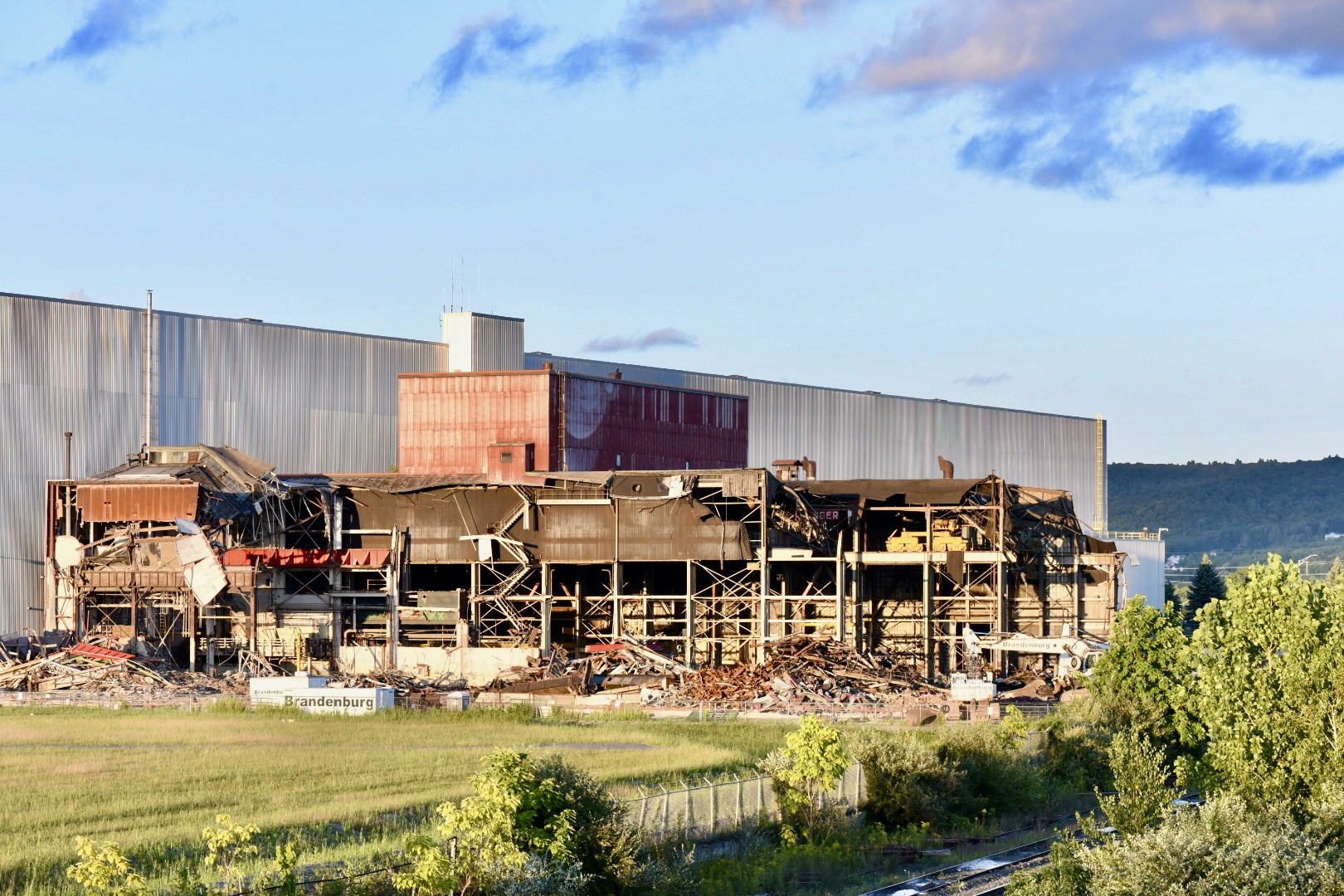
I watch demolition dust rise from what remains of the GE facility—the same facility I was recently told was "too dangerous to inspect." My mother's house sits just feet away. I grew up here, in these shadows, never knowing the full truth of what that dust might contain.
I am a resident of Pittsfield, Massachusetts, and I am filing this petition because our community is suffering while the Environmental Protection Agency (EPA) fails us.
The statistics paint a brutal picture of what it means to live in Pittsfield today:
Overall Death Rate: 1,308.0 per 100,000—dramatically higher than Massachusetts' rate of 900.2.
Cancer Rates: 463.7 per 100,000, compared to the state's 449.4.
Asthma Prevalence: 14.89% versus 9.55% statewide.
Diabetes Prevalence: 15.27% compared to 11.94% in Massachusetts.
Hypertension: Nearly half our population (47.47%) lives with hypertension versus 40.94% statewide.
But these aren't just numbers. They are our neighbors, our children, our parents. They are the faces I see at grocery stores and school meetings, many carrying the weight of illnesses they don't understand and their doctors can't explain.
Our Goals
We demand immediate action from the EPA Office of Inspector General to investigate and address the systemic failures of EPA Region 1 officials in enforcing critical public health protections mandated by the Comprehensive Environmental Response, Compensation, and Liability Act (CERCLA) at the GE-Housatonic River Superfund Site.
Specifically, we request:
Immediate Investigation: A thorough investigation into EPA Region 1's compliance with CERCLA requirements concerning the GE-Housatonic River Superfund Site.
Notification of ATSDR: The EPA must notify the Agency for Toxic Substances and Disease Registry (ATSDR) to conduct a comprehensive public health assessment as mandated by CERCLA §104(i)(1).
Updated Risk Assessments: The EPA must update risk assessments to incorporate current scientific data on PCB toxicity, including inhalation risks and non-cancer health effects, as required by CERCLA §104(i)(6).
Establishment of Medical Registry and Disease Surveillance: In cooperation with ATSDR, establish a medical registry and conduct long-term health surveillance for residents exposed to PCBs, as mandated by CERCLA §104(i)(9).
Education of Healthcare Providers: Disseminate information related to the health effects of PCBs to local healthcare professionals and the public, as required by CERCLA §104(i)(14) through the coordination with other agencies.
Improved Air Monitoring and Timely Notifications: Implement real-time air monitoring and provide timely notifications to residents about potential PCB exposure spikes.
Incorporation of New Scientific Research: Consider and incorporate recent scientific studies into risk assessments and remediation plans.
Detailed Complaint
Alleged Wrongdoings and Violations:
- Failure to Notify the Agency for Toxic Substances and Disease Registry (ATSDR) as Required by CERCLA §104(i)(1)
What Happened:
EPA Region 1 officials have not notified ATSDR to conduct a public health assessment of the GE-Housatonic River Superfund Site, despite substantial PCB contamination and elevated health issues within the community.
Evidence:
During the Citizens Coordinating Council (CCC) meetings on October 9 and 10, 2024, EPA officials dismissed community concerns about health impacts and deflected responsibility to other agencies.
Specific Statement by EPA Project Manager, Dean Taliaferro:
"EPA's role under the consent decree is we have to administer and ensure GE's compliance with the consent decree... Anything related to PCB blood serum sampling, health concerns, epidemiology studies, tracking of diseases—that's really a Department of Public Health issue."
Community Member's Response (Myself, Kaitlyn Pierce):
"From my understanding though, the EPA is required under law to at least... They may not be the responsible party for actually administering tests, but they are the responsible party for making sure that those things are being cared for, and that would involve our community."
Violation:
Under CERCLA §104(i)(1), the EPA is mandated to notify ATSDR when a release or potential release of hazardous substances occurs, so that ATSDR can perform a public health assessment. The EPA's failure to do so or to do so properly neglects this statutory requirement.
2. Reliance on Outdated Risk Assessments and Failure to Update Them (§104(i)(6))
What Happened:
The EPA is relying on a risk assessment from 2005 and has not incorporated new scientific data on PCB toxicity, including recent findings on inhalation risks and non-cancer health effects.
Evidence:
EPA Risk Assessor, Courtney Carroll, stated:
"I believe the risk assessment was completed in 2005... There have not been any toxicity values for PCBs that we use that have been updated since that risk assessment was completed."
Community Concerns Raised:
Residents questioned the use of 20-year-old data, emphasizing that newer studies show increased risks.
Community Member Robert Davenport:
"So we have 20-year-old data that you're using for your risk assessment?"
My Response:
"Almost 20 years ago, though, that was the data. We haven't consulted any additional science or studies or nothing else that's been considered since that. That's the data that we're using?"
Violation:
CERCLA §104(i)(6) requires the EPA to consider new information and revise health assessments when appropriate. By not updating risk assessments with current scientific data, the EPA is not fulfilling this obligation.
3. Failure to Establish a Medical Registry and Conduct Disease Surveillance (§104(i)(9))
What Happened:
The EPA in coordination with other agencies has not established a medical registry for residents exposed to PCBs nor conducted disease surveillance, despite known health issues in the community.
Evidence:
Community members expressed the need for medical monitoring and tracking of illnesses related to PCB exposure.
EPA's Response:
Officials stated that health monitoring is outside their responsibilities.
EPA Project Manager, Dean Taliaferro:
"Our role is cleanup, not health monitoring. If you're looking for disease tracking, that's not something we're involved in."
My Response:
"Not a doctor has a clue. And I don't know how you can tell me, well, that's not really our job, but we're here because PCBs are bad. That was really not a good answer."
Violation:
CERCLA §104(i)(9) mandates the EPA, in cooperation with ATSDR, to establish and maintain a medical registry of persons exposed to hazardous substances and to conduct long-term health surveillance. The EPA's inaction violates this requirement.
4. Failure to Educate Healthcare Providers (§104(i)(14))
What Happened:
Local healthcare providers lack information about PCB-related health issues, resulting in inadequate medical care for affected residents.
Evidence:
My Personal Experience:
"I have asked probably five doctors in the past month myself. Not one can tell me how... Not even a urologist when bladder cancer is one of the leading causes of death among men in Pittsfield."
EPA's Response:
Responsibility was deflected to state agencies, with no proactive measures taken by the EPA when approached or ATSDR.
Massachusetts Department of Public Health Representative:
"In the past, DPH has done grand rounds to educate physicians. It has been a long time... We're always looking for more information about how best to engage physicians."
Violation:
Under CERCLA §104(i)(14), the ATSDR is required to assemble and disseminate information related to the health effects of hazardous substances to healthcare professionals and the public. The EPA's failure to do so hinders proper medical response.
5. Inadequate Air Monitoring and Failure to Provide Timely Notifications
What Happened:
The EPA's air monitoring protocols involve delays of 14-21 days to obtain results, lack real-time monitoring, and do not provide timely notifications to residents about potential PCB exposure spikes.
Evidence:
Community Member Robert Davenport:
"It takes 14 to 21 days to get the results of a test... So then when you get a level that exceeds that, then there is an automatic stop work order for at least 14 to 21 days?"
EPA's Response:
"No, you wouldn't have to wait 21 days... One individual result, which might be over the action level, is not in itself a health issue."
Additional Concern by Valerie Anderson:
"What good is air monitoring if you don't tell the residents that there's been an increase in PCBs so we could at least close our windows?"
EPA Project Manager, Dean Taliaferro:
"There's no point closing your windows... There's no need to get instantaneous PCB air monitoring results for this level of contamination."
Violation:
The lack of timely data and notifications fails to protect public health, contrary to the EPA's obligations under CERCLA to prevent exposure to hazardous substances and to inform affected communities.
6. Dismissal of Community Health Concerns and Failure to Incorporate New Scientific Research
What Happened:
The EPA dismissed community concerns and did not incorporate recent scientific studies indicating higher risks associated with PCB exposure into their risk assessments and remediation plans.
Evidence:
Community Member Julia Thomas referenced a 2020 study:
"Are you guys familiar with the publication put out... by Boston University School of Public Health... 'Human Health Risk Due to Airborne Polychlorinated Biphenyls is Highest in New Bedford Harbor Communities Living Closest to the Harbor'?"
EPA Risk Assessor, Courtney Carroll, responded:
"I'd have to refresh my memory on that particular study... We believe that our notification and action levels are aligned with those protective standards."
Community Member Holly Hardman expressed concern:
"I feel as though... you're using these old methods. I don't understand, unless it's just about saving money... I just don't understand the lack of an embrace of new science."
Violation:
Under CERCLA, the EPA and ATSDR are required to consider new scientific data in their risk assessments and to adjust their actions accordingly. Ignoring recent studies neglects this responsibility.
Effect of the Wrongdoing
Public Health Impact:
Increased Health Risks: Ongoing exposure to PCBs has likely contributed to elevated rates of cancer, asthma, diabetes, hypertension, and developmental issues among residents.
Undiagnosed Conditions: Without proper education and information, healthcare providers may misdiagnose or fail to diagnose PCB-related illnesses.
Psychological Stress: The community experiences anxiety and stress due to the lack of information and perceived negligence by the EPA.
Environmental Degradation:
Persistent Contamination: The Housatonic River and surrounding ecosystems remain contaminated, affecting wildlife and humans limiting recreational use and the ability to grow food.
Ecological Damage: Disruption of local ecosystems, impacting biodiversity and natural resources.
Economic Consequences:
Healthcare Costs: Increased health issues lead to higher medical expenses for residents and strain on local healthcare systems.
Property Values: Contamination may decrease property values, impacting residents financially and affecting the local economy.
Loss of Economic Opportunities: Environmental stigma may deter investment and tourism in the area.
Loss of Trust:
Erosion of Confidence: The EPA's failure undermines public trust in government agencies responsible for protecting health and the environment.
Community Disempowerment: Residents feel unheard and marginalized, leading to decreased civic engagement.
We Need Your Support
Our community in Pittsfield, Massachusetts, has suffered for decades due to the EPA's and ATSDR's failures to fulfill its obligations under CERCLA. The ongoing exposure to PCBs has had severe health, environmental, and economic impacts on our residents.
By signing this petition, you are demanding:
Accountability from the EPA Region 1 officials.
Immediate action to protect the health and well-being of Pittsfield residents.
Enforcement of laws designed to safeguard public health and the environment. We will work on how to hold the ATSDR directly accountable next.
Take Action Now
Please sign and share this petition to urge the EPA Office of Inspector General to investigate these violations thoroughly and take immediate corrective actions. Our community's health depends on it.
Thank you for your support.

332
The Issue
Our community is dying. For decades, Pittsfield, Massachusetts, has suffered from the effects of PCB contamination, yet the EPA has failed to enforce its legal responsibilities. I am a resident of Pittsfield, and I have filed a formal complaint with the OIG to investigate EPA Region 1 for systemic negligence and violations of federal laws under CERCLA. I am asking you to sign this petition to demand immediate action, accountability, and justice for the people of Pittsfield.
Goals
Demand OIG Action: Ensure a thorough and transparent investigation into EPA Region 1’s failure to uphold CERCLA obligations before moving on to the failures of the ATSDR.
Raise Awareness: Amplify the voices of Pittsfield residents who continue to suffer from chronic health issues linked to PCB exposure.
Community Empowerment: Encourage other residents to file complaints, ensuring the OIG hears the full extent of the community’s suffering.
By signing this petition, you are helping to hold the EPA accountable, protect public health, and seek justice for Pittsfield and so many more who are living in Superfund Sites.
FULL COMPLAINT TEXT:
I watch demolition dust rise from what remains of the GE facility—the same facility I was recently told was "too dangerous to inspect." My mother's house sits just feet away. I grew up here, in these shadows, never knowing the full truth of what that dust might contain.
I am a resident of Pittsfield, Massachusetts, and I am filing this petition because our community is suffering while the Environmental Protection Agency (EPA) fails us.
The statistics paint a brutal picture of what it means to live in Pittsfield today:
Overall Death Rate: 1,308.0 per 100,000—dramatically higher than Massachusetts' rate of 900.2.
Cancer Rates: 463.7 per 100,000, compared to the state's 449.4.
Asthma Prevalence: 14.89% versus 9.55% statewide.
Diabetes Prevalence: 15.27% compared to 11.94% in Massachusetts.
Hypertension: Nearly half our population (47.47%) lives with hypertension versus 40.94% statewide.
But these aren't just numbers. They are our neighbors, our children, our parents. They are the faces I see at grocery stores and school meetings, many carrying the weight of illnesses they don't understand and their doctors can't explain.
Our Goals
We demand immediate action from the EPA Office of Inspector General to investigate and address the systemic failures of EPA Region 1 officials in enforcing critical public health protections mandated by the Comprehensive Environmental Response, Compensation, and Liability Act (CERCLA) at the GE-Housatonic River Superfund Site.
Specifically, we request:
Immediate Investigation: A thorough investigation into EPA Region 1's compliance with CERCLA requirements concerning the GE-Housatonic River Superfund Site.
Notification of ATSDR: The EPA must notify the Agency for Toxic Substances and Disease Registry (ATSDR) to conduct a comprehensive public health assessment as mandated by CERCLA §104(i)(1).
Updated Risk Assessments: The EPA must update risk assessments to incorporate current scientific data on PCB toxicity, including inhalation risks and non-cancer health effects, as required by CERCLA §104(i)(6).
Establishment of Medical Registry and Disease Surveillance: In cooperation with ATSDR, establish a medical registry and conduct long-term health surveillance for residents exposed to PCBs, as mandated by CERCLA §104(i)(9).
Education of Healthcare Providers: Disseminate information related to the health effects of PCBs to local healthcare professionals and the public, as required by CERCLA §104(i)(14) through the coordination with other agencies.
Improved Air Monitoring and Timely Notifications: Implement real-time air monitoring and provide timely notifications to residents about potential PCB exposure spikes.
Incorporation of New Scientific Research: Consider and incorporate recent scientific studies into risk assessments and remediation plans.
Detailed Complaint
Alleged Wrongdoings and Violations:
- Failure to Notify the Agency for Toxic Substances and Disease Registry (ATSDR) as Required by CERCLA §104(i)(1)
What Happened:
EPA Region 1 officials have not notified ATSDR to conduct a public health assessment of the GE-Housatonic River Superfund Site, despite substantial PCB contamination and elevated health issues within the community.
Evidence:
During the Citizens Coordinating Council (CCC) meetings on October 9 and 10, 2024, EPA officials dismissed community concerns about health impacts and deflected responsibility to other agencies.
Specific Statement by EPA Project Manager, Dean Taliaferro:
"EPA's role under the consent decree is we have to administer and ensure GE's compliance with the consent decree... Anything related to PCB blood serum sampling, health concerns, epidemiology studies, tracking of diseases—that's really a Department of Public Health issue."
Community Member's Response (Myself, Kaitlyn Pierce):
"From my understanding though, the EPA is required under law to at least... They may not be the responsible party for actually administering tests, but they are the responsible party for making sure that those things are being cared for, and that would involve our community."
Violation:
Under CERCLA §104(i)(1), the EPA is mandated to notify ATSDR when a release or potential release of hazardous substances occurs, so that ATSDR can perform a public health assessment. The EPA's failure to do so or to do so properly neglects this statutory requirement.
2. Reliance on Outdated Risk Assessments and Failure to Update Them (§104(i)(6))
What Happened:
The EPA is relying on a risk assessment from 2005 and has not incorporated new scientific data on PCB toxicity, including recent findings on inhalation risks and non-cancer health effects.
Evidence:
EPA Risk Assessor, Courtney Carroll, stated:
"I believe the risk assessment was completed in 2005... There have not been any toxicity values for PCBs that we use that have been updated since that risk assessment was completed."
Community Concerns Raised:
Residents questioned the use of 20-year-old data, emphasizing that newer studies show increased risks.
Community Member Robert Davenport:
"So we have 20-year-old data that you're using for your risk assessment?"
My Response:
"Almost 20 years ago, though, that was the data. We haven't consulted any additional science or studies or nothing else that's been considered since that. That's the data that we're using?"
Violation:
CERCLA §104(i)(6) requires the EPA to consider new information and revise health assessments when appropriate. By not updating risk assessments with current scientific data, the EPA is not fulfilling this obligation.
3. Failure to Establish a Medical Registry and Conduct Disease Surveillance (§104(i)(9))
What Happened:
The EPA in coordination with other agencies has not established a medical registry for residents exposed to PCBs nor conducted disease surveillance, despite known health issues in the community.
Evidence:
Community members expressed the need for medical monitoring and tracking of illnesses related to PCB exposure.
EPA's Response:
Officials stated that health monitoring is outside their responsibilities.
EPA Project Manager, Dean Taliaferro:
"Our role is cleanup, not health monitoring. If you're looking for disease tracking, that's not something we're involved in."
My Response:
"Not a doctor has a clue. And I don't know how you can tell me, well, that's not really our job, but we're here because PCBs are bad. That was really not a good answer."
Violation:
CERCLA §104(i)(9) mandates the EPA, in cooperation with ATSDR, to establish and maintain a medical registry of persons exposed to hazardous substances and to conduct long-term health surveillance. The EPA's inaction violates this requirement.
4. Failure to Educate Healthcare Providers (§104(i)(14))
What Happened:
Local healthcare providers lack information about PCB-related health issues, resulting in inadequate medical care for affected residents.
Evidence:
My Personal Experience:
"I have asked probably five doctors in the past month myself. Not one can tell me how... Not even a urologist when bladder cancer is one of the leading causes of death among men in Pittsfield."
EPA's Response:
Responsibility was deflected to state agencies, with no proactive measures taken by the EPA when approached or ATSDR.
Massachusetts Department of Public Health Representative:
"In the past, DPH has done grand rounds to educate physicians. It has been a long time... We're always looking for more information about how best to engage physicians."
Violation:
Under CERCLA §104(i)(14), the ATSDR is required to assemble and disseminate information related to the health effects of hazardous substances to healthcare professionals and the public. The EPA's failure to do so hinders proper medical response.
5. Inadequate Air Monitoring and Failure to Provide Timely Notifications
What Happened:
The EPA's air monitoring protocols involve delays of 14-21 days to obtain results, lack real-time monitoring, and do not provide timely notifications to residents about potential PCB exposure spikes.
Evidence:
Community Member Robert Davenport:
"It takes 14 to 21 days to get the results of a test... So then when you get a level that exceeds that, then there is an automatic stop work order for at least 14 to 21 days?"
EPA's Response:
"No, you wouldn't have to wait 21 days... One individual result, which might be over the action level, is not in itself a health issue."
Additional Concern by Valerie Anderson:
"What good is air monitoring if you don't tell the residents that there's been an increase in PCBs so we could at least close our windows?"
EPA Project Manager, Dean Taliaferro:
"There's no point closing your windows... There's no need to get instantaneous PCB air monitoring results for this level of contamination."
Violation:
The lack of timely data and notifications fails to protect public health, contrary to the EPA's obligations under CERCLA to prevent exposure to hazardous substances and to inform affected communities.
6. Dismissal of Community Health Concerns and Failure to Incorporate New Scientific Research
What Happened:
The EPA dismissed community concerns and did not incorporate recent scientific studies indicating higher risks associated with PCB exposure into their risk assessments and remediation plans.
Evidence:
Community Member Julia Thomas referenced a 2020 study:
"Are you guys familiar with the publication put out... by Boston University School of Public Health... 'Human Health Risk Due to Airborne Polychlorinated Biphenyls is Highest in New Bedford Harbor Communities Living Closest to the Harbor'?"
EPA Risk Assessor, Courtney Carroll, responded:
"I'd have to refresh my memory on that particular study... We believe that our notification and action levels are aligned with those protective standards."
Community Member Holly Hardman expressed concern:
"I feel as though... you're using these old methods. I don't understand, unless it's just about saving money... I just don't understand the lack of an embrace of new science."
Violation:
Under CERCLA, the EPA and ATSDR are required to consider new scientific data in their risk assessments and to adjust their actions accordingly. Ignoring recent studies neglects this responsibility.
Effect of the Wrongdoing
Public Health Impact:
Increased Health Risks: Ongoing exposure to PCBs has likely contributed to elevated rates of cancer, asthma, diabetes, hypertension, and developmental issues among residents.
Undiagnosed Conditions: Without proper education and information, healthcare providers may misdiagnose or fail to diagnose PCB-related illnesses.
Psychological Stress: The community experiences anxiety and stress due to the lack of information and perceived negligence by the EPA.
Environmental Degradation:
Persistent Contamination: The Housatonic River and surrounding ecosystems remain contaminated, affecting wildlife and humans limiting recreational use and the ability to grow food.
Ecological Damage: Disruption of local ecosystems, impacting biodiversity and natural resources.
Economic Consequences:
Healthcare Costs: Increased health issues lead to higher medical expenses for residents and strain on local healthcare systems.
Property Values: Contamination may decrease property values, impacting residents financially and affecting the local economy.
Loss of Economic Opportunities: Environmental stigma may deter investment and tourism in the area.
Loss of Trust:
Erosion of Confidence: The EPA's failure undermines public trust in government agencies responsible for protecting health and the environment.
Community Disempowerment: Residents feel unheard and marginalized, leading to decreased civic engagement.
We Need Your Support
Our community in Pittsfield, Massachusetts, has suffered for decades due to the EPA's and ATSDR's failures to fulfill its obligations under CERCLA. The ongoing exposure to PCBs has had severe health, environmental, and economic impacts on our residents.
By signing this petition, you are demanding:
Accountability from the EPA Region 1 officials.
Immediate action to protect the health and well-being of Pittsfield residents.
Enforcement of laws designed to safeguard public health and the environment. We will work on how to hold the ATSDR directly accountable next.
Take Action Now
Please sign and share this petition to urge the EPA Office of Inspector General to investigate these violations thoroughly and take immediate corrective actions. Our community's health depends on it.
Thank you for your support.
The Decision Makers
Supporter Voices
Petition Updates
Share this petition
Petition created on December 3, 2024