
Declawing is Inhumane, Show That You Care
The Issue
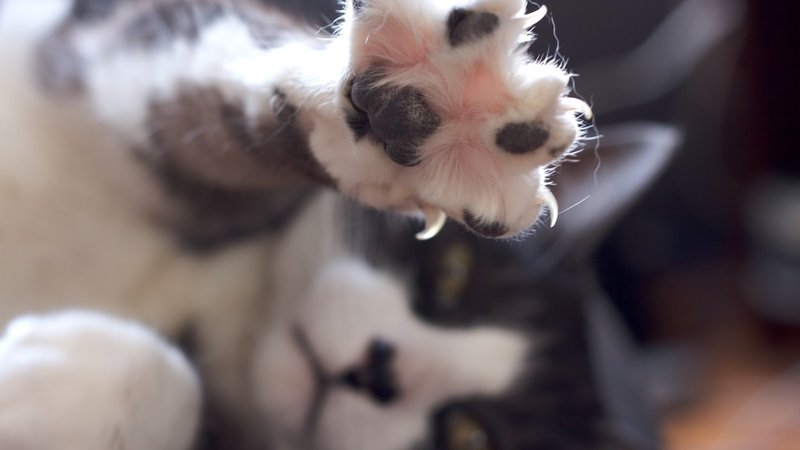
Declawing, also called onychectomy, is a dangerous surgery where a cat's toe is amputated at the last joint(Conrad, 2013). Cats both big and small are declawed across America. Unlike fingernails that are only attached to the skin, Cat's claws are actually not just a toenail, their claws grow from the bone within the third phalanx. The only way to remove the nail, is to cut the bone. So when a cat is declawed, there claws aren’t just removed, part of there bone is removed. The best word meaning declawing would be called phalangectomy which means “excision or removal of the toe bone”(Onychectomy 2016).
Since cats bear most of their weight onto their toes when they are walking, it becomes painful for a declawed cat to bear their own weight while moving. The procedure can also cause infection, tumors and severe arthritis(Conrad 2013). These cats after being declawed have to relearn how to walk, and since they learn how to walk on their toes, they relearn by walking on their wrists, if the arthritis gets really bad overtime, they might even start walking on their elbows. Cats who are declawed might also become very quick to bite when they feel the slightest bit threatened because they can not show their claws or use them to defend themselves. A once playful cat may lethargic once declawed because running around and playing would cause them discomfort(conrad,2013).
What do we want? For a bill to be introduced in the Rhode Island legislature that bans cat declawing throughout the state.
Sources:
Conrad, Jennifer. "DECLAW SURGERY — HEALTH PROBLEMS DUE TO DECLAWING." Declaw Surgery. The Paw Project, 1 Jan. 2013. Web. 17 Jan. 2017.
"Onychectomy." Wikipedia. Wikimedia Foundation, 28 Dec. 2016. Web. 17 Jan. 2017.

Petition Closed
The Issue
Declawing, also called onychectomy, is a dangerous surgery where a cat's toe is amputated at the last joint(Conrad, 2013). Cats both big and small are declawed across America. Unlike fingernails that are only attached to the skin, Cat's claws are actually not just a toenail, their claws grow from the bone within the third phalanx. The only way to remove the nail, is to cut the bone. So when a cat is declawed, there claws aren’t just removed, part of there bone is removed. The best word meaning declawing would be called phalangectomy which means “excision or removal of the toe bone”(Onychectomy 2016).
Since cats bear most of their weight onto their toes when they are walking, it becomes painful for a declawed cat to bear their own weight while moving. The procedure can also cause infection, tumors and severe arthritis(Conrad 2013). These cats after being declawed have to relearn how to walk, and since they learn how to walk on their toes, they relearn by walking on their wrists, if the arthritis gets really bad overtime, they might even start walking on their elbows. Cats who are declawed might also become very quick to bite when they feel the slightest bit threatened because they can not show their claws or use them to defend themselves. A once playful cat may lethargic once declawed because running around and playing would cause them discomfort(conrad,2013).
What do we want? For a bill to be introduced in the Rhode Island legislature that bans cat declawing throughout the state.
Sources:
Conrad, Jennifer. "DECLAW SURGERY — HEALTH PROBLEMS DUE TO DECLAWING." Declaw Surgery. The Paw Project, 1 Jan. 2013. Web. 17 Jan. 2017.
"Onychectomy." Wikipedia. Wikimedia Foundation, 28 Dec. 2016. Web. 17 Jan. 2017.
The Decision Makers

Petition Updates
Share this petition
Petition created on January 17, 2017