
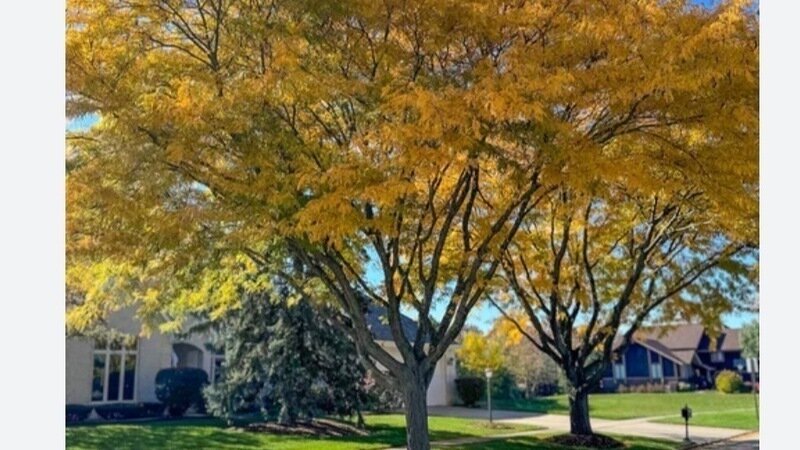
North Sydney Council won’t have to pick up leaves all year round from struggling temperate trees saving fuel and man hours that could be spent planting decent sized ground level pollution filtering plants for all those commuters waiting for buses on Military Rd 😮💨. Or maybe splash out on a real arborist perhaps who understands that in some locations it is hotter than others so you cannot just plant the same tree everywhere!
🌳 How It Survives 40°C
The Shademaster Honey Locust (Gleditsia triacanthos var. inermis) is engineered by nature to act like a master of heat regulation through several specific features:
Micro-Leaf Canopy: It features very small, compound leaflets. Unlike large-leafed trees (like Tulips) that trap heat, these tiny leaflets allow excellent airflow to pass right through the canopy, shedding ambient heat rapidly.
Transpiration Cooling: When supplied with adequate ground moisture, the tree acts like a biological evaporative cooler. It pulls water from deep in the soil and releases it as vapor through its leaves, cooling the immediate tissue.
Deep, Aggressive Root System: To fuel that evaporative cooling during 40°C heat waves, the tree relies on a highly adaptable and deep root system that actively seeks out pockets of deep soil moisture where other plants would dry out.
Stomatal Shutdown: If the soil becomes too dry during extreme heat, the tree will close the microscopic pores (stomata) on its leaves to stop moisture loss, essentially going into a temporary metabolic "holding pattern" until the temperature drops.