Church Street Marketplace

The Issue

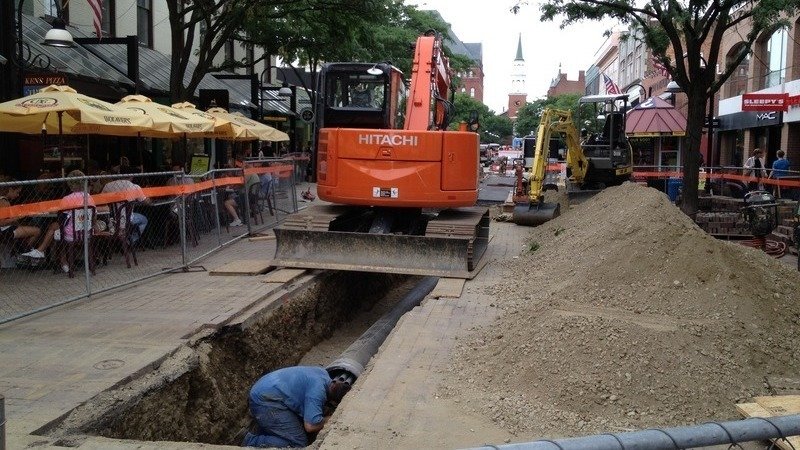
Many of our businesses and employees derive a substantial portion of their income during the month of August. Choosing to tear up Church Street during the busiest month of the year poses an unreasonable financial hardship for those affected, as well as an eyesore and inconvenience for the guests visiting our city, many for the first time.

This petition had 812 supporters

The Issue

Many of our businesses and employees derive a substantial portion of their income during the month of August. Choosing to tear up Church Street during the busiest month of the year poses an unreasonable financial hardship for those affected, as well as an eyesore and inconvenience for the guests visiting our city, many for the first time.

The Decision Makers

Church St Marketplace Commission
Responded
June 27, 2012 Dear Friends and Supporters of the Church Street Marketplace: Thank you for caring so deeply about the Church Street Marketplace and for supporting our downtown. I’m writing to share some information about our electrical and lighting project. It will provide you with a more complete view of the construction that’s happening on Church Street. Best to you, Ron Redmond, Church Street Marketplace, ron.redmond.vt@gmail.com or 802-865-7254. Q. What is the Church Street Electrical and Lighting Project? A. A project funded by the Federal Highway Administration to replace Church Street’s aging electrical system, originally built in 1981. The project includes new underground conduit, replacing our existing street lights with 46 new LED street lights and improved access to electricity for cart vendors and special events. The project will run from April to November, 2012. Q. What’s wrong with the current electrical system? Why not just keep what you have? A. Church Street’s lighting system was built in 1981 and needs to be replaced. Two street light poles have fallen over in the past 18 months, because the bases are rusting. Underground conduit is rusted in many locations and wiring no longer connects to fixtures. The reason many of our street lights don’t work is because there is no longer a power source. Now is the time! Q. Why did this happen? A: When Church Street was created, Church Street’s charter required that no Burlington taxpayer dollars be spent on its operations. The Church Street Marketplace has never had the financial capacity to maintain the lighting system. We have been making “band aid” repairs over the last 30 years. Also, the original conduit (steel pipe) and wiring are outdated and more and more sections of the lighting system are failing each month. Q: What are the benefits of the Lighting Project? A: Safer, more consistent lighting at night using LED technology. Our customers will feel safer when they walk on Church Street at night. Each light fixture will have its own “dimmer” switch so that we can control the brightness in specific areas. Each street light will accommodate banners, and feature accent lighting, that can be aimed on a storefront or at architectural features of a building. Separate lighting systems for Cart Vendors, Special Events (such as Christmas lights). We will no longer be plagued by temporary power failures. When electricity is on, it will stay on! Irrigation system for our trees. The new drip irrigation system is an efficient and green way to provide the nutrients and water that urban trees need to grow happy and healthy. Q. How long have you been planning this project? Why can’t you wait until another time? A. We began planning the replacement of Church Street’s electrical system in 2005 when we learned we would receive a federal earmark from the U.S. Congress. In 2005, the US Congress passed the Safe, Accountable, Flexible, Efficient Transportation Equity Act, the largest surface transportation investment in our Nation's history with guaranteed funding for highways, highway safety, and public transportation. Vermont’s Congressional delegation helped secure funds for a range of projects, including improvements and enhancements in our downtown. Because the deterioration of Church Street’s electrical system has been escalating over the past decade, it was imperative that a new system be built. These funds were seen as the only way to address the deterioration. The project has been delayed several times because of its complexity and because of the impact of the weak economy on Church Street and our downtown. We wanted to begin this project only when we knew we would be bringing the least amount of disruption possible to our businesses. The construction plan has been designed in a way that will speed up construction and minimize impact on Church Street business owners. Q: Why did you delay the project for so many years? A: - The Marketplace Commission spent the past seven years laboring over this particular project because of its complexity, cost and the amount of time required to complete it. They knew that the project would be disruptive and worked hard to find ways to reduce the disruption for our businesses. Every year, between 2008 and 2011, the project was postponed because the economy on Church Street and in our downtown was so weak. Information was gathered from both surveys and face-to-face conversations. In 2009, for example, the Street experienced an 11% vacancy rate – the highest vacancy rate in more than two decades. Vacany is now at about 4%. In 2011, the Commission surveyed business owners and noted that economic conditions on the Street were moving in a more positive direction. The decision was made in late 2011 to move forward with construction, to begin in the spring, 2012. That plan was nearly cancelled in January of 2012, when, in the 11th hour, Vtrans requested an additional review of construction documents. The potential delay would have pushed the project back to a May or June start time – an unacceptable start time. Q: Why not just use a portion of the federal for this project, to pay for the cost of delaying the project? A: In the fall of 2011, the Department of Public Works informed the Marketplace staff and Commission that the capital budget used to fund improvements in the downtown since 2005 had been overspent by $1 million. The capital projects to date had included: a) rebuilding the steps on the Church Street side of City Hall; b) rebuilding the Marketplace Alleyway between the Marketplace Garage and the Marketplace; c) enhancing lower Church Street between Main and King Streets; d) enhancing St. Paul Street between Main and College Streets; d) casting the Big Joe Burrell statue now on Church Street; e) raising the grade of the Church and Cherry Street intersection. 80% of those capital funds came from SAFETEA-LU– The Safe, Accountable, Flexible Efficient Transportation Equity Act of 2005, the largest surface transportation investment in our Nation's history with guaranteed funding for highways, highway safety, and public transportation. 20% were local match (meaning from the City’s capital budget). This $1 million shortfall meant that the remaining projects – Church Street Electrical and Lighting Project and the Downtown Wayfinding Signage Program – could not be adequately funded. Cost saving strategies were put into place to help bring down the cost of the electrical and lighting project. In early winter, the Marketplace Commission agreed (and Vtrans and Federal Highways approved) the transfer of a separate $960,000 earmark the Church Street Marketplace had received in 2009, slated to bring improvements to Church Street’s top block. That particular earmark was 100% money, meaning that a 20% match was not required. That $960,000 earmark, combined with a $100,000 grant secured from the Vermont Downtown Program, assured that the Church Street Electrical and Lighting Project would move forward in the Spring of 2012. It is hoped that any excess funds remaining from the Church Street Electrical and Lighting Project can be allocated towards the Downtown Wayfinding Signage Program, and Top Block enhancements. Q: Why not suspend this project for 30 days or more, and complete it in the late fall. A: It pushes the end date of the project out. While we are confident that the project will go as planned, every construction project must anticipate unexpected occurrences that could cause delays. The longer we draw the project out, the end date moves beyond November which brings colder temperatures when certain aspects of the project cannot be completed. For example, asphalt paving, brick and tree installation. Crews have been hired based on the expectation that they will work within a certain time frame. If the project is extended significantly beyond the original date, the construction contractor risks potential lost opportunities. 80% of the cost of the project is funded through the Safe, Accountable, Flexible, Efficient Transportation Equity Act of 2005, and administered by the Federal Highway Administration (FHWA). Any changes to the project must be approved by the federal government. Preliminary discussions with FHWA are that suspension would most likely not be approved. Cost of suspending the project (paying the construction crew to be idle) would have to be deducted from the funds budgeted for the project. That would mean less funds for other remaining capital projects, like the Downtown Wayfinding Signage Program and improvements to the Top Block of Church Street. Given the current challenges our US Congress is having about government spending, we anticipate that in the future, earmarks will be rare or non-existent. Q: Why didn’t you break up the contract into different units of work to be completed over a period of years. A: Because doing so would make the project more costly. Also, laying conduit downhill (Church Street slopes downward from North to South) has be done in a linear manner. By doing so, we ensure that the conduit fits together properly and will last over time. The project needs to be done in sequence. Q: What will be the disruption in front of a Church Street business? A: We intend to limit work to a block by block interruption. However, there will be activities on more than one block at a time. For example, once the new light poles have installed and energized, we will be removing the existing poles, bases and related infrastructure as we are able to switch to the permanent systems and fixtures. The challenge here is that we need to maintain the old infrastructure and lights on a temporary basis. If Excavation is occurring in front of a particular business, there will be an approximately seven day period when construction will extend to the granite curb line in front of your business between 7 AM and 4 PM Weekdays. If you have an outdoor café, it may or may not be available for that seven day period. Because construction ends each weekday at 4 PM, your café should be available for the dinner hours during those seven days – those with cafes on the east side of the street will have more limited space available – and the Marketplace will work directly with those businesses to adjust their café dimensions accordingly. Q: Why is the construction easier and less time consuming when the contractor reaches City Hall Block (Church Street between Main Street and College Street). A: The 18” conduit encasement runs to a 5 foot square manhole that is at the north end of City Hall block. Individual conduits and irrigation piping will be run south of the City Hall Block manhole to the light poles, trees and vendor bollards. The installation of individual conduits only take several steps out of the process which allows us to complete the pipe installation on City Hall Block in a few days; much less than time needed on the Mall Block (Cherry to Bank) and Second Block (Bank to College). Q: How long will the construction crew be on each block? A: The construction crew, for example, started work on our Mall Block (Church Street between Cherry and Bank Street) on Monday, June 11. As of this writing, we anticipate they’ll be off the Mall Block by the end of the month – so approximately 20 days. Construction only takes up about ½ of the block at one time (or 150 feet). Each block is approximately 400 feet long. Q: What about construction equipment in front of my business? A: Yes. Wright & Morrissey will use back hoes, dump trucks and other construction vehicles. Q: What are the different types of construction that will occur? A: Digging a trench down the center of the street, five feet wide, four feet deep. The construction crew will excavate 150 feet at a time. Each block is approximately 400 feet long. The construction crew will use four-foot high, 150 foot long, moveable chain link fencing around their construction area. After 4 PM, the chain link fencing will be compressed to the center of the street – so that outdoor cafes can expand for the dinner hour. Trenches outside of fenced in and secure areas will be covered at the end of the work day. Underground directional drilling from the center of Church Streets out to the east and west sides where new street light poles will be located. Burying 18” wide electrical conduit in the trench on the Mall and Second block. Burying a narrower electrical conduit on the Top Block and City Hall Block Filling in the trench Repairing manholes as needed: Many of Church Street’s manholes have not been addressed since 1981. This work will ensure their continued stability. We are abandoning certain handholes. BED may be repairing some of their vaults based on the study that they commissioned. This work has not been added into our scope and needs to be clarified with BED. Installing new trees and/or tree grates: Installing 19 new trees, primarily on the top block (Cherry to Pearl). Replacing stone bases around trees with metal tree grates. Installing new light poles with fixtures: This involves “vacuum excavating” a 4’ x 4’ hole for each new light pole. Due to potential unforeseen conditions this may change. Brick Replacement: Laying bricks down over the filled trench , around new light pole bases, at the removed existing light poles and around reworked tree grates Q: Who is your construction contractor? A: Wright & Morrissey, Inc., the oldest continually active general contractor in Vermont, incorporated in 1947. The firm has constructed a multitude of large and small projects throughout Vermont, New York and Northern New England including office buildings, housing developments, recreational buildings, manufacturing plants, public works projects and more. Wright & Morrissey successfully completed Church Street construction projects in 1994 (top block fountain), 2003 (rebricking portions of Church Street), improvements to the Marketplace Alleyway in 2008, and stair reconstruction on the Church Street side of City Hall, also in 2008. Q: What is the start and end time of construction? A: April through November. Q: What are the construction crews’ hours? A: MONDAY – FRIDAY, 7 AM to 4 PM. The crew may have to work on a weekend but that will be thoroughly discussed and reviewed before making that decision. The crew will be working a few overnights at the intersections. Q: Who will manage the Street Light system when it’s completed? A: Burlington Electric Department will maintain the basic infrastructure (conduit, poles, street lights); Church Street will maintain all accent lighting, power for street vendors, events.
City of Burlington
City of Burlington
Mayor Miro Weinberger
Celia Daly
Celia Daly
Marketplace Commissioner
Eli Lesser Goldsmith
Marketplace Commissioner
Jeff Nick
Jeff Nick
Marketplace Commissioner

Petition Updates

Share this petition

Petition created on June 22, 2012