

Cannabis Legalization: A Safer, Smarter, and More Prosperous India
The Issue
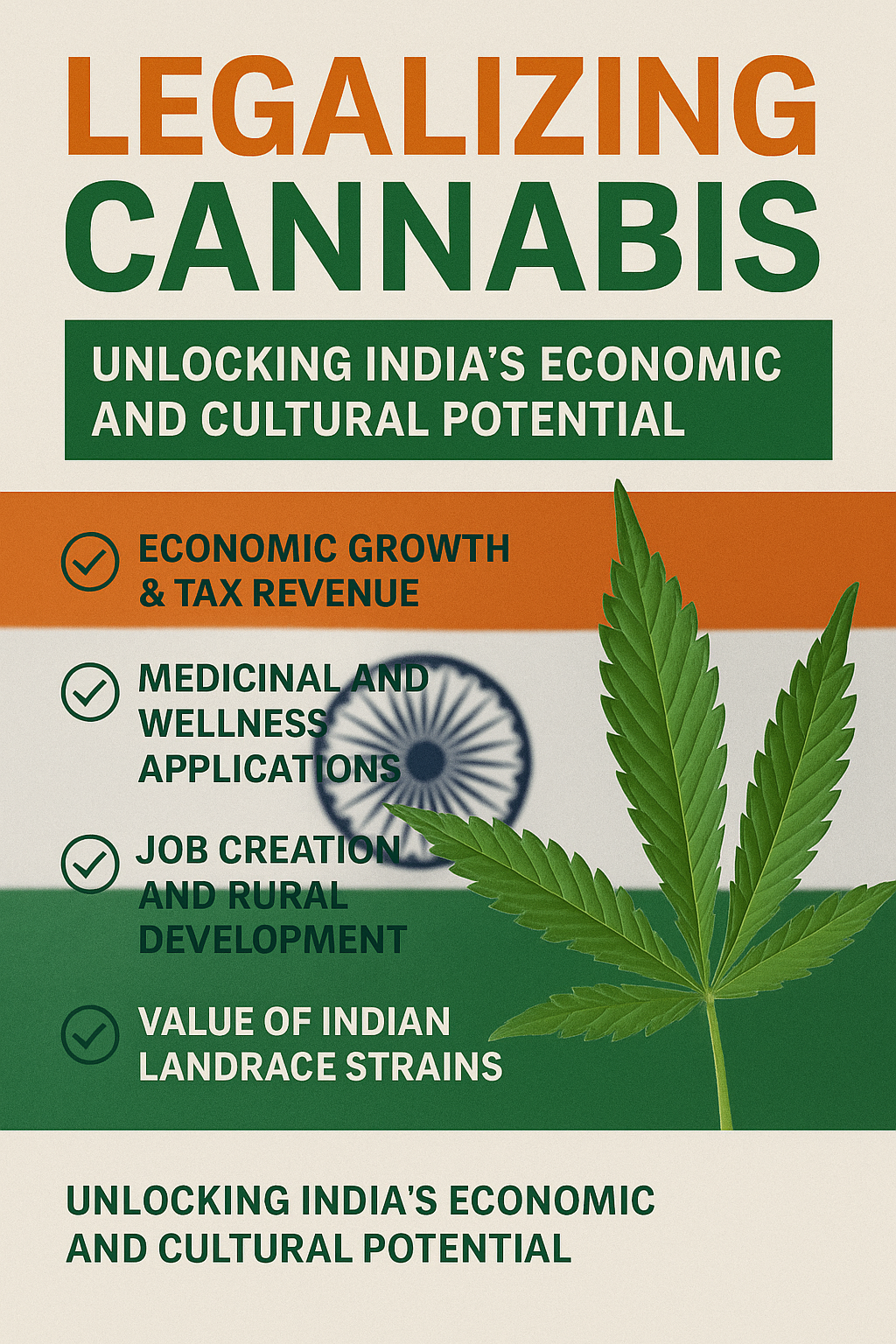
Reimagining Cannabis Legalization: A Path to India’s Economic and Cultural Renaissance
I have personally witnessed the positive behavioral changes in people who use cannabis, based on my own community survey. However, this ancient plant remains illegal in India, despite its long-standing cultural, medicinal, and spiritual significance. Today, I urge our policymakers to reconsider cannabis legalization. By doing so, we can not only unlock immense economic opportunities but also revive an ancient tradition that has been deeply rooted in Indian heritage.
Cannabis legalization could serve as an alternative to the liquor industry, which has long been associated with societal issues such as domestic violence, road accidents, and health complications. In comparison, cannabis is less harmful, less addictive, and even offers therapeutic benefits when consumed responsibly. The economic potential is undeniable. A Deloitte study projected that legalizing marijuana in Canada would bring in more than $4 billion in net revenue (Deloitte, 2016). If India, with its vast agricultural base and natural cannabis cultivation regions, adopted a similar approach, we could see an equally transformative impact on our economy.
Economic Growth and Tax Revenue
A regulated cannabis industry could generate billions in revenue for India. Taxation on cannabis products—just like tobacco and alcohol—could fund infrastructure projects, healthcare, and education. Moreover, the global cannabis market is expected to reach over $100 billion in the next decade. With its favorable climate and heritage strains, India is well-positioned to emerge as a major exporter of both medicinal cannabis and hemp-based products.
Job Creation and Rural Empowerment
Legalization could create millions of jobs. From cultivation and harvesting to research, processing, and retail, the cannabis industry would open up a vast employment network. Rural areas like Himachal Pradesh, Uttarakhand, and parts of the Northeast—where cannabis naturally grows—could become economic powerhouses. Farmers who currently depend on low-profit crops could earn far more from government-regulated cannabis cultivation.
Medicinal and Wellness Benefits
Cannabis has proven medicinal properties. It can alleviate chronic pain, manage epilepsy, reduce cancer-related symptoms, and help with anxiety and insomnia. In Ayurveda, cannabis has been used for centuries as part of traditional remedies, often referred to as Vijaya. Products like bhang have been integral to our cultural and spiritual practices, especially during festivals like Holi and Maha Shivratri. Reviving this ancient wisdom in a modern, regulated context could give India an edge in the global medicinal cannabis market.
Boost to Hemp and Sustainable Industries
Industrial hemp, a non-psychoactive form of cannabis, has countless applications—from eco-friendly textiles and biodegradable plastics to biofuels and nutritional supplements. Uttarakhand has already legalized hemp cultivation, but a national policy could transform India into a global leader in sustainable hemp production. This aligns perfectly with our environmental goals and the push for green industries.
Reducing the Black Market
By legalizing cannabis, we can undercut illegal trade networks, ensuring that consumers have access to safe, regulated products. This would reduce the burden on law enforcement, courts, and prisons, allowing resources to be redirected towards more pressing criminal issues.
Tourism Potential
Countries like Thailand and states in the USA have witnessed a surge in cannabis tourism. India, with its spiritual connection to cannabis, could become a global destination for wellness and cultural tourism. Imagine curated retreats in Himachal or Rishikesh where yoga, Ayurveda, and cannabis wellness come together as a holistic experience.
The Value of Indian Cannabis Strains
India is home to some of the world’s most celebrated cannabis landraces—unique strains that have naturally evolved over centuries. Malana Cream (Himachal Pradesh) is globally renowned for its purity and aromatic resin. Idukki Gold (Kerala) and Indian Kush (Kashmir region) are similarly prized for their unique chemical profiles and medicinal properties.
These indigenous strains are part of our heritage and could dominate the global market if properly cultivated and protected under legalization. They hold immense export potential, with global consumers already recognizing their superior quality. Legalization would not only protect these strains from illegal trafficking but also give local farmers access to international markets under fair trade practices.
Conclusion
Cannabis is not just an economic opportunity—it’s part of our culture, history, and future. Legalizing cannabis would create jobs, generate revenue, reduce crime, and position India as a leader in the global wellness and sustainable industries. Most importantly, it would give our indigenous strains the recognition they deserve on the world stage.
It is time for India to rise above outdated taboos and embrace this ancient plant for the modern era. Cannabis legalization is not just a policy change; it is an opportunity to drive economic growth, preserve cultural heritage, and create a healthier, more responsible society.

4
The Issue
Reimagining Cannabis Legalization: A Path to India’s Economic and Cultural Renaissance
I have personally witnessed the positive behavioral changes in people who use cannabis, based on my own community survey. However, this ancient plant remains illegal in India, despite its long-standing cultural, medicinal, and spiritual significance. Today, I urge our policymakers to reconsider cannabis legalization. By doing so, we can not only unlock immense economic opportunities but also revive an ancient tradition that has been deeply rooted in Indian heritage.
Cannabis legalization could serve as an alternative to the liquor industry, which has long been associated with societal issues such as domestic violence, road accidents, and health complications. In comparison, cannabis is less harmful, less addictive, and even offers therapeutic benefits when consumed responsibly. The economic potential is undeniable. A Deloitte study projected that legalizing marijuana in Canada would bring in more than $4 billion in net revenue (Deloitte, 2016). If India, with its vast agricultural base and natural cannabis cultivation regions, adopted a similar approach, we could see an equally transformative impact on our economy.
Economic Growth and Tax Revenue
A regulated cannabis industry could generate billions in revenue for India. Taxation on cannabis products—just like tobacco and alcohol—could fund infrastructure projects, healthcare, and education. Moreover, the global cannabis market is expected to reach over $100 billion in the next decade. With its favorable climate and heritage strains, India is well-positioned to emerge as a major exporter of both medicinal cannabis and hemp-based products.
Job Creation and Rural Empowerment
Legalization could create millions of jobs. From cultivation and harvesting to research, processing, and retail, the cannabis industry would open up a vast employment network. Rural areas like Himachal Pradesh, Uttarakhand, and parts of the Northeast—where cannabis naturally grows—could become economic powerhouses. Farmers who currently depend on low-profit crops could earn far more from government-regulated cannabis cultivation.
Medicinal and Wellness Benefits
Cannabis has proven medicinal properties. It can alleviate chronic pain, manage epilepsy, reduce cancer-related symptoms, and help with anxiety and insomnia. In Ayurveda, cannabis has been used for centuries as part of traditional remedies, often referred to as Vijaya. Products like bhang have been integral to our cultural and spiritual practices, especially during festivals like Holi and Maha Shivratri. Reviving this ancient wisdom in a modern, regulated context could give India an edge in the global medicinal cannabis market.
Boost to Hemp and Sustainable Industries
Industrial hemp, a non-psychoactive form of cannabis, has countless applications—from eco-friendly textiles and biodegradable plastics to biofuels and nutritional supplements. Uttarakhand has already legalized hemp cultivation, but a national policy could transform India into a global leader in sustainable hemp production. This aligns perfectly with our environmental goals and the push for green industries.
Reducing the Black Market
By legalizing cannabis, we can undercut illegal trade networks, ensuring that consumers have access to safe, regulated products. This would reduce the burden on law enforcement, courts, and prisons, allowing resources to be redirected towards more pressing criminal issues.
Tourism Potential
Countries like Thailand and states in the USA have witnessed a surge in cannabis tourism. India, with its spiritual connection to cannabis, could become a global destination for wellness and cultural tourism. Imagine curated retreats in Himachal or Rishikesh where yoga, Ayurveda, and cannabis wellness come together as a holistic experience.
The Value of Indian Cannabis Strains
India is home to some of the world’s most celebrated cannabis landraces—unique strains that have naturally evolved over centuries. Malana Cream (Himachal Pradesh) is globally renowned for its purity and aromatic resin. Idukki Gold (Kerala) and Indian Kush (Kashmir region) are similarly prized for their unique chemical profiles and medicinal properties.
These indigenous strains are part of our heritage and could dominate the global market if properly cultivated and protected under legalization. They hold immense export potential, with global consumers already recognizing their superior quality. Legalization would not only protect these strains from illegal trafficking but also give local farmers access to international markets under fair trade practices.
Conclusion
Cannabis is not just an economic opportunity—it’s part of our culture, history, and future. Legalizing cannabis would create jobs, generate revenue, reduce crime, and position India as a leader in the global wellness and sustainable industries. Most importantly, it would give our indigenous strains the recognition they deserve on the world stage.
It is time for India to rise above outdated taboos and embrace this ancient plant for the modern era. Cannabis legalization is not just a policy change; it is an opportunity to drive economic growth, preserve cultural heritage, and create a healthier, more responsible society.
The Decision Makers
Petition Updates
Share this petition
Petition created on 18 July 2025