

Bring London Buses back to Waltham Abbey – fix our inadequate public transport.
The Issue
🚨 UPDATE: PETITION TEXT UPDATED - 21ST JUNE 2026. This campaign has come further than ever before - and we believe we are closer to real change than at any point since it began.
When we relaunched this petition, we had gathered over 1,500 signatures and secured remarkable support across every level of government. Today, that number stands at over 2,500 - the equivalent of more than 1 in 9 people living in Waltham Abbey - with signatures from residents, businesses and supporters across the area.
Here is how far this campaign has come:
Dr Neil Hudson MP, our Member of Parliament for Epping Forest, gave his full support from the outset, stating: “I am very happy to support this campaign and believe it is a very important one... residents of Waltham Abbey are no different and deserve access to the same services as others across London... you can be assured of my support for this vital campaign.”
Sir Iain Duncan Smith MP, neighbouring Member of Parliament for Chingford and Woodford Green, has backed our call for TfL to reinstate services between Waltham Abbey and Chingford, and has pushed TfL directly to take action.
The Mayor of Waltham Abbey, Cllr Shane Yerrell, went above and beyond, volunteering to have this petition submitted at the London Assembly in his own name - a decision that undoubtedly helped secure a unanimous vote in our favour.
The London Assembly unanimously passed a motion proposed by Cllr Emma Best AM and seconded by Cllr Keith Prince AM, calling on TfL to reinstate services between Waltham Abbey and Chingford, with cross-party support and not a single vote against it.
At Epping Forest District Council’s Overview & Scrutiny Committee meeting with TfL, Waltham Abbey councillors from across parties pushed directly for reinstated TfL bus services.
And thanks to all of the above, Transport for London has confirmed - on the record - that it is willing to work with Essex County Council to restore bus services for Waltham Abbey, despite the initial negative response from Mayor of London Sadiq Khan. TfL has made clear it would seek a financial contribution from Essex County Council, our local transport authority.
Under the previous administration at Essex County Council, this is where things stalled. Despite holding millions of pounds in government bus funding, despite TfL's stated willingness to talk, despite overwhelming local and cross-party political support, and despite a unanimous London Assembly vote, Essex County Council did not initiate formal discussions with TfL. Our previous county councillor, who had described the London Assembly motion as a “massive boost for Waltham Abbey,” went silent.
Things have changed.
Following the delayed local elections in May 2026, Essex County Council is now under new administration. James Abbott has been elected as our new county councillor for Waltham Abbey, and has already shown that he is listening to residents’ concerns. Essex County Council has now secured more than £68 million in government funding for bus improvements: over £32 million in revenue funding through to 2029, and over £36 million in capital funding through to 2030 - dwarfing the funding available to the previous administration.
Most significantly of all - this campaign has now reached Westminster. In June 2026’s Transport Questions, Dr Neil Hudson MP told Parliament: “Residents in Waltham Abbey have no access to the tube at all and have been left with a limited bus network since Transport for London withdrew services. Young people are unable to get to the next stage in their education, and residents are struggling to get into London. I pay tribute to the Bring Back Red Buses Waltham Abbey campaign. Please can the Government press the Mayor of London, TfL and Essex County Council to work together to give the people of Waltham Abbey and beyond the transport services they so desperately need?” This is now part of the official Parliamentary record.
Commenting afterwards, he stated that “Waltham Abbey has been left behind for far too long. With ULEZ placing additional financial pressure on local people, restoring TfL bus services is a necessity. I will continue to press the Government, TfL, the Mayor of London and Essex County Council until Waltham Abbey gets the fair, reliable and affordable transport network it deserves.”
Meanwhile, the cost of inaction continues to mount. From 27th July, Arriva is cutting the already inadequate evening service of its commercial route 66 between Loughton and Waltham Abbey - moving the last bus to Waltham Abbey from the tube station from 22:03 to just 19:46. It is a stark illustration of exactly what this campaign has always warned about: a town left entirely dependent on commercial operators, with no contract, no obligation, and no say when a private company decides to cut services further.
The funding exists. TfL is willing. Two MPs are behind this cause. Local councillors are behind this cause. The London Assembly has voted unanimously. A new administration is now in place at Essex County Council. Every piece needed to finally fix this is on the table at the same time - for the first time in this campaign's history.
What's missing is the final step: Essex County Council formally sitting down with TfL.
🚨 If you believe Waltham Abbey deserves the comprehensive, properly integrated and affordable public transport service it once had, sign and share this petition now. Help us turn this unprecedented level of support into action.
👇 Scroll down to read the original petition and our demands in full. It's time to turn up the volume - don't let them ignore Waltham Abbey.
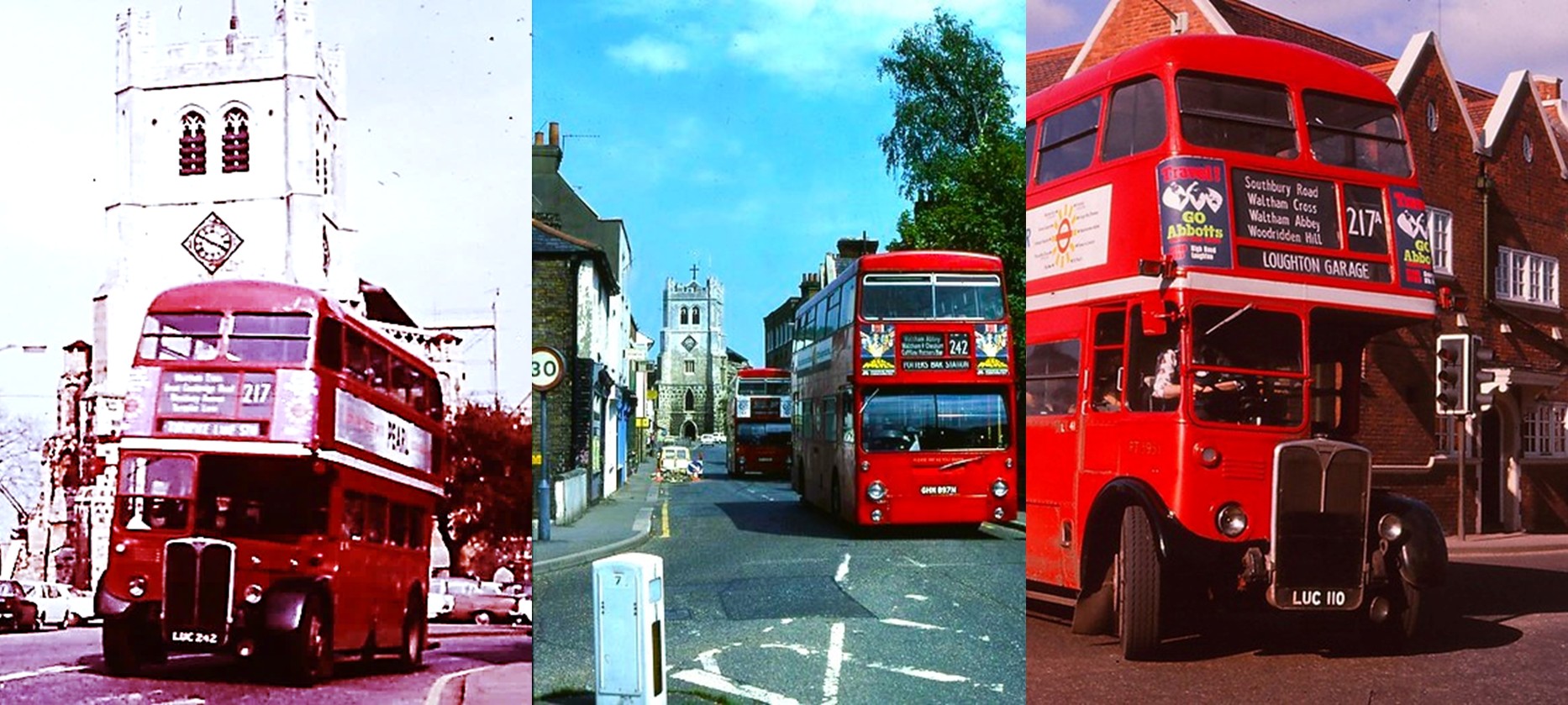
Public transport options in Waltham Abbey are a far cry from decades ago, when the town formed an integral part of the London bus network. Today, this suburban commuter town of 23,000 people – sitting right on the edge of the Greater London Authority boundary, within the Lee Valley and wider Lee Valley Regional Park, home to the magnificent Waltham Abbey Church, the grave of King Harold, the Royal Gunpowder Mills, the Lee Valley White Water Centre, Epping Forest, an ancient market, and a wealth of historic pubs, restaurants and independent businesses – is disadvantaged by a mainly unsubsidised commercial service that is unfit for purpose, whilst neighbouring areas in almost every direction - on both sides of the GLA boundary - remain well-served by reliable, properly integrated, TfL-contracted routes.
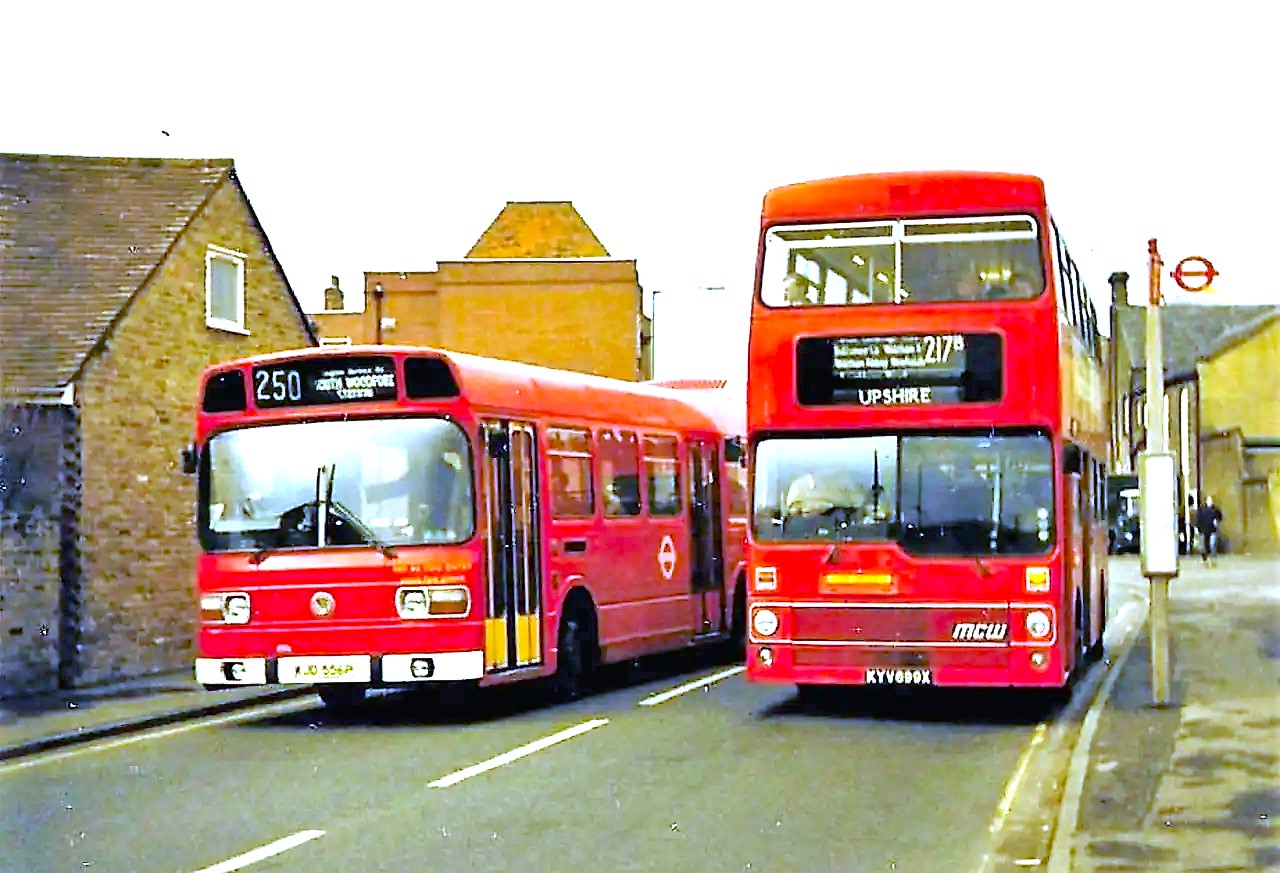
Locals, visitors, commuters and businesses alike once relied on a town that was thoroughly well-connected. Red buses provided Waltham Abbey with direct and comprehensive links to Chingford, Loughton, Enfield Town, Cheshunt, Waltham Cross, South Woodford, Chigwell, Buckhurst Hill, Potters Bar and Epping, among other areas - carrying residents to neighbouring areas and stations for work and opportunity, and bringing footfall into Waltham Abbey in return. Night buses to and from Trafalgar Square would even serve the town, terminating in Upshire, showing just how integral Waltham Abbey once was to the wider London network, not a forgotten outpost on its fringe.
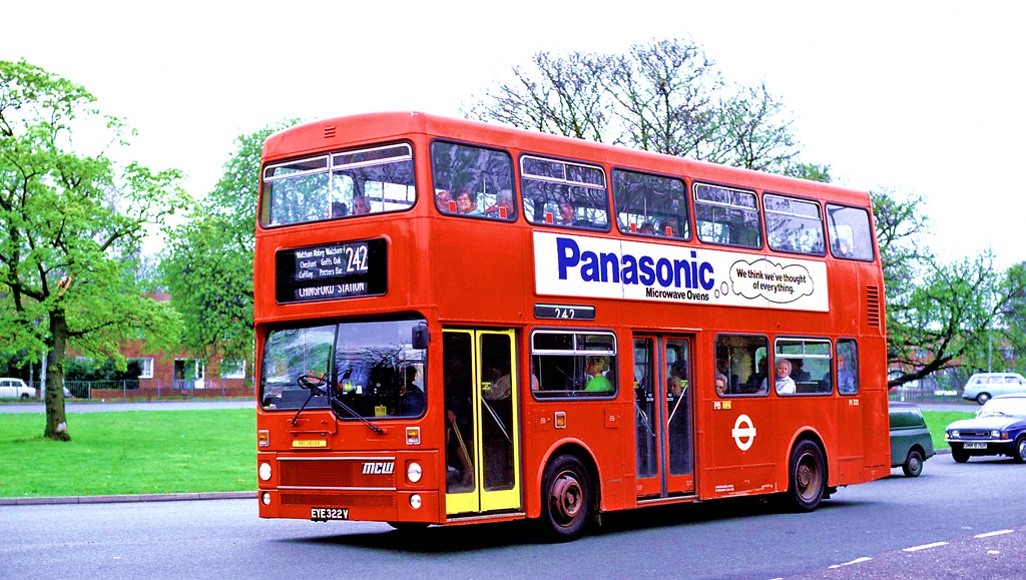
The London Transport roundel logo, until relatively recently, featured on almost every bus stop in the town. The 250 ran from Waltham Cross to South Woodford via Loughton tube station; the 317 ran from Upshire to Enfield Town; and generations of locals used route 242 to access Chingford, Cheshunt and beyond – that's just to name a few former London Transport routes. The iconic Routemaster bus was a regular sight in Waltham Abbey, whether on Sun Street, Honey Lane or the Ninefields Estate.
Today, things are much different. People travelling to and from Waltham Abbey are reliant on cars for journeys that should easily and affordably be made on public transport, contributing to the town's traffic problem. The town is less accessible to visitors, and neighbouring areas are less accessible from Waltham Abbey. What should be both a thriving London suburb and an attractive tourist destination is constricted by unreliable buses. Our local businesses are suffering, and local people are isolated.
Waltham Abbey is a commuter town without a train or tube station – a comprehensive bus service, properly integrated with the wider TfL network is therefore essential. The Ultra Low Emission Zone (ULEZ) now borders the town directly, threatening drivers with a £12.50 daily charge for driving into Greater London, furthering the need for restored links. Despite adjoining this administrative boundary, Waltham Abbey no longer has a single bus that crosses it. Our town is more desperate than ever for an adequate public transport service, yet remains neglected and disconnected from the wider network.
Following the ULEZ expansion, Mayor of London Sadiq Khan stated, “When I made the tough decision to expand the ULEZ London-wide, one of my key commitments was to improve transport links in outer London.” That commitment has not been honoured in this area.
It is sometimes suggested that low passenger numbers on withdrawn routes justify their loss, and that bus services should simply follow commercial demand. But TfL bus routes are not run for profit - they are public services, operated under contract, with obligations to the communities they serve regardless of whether they turn a surplus. The overwhelming majority of TfL's bus network operates at a loss, deliberately subsidised because reliable public transport is a public good, not a commercial product. Nor can demand be fairly measured against a service that was itself unreliable, infrequent, or, as in Waltham Abbey's case, withdrawn from the town entirely while continuing to run to its very edge. Low usage of a poor service is not evidence that a good service wouldn't be used. For decades, frequent London buses serving this exact corridor were well-used by generations of residents. The demand did not disappear. The service did.
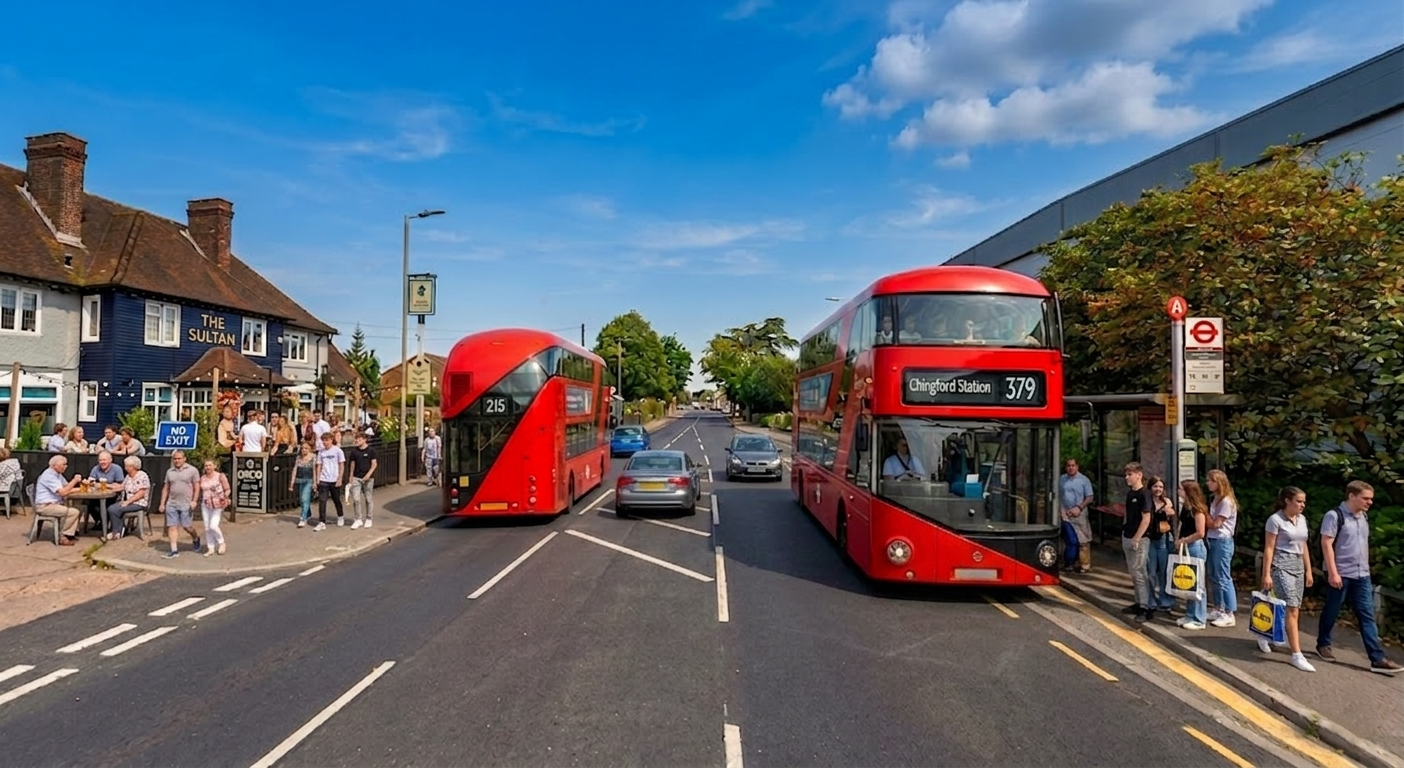
At present, not a single bus provides a service between Waltham Abbey and neighbouring Chingford – two adjacent towns just ten minutes apart by car, separated by nothing more than an invisible administrative line. This is simply unacceptable, and cannot be allowed to continue. We call on Transport for London to restore a frequent, daily London Buses link between Waltham Abbey and neighbouring Chingford by extending route 215 (which currently terminates at the Lee Valley Campsite on Sewardstone Road – just within the Waltham Abbey boundary), and route 379 (which also terminates on Sewardstone Road), to at least Waltham Abbey Town Centre. Both routes are needed, and both routes should be extended – each offers a different, vital connection, and together they would finally reconnect our town to the wider TfL network in full.
Route 215 is a 5-mile route running between Walthamstow Central and the Lee Valley Campsite on Sewardstone Road via Chingford Mount, at a frequency of approximately every 20 to 30 minutes, 7 days a week. The first bus departs Lee Valley Campsite at 05:15 on Mondays to Saturdays, and 06:50 on Sundays. The last bus arrives at Lee Valley Campsite at around 00:50, 7 days a week. The route enters the Waltham Abbey boundary at the Yardley Lane Estate, but terminates at the Lee Valley Campsite on Sewardstone Road, leaving no public transport towards Waltham Abbey itself.
Route 379 is one of the shortest bus routes in London (2 miles), running between Chingford Station and the Yardley Lane Estate on Sewardstone Road (which lies on the Waltham Abbey Town Council border) via Kings Head Hill. It was established to partly compensate for the loss of route 242 between Chingford Station and Waltham Abbey. The route runs approximately every 15 to 30 minutes, 7 days a week. The first bus departs Yardley Lane at 05:09 (06:20 on Sundays), and the last bus from Chingford Station arrives at Yardley Lane at around 00:50, throughout the week.
Chingford Station sits at the heart of this issue. It is not merely a railway station; it is a key local transport hub, providing London Overground services and serving as the interchange point for numerous TfL bus routes fanning out across north-east London, including connections to Whipps Cross Hospital and local schools attended by many Waltham Abbey students. For generations, Waltham Abbey residents reached this hub directly by bus. Restoring this link is not just about reaching Chingford or vice versa – it is also about restoring Waltham Abbey’s access to the entire onward TfL network that Chingford Station unlocks.
The stretch between Waltham Abbey and Chingford was once one of the most frequently served corridors in the area, with London bus route 242 running every 10 to 30 minutes from early mornings to late evenings. Even on a Sunday night, the final bus from Chingford Station to Waltham Abbey would leave as late as 00:10. Just compare this with the situation Waltham Abbey finds itself in today – at a time this service is needed more than ever, not a single bus serves this stretch. Many drivers are now required to pay a £12.50 daily charge to enter Chingford, whilst all bus stops on Sewardstone Road towards Chingford (except the Lee Valley Campsite) have no public transport service whatsoever. The cost of this gap to local people and businesses on both sides of the GLA boundary is severe, and it is felt every single day.
Extending route 379 would restore the much-needed link between Waltham Abbey and Chingford Station, while extending route 215 would restore the long-lost link to Chingford Mount and Walthamstow Central. Together, they would breathe life back into a corridor that has been quietly dying for years - home to residents, housing estates, care homes, and key places of employment and leisure that remain completely unreachable without a car: the Premier Inn hotel, the Lee Valley Campsite, Gunpowder Park, the large Sainsbury's Waltham Point distribution centre, and the Bakers Arms and Plough pubs among them. Restoring this link would reconnect every one of them, with real benefits for local people, for tourism, and for the wider local economy. Guests staying at the hotel or the campsite would, for the first time in years, be able to reach Waltham Abbey itself by public transport - a meaningful boost for a town whose tourism potential has long outstripped its transport links. And the businesses along this corridor, several of which operate around the clock, employ a significant number of local people who currently have no reliable way to get to work. Two neighbouring communities, both significant centres of population, separated by a gap that should never have been allowed to exist.
This petition has received endorsements from several businesses along the A112 Sewardstone Road, from Waltham Abbey Football Club, to the care homes at Ashbrook Court and 1 Sewardstone Close, where workers, residents and families are desperately seeking restored public transport between Waltham Abbey and Chingford.
Fares on the limited services that do operate in the town are expensive, inconsistent and complex, varying between commercial operators. Tickets issued by one operator are often not accepted by another, forcing passengers to navigate a costly, fragmented system with different fares, ticket types and conditions. Despite all nearby train and tube stations being within TfL fare zones 5, 6 and 7, accepting TfL Oyster and contactless alongside most buses in neighbouring areas, our local buses are not integrated with TfL's payment methods and fare caps – this is especially detrimental to tourists and visitors, and results in more expensive journeys for locals. Waltham Abbey’s bus users are the exception to a system that works seamlessly for everyone around them.
The contrast is stark. On TfL services, an adult fare to any stop is just £1.75. This £1.75 fare also provides unlimited journeys on any TfL bus service within the hour, via the Hopper fare. Under-16s travel free with a Zip Oyster photocard. Bus services in neighbouring areas like Loughton and Waltham Cross benefit from this. In Waltham Abbey, none of it applies. A single adult ticket to Loughton Station costs around £4, and around £3 to Waltham Cross. A taxi to Chingford - a journey that should be a short, cheap bus ride - costs upwards of £14 each way. Waltham Abbey residents are paying much more, for far less.
Restoring TfL's fare structure to Waltham Abbey would do more than save residents money. It would actively encourage use of public transport and help ease congestion. The Hopper fare would transform journeys requiring an interchange, suddenly making multi-leg trips affordable rather than punitively expensive. And for families and school students, in a town with one secondary school and no sixth form, where young people regularly travel out of town for education, free and discounted fares would remove a real and persistent financial barrier to opportunity. It is a tax on simply living in Waltham Abbey.
Residents consistently report buses cancelled without notice, services that fail to follow their own published timetable, and buses skipping stops entirely when running overcrowded. Unlike TfL services, which operate under contract with defined performance standards, real-time tracking, and financial penalties for operators who run unreliably, the commercial operators currently serving Waltham Abbey answer to no one but their bottom line. A missed or cancelled bus has little consequence for the operator, and no recourse for the passenger left waiting. TfL-contracted routes cannot simply be altered, renumbered, or withdrawn at an operator's discretion - they are planned, monitored, and held to account by a public body whose purpose is to serve passengers, not merely to turn a margin. This is precisely the standard Waltham Abbey is asking to be restored: a bus network that works the same way, every day, that residents can actually plan their lives around.
Waltham Abbey’s nearest London Underground station is in neighbouring Loughton, on the Central Line. There is one secondary school in Waltham Abbey, with no sixth form; many students in the town attend college or secondary school in Loughton or further afield, and rely on public transport to get there. The unreliability of these connections has become so well-known that schools in Loughton and neighbouring areas have, in many cases, formally exempted Waltham Abbey students from detentions for lateness - a remarkable acknowledgement of just how unfit for purpose our public transport has become.
London bus routes historically provided links between the two towns – routes like the old 217A historically ran between Enfield Town and Loughton via Waltham Cross and Waltham Abbey, and the later route 250 ran between Waltham Cross and South Woodford via Waltham Abbey and Loughton. From the transition of London bus route 250 to commercial operation onwards, there have been countless changes of operator, route, and route numbers. Today, Arriva operates the commercial route ‘66’ (Waltham Cross – Loughton) on Mondays to Saturdays, and Central Connect operates the confusingly-named ‘16C’, funded by Essex County Council (also Waltham Cross – Loughton, but taking a complex detour via Broomstick Hall Road to cover Upshire and Ninefields North), on Sundays and public holidays.
On weekdays, the last three buses from Waltham Cross station to Waltham Abbey currently leave at 21:31, 21:37 and 22:07. Meanwhile, frequent trains from Liverpool Street and Stratford continue to serve the station until after midnight. The last three buses from Loughton tube station to Waltham Abbey currently leave at 19:46, 20:53 and 22:03. And from 27th July 2026, Arriva is cutting the final two Loughton ‘66’ services entirely, meaning the last bus from Loughton will leave at just 19:46.
This is an unacceptable frequency and curfew for services from our nearest stations, restricting local people, harming access to and from employment, and harming our local businesses, particularly pubs, restaurants and bars. Meanwhile, neighbouring areas remain frequently served by TfL buses, 7 days a week, from early mornings until the early hours.
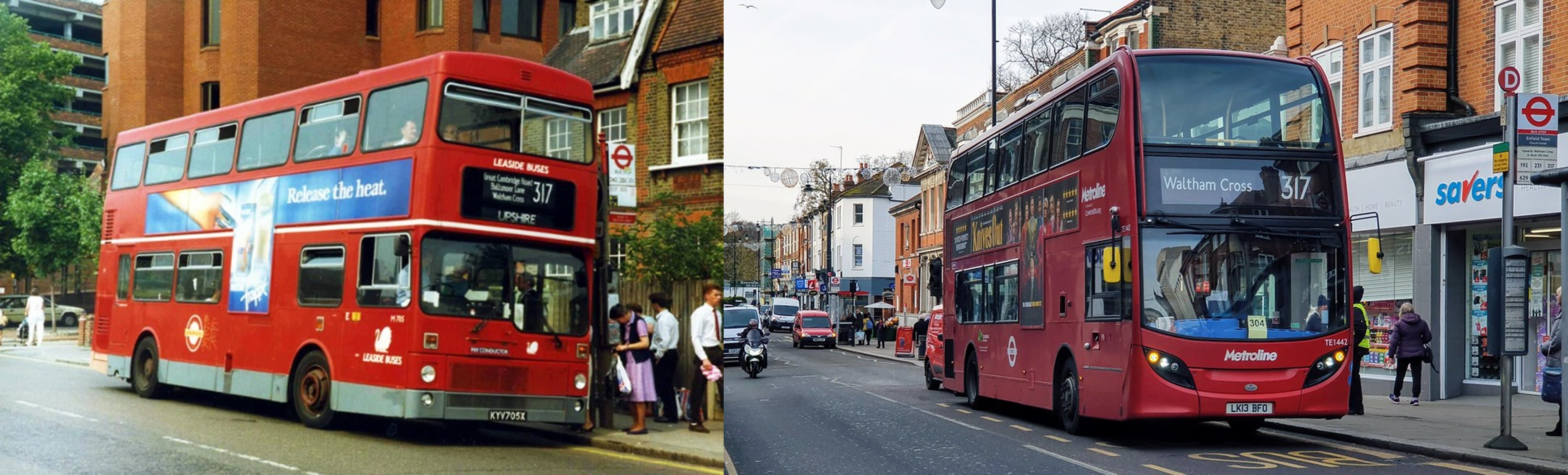
Route 317 represents a quick, cost-effective win available to Transport for London and Essex County Council. Established in 1976 as route 217B and renumbered 317 in 1987, the route originally ran from Enfield Town through Waltham Cross and Waltham Abbey to Upshire. In March 1994 - thanks to Essex County Council - the Waltham Cross to Upshire section was withdrawn, truncating the route at Waltham Cross Bus Station - where it has terminated ever since.
Today, route 317 runs around every 20 to 30 minutes, seven days a week, with buses departing Waltham Cross from around 5am to 1am. It is a frequent, reliable, fully Oyster-integrated TfL service, already running to within a few minutes of Waltham Abbey Town Centre. Restoring the short Waltham Cross to Upshire section would not require a new route, new infrastructure, or significant new investment: simply a small number of additional minutes added to a service that already exists, already runs late into the night, and already operates seven days a week. It would immediately give Waltham Abbey a fully TfL-integrated connection to its nearest railway station - Waltham Cross - from the first train of the day to the last, as well as restoring the historic direct link to Enfield Town, a major commercial centre within the GLA boundary.
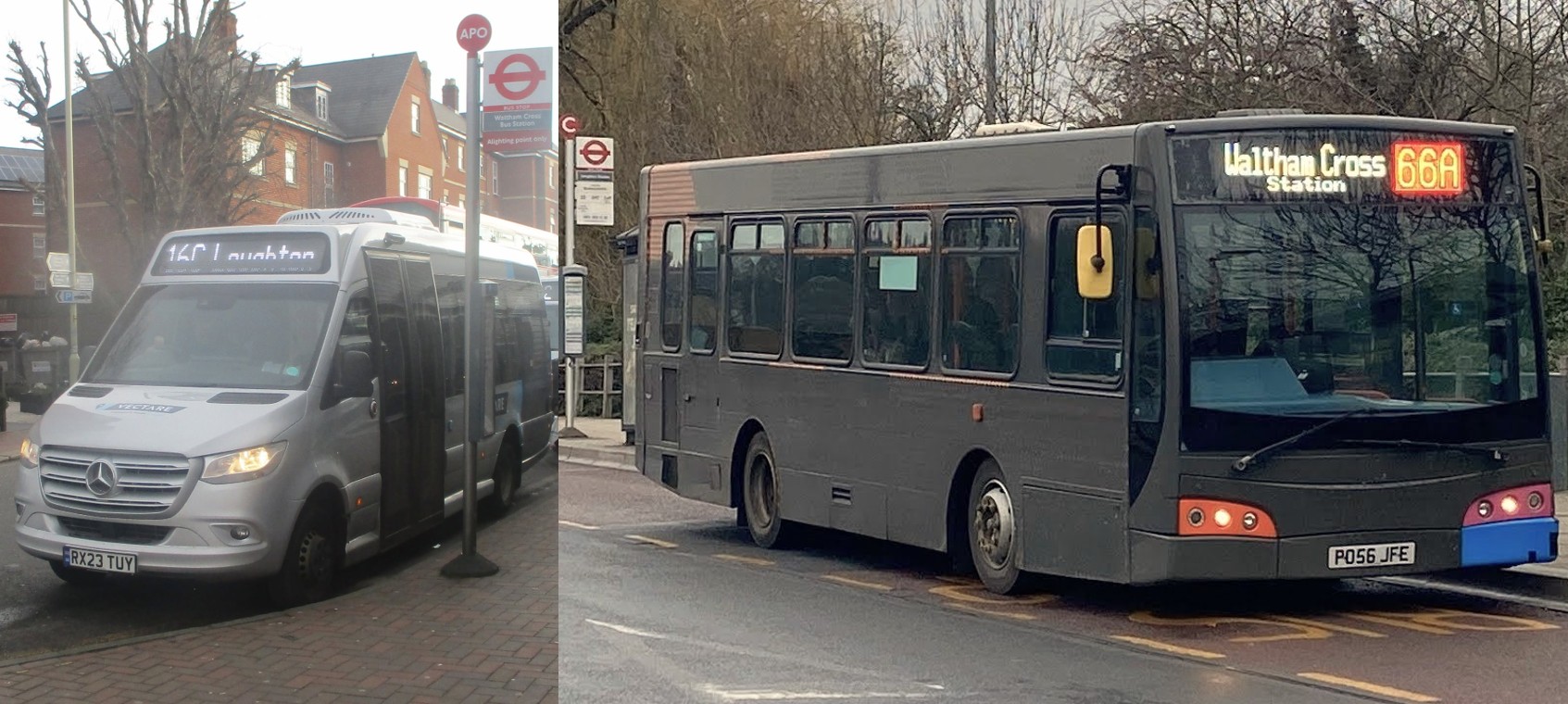
On Sundays and bank holidays, our entire town is reduced to just a single bus. Route ‘16C’ operated by Central Connect (formerly known as the ‘66A’) is the only bus running anywhere in Waltham Abbey on these days, with the sole exception of the Lee Valley Campsite bus stop, which continues to receive a frequent TfL service until late at night, every single day of the week. This one remaining route runs just once an hour, with the last bus to Loughton leaving Waltham Cross at around 7:45pm.
Services to Epping are set to improve slightly from late summer, but remain far from adequate. Essex County Council is set to contribute to Central Connect’s route ‘13’, increasing its current unacceptable frequency of every 1 to 2 hours to “up to every 30 minutes on weekdays”. But look closer, and the limits of this improvement become clear. The route only operates from mid-mornings to early evenings on Mondays to Saturdays. The last bus to Epping currently leaves Waltham Cross at just 5:45 pm. New timetables confirming the detail have not yet even been published.
There is still no early morning or evening service, no Sunday or bank holiday service, and the route remains entirely unintegrated with the TfL network - no Oyster, no Hopper fare, no fare capping. Epping is home to local amenities, shops, St Margaret’s Hospital, and the Central Line – yet residents needing to reach any of it remain at the mercy of a commercial timetable with hard limits on when, and on which days, they are able to travel at all. A frequency increase is welcome. But it is nowhere near a solution.
What our town needs now is for that same ambition to be applied in full: a genuinely comprehensive, TfL-integrated service, running early mornings to late nights, seven days a week, matching what residents in neighbouring areas already take entirely for granted.
Fifty years ago, the idea that Waltham Abbey would no longer receive red buses, or a bus to Chingford, was unimaginable. This is the 21st century - Waltham Abbey is bigger than ever, and the town continues to grow. At a time residents are encouraged to use public transport, whether for traffic or the environment, we are subject to extremely poor public transport options. Those without access to cars, or who cannot afford taxis, have limited access to employment, leisure and services. Our town needs London buses more than it ever did, and deserves better.
We the undersigned call on Transport for London, Essex County Council and the Mayor of London to support:
- The extension of London Buses route 215 (which currently terminates at the Lee Valley Campsite on Sewardstone Road – just within the Waltham Abbey boundary, but in an inaccessible location on the edge of the town boundary), and London Buses route 379 (which also terminates on Sewardstone Road), to at least Waltham Abbey Town Centre, to restore comprehensive public transport between Waltham Abbey and neighbouring Chingford, including a restored link to Chingford Station.
- The restoration of the Waltham Cross to Upshire section of London Buses route 317, which would restore the direct link between Waltham Abbey and Enfield Town, and create a frequent, TfL-operated bus link between Waltham Abbey and its nearest station (Waltham Cross), serving the area from early in the morning until late at night, 7 days a week.
- The restoration of London bus services between Waltham Abbey and Loughton tube station. The current Arriva '66' and Central Connect '16C' services are unfit for purpose, and are shortly being cut further.
- The restoration of London bus services between Waltham Abbey and Epping. Despite a recent increase in frequency, the level of service provided by Central Connect's route ‘13’ remains beyond inadequate. A frequent, 7-day-a-week, TfL-integrated service would ensure seamless access to St Margaret's Hospital, Central Line services, and local amenities.
- The extension or creation of other London Buses routes to serve Waltham Abbey, whether through new services or combined route extensions - sufficient public transport links to other areas, including Cheshunt and Epping (both previously linked to Waltham Abbey with London Buses), as well as Harlow, are vital.
- A clear, public commitment from Essex County Council to open formal discussions with Transport for London without further delay.
This is what it would take to give Waltham Abbey back the connectivity our neighbours have never lost. The proposals above represent the minimum required to put that right, but we recognise there may be more efficient, or more ambitious, ways of building on them to deliver the most effective and deliverable coverage overall.
Transport for London and Essex County Council may find that creative combinations of route extensions offer the most effective ways to close the gaps in Waltham Abbey’s connectivity, including to areas like Loughton, Epping, Cheshunt and Harlow. For example, we would welcome extensions of route 317 beyond Upshire to Loughton (broadly echoing the combined reach of the historic London 217A/250/317 routes) - replacing the inadequate Arriva ‘66’ and Central Connect ‘16C’ in a single TfL-integrated service; route 215 towards Harlow; and route 379 towards Cheshunt (reviving a connection once served by the historic 242). What matters is that Transport for London and Essex County Council deliver a comprehensive bus network for Waltham Abbey, properly integrated with the wider TfL system, delivered by whichever combination of route extensions achieves that most effectively.
Our town has waited long enough. The funding exists, and the political will across every level of government has never been stronger.
If you believe Waltham Abbey deserves the bus services it once had - and the services its neighbours already enjoy - please sign and share this petition today.
Every signature brings us closer to the change Waltham Abbey desperately needs.

3,340
The Issue
🚨 UPDATE: PETITION TEXT UPDATED - 21ST JUNE 2026. This campaign has come further than ever before - and we believe we are closer to real change than at any point since it began.
When we relaunched this petition, we had gathered over 1,500 signatures and secured remarkable support across every level of government. Today, that number stands at over 2,500 - the equivalent of more than 1 in 9 people living in Waltham Abbey - with signatures from residents, businesses and supporters across the area.
Here is how far this campaign has come:
Dr Neil Hudson MP, our Member of Parliament for Epping Forest, gave his full support from the outset, stating: “I am very happy to support this campaign and believe it is a very important one... residents of Waltham Abbey are no different and deserve access to the same services as others across London... you can be assured of my support for this vital campaign.”
Sir Iain Duncan Smith MP, neighbouring Member of Parliament for Chingford and Woodford Green, has backed our call for TfL to reinstate services between Waltham Abbey and Chingford, and has pushed TfL directly to take action.
The Mayor of Waltham Abbey, Cllr Shane Yerrell, went above and beyond, volunteering to have this petition submitted at the London Assembly in his own name - a decision that undoubtedly helped secure a unanimous vote in our favour.
The London Assembly unanimously passed a motion proposed by Cllr Emma Best AM and seconded by Cllr Keith Prince AM, calling on TfL to reinstate services between Waltham Abbey and Chingford, with cross-party support and not a single vote against it.
At Epping Forest District Council’s Overview & Scrutiny Committee meeting with TfL, Waltham Abbey councillors from across parties pushed directly for reinstated TfL bus services.
And thanks to all of the above, Transport for London has confirmed - on the record - that it is willing to work with Essex County Council to restore bus services for Waltham Abbey, despite the initial negative response from Mayor of London Sadiq Khan. TfL has made clear it would seek a financial contribution from Essex County Council, our local transport authority.
Under the previous administration at Essex County Council, this is where things stalled. Despite holding millions of pounds in government bus funding, despite TfL's stated willingness to talk, despite overwhelming local and cross-party political support, and despite a unanimous London Assembly vote, Essex County Council did not initiate formal discussions with TfL. Our previous county councillor, who had described the London Assembly motion as a “massive boost for Waltham Abbey,” went silent.
Things have changed.
Following the delayed local elections in May 2026, Essex County Council is now under new administration. James Abbott has been elected as our new county councillor for Waltham Abbey, and has already shown that he is listening to residents’ concerns. Essex County Council has now secured more than £68 million in government funding for bus improvements: over £32 million in revenue funding through to 2029, and over £36 million in capital funding through to 2030 - dwarfing the funding available to the previous administration.
Most significantly of all - this campaign has now reached Westminster. In June 2026’s Transport Questions, Dr Neil Hudson MP told Parliament: “Residents in Waltham Abbey have no access to the tube at all and have been left with a limited bus network since Transport for London withdrew services. Young people are unable to get to the next stage in their education, and residents are struggling to get into London. I pay tribute to the Bring Back Red Buses Waltham Abbey campaign. Please can the Government press the Mayor of London, TfL and Essex County Council to work together to give the people of Waltham Abbey and beyond the transport services they so desperately need?” This is now part of the official Parliamentary record.
Commenting afterwards, he stated that “Waltham Abbey has been left behind for far too long. With ULEZ placing additional financial pressure on local people, restoring TfL bus services is a necessity. I will continue to press the Government, TfL, the Mayor of London and Essex County Council until Waltham Abbey gets the fair, reliable and affordable transport network it deserves.”
Meanwhile, the cost of inaction continues to mount. From 27th July, Arriva is cutting the already inadequate evening service of its commercial route 66 between Loughton and Waltham Abbey - moving the last bus to Waltham Abbey from the tube station from 22:03 to just 19:46. It is a stark illustration of exactly what this campaign has always warned about: a town left entirely dependent on commercial operators, with no contract, no obligation, and no say when a private company decides to cut services further.
The funding exists. TfL is willing. Two MPs are behind this cause. Local councillors are behind this cause. The London Assembly has voted unanimously. A new administration is now in place at Essex County Council. Every piece needed to finally fix this is on the table at the same time - for the first time in this campaign's history.
What's missing is the final step: Essex County Council formally sitting down with TfL.
🚨 If you believe Waltham Abbey deserves the comprehensive, properly integrated and affordable public transport service it once had, sign and share this petition now. Help us turn this unprecedented level of support into action.
👇 Scroll down to read the original petition and our demands in full. It's time to turn up the volume - don't let them ignore Waltham Abbey.
Public transport options in Waltham Abbey are a far cry from decades ago, when the town formed an integral part of the London bus network. Today, this suburban commuter town of 23,000 people – sitting right on the edge of the Greater London Authority boundary, within the Lee Valley and wider Lee Valley Regional Park, home to the magnificent Waltham Abbey Church, the grave of King Harold, the Royal Gunpowder Mills, the Lee Valley White Water Centre, Epping Forest, an ancient market, and a wealth of historic pubs, restaurants and independent businesses – is disadvantaged by a mainly unsubsidised commercial service that is unfit for purpose, whilst neighbouring areas in almost every direction - on both sides of the GLA boundary - remain well-served by reliable, properly integrated, TfL-contracted routes.
Locals, visitors, commuters and businesses alike once relied on a town that was thoroughly well-connected. Red buses provided Waltham Abbey with direct and comprehensive links to Chingford, Loughton, Enfield Town, Cheshunt, Waltham Cross, South Woodford, Chigwell, Buckhurst Hill, Potters Bar and Epping, among other areas - carrying residents to neighbouring areas and stations for work and opportunity, and bringing footfall into Waltham Abbey in return. Night buses to and from Trafalgar Square would even serve the town, terminating in Upshire, showing just how integral Waltham Abbey once was to the wider London network, not a forgotten outpost on its fringe.
The London Transport roundel logo, until relatively recently, featured on almost every bus stop in the town. The 250 ran from Waltham Cross to South Woodford via Loughton tube station; the 317 ran from Upshire to Enfield Town; and generations of locals used route 242 to access Chingford, Cheshunt and beyond – that's just to name a few former London Transport routes. The iconic Routemaster bus was a regular sight in Waltham Abbey, whether on Sun Street, Honey Lane or the Ninefields Estate.
Today, things are much different. People travelling to and from Waltham Abbey are reliant on cars for journeys that should easily and affordably be made on public transport, contributing to the town's traffic problem. The town is less accessible to visitors, and neighbouring areas are less accessible from Waltham Abbey. What should be both a thriving London suburb and an attractive tourist destination is constricted by unreliable buses. Our local businesses are suffering, and local people are isolated.
Waltham Abbey is a commuter town without a train or tube station – a comprehensive bus service, properly integrated with the wider TfL network is therefore essential. The Ultra Low Emission Zone (ULEZ) now borders the town directly, threatening drivers with a £12.50 daily charge for driving into Greater London, furthering the need for restored links. Despite adjoining this administrative boundary, Waltham Abbey no longer has a single bus that crosses it. Our town is more desperate than ever for an adequate public transport service, yet remains neglected and disconnected from the wider network.
Following the ULEZ expansion, Mayor of London Sadiq Khan stated, “When I made the tough decision to expand the ULEZ London-wide, one of my key commitments was to improve transport links in outer London.” That commitment has not been honoured in this area.
It is sometimes suggested that low passenger numbers on withdrawn routes justify their loss, and that bus services should simply follow commercial demand. But TfL bus routes are not run for profit - they are public services, operated under contract, with obligations to the communities they serve regardless of whether they turn a surplus. The overwhelming majority of TfL's bus network operates at a loss, deliberately subsidised because reliable public transport is a public good, not a commercial product. Nor can demand be fairly measured against a service that was itself unreliable, infrequent, or, as in Waltham Abbey's case, withdrawn from the town entirely while continuing to run to its very edge. Low usage of a poor service is not evidence that a good service wouldn't be used. For decades, frequent London buses serving this exact corridor were well-used by generations of residents. The demand did not disappear. The service did.
At present, not a single bus provides a service between Waltham Abbey and neighbouring Chingford – two adjacent towns just ten minutes apart by car, separated by nothing more than an invisible administrative line. This is simply unacceptable, and cannot be allowed to continue. We call on Transport for London to restore a frequent, daily London Buses link between Waltham Abbey and neighbouring Chingford by extending route 215 (which currently terminates at the Lee Valley Campsite on Sewardstone Road – just within the Waltham Abbey boundary), and route 379 (which also terminates on Sewardstone Road), to at least Waltham Abbey Town Centre. Both routes are needed, and both routes should be extended – each offers a different, vital connection, and together they would finally reconnect our town to the wider TfL network in full.
Route 215 is a 5-mile route running between Walthamstow Central and the Lee Valley Campsite on Sewardstone Road via Chingford Mount, at a frequency of approximately every 20 to 30 minutes, 7 days a week. The first bus departs Lee Valley Campsite at 05:15 on Mondays to Saturdays, and 06:50 on Sundays. The last bus arrives at Lee Valley Campsite at around 00:50, 7 days a week. The route enters the Waltham Abbey boundary at the Yardley Lane Estate, but terminates at the Lee Valley Campsite on Sewardstone Road, leaving no public transport towards Waltham Abbey itself.
Route 379 is one of the shortest bus routes in London (2 miles), running between Chingford Station and the Yardley Lane Estate on Sewardstone Road (which lies on the Waltham Abbey Town Council border) via Kings Head Hill. It was established to partly compensate for the loss of route 242 between Chingford Station and Waltham Abbey. The route runs approximately every 15 to 30 minutes, 7 days a week. The first bus departs Yardley Lane at 05:09 (06:20 on Sundays), and the last bus from Chingford Station arrives at Yardley Lane at around 00:50, throughout the week.
Chingford Station sits at the heart of this issue. It is not merely a railway station; it is a key local transport hub, providing London Overground services and serving as the interchange point for numerous TfL bus routes fanning out across north-east London, including connections to Whipps Cross Hospital and local schools attended by many Waltham Abbey students. For generations, Waltham Abbey residents reached this hub directly by bus. Restoring this link is not just about reaching Chingford or vice versa – it is also about restoring Waltham Abbey’s access to the entire onward TfL network that Chingford Station unlocks.
The stretch between Waltham Abbey and Chingford was once one of the most frequently served corridors in the area, with London bus route 242 running every 10 to 30 minutes from early mornings to late evenings. Even on a Sunday night, the final bus from Chingford Station to Waltham Abbey would leave as late as 00:10. Just compare this with the situation Waltham Abbey finds itself in today – at a time this service is needed more than ever, not a single bus serves this stretch. Many drivers are now required to pay a £12.50 daily charge to enter Chingford, whilst all bus stops on Sewardstone Road towards Chingford (except the Lee Valley Campsite) have no public transport service whatsoever. The cost of this gap to local people and businesses on both sides of the GLA boundary is severe, and it is felt every single day.
Extending route 379 would restore the much-needed link between Waltham Abbey and Chingford Station, while extending route 215 would restore the long-lost link to Chingford Mount and Walthamstow Central. Together, they would breathe life back into a corridor that has been quietly dying for years - home to residents, housing estates, care homes, and key places of employment and leisure that remain completely unreachable without a car: the Premier Inn hotel, the Lee Valley Campsite, Gunpowder Park, the large Sainsbury's Waltham Point distribution centre, and the Bakers Arms and Plough pubs among them. Restoring this link would reconnect every one of them, with real benefits for local people, for tourism, and for the wider local economy. Guests staying at the hotel or the campsite would, for the first time in years, be able to reach Waltham Abbey itself by public transport - a meaningful boost for a town whose tourism potential has long outstripped its transport links. And the businesses along this corridor, several of which operate around the clock, employ a significant number of local people who currently have no reliable way to get to work. Two neighbouring communities, both significant centres of population, separated by a gap that should never have been allowed to exist.
This petition has received endorsements from several businesses along the A112 Sewardstone Road, from Waltham Abbey Football Club, to the care homes at Ashbrook Court and 1 Sewardstone Close, where workers, residents and families are desperately seeking restored public transport between Waltham Abbey and Chingford.
Fares on the limited services that do operate in the town are expensive, inconsistent and complex, varying between commercial operators. Tickets issued by one operator are often not accepted by another, forcing passengers to navigate a costly, fragmented system with different fares, ticket types and conditions. Despite all nearby train and tube stations being within TfL fare zones 5, 6 and 7, accepting TfL Oyster and contactless alongside most buses in neighbouring areas, our local buses are not integrated with TfL's payment methods and fare caps – this is especially detrimental to tourists and visitors, and results in more expensive journeys for locals. Waltham Abbey’s bus users are the exception to a system that works seamlessly for everyone around them.
The contrast is stark. On TfL services, an adult fare to any stop is just £1.75. This £1.75 fare also provides unlimited journeys on any TfL bus service within the hour, via the Hopper fare. Under-16s travel free with a Zip Oyster photocard. Bus services in neighbouring areas like Loughton and Waltham Cross benefit from this. In Waltham Abbey, none of it applies. A single adult ticket to Loughton Station costs around £4, and around £3 to Waltham Cross. A taxi to Chingford - a journey that should be a short, cheap bus ride - costs upwards of £14 each way. Waltham Abbey residents are paying much more, for far less.
Restoring TfL's fare structure to Waltham Abbey would do more than save residents money. It would actively encourage use of public transport and help ease congestion. The Hopper fare would transform journeys requiring an interchange, suddenly making multi-leg trips affordable rather than punitively expensive. And for families and school students, in a town with one secondary school and no sixth form, where young people regularly travel out of town for education, free and discounted fares would remove a real and persistent financial barrier to opportunity. It is a tax on simply living in Waltham Abbey.
Residents consistently report buses cancelled without notice, services that fail to follow their own published timetable, and buses skipping stops entirely when running overcrowded. Unlike TfL services, which operate under contract with defined performance standards, real-time tracking, and financial penalties for operators who run unreliably, the commercial operators currently serving Waltham Abbey answer to no one but their bottom line. A missed or cancelled bus has little consequence for the operator, and no recourse for the passenger left waiting. TfL-contracted routes cannot simply be altered, renumbered, or withdrawn at an operator's discretion - they are planned, monitored, and held to account by a public body whose purpose is to serve passengers, not merely to turn a margin. This is precisely the standard Waltham Abbey is asking to be restored: a bus network that works the same way, every day, that residents can actually plan their lives around.
Waltham Abbey’s nearest London Underground station is in neighbouring Loughton, on the Central Line. There is one secondary school in Waltham Abbey, with no sixth form; many students in the town attend college or secondary school in Loughton or further afield, and rely on public transport to get there. The unreliability of these connections has become so well-known that schools in Loughton and neighbouring areas have, in many cases, formally exempted Waltham Abbey students from detentions for lateness - a remarkable acknowledgement of just how unfit for purpose our public transport has become.
London bus routes historically provided links between the two towns – routes like the old 217A historically ran between Enfield Town and Loughton via Waltham Cross and Waltham Abbey, and the later route 250 ran between Waltham Cross and South Woodford via Waltham Abbey and Loughton. From the transition of London bus route 250 to commercial operation onwards, there have been countless changes of operator, route, and route numbers. Today, Arriva operates the commercial route ‘66’ (Waltham Cross – Loughton) on Mondays to Saturdays, and Central Connect operates the confusingly-named ‘16C’, funded by Essex County Council (also Waltham Cross – Loughton, but taking a complex detour via Broomstick Hall Road to cover Upshire and Ninefields North), on Sundays and public holidays.
On weekdays, the last three buses from Waltham Cross station to Waltham Abbey currently leave at 21:31, 21:37 and 22:07. Meanwhile, frequent trains from Liverpool Street and Stratford continue to serve the station until after midnight. The last three buses from Loughton tube station to Waltham Abbey currently leave at 19:46, 20:53 and 22:03. And from 27th July 2026, Arriva is cutting the final two Loughton ‘66’ services entirely, meaning the last bus from Loughton will leave at just 19:46.
This is an unacceptable frequency and curfew for services from our nearest stations, restricting local people, harming access to and from employment, and harming our local businesses, particularly pubs, restaurants and bars. Meanwhile, neighbouring areas remain frequently served by TfL buses, 7 days a week, from early mornings until the early hours.
Route 317 represents a quick, cost-effective win available to Transport for London and Essex County Council. Established in 1976 as route 217B and renumbered 317 in 1987, the route originally ran from Enfield Town through Waltham Cross and Waltham Abbey to Upshire. In March 1994 - thanks to Essex County Council - the Waltham Cross to Upshire section was withdrawn, truncating the route at Waltham Cross Bus Station - where it has terminated ever since.
Today, route 317 runs around every 20 to 30 minutes, seven days a week, with buses departing Waltham Cross from around 5am to 1am. It is a frequent, reliable, fully Oyster-integrated TfL service, already running to within a few minutes of Waltham Abbey Town Centre. Restoring the short Waltham Cross to Upshire section would not require a new route, new infrastructure, or significant new investment: simply a small number of additional minutes added to a service that already exists, already runs late into the night, and already operates seven days a week. It would immediately give Waltham Abbey a fully TfL-integrated connection to its nearest railway station - Waltham Cross - from the first train of the day to the last, as well as restoring the historic direct link to Enfield Town, a major commercial centre within the GLA boundary.
On Sundays and bank holidays, our entire town is reduced to just a single bus. Route ‘16C’ operated by Central Connect (formerly known as the ‘66A’) is the only bus running anywhere in Waltham Abbey on these days, with the sole exception of the Lee Valley Campsite bus stop, which continues to receive a frequent TfL service until late at night, every single day of the week. This one remaining route runs just once an hour, with the last bus to Loughton leaving Waltham Cross at around 7:45pm.
Services to Epping are set to improve slightly from late summer, but remain far from adequate. Essex County Council is set to contribute to Central Connect’s route ‘13’, increasing its current unacceptable frequency of every 1 to 2 hours to “up to every 30 minutes on weekdays”. But look closer, and the limits of this improvement become clear. The route only operates from mid-mornings to early evenings on Mondays to Saturdays. The last bus to Epping currently leaves Waltham Cross at just 5:45 pm. New timetables confirming the detail have not yet even been published.
There is still no early morning or evening service, no Sunday or bank holiday service, and the route remains entirely unintegrated with the TfL network - no Oyster, no Hopper fare, no fare capping. Epping is home to local amenities, shops, St Margaret’s Hospital, and the Central Line – yet residents needing to reach any of it remain at the mercy of a commercial timetable with hard limits on when, and on which days, they are able to travel at all. A frequency increase is welcome. But it is nowhere near a solution.
What our town needs now is for that same ambition to be applied in full: a genuinely comprehensive, TfL-integrated service, running early mornings to late nights, seven days a week, matching what residents in neighbouring areas already take entirely for granted.
Fifty years ago, the idea that Waltham Abbey would no longer receive red buses, or a bus to Chingford, was unimaginable. This is the 21st century - Waltham Abbey is bigger than ever, and the town continues to grow. At a time residents are encouraged to use public transport, whether for traffic or the environment, we are subject to extremely poor public transport options. Those without access to cars, or who cannot afford taxis, have limited access to employment, leisure and services. Our town needs London buses more than it ever did, and deserves better.
We the undersigned call on Transport for London, Essex County Council and the Mayor of London to support:
- The extension of London Buses route 215 (which currently terminates at the Lee Valley Campsite on Sewardstone Road – just within the Waltham Abbey boundary, but in an inaccessible location on the edge of the town boundary), and London Buses route 379 (which also terminates on Sewardstone Road), to at least Waltham Abbey Town Centre, to restore comprehensive public transport between Waltham Abbey and neighbouring Chingford, including a restored link to Chingford Station.
- The restoration of the Waltham Cross to Upshire section of London Buses route 317, which would restore the direct link between Waltham Abbey and Enfield Town, and create a frequent, TfL-operated bus link between Waltham Abbey and its nearest station (Waltham Cross), serving the area from early in the morning until late at night, 7 days a week.
- The restoration of London bus services between Waltham Abbey and Loughton tube station. The current Arriva '66' and Central Connect '16C' services are unfit for purpose, and are shortly being cut further.
- The restoration of London bus services between Waltham Abbey and Epping. Despite a recent increase in frequency, the level of service provided by Central Connect's route ‘13’ remains beyond inadequate. A frequent, 7-day-a-week, TfL-integrated service would ensure seamless access to St Margaret's Hospital, Central Line services, and local amenities.
- The extension or creation of other London Buses routes to serve Waltham Abbey, whether through new services or combined route extensions - sufficient public transport links to other areas, including Cheshunt and Epping (both previously linked to Waltham Abbey with London Buses), as well as Harlow, are vital.
- A clear, public commitment from Essex County Council to open formal discussions with Transport for London without further delay.
This is what it would take to give Waltham Abbey back the connectivity our neighbours have never lost. The proposals above represent the minimum required to put that right, but we recognise there may be more efficient, or more ambitious, ways of building on them to deliver the most effective and deliverable coverage overall.
Transport for London and Essex County Council may find that creative combinations of route extensions offer the most effective ways to close the gaps in Waltham Abbey’s connectivity, including to areas like Loughton, Epping, Cheshunt and Harlow. For example, we would welcome extensions of route 317 beyond Upshire to Loughton (broadly echoing the combined reach of the historic London 217A/250/317 routes) - replacing the inadequate Arriva ‘66’ and Central Connect ‘16C’ in a single TfL-integrated service; route 215 towards Harlow; and route 379 towards Cheshunt (reviving a connection once served by the historic 242). What matters is that Transport for London and Essex County Council deliver a comprehensive bus network for Waltham Abbey, properly integrated with the wider TfL system, delivered by whichever combination of route extensions achieves that most effectively.
Our town has waited long enough. The funding exists, and the political will across every level of government has never been stronger.
If you believe Waltham Abbey deserves the bus services it once had - and the services its neighbours already enjoy - please sign and share this petition today.
Every signature brings us closer to the change Waltham Abbey desperately needs.


Supporter Voices
Petition Updates
Share this petition
Petition created on 9 May 2023