

Boulder County, Colorado Commissioners: Stop Logging Our Parks and Open Space!
The Issue
Boulder County is in the process of a massive, unprecedented scheme to log and degrade our biodiverse, carbon-storing public forests and parks in the name “wildfire fuel reduction,” all at taxpayer expense while handing over trees to private logging corporations.
Several hundred peer reviewed studies authored by hundreds of scientists (on top of many U.S. Forest Service studies and studies funded by Boulder County itself) find that cutting forests actually heats up and dries out the forest microclimate, which can make fires start easier and burn more intensely (including igniting crown fires), while opening stands that let winds spread flames quicker to nearby communities, potentially overwhelming evacuees and firefighters.
In 2025-2026, the County plans to carry out aggressive "fuel reduction" logging in the newly acquired Tucker Ranch outside of Nederland.
Several similar projects are in planning stages across Boulder County.
In 2023, under the umbrella of the St. Vrain Forest Health Partnership, the “Antelope Park Forest Health Project” gouged out miles of new roads above the Longmont Reservoir to log over 3,000 acres in Button Rock Preserve west of Lyons, cutting many of the largest, most-fire resistant trees in the forest, including in a Winter Elk Concentration Area closed from December to March to “protect wildlife.”
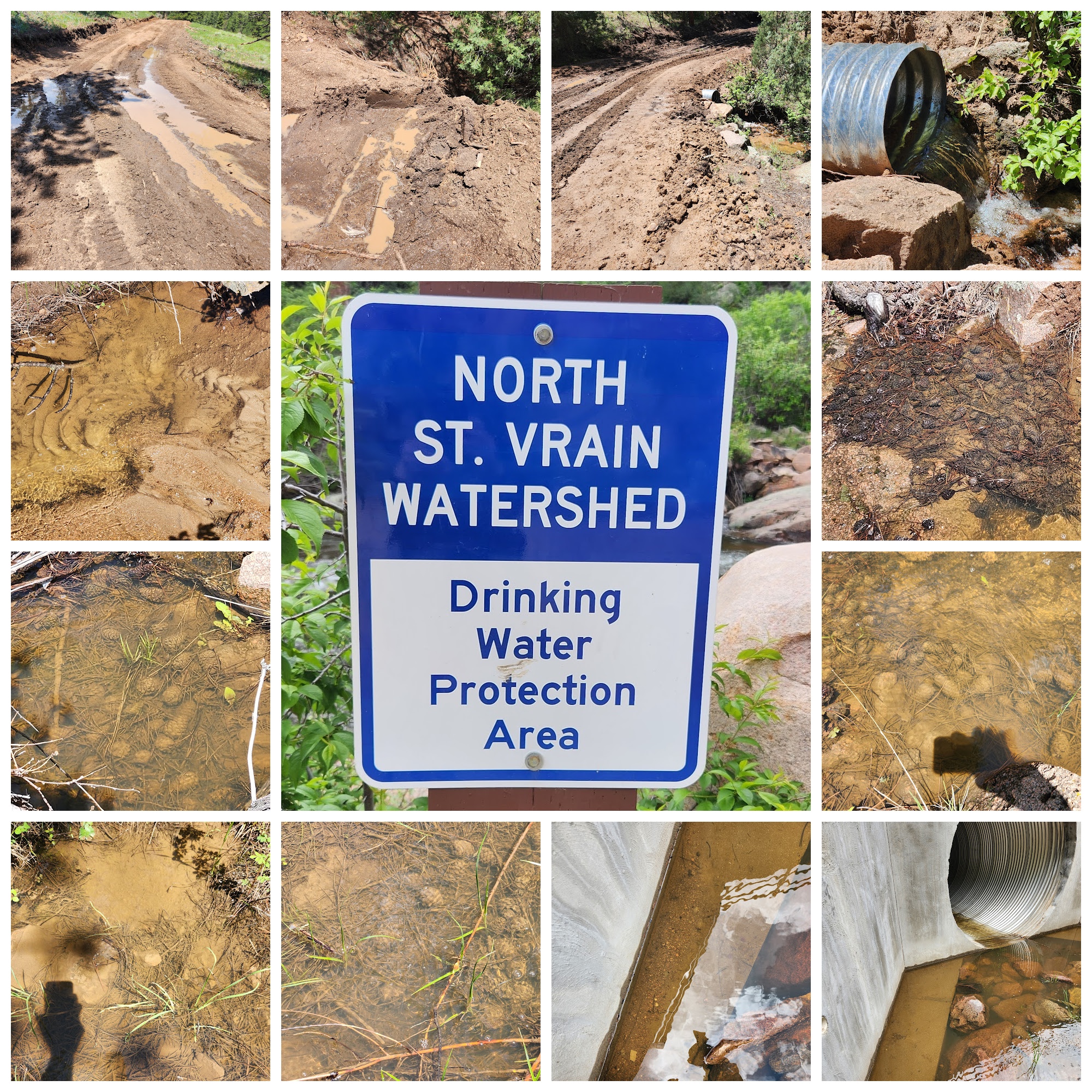
Photos show muddy, eroding logging roads dumping sediment into a stream flowing directly into the drinking water supply for Longmont’s 98,885 residents.
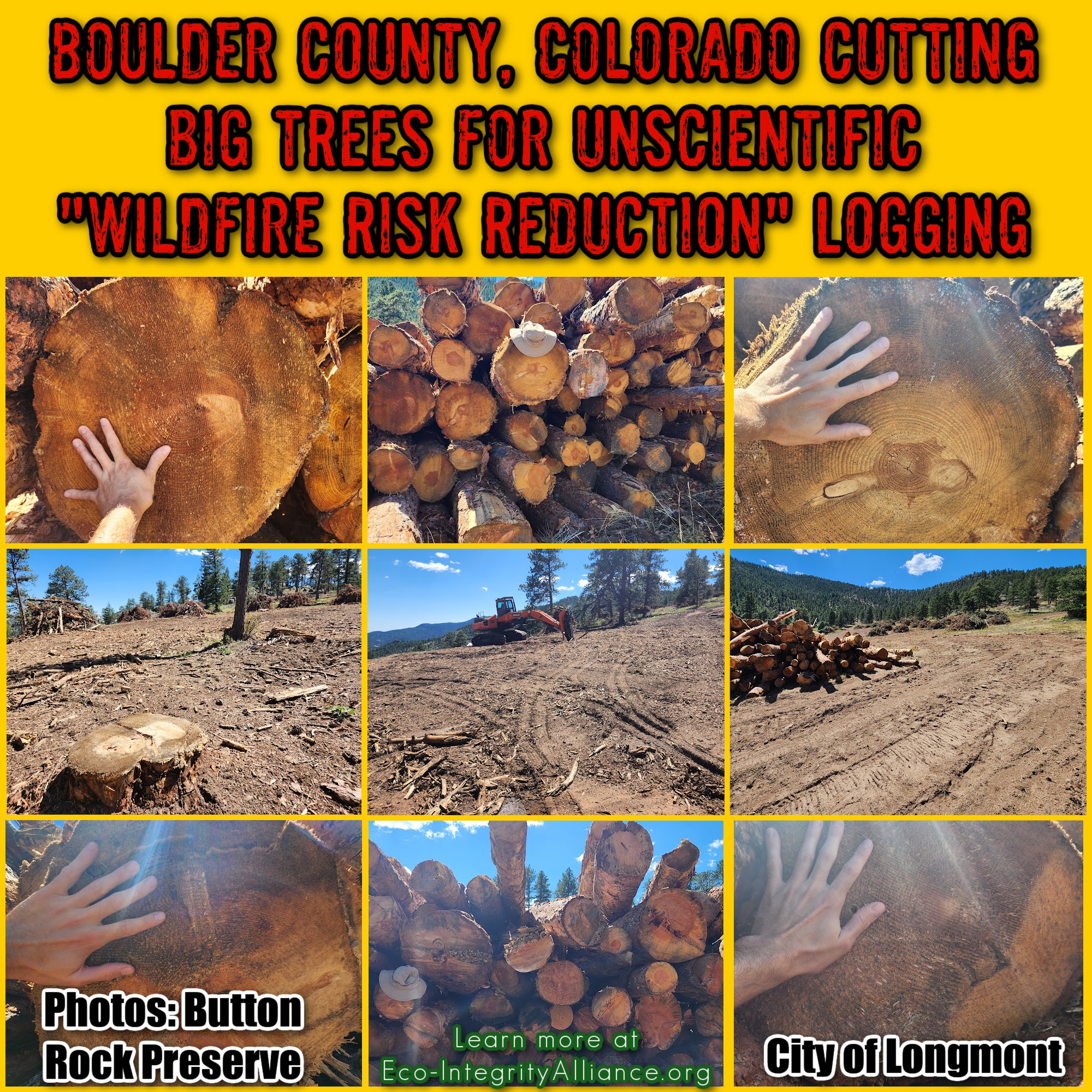
Other photos show hundreds of large, mature ponderosa pines up to 2 feet in diameter cut and stacked for lumber.
In spring of 2023, Boulder County logged hundreds of large, mature, fire-resistant conifers in Caribou Ranch Open Space 1.5 miles outside of Nederland in violation of its own management plan.
Not only doesn’t logging carbon-storing forests prevent the large, weather-driven fires that threaten our communities—the Marshall Fire burned almost entirely through grasslands and residential neighborhoods—studies (including from Boulder’s Fourmile Canyon Fire in 2012 and 2002’s Hayman Fire) show logging can actually dry out forests by opening stands to sunlight and wind, spreading flames faster.
Indeed, the entire premise of logging to create “historical conditions” of Disneyfied parklike forests due to “overgrown” stands and “unusual” high-severity wildfire has been repeatedly debunked by countless studies in peer-reviewed journals. Contrary to the industry/agency narrative, these studies find that western forests—including in Colorado’s Front Range—prior to fire suppression did grow densely and did experience high-severity wildfire.
The scientific consensus, including from the U.S. Forest Service’s Rocky Mountain Research Station Fire Sciences Laboratory, is that hardening homes—measures such as installing metal roofs and maintaining defensible space 15-60 feet around structures (no more than 100)—can save most homes from the most severe wildfires.
Alarmingly, this “log to save the forest” scheme is also planned for 3.5 million acres of federal lands in Colorado’s Front Range, and a mind-boggling 112 million acres--59% of National Forests--across the West.
This unprecedented scale of logging would make it impossible for the U.S. to meet responsibilities under the Global Biodiversity Framework for protecting 30% of ecosystems by 2030 or targets under the Paris Agreement.
Please sign this petition demanding that:
1. Boulder County Commissioners place an immediate moratorium on "fuel reduction" on public lands until the full body of science and public input is incorporated into the decision making process.
2. Route any and all “fuel reduction” taxpayer dollars towards more home hardening grants for low-income residents so communities can protect themselves and save lives.

93
The Issue
Boulder County is in the process of a massive, unprecedented scheme to log and degrade our biodiverse, carbon-storing public forests and parks in the name “wildfire fuel reduction,” all at taxpayer expense while handing over trees to private logging corporations.
Several hundred peer reviewed studies authored by hundreds of scientists (on top of many U.S. Forest Service studies and studies funded by Boulder County itself) find that cutting forests actually heats up and dries out the forest microclimate, which can make fires start easier and burn more intensely (including igniting crown fires), while opening stands that let winds spread flames quicker to nearby communities, potentially overwhelming evacuees and firefighters.
In 2025-2026, the County plans to carry out aggressive "fuel reduction" logging in the newly acquired Tucker Ranch outside of Nederland.
Several similar projects are in planning stages across Boulder County.
In 2023, under the umbrella of the St. Vrain Forest Health Partnership, the “Antelope Park Forest Health Project” gouged out miles of new roads above the Longmont Reservoir to log over 3,000 acres in Button Rock Preserve west of Lyons, cutting many of the largest, most-fire resistant trees in the forest, including in a Winter Elk Concentration Area closed from December to March to “protect wildlife.”
Photos show muddy, eroding logging roads dumping sediment into a stream flowing directly into the drinking water supply for Longmont’s 98,885 residents.
Other photos show hundreds of large, mature ponderosa pines up to 2 feet in diameter cut and stacked for lumber.
In spring of 2023, Boulder County logged hundreds of large, mature, fire-resistant conifers in Caribou Ranch Open Space 1.5 miles outside of Nederland in violation of its own management plan.
Not only doesn’t logging carbon-storing forests prevent the large, weather-driven fires that threaten our communities—the Marshall Fire burned almost entirely through grasslands and residential neighborhoods—studies (including from Boulder’s Fourmile Canyon Fire in 2012 and 2002’s Hayman Fire) show logging can actually dry out forests by opening stands to sunlight and wind, spreading flames faster.
Indeed, the entire premise of logging to create “historical conditions” of Disneyfied parklike forests due to “overgrown” stands and “unusual” high-severity wildfire has been repeatedly debunked by countless studies in peer-reviewed journals. Contrary to the industry/agency narrative, these studies find that western forests—including in Colorado’s Front Range—prior to fire suppression did grow densely and did experience high-severity wildfire.
The scientific consensus, including from the U.S. Forest Service’s Rocky Mountain Research Station Fire Sciences Laboratory, is that hardening homes—measures such as installing metal roofs and maintaining defensible space 15-60 feet around structures (no more than 100)—can save most homes from the most severe wildfires.
Alarmingly, this “log to save the forest” scheme is also planned for 3.5 million acres of federal lands in Colorado’s Front Range, and a mind-boggling 112 million acres--59% of National Forests--across the West.
This unprecedented scale of logging would make it impossible for the U.S. to meet responsibilities under the Global Biodiversity Framework for protecting 30% of ecosystems by 2030 or targets under the Paris Agreement.
Please sign this petition demanding that:
1. Boulder County Commissioners place an immediate moratorium on "fuel reduction" on public lands until the full body of science and public input is incorporated into the decision making process.
2. Route any and all “fuel reduction” taxpayer dollars towards more home hardening grants for low-income residents so communities can protect themselves and save lives.
The Decision Makers

Supporter Voices
Petition Updates
Share this petition
Petition created on September 3, 2023