Save our young people

1,801

The Issue

In London we are blighted by the affects of knife crime and violent gang culture . In our borough Camden , we have seen so much . Murder, serious injuries and heartbroken families . Serious cuts to vital support services have hugely impacted on our community .

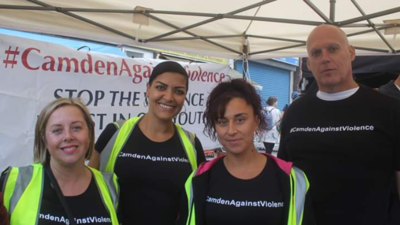
I am a youth referral coordinator for #Camden Against Violence . I try to support young people into education/ training or employment thus reducing the amount of NEETS and reducing young people’s vulnerability. We see the impact that the needless  fatalities have on our young people . More and more young people stay at home . Parents are afraid to let their children out . Parents are afraid to go out This is not right at all . We should feel safe in our community. 

After consulting with our young people we ask why they carry knives , many say out of fear . Unfortunately the young make choices based on emotion without considering the long term consequences. Young people are our future , but they have become marginalised. Young people are marginalised in education and if they are deemed to difficult put into pupil referral units , rather than getting to the root cause . These causes are generally Anxiety, dyslexia, ADHD , stresses at home our in their community, economic stressors within the family . Online trolling and bullying . Poor mental health of a family member , addiction etc 

Our community in Camden is suffering greatly through cuts to education, cuts to mentoring support schemes , cuts to CAMHS services . Cuts to youth services as a whole . It relies on organisations such as ourselves to pick up where the police and council cannot . Due to cuts to budgets .  This is not right as a member of the G20 . 

We at #Camden Against Violence are asking for an holistic , public health approach to tackling violent youth crimes . We are asking for reinvestment in vital services , a COBRA meeting as this is murder on a large scale and better representation of our youth . More police on our streets is a must , and for those who are convicted of offences of a violent nature rehabilitation in prisons to thwart the cycle of reoffending . Thus saving the government millions of pounds . Which could be invested back into youth services . 

I ask on behalf of the parents of those who have been murdered or seriously injured and those parents who are to afraid to let their children go out. Please  help us support and rebuild our community through better investment , better engagement with grass roots projects such ourselves . Sit with us , listen to the needs of our community . In light of 3 fatalities and 1 serious injury in a matter of 4 days .. I’d say it’s time for change .  There are 7 active open murder cases in Camden . 

The government have the power to bring about change . The residents of Camden are calling upon you to help us save our youth and protect our community from further devastation.  It can be done if the government and those in power choose to listen . It will not be a fast process , however any start to this process will be very welcome . 

The Decision Makers

Sadiq Khan
Mayor of London
Responded
Thank you for the petition submitted on the Change.org website about the effects of knife crime and violent gang culture on Camden borough. It’s inspiring to hear of your extensive knowledge, experience, and desire to help be a part of addressing this issue. Like you, the Mayor is also concerned about the increase in knife crime in London. The Mayor’s first priority is to keep Londoners safe and he has made tackling violence a key priority. He has been clear that the levels of violence, which have risen in London and around the country, are too high. Every life lost to violence is a tragedy and every injury has serious impacts, both for those affected and London’s wider communities. You have described the impact which knife crime and gang culture has had on the communities within Camden and also the results of cuts in public services. Unfortunately, the Government has made the fight against knife crime increasingly difficult by giving less money to the police and allowing police numbers to drop so significantly. The Metropolitan Police Service (MPS) has had to save more than £850 million since 2013-14, resulting in officer numbers falling to a level not seen since 2003. The Mayor has done everything he can to support the MPS, taking difficult decisions including increasing the police share of council tax by the maximum amount permissible in law and moving money from business rates into policing. Thanks to these decisions, he has been able to invest a further £234 million in policing, protecting 1,000 officer posts that would otherwise have been lost and enabling the recruitment of an additional 300 officers. However, with the vast majority of police funding provided by the Government, the Mayor cannot close the funding gap caused by the Government’s austerity programme alone. Since his election in 2016 he has lobbied intensively for the Government to reverse police cuts and properly fund the MPS. The Mayor has therefore welcomed the new Prime Minister’s agreement that the Government’s police cuts were a mistake and the announcement of plans to support the recruitment of 20,000 police officers nationally to partially reverse these cuts. The Mayor agrees with the Commissioner that London needs 6,000 of these officers. He has written to the new Home Secretary seeking clarification that the MPS will receive 6,000 officers, and that these officers are in addition to the 1,300 officers being funded by City Hall. He has also sought urgent clarification that all 20,000 additional officers will be split between the territorial police forces. While the National Crime Agency, counter terror policing and other national agencies require investment, it’s crucial that the full 6,000 go into our London communities. Despite the Government cuts, the Mayor has established a Violent Crime Task Force (VCTF) and is providing £15 million annually to support its operation. The taskforce enables the MPS to be even more proactive on the streets of the capital, bearing down on violent crime and serious criminality. Violence is still at very serious levels, but between the launch of the VCTF in April 2018 and the end of September 2019, the command has carried out 10,951 weapons sweeps, recovered 1,258 knives, 822 offensive weapons and arrested 6,849 suspects. Over the same period, wider activity across the MPS targeting violence has seen 55,508 weapon sweeps carried out and 4,064 knives recovered along with 1,935 offensive weapons. In addition to cuts to the police, Government cuts to preventative services such as youth services, community groups, education and probation have reversed decades of progress in tackling the root causes of violent offending by young people. The reversal in cuts to policing must go hand in hand with a reversal in the cuts to preventative services if we are to achieve a lasting reduction in violence. To help London’s children and young adults, particularly those at risk of getting caught up in crime, make the most of our amazing city, the Mayor has also created the Young Londoners Fund (YLF). The Mayor’s investment of £45 million into the YLF will enable children and young people to fulfil their potential, through a range of education, sport, cultural and other activities. The fund will see £30 million made available for projects in local communities. The remaining £15 million is being invested to expand existing projects funded by City Hall that support young Londoners. So far, 179 projects have been awarded funding; information can be found here: https://data.london.gov.uk/dataset/young-londoners-fund-projects. These include activities ranging from theatre groups and employability training to football clubs and art sessions. For further information please see: www.london.gov.uk/what-we-do/education-and-youth/young-londoners/mayors-young-londoners-fund. As well as this, the Mayor has committed £6.8 million to fund the Violence Reduction Unit (VRU). The VRU includes specialists in health, youth and social services to lead a long-term public health approach to tackle the causes of violent crime. The VRU looks to build on Glasgow’s success, scaling up an approach that has worked in a city with a population of 600,000 people to a capital with over 9 million. Since the Mayor announced the creation of the VRU in September 2018, listening to and learning from those affected by and working to address violence has been the Unit’s top priority ¬– recognising that the VRU must put the community at the heart of its work and only by doing so can it take a sustainable long-term approach towards reducing violence. The Unit’s commitments to community and youth involvement are set out in its strategy here: www.london.gov.uk/moderngovmb/ieListDocuments.aspx?CId=443&MId=6342&Ver=4. A public health approach means no more looking at violence as an isolated incident. It doesn’t mean excusing criminality, but it does mean that to genuinely change behaviour the Unit must look at the context and influences that impact on individuals at significant points in their life; acknowledging that no individual operates in a vacuum but is both part of and influenced by a huge range of other contexts. The work programme will follow the path of a child’s journey through life, recognising that young people can be exposed to vulnerable situations in a range of social contexts that go beyond the family. As the child moves from the home into the community, there is further impact from a broader range of influences and experiences. For most children growing up in London, these experiences reflect the fantastic range of culture, diversity and opportunity available. But for some, there are more challenging or problematic experiences. A funded work programme for years one and two has been developed, drawing on evidence from current successful initiatives, and reflects what the stakeholders and local communities have conveyed that they want to see. In the first year of operation the VRU will prioritise the following key areas: • Expanding after-school provision in high-crime areas – following data which shows that violent incidents involving young people aged 10-16 are more likely to happen at the end of the school day. • Supporting the often-difficult transition from primary to secondary school. • Supporting schools to reduce school exclusions by piloting a programme of inclusion and nurturing as developed in Glasgow, where exclusions were reduced by 81 per cent over the last decade. • Providing extra support for young people affected by domestic violence – following evidence of the link between involvement in violence and children witnessing violence in the home. The VRU will work with women and girls’ networks to work towards equity of provision and access for young people aligned with support services for adults on a pan-London level. • Supporting parents – expanding access to parenting programmes to support parents who are concerned about their children – enabling them to access information and good practice, share their concerns and support each other. • Investing in supporting vulnerable parents and carers including those who are victims of crime and in the Criminal Justice System. • Investing in London’s youth workers by co-producing a programme of training and development to support and grow their profession. • Working with young people on establishing a Young Persons’ Action Group to inform the Unit’s work – the Group will be representative of young people across London and will make decisions to inform the work of the Unit, backed up with funding to put those actions into practice to make a real difference in communities. • Piloting programmes in prisons and young offender institutions. • Working at a neighbourhood level and with local Community Safety Partnerships to continue developing best practice and multi-agency action plans to address violence and knife crime in their areas. • Investing in grassroots initiatives to combat knife crime to make sure that these groups are supported in the long term with sufficient investment. The causes of violence are complicated, and so there is no one simple solution. Progress will come from a combination of tough enforcement by the police and interventions to help people make better life choices and turn away from crime. Taken together, this short-term enforcement by the police and long-term activity across services will deliver a relentless focus on tackling knife crime and violence across the capital. I hope that this provides you with an overview of the range of action the Mayor is taking to tackle violence in order to ensure that London is an even safer place for everyone. Yours sincerely Public Liaison Unit Greater London Authority
Boris Johnson
Prime Minister
Jeremy Corbyn
Leader of Labour Party

Petition Updates

Share this petition

Petition created on 14 September 2019