
Beyond the Screen: 7 Creative Studio Digital Physical Experience Ideas Worth Championing
The Issue
A child presses a glowing panel and a river appears to flow across the museum floor. A grandmother who cannot travel far puts on a headset and walks through a heritage site she read about as a girl. A student rehearses a risky procedure in a simulated room where a mistake costs nothing. These moments all turn passive looking into active taking part.
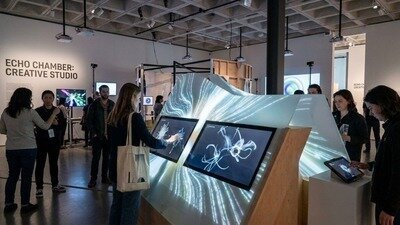
This is the heart of a creative studio digital physical experience: a real place, layered with digital storytelling, built so people feel something and grasp more than a sign on a wall can say. Done well, it serves communities, not only brands. Done poorly, it becomes an expensive screen nobody uses. The ideas below focus on the first kind.
What makes a creative studio digital physical experience matter?
It matters because people remember what they do far more than what they are told. A creative studio digital physical experience gives a place a memory and a voice, so a museum, a park, or a classroom can carry ideas that words alone cannot. The catch: immersive is not the same as usable.
The Nielsen Norman Group, a firm that has studied user experience for decades, has applied its usability principles to virtual reality, a reminder that novelty fades fast when an interface confuses people. The strongest work begins with a human need and adds technology only where it helps, which is the line between an experience people remember and a gadget that gathers dust.
Seven ideas worth building for people, not just for show
Each works across sectors, from a small local museum to a large civic project. None needs the biggest budget, only a clear purpose.
1. Turn museum visits into taking part
Long labels and locked cases lose people quickly. Interactive stations let visitors choose what to explore, follow a story at their own pace, and leave with something that stuck. One studio designed four interactive digital experiences for a museum's "Network of the Past" exhibition, turning displays people usually walk past into something to explore by hand. Online collections on platforms such as Google Arts & Culture then extend that access far beyond the building.
2. Bring heritage and tourism within reach
Not everyone can travel to a World Heritage site, and some sites are too fragile for heavy foot traffic. Digital reconstructions, 3D models, and guided immersive tours let people visit from a school hall or a community center. UNESCO runs a program on culture and digital technologies that uses 3D imagery and digital storytelling to widen access to World Heritage, and even to recreate stolen or lost artefacts. For tourism boards, the same tools preview a destination and ease pressure on crowded landmarks.
3. Make public spaces feel alive
A plaza, library, transit hall, or hospital corridor can do more than move people through it. Responsive light, projection, and sound that react to footsteps or the time of day turn dead corners into places people enjoy and return to. Public art that shifts with the seasons gives a neighborhood a reason to gather.
4. Let learners practice safely through simulation
Some lessons are dangerous, costly, or impossible to stage in real life. Simulation lets students and workers rehearse them as often as they need, with no risk to anyone. Mining, aviation, healthcare, and emergency teams already train this way, and classrooms use it to make abstract science visible. The value is not the headset. It is the freedom to fail, learn, and try again.
5. Design for everyone from the first sketch
An experience that works for only some people is not finished. Captions, audio description, high contrast visuals, seating, and more than one way to interact separate welcome from exclusion. The W3C's Web Content Accessibility Guidelines, currently at version 2.2, set four plain goals for digital content: it should be perceivable, operable, understandable, and robust. Treating those goals as a starting point, not a final checklist, shows a community that a space is built for all of it.
6. Build visitor centers that explain, not sell
Company and government visitor centers earn trust when they teach instead of pitch. An immersive center can show how a bridge gets built or how clean water reaches a tap. People leave with understanding, which outlasts any slogan.
7. Measure what the experience actually does
Public money and community goodwill deserve evidence. Dwell time, repeat visits, quiz scores, and simple feedback show whether an experience informs or merely entertains. Usability testing with real visitors, long championed by user experience researchers, catches confusing moments before opening day. What gets measured can be improved, and what improves keeps serving people for years.
Which trends are shaping immersive design next?
The next wave is lighter, smarter, and more personal. Experiences are moving off heavy hardware and onto the phones people already carry, while AI tailors stories to each visitor in real time. Sustainability is climbing the list too, since a permanent installation must justify its energy and materials.
A few shifts stand out:
- Personal devices as the main screen, through augmented reality, so cities and museums reach people without costly kiosks.
- Real time responses that adapt to crowd size, language, and accessibility needs.
- Reusable, modular builds that cut waste and let one space tell many stories over time.
How can a community or organization start responsibly?
Start with the people and the purpose, not the technology. Name the one thing visitors should feel, then choose the simplest tools that deliver it. Build a small prototype, test it with the real audience, and plan for upkeep before committing.
A modest interactive that works beats an ambitious one that breaks. Ask who might be left out, and fix that early. Agree on how success will be measured, and revisit it after opening.
That keeps budgets honest and the focus where it belongs: on the community the space is meant to serve.
Why a creative studio digital physical experience is worth the effort
A creative studio digital physical experience is not about spectacle for its own sake. At its best, it makes knowledge easier to reach, heritage easier to protect, learning safer, and public places more human.
Museums, schools, tourism boards, and civic leaders can use these ideas to include more people rather than impress a few. The question is no longer whether digital and physical belong together. It is whether we build them with enough care to earn the time and trust of the people who show up.

1
The Issue
A child presses a glowing panel and a river appears to flow across the museum floor. A grandmother who cannot travel far puts on a headset and walks through a heritage site she read about as a girl. A student rehearses a risky procedure in a simulated room where a mistake costs nothing. These moments all turn passive looking into active taking part.
This is the heart of a creative studio digital physical experience: a real place, layered with digital storytelling, built so people feel something and grasp more than a sign on a wall can say. Done well, it serves communities, not only brands. Done poorly, it becomes an expensive screen nobody uses. The ideas below focus on the first kind.
What makes a creative studio digital physical experience matter?
It matters because people remember what they do far more than what they are told. A creative studio digital physical experience gives a place a memory and a voice, so a museum, a park, or a classroom can carry ideas that words alone cannot. The catch: immersive is not the same as usable.
The Nielsen Norman Group, a firm that has studied user experience for decades, has applied its usability principles to virtual reality, a reminder that novelty fades fast when an interface confuses people. The strongest work begins with a human need and adds technology only where it helps, which is the line between an experience people remember and a gadget that gathers dust.
Seven ideas worth building for people, not just for show
Each works across sectors, from a small local museum to a large civic project. None needs the biggest budget, only a clear purpose.
1. Turn museum visits into taking part
Long labels and locked cases lose people quickly. Interactive stations let visitors choose what to explore, follow a story at their own pace, and leave with something that stuck. One studio designed four interactive digital experiences for a museum's "Network of the Past" exhibition, turning displays people usually walk past into something to explore by hand. Online collections on platforms such as Google Arts & Culture then extend that access far beyond the building.
2. Bring heritage and tourism within reach
Not everyone can travel to a World Heritage site, and some sites are too fragile for heavy foot traffic. Digital reconstructions, 3D models, and guided immersive tours let people visit from a school hall or a community center. UNESCO runs a program on culture and digital technologies that uses 3D imagery and digital storytelling to widen access to World Heritage, and even to recreate stolen or lost artefacts. For tourism boards, the same tools preview a destination and ease pressure on crowded landmarks.
3. Make public spaces feel alive
A plaza, library, transit hall, or hospital corridor can do more than move people through it. Responsive light, projection, and sound that react to footsteps or the time of day turn dead corners into places people enjoy and return to. Public art that shifts with the seasons gives a neighborhood a reason to gather.
4. Let learners practice safely through simulation
Some lessons are dangerous, costly, or impossible to stage in real life. Simulation lets students and workers rehearse them as often as they need, with no risk to anyone. Mining, aviation, healthcare, and emergency teams already train this way, and classrooms use it to make abstract science visible. The value is not the headset. It is the freedom to fail, learn, and try again.
5. Design for everyone from the first sketch
An experience that works for only some people is not finished. Captions, audio description, high contrast visuals, seating, and more than one way to interact separate welcome from exclusion. The W3C's Web Content Accessibility Guidelines, currently at version 2.2, set four plain goals for digital content: it should be perceivable, operable, understandable, and robust. Treating those goals as a starting point, not a final checklist, shows a community that a space is built for all of it.
6. Build visitor centers that explain, not sell
Company and government visitor centers earn trust when they teach instead of pitch. An immersive center can show how a bridge gets built or how clean water reaches a tap. People leave with understanding, which outlasts any slogan.
7. Measure what the experience actually does
Public money and community goodwill deserve evidence. Dwell time, repeat visits, quiz scores, and simple feedback show whether an experience informs or merely entertains. Usability testing with real visitors, long championed by user experience researchers, catches confusing moments before opening day. What gets measured can be improved, and what improves keeps serving people for years.
Which trends are shaping immersive design next?
The next wave is lighter, smarter, and more personal. Experiences are moving off heavy hardware and onto the phones people already carry, while AI tailors stories to each visitor in real time. Sustainability is climbing the list too, since a permanent installation must justify its energy and materials.
A few shifts stand out:
- Personal devices as the main screen, through augmented reality, so cities and museums reach people without costly kiosks.
- Real time responses that adapt to crowd size, language, and accessibility needs.
- Reusable, modular builds that cut waste and let one space tell many stories over time.
How can a community or organization start responsibly?
Start with the people and the purpose, not the technology. Name the one thing visitors should feel, then choose the simplest tools that deliver it. Build a small prototype, test it with the real audience, and plan for upkeep before committing.
A modest interactive that works beats an ambitious one that breaks. Ask who might be left out, and fix that early. Agree on how success will be measured, and revisit it after opening.
That keeps budgets honest and the focus where it belongs: on the community the space is meant to serve.
Why a creative studio digital physical experience is worth the effort
A creative studio digital physical experience is not about spectacle for its own sake. At its best, it makes knowledge easier to reach, heritage easier to protect, learning safer, and public places more human.
Museums, schools, tourism boards, and civic leaders can use these ideas to include more people rather than impress a few. The question is no longer whether digital and physical belong together. It is whether we build them with enough care to earn the time and trust of the people who show up.
Petition Updates
Share this petition
Petition created on 27 July 2026