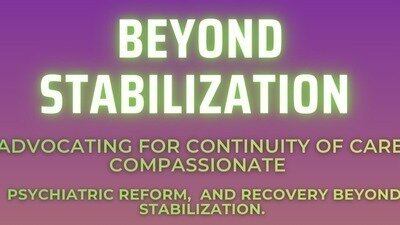

Beyond Stabilization: Bridging the Gap Between Crisis Care and Recovery
Beyond Stabilization: Bridging the Gap Between Crisis Care and Recovery
The Issue
Beyond Stabilization:
Beyond Stabilization: Bridging the Gap Between Crisis Care and Recovery
Public Opinion Question
If a person is still experiencing auditory hallucinations, delusions, paranoia, confusion, impaired judgment, or difficulty distinguishing reality from illness, would you consider that person "stable"?
Many people answer no.
Yet families across the country are facing a difficult reality. Individuals living with severe mental illness are often discharged from psychiatric hospitals once they are no longer considered an immediate danger to themselves or others, even though they may still be experiencing significant symptoms that affect their ability to function safely and independently.
This is not because hospitals do not care. Acute psychiatric hospitals are designed for short-term crisis stabilization and often lack the resources, capacity, and funding to provide months of ongoing treatment. At the same time, long-term treatment options and state psychiatric hospital beds are often limited, leaving patients and families caught in a gap between stabilization and recovery.
As a result, many individuals cycle through repeated crises, emergency room visits, psychiatric hospitalizations, discharges, relapses, and readmissions without ever receiving the sustained support they need.
My own family has experienced this firsthand. My nephew, who lives with schizoaffective disorder and co-occurring challenges, has been hospitalized multiple times in a matter of months. Like many families, we have witnessed the revolving door of mental health care and the lack of options for individuals who need more than a few days of stabilization but cannot access long-term treatment.
This petition is not about blaming hospitals or healthcare professionals. It is about advocating for solutions.
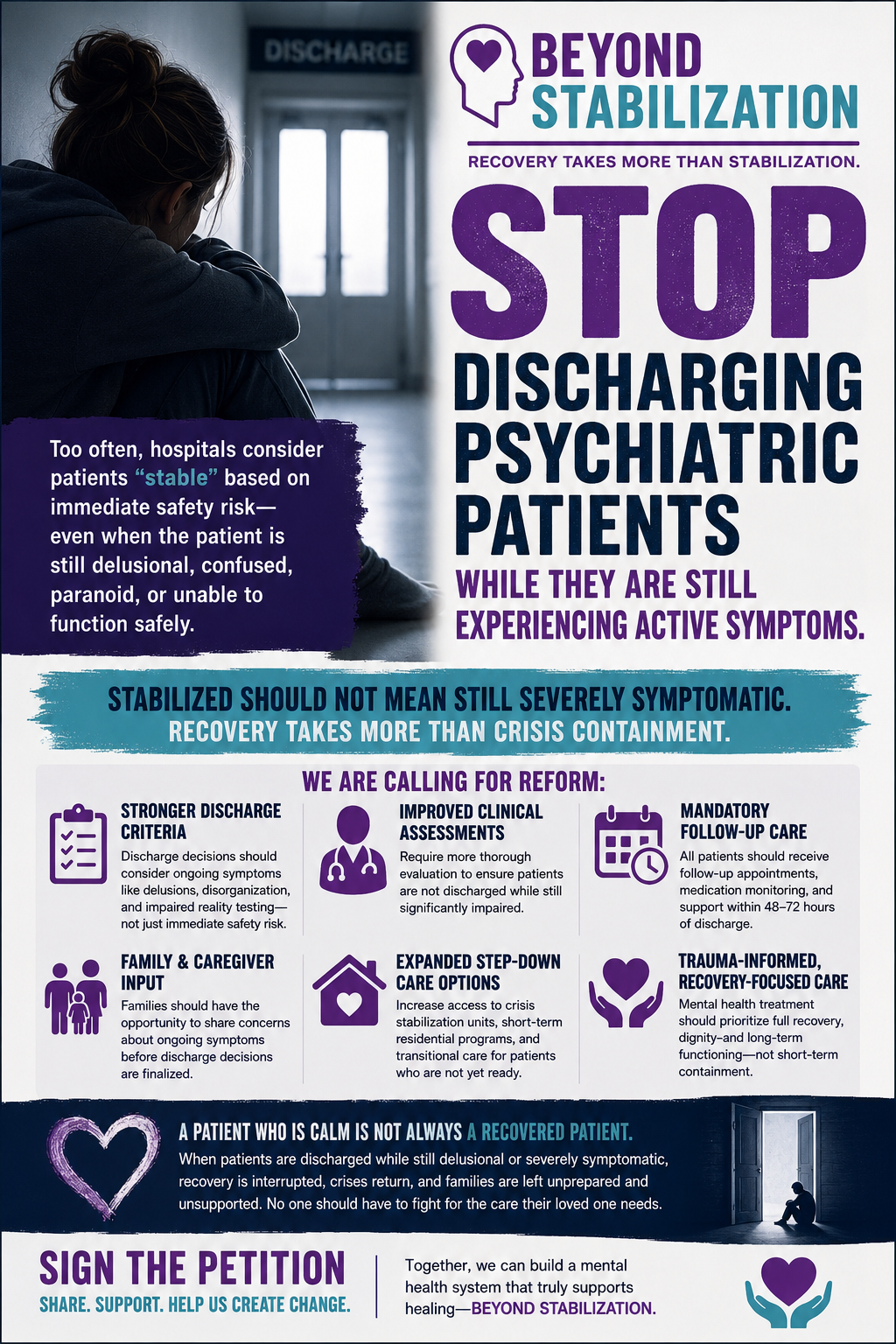
We are calling for:
• Improved continuity of care following psychiatric discharge
• Better discharge planning and follow-up services
• Expanded transitional treatment and residential programs
• Increased access to Assertive Community Treatment (ACT) and intensive community support
• Stronger support for families and caregivers
• Policies focused on recovery, not just crisis stabilization
Mental health recovery takes more than a few days in a hospital. It requires ongoing support, treatment, and a system designed to help people move beyond crisis toward lasting recovery.
If you believe we need better solutions for individuals living with severe mental illness and the families who support them, please sign and share this petition.
Together, we can move beyond stabilization and build a mental health system that supports true recovery.
💙 Recovery Takes More Than Stabilization

120
The Issue
Beyond Stabilization:
Beyond Stabilization: Bridging the Gap Between Crisis Care and Recovery
Public Opinion Question
If a person is still experiencing auditory hallucinations, delusions, paranoia, confusion, impaired judgment, or difficulty distinguishing reality from illness, would you consider that person "stable"?
Many people answer no.
Yet families across the country are facing a difficult reality. Individuals living with severe mental illness are often discharged from psychiatric hospitals once they are no longer considered an immediate danger to themselves or others, even though they may still be experiencing significant symptoms that affect their ability to function safely and independently.
This is not because hospitals do not care. Acute psychiatric hospitals are designed for short-term crisis stabilization and often lack the resources, capacity, and funding to provide months of ongoing treatment. At the same time, long-term treatment options and state psychiatric hospital beds are often limited, leaving patients and families caught in a gap between stabilization and recovery.
As a result, many individuals cycle through repeated crises, emergency room visits, psychiatric hospitalizations, discharges, relapses, and readmissions without ever receiving the sustained support they need.
My own family has experienced this firsthand. My nephew, who lives with schizoaffective disorder and co-occurring challenges, has been hospitalized multiple times in a matter of months. Like many families, we have witnessed the revolving door of mental health care and the lack of options for individuals who need more than a few days of stabilization but cannot access long-term treatment.
This petition is not about blaming hospitals or healthcare professionals. It is about advocating for solutions.
We are calling for:
• Improved continuity of care following psychiatric discharge
• Better discharge planning and follow-up services
• Expanded transitional treatment and residential programs
• Increased access to Assertive Community Treatment (ACT) and intensive community support
• Stronger support for families and caregivers
• Policies focused on recovery, not just crisis stabilization
Mental health recovery takes more than a few days in a hospital. It requires ongoing support, treatment, and a system designed to help people move beyond crisis toward lasting recovery.
If you believe we need better solutions for individuals living with severe mental illness and the families who support them, please sign and share this petition.
Together, we can move beyond stabilization and build a mental health system that supports true recovery.
💙 Recovery Takes More Than Stabilization
120
The Decision Makers

Petition Updates
Share this petition
Petition created on May 25, 2026