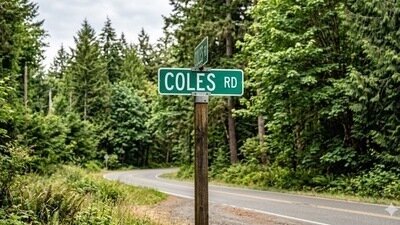

Before we build: Demand the full truth about Coles Road Development
The Issue
Urgent Action Requested from Whidbey Island Residents.
A Petition to the Langley City Council and Mayor Kennedy Horstman
Why This Petition Matters
This island has a way of getting into people. The salt air, the herons at low tide, the way the light falls through the madronas in October. Those of us who have built our lives here know that what makes Whidbey worth living on is not accidental. It is tended. It is protected. It is fragile.
On June 1, 2026, the Langley City Council delayed their decision to vote to replace a legally recorded 2005 annexation agreement that protects 40 acres on Coles Road from overdevelopment, replacing it with approval for 85 new homes under a Habitat for Humanity proposal.
The decision was delayed again at the June 15th city council meeting as the city needed to meet with a legal council. ( see letter update from Marnie Jackson, ED of Whidbey Environment Action Network).
Currently there are 2 applications for this land, Habitat for Humanity and the land owner South Whidbey LLC. Both applications are for a minimum of 105 houses with each house potentially adding 2 ADU buildings.
We are signing this petition not in opposition to our neighbors who need affordable homes, they are us, and we are them, but out of a deep belief that we do not have to choose between housing people and protecting the water we all drink, the streams our salmon return to, and the land held sacred by the people who were here long before any of us.
We demand sustainable, affordable housing on Whidbey Island.
A smaller, carefully considered development on this same parcel could do both. We are asking our city council to be brave enough to find that path before as they consult with their legal team and makes the choice for all of us.
What We Know, And What We're Not Being Told
1. This Land Sits on a Sole-Source Aquifer
Whidbey Island has no backup water supply. The EPA has designated Island County a sole-source aquifer, meaning every glass of water residents drink comes entirely from underground. The Coles Road parcel sits directly within this sensitive recharge zone, adjacent to the Langley Water Treatment Plant.
Dense development on this site will cover critical aquifer recharge areas with impervious surfaces — rooftops, roads, and driveways — blocking rain from soaking into the ground. Once that aquifer is compromised, there is no alternative. No second chance.
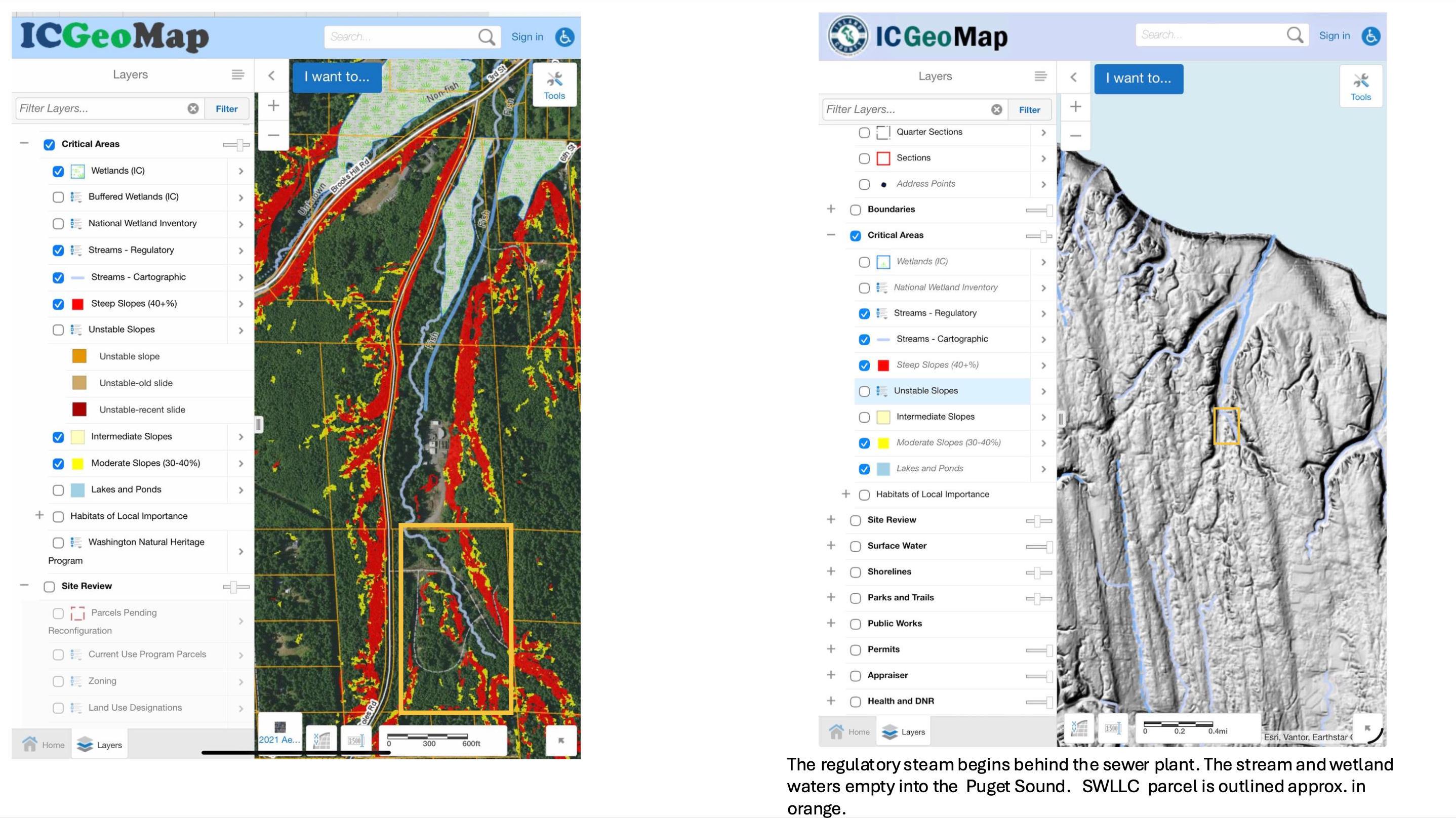
2. The City Cannot Safely Manage Its Current Wastewater, So How Will It Handle More?
This may be the most urgent and underreported concern of all.
The Langley Wastewater Treatment Facility sits at 999 Coles Road, on the same road as the proposed development. Built in 1992 and designed to serve a small city, the facility currently handles 150,000 gallons of wastewater per day using sequencing batch reactors and an on-site composting operation.
The problem is what happens to the treated solid waste, the biosolids, after processing. Currently, treated biosolids are stored in open mounds on the facility grounds, without an impermeable liner or protective pad underneath them. When it rains on Whidbey Island, which it does, regularly and heavily, that material does not stay in place. Leachate from unlined biosolid storage seeps directly into the soil and, from there, into the aquifer below.
Biosolids from municipal wastewater contain a wide range of contaminants, including PFAS "forever chemicals," nitrates, pharmaceuticals, pathogens, and heavy metals, that wastewater treatment processes do not fully remove. Washington State's Department of Ecology acknowledges that PFAS move through the treatment process and into biosolids, and that preventing contamination from these chemicals requires preventing them from reaching the ground in the first place.
The city's own records describe its composting facility as "undersized." Regional officials have noted that Langley would "only desire a regional plant for backup”, an acknowledgment that its current capacity is already stretched.
Now the city is being asked to approve a development that would increase Langley's housing stock significantly, bringing dozens of new homes, hundreds of new residents, and a proportional surge in wastewater volume to a treatment facility that is already undersized, already composting in the open, and already leaching into the sole-source aquifer it sits beside.
The question is not hypothetical. It is immediate: If the City of Langley cannot safely contain the solid waste it generates today, what is the plan for tomorrow?
Before any vote to expand development on Coles Road, the City Council must answer:
What is the current assessed capacity of the Langley Wastewater Treatment Facility?
Has the biosolid storage area been tested for leachate reaching the aquifer?
What is the estimated increase in wastewater volume that 85 new housing units would generate?
Is there a funded, permitted plan to upgrade the treatment facility and eliminate unlined biosolid storage before new development begins?
These are not obstructionist questions. They are the minimum any responsible elected body should be able to answer before approving 85 new units of housing on the same road as an already-strained, open-waste treatment site sitting over a sole-source aquifer.
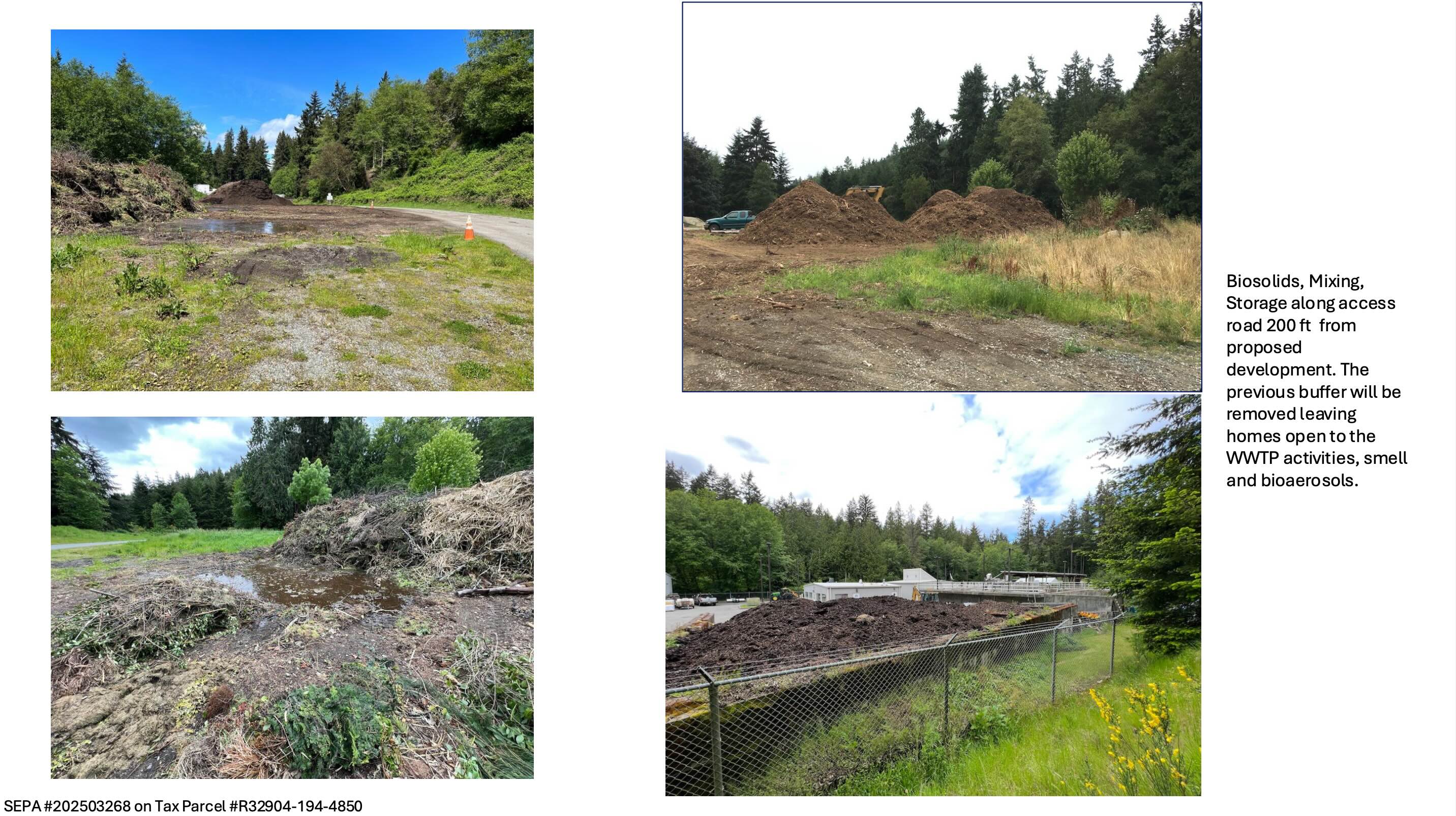
3. The Environmental Survey Was Done in a Drought, And Never Updated
The environmental report used to justify prior development proposals was conducted in August during a drought and examined only two locations near Coles Road for wetlands. Community members raised serious objections. The report was resubmitted unchanged. We do not yet know whether the current Habitat for Humanity proposal will require a new, independent, and comprehensive environmental and hydrogeological review. It must.
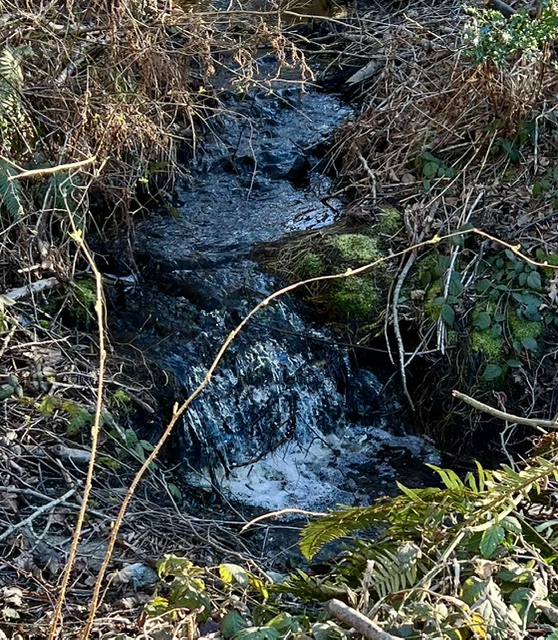
4. Endangered Species Depend on These Waters
South Whidbey's streams feed directly into Saratoga Passage, habitat used by ESA-listed Puget Sound Chinook salmon, Puget Sound steelhead, and threatened bull trout. Southern Resident orca, endangered under federal law, depend on those same Chinook as their primary food source. What happens to Coles Road's aquifer and stormwater does not stay on Coles Road. It travels downstream, into the passage, into the food chain, into the future.
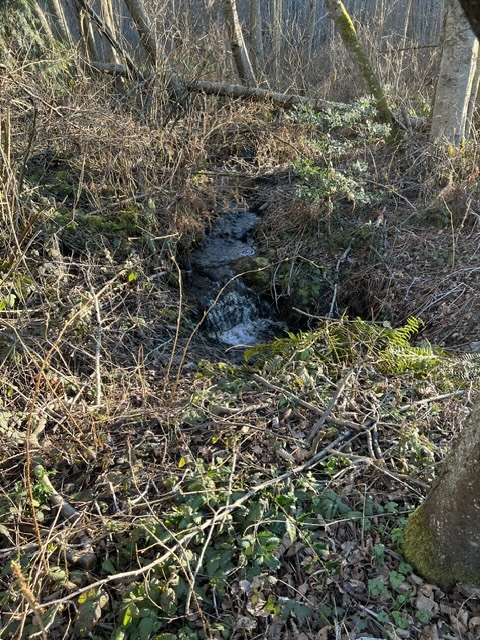
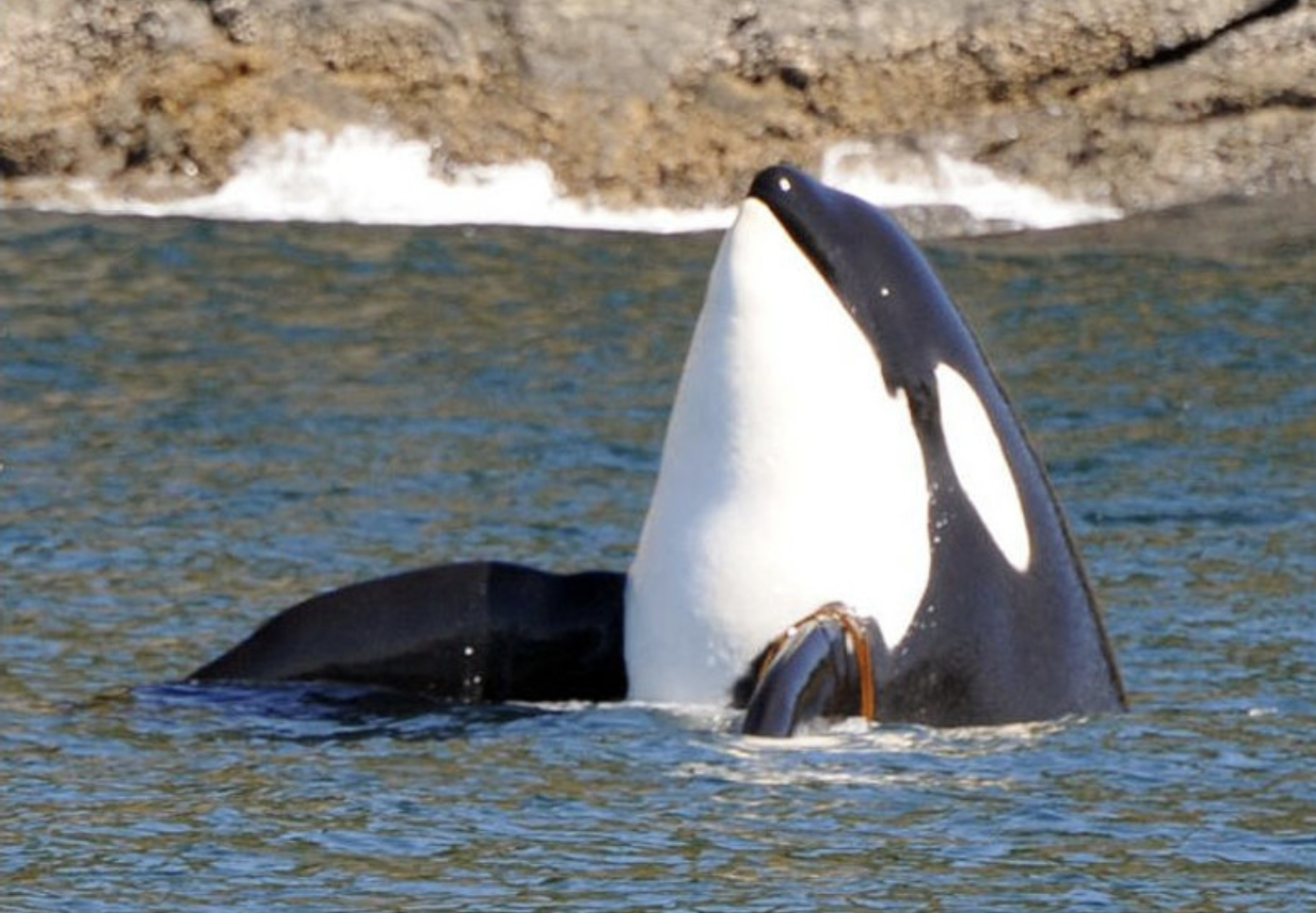
Our actions have an impact!
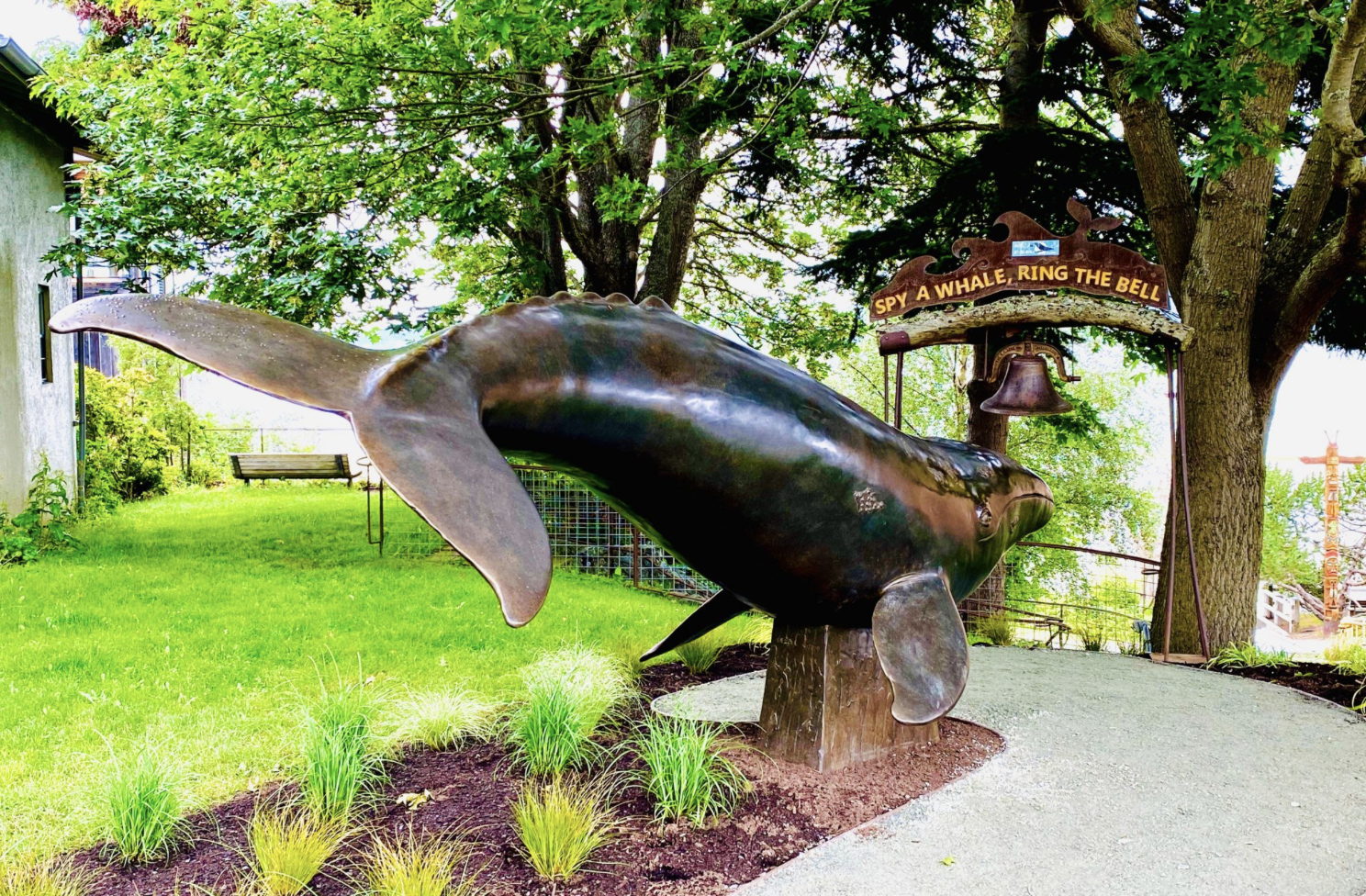
We celebrate and protect our unbelievable environment publicly, and now we need to prove it!
5. Treaty Rights Are at Stake
Long before Coles Road had a name, this land and these waters belonged to the Snohomish people, ancestors of the present-day Tulalip Tribes, who ceded ownership in the 1855 Treaty of Point Elliott while retaining forever the right to hunt, fish, and gather in their usual and accustomed places. That right is not symbolic. It is legally binding. And it depends entirely on healthy streams and clean water.
When aquifer recharge is blocked, when contaminants from unlined biosolid mounds wash into the watershed, when salmon habitat degrades, treaty rights become impossible to exercise. No environmental review of this development is complete without meaningful, government-to-government consultation with the Tulalip Tribes. That has not happened. It must.
The City of Langley, Washington City Council reads the following official Land Acknowledgement statement to open its public meetings:
"The City of Langley acknowledges the original inhabitants of this area, the Coast Salish people. Since time immemorial, they have hunted, fished, gathered, and taken care of these lands. We respect their sovereignty, their right to self-determination, and we honor their sacred spiritual connection with the land and water."
6. The 2005 Annexation Agreement Exists for Good Reason
The 2005 annexation agreement is a legally recorded contract, on file at Island County, that limits development on this parcel to 24 units. Current zoning would otherwise allow 115. The city is now being asked to replace that agreement with one allowing 85 units, more than three times what the agreement permits.
That agreement was not arbitrary. It was not a bureaucratic footnote. It reflected real constraints, environmental, hydrogeological, and community-based, that do not disappear simply because a nonprofit is now the buyer. Before it is erased, the public deserves a full accounting of why those limits were set, what has changed since 2005, and what enforceable protections will replace them.
7. Habitat for Humanity Has an Unfinished Project in Langley
Habitat for Humanity of Island County's Heron Park Townhomes, seven units on Third Street, Langley's first-ever Habitat project within city limits, has been delayed since at least 2022. As of early 2026, construction had still not broken ground. We do not oppose Habitat's mission. We honor it. And we ask a reasonable question that any responsible council should ask: should the City of Langley award a development agreement for 85 units to an organization that has not yet completed its first 7-unit project in this city? Accountability is not opposition. It is stewardship.
A Cautionary Tale: The Fairway Oaks Story
Before Langley votes yes, it is worth knowing what happened in Jacksonville, Florida.
In 2000, HabiJax, Habitat for Humanity's Jacksonville affiliate, built 85 homes in 17 days on land that a federal audit had flagged years earlier as a former garbage dump. Within a few years, homes were sinking, foundations were cracking, mold was spreading, and methane was detected in the soil beneath residents' floors. Homeowners said they were never told about the land's history. A class action lawsuit followed. The city tried to have it dismissed. A judge said no.
When residents pleaded for help, HabiJax and the city suggested the problem was poor maintenance. The homeowners association president responded simply: "They used my mama."
We are not saying this will happen on Coles Road. We are saying that good intentions are not the same as due diligence, and that the people who would live in those homes deserve a city council that asks hard questions before the vote, not after.
📖 Read the full investigative story here: Mold, Foundation Cracks, Sinking Houses: How a Florida Habitat for Humanity Neighborhood Fell Apart — Southerly Magazine / Scalawag, January 2020
More examples Portland “Cherry Blossom Towhomes”.
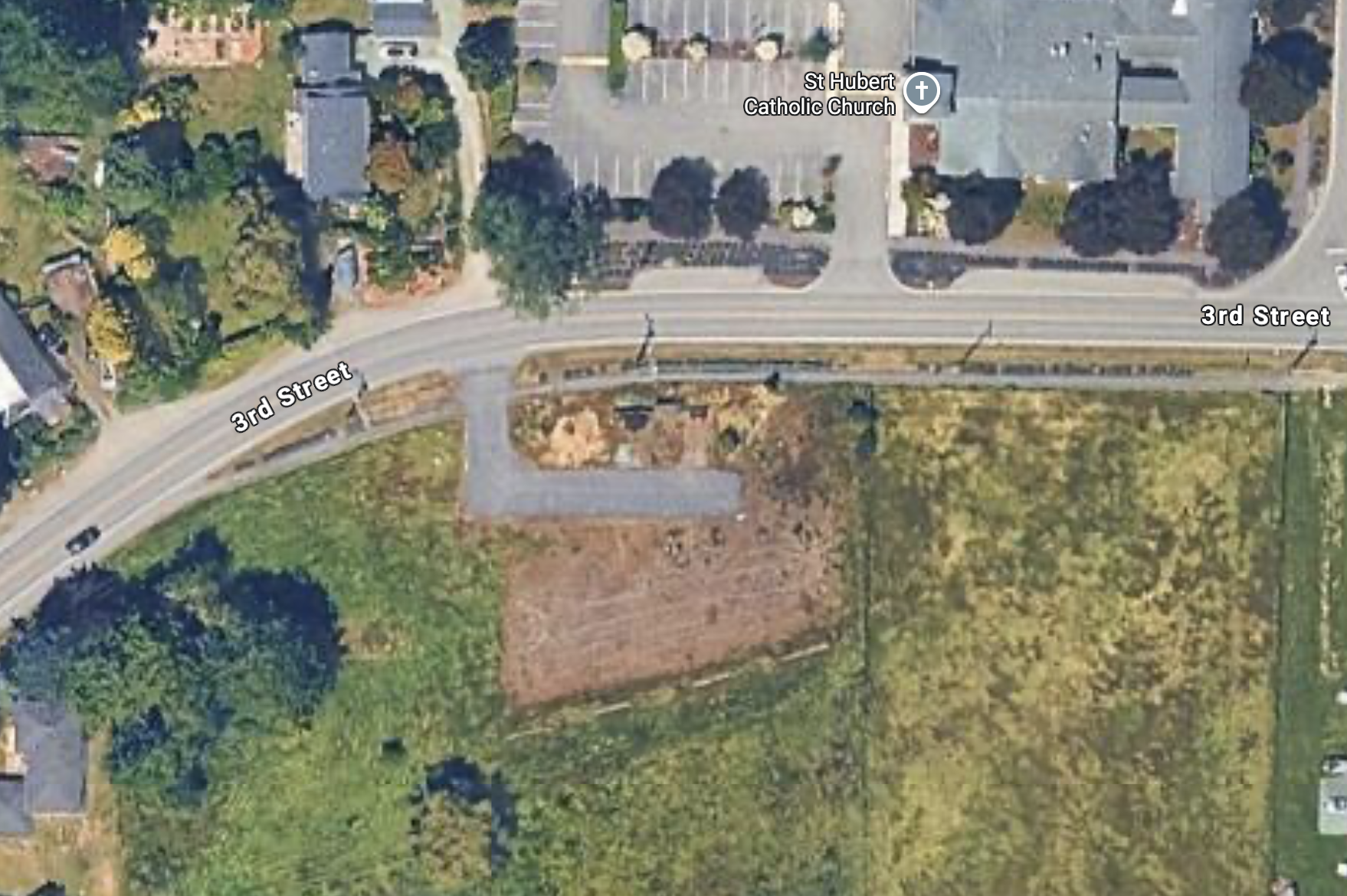
Unfinished Heron Park Town Homes Site.
What We Are Asking
We, the undersigned, call on the Langley City Council to:
1. Require an independent assessment of the Langley Wastewater Treatment Facility parcel, the condition and leachate risk of its open biosolid storage, proper signage, aquifer impact testing, and a funded upgrade plan, before any vote on new development.
2. Require a new, independent environmental and hydrogeological survey of the SouthWhidbey LLC owned Coles Road parcel, conducted during wet season conditions per Geotechnical report, covering the full 40 acres, and made publicly available before any vote.
3. Require meaningful government-to-government consultation with the Tulalip Tribes before amending the annexation agreement.
4. Establish clear conditions and timelines requiring Habitat for Humanity of Island County to complete the Heron Park Townhomes project before breaking ground on Coles Road.
5. Hold a full public hearing, not just a council discussion, before any vote to replace the 2005 annexation agreement.
6. Commission an independent assessment of ADU incentives as a complementary affordable housing strategy that does not require developing sensitive aquifer recharge land adjacent to an undersized wastewater facility.
7. Make all environmental, legal, financial, and wastewater capacity documents related to the proposed Land Use Agreement publicly available at least 30 days before any vote.
A Note on Affordable Housing
We want to say this clearly, because it matters: this petition is not opposition to affordable housing. Langley needs more housing. Island County's working families, our teachers, our caregivers, our young people, our elders, deserve safe, stable, affordable homes. That need is real and it is urgent.
But affordable housing built on a compromised aquifer, beside an open-waste composting site without a protective liner, without meaningful tribal consultation, without a current environmental review, that is not a gift to this community. It is a liability. A liability for the residents who will live there, for the water they will drink, for the species and peoples whose survival depends on the health of this land, and ultimately for the city that approved it.
The 2005 annexation agreement already allows 24 units on this parcel. A thoughtful, fully reviewed, properly supported development of that scale could provide meaningful affordable housing AND protect what makes this island worth living on. We are not asking the council to choose between people and the land. We are asking them to refuse that false choice, and to be worthy of the community that elected them.
Langley can do better. We are asking the city to prove it.
Attend the Meeting
Langley City Council Meeting — June 1, 2026
Langley City Council meetings are held the first and third Monday of each month at 5:30 PM. Since April 7, 2025, all council meetings are held at the Langley Library, 104 Second Street, both in person and via Zoom. Washington State Department of Ecology
How to Attend
In person: Langley Library, 104 Second Street, Langley, WA 98260
Via Zoom: The standing Zoom link is https://us02web.zoom.us/j/85016739615 — Webinar ID: 850 1673 9615, Passcode: 378405 Kraken Sense
If You Want to Make Public Comment
If attending remotely and wishing to make public comment, submit a request no later than 3:00 PM on June 1 using the public comment request form on the city website. In-person attendees do not need to submit the form in advance. Washington State Department of Ecology
You can also contact the council directly at council@langleywa.org or write to P.O. Box 366, Langley, WA 98260.
Organized by residents of South Whidbey Island.
For questions or to add your organization's endorsement, contact: WIResidentsAdvocacy@icloud.com
*note: there is no need to make a financial donation here on change.org for this petition. Thank you to those who have.
Sign below to demand transparency, accountability, and a development process worthy of this community.

Victory
The Issue
Urgent Action Requested from Whidbey Island Residents.
A Petition to the Langley City Council and Mayor Kennedy Horstman
Why This Petition Matters
This island has a way of getting into people. The salt air, the herons at low tide, the way the light falls through the madronas in October. Those of us who have built our lives here know that what makes Whidbey worth living on is not accidental. It is tended. It is protected. It is fragile.
On June 1, 2026, the Langley City Council delayed their decision to vote to replace a legally recorded 2005 annexation agreement that protects 40 acres on Coles Road from overdevelopment, replacing it with approval for 85 new homes under a Habitat for Humanity proposal.
The decision was delayed again at the June 15th city council meeting as the city needed to meet with a legal council. ( see letter update from Marnie Jackson, ED of Whidbey Environment Action Network).
Currently there are 2 applications for this land, Habitat for Humanity and the land owner South Whidbey LLC. Both applications are for a minimum of 105 houses with each house potentially adding 2 ADU buildings.
We are signing this petition not in opposition to our neighbors who need affordable homes, they are us, and we are them, but out of a deep belief that we do not have to choose between housing people and protecting the water we all drink, the streams our salmon return to, and the land held sacred by the people who were here long before any of us.
We demand sustainable, affordable housing on Whidbey Island.
A smaller, carefully considered development on this same parcel could do both. We are asking our city council to be brave enough to find that path before as they consult with their legal team and makes the choice for all of us.
What We Know, And What We're Not Being Told
1. This Land Sits on a Sole-Source Aquifer
Whidbey Island has no backup water supply. The EPA has designated Island County a sole-source aquifer, meaning every glass of water residents drink comes entirely from underground. The Coles Road parcel sits directly within this sensitive recharge zone, adjacent to the Langley Water Treatment Plant.
Dense development on this site will cover critical aquifer recharge areas with impervious surfaces — rooftops, roads, and driveways — blocking rain from soaking into the ground. Once that aquifer is compromised, there is no alternative. No second chance.
2. The City Cannot Safely Manage Its Current Wastewater, So How Will It Handle More?
This may be the most urgent and underreported concern of all.
The Langley Wastewater Treatment Facility sits at 999 Coles Road, on the same road as the proposed development. Built in 1992 and designed to serve a small city, the facility currently handles 150,000 gallons of wastewater per day using sequencing batch reactors and an on-site composting operation.
The problem is what happens to the treated solid waste, the biosolids, after processing. Currently, treated biosolids are stored in open mounds on the facility grounds, without an impermeable liner or protective pad underneath them. When it rains on Whidbey Island, which it does, regularly and heavily, that material does not stay in place. Leachate from unlined biosolid storage seeps directly into the soil and, from there, into the aquifer below.
Biosolids from municipal wastewater contain a wide range of contaminants, including PFAS "forever chemicals," nitrates, pharmaceuticals, pathogens, and heavy metals, that wastewater treatment processes do not fully remove. Washington State's Department of Ecology acknowledges that PFAS move through the treatment process and into biosolids, and that preventing contamination from these chemicals requires preventing them from reaching the ground in the first place.
The city's own records describe its composting facility as "undersized." Regional officials have noted that Langley would "only desire a regional plant for backup”, an acknowledgment that its current capacity is already stretched.
Now the city is being asked to approve a development that would increase Langley's housing stock significantly, bringing dozens of new homes, hundreds of new residents, and a proportional surge in wastewater volume to a treatment facility that is already undersized, already composting in the open, and already leaching into the sole-source aquifer it sits beside.
The question is not hypothetical. It is immediate: If the City of Langley cannot safely contain the solid waste it generates today, what is the plan for tomorrow?
Before any vote to expand development on Coles Road, the City Council must answer:
What is the current assessed capacity of the Langley Wastewater Treatment Facility?
Has the biosolid storage area been tested for leachate reaching the aquifer?
What is the estimated increase in wastewater volume that 85 new housing units would generate?
Is there a funded, permitted plan to upgrade the treatment facility and eliminate unlined biosolid storage before new development begins?
These are not obstructionist questions. They are the minimum any responsible elected body should be able to answer before approving 85 new units of housing on the same road as an already-strained, open-waste treatment site sitting over a sole-source aquifer.
3. The Environmental Survey Was Done in a Drought, And Never Updated
The environmental report used to justify prior development proposals was conducted in August during a drought and examined only two locations near Coles Road for wetlands. Community members raised serious objections. The report was resubmitted unchanged. We do not yet know whether the current Habitat for Humanity proposal will require a new, independent, and comprehensive environmental and hydrogeological review. It must.
4. Endangered Species Depend on These Waters
South Whidbey's streams feed directly into Saratoga Passage, habitat used by ESA-listed Puget Sound Chinook salmon, Puget Sound steelhead, and threatened bull trout. Southern Resident orca, endangered under federal law, depend on those same Chinook as their primary food source. What happens to Coles Road's aquifer and stormwater does not stay on Coles Road. It travels downstream, into the passage, into the food chain, into the future.
Our actions have an impact!
We celebrate and protect our unbelievable environment publicly, and now we need to prove it!
5. Treaty Rights Are at Stake
Long before Coles Road had a name, this land and these waters belonged to the Snohomish people, ancestors of the present-day Tulalip Tribes, who ceded ownership in the 1855 Treaty of Point Elliott while retaining forever the right to hunt, fish, and gather in their usual and accustomed places. That right is not symbolic. It is legally binding. And it depends entirely on healthy streams and clean water.
When aquifer recharge is blocked, when contaminants from unlined biosolid mounds wash into the watershed, when salmon habitat degrades, treaty rights become impossible to exercise. No environmental review of this development is complete without meaningful, government-to-government consultation with the Tulalip Tribes. That has not happened. It must.
The City of Langley, Washington City Council reads the following official Land Acknowledgement statement to open its public meetings:
"The City of Langley acknowledges the original inhabitants of this area, the Coast Salish people. Since time immemorial, they have hunted, fished, gathered, and taken care of these lands. We respect their sovereignty, their right to self-determination, and we honor their sacred spiritual connection with the land and water."
6. The 2005 Annexation Agreement Exists for Good Reason
The 2005 annexation agreement is a legally recorded contract, on file at Island County, that limits development on this parcel to 24 units. Current zoning would otherwise allow 115. The city is now being asked to replace that agreement with one allowing 85 units, more than three times what the agreement permits.
That agreement was not arbitrary. It was not a bureaucratic footnote. It reflected real constraints, environmental, hydrogeological, and community-based, that do not disappear simply because a nonprofit is now the buyer. Before it is erased, the public deserves a full accounting of why those limits were set, what has changed since 2005, and what enforceable protections will replace them.
7. Habitat for Humanity Has an Unfinished Project in Langley
Habitat for Humanity of Island County's Heron Park Townhomes, seven units on Third Street, Langley's first-ever Habitat project within city limits, has been delayed since at least 2022. As of early 2026, construction had still not broken ground. We do not oppose Habitat's mission. We honor it. And we ask a reasonable question that any responsible council should ask: should the City of Langley award a development agreement for 85 units to an organization that has not yet completed its first 7-unit project in this city? Accountability is not opposition. It is stewardship.
A Cautionary Tale: The Fairway Oaks Story
Before Langley votes yes, it is worth knowing what happened in Jacksonville, Florida.
In 2000, HabiJax, Habitat for Humanity's Jacksonville affiliate, built 85 homes in 17 days on land that a federal audit had flagged years earlier as a former garbage dump. Within a few years, homes were sinking, foundations were cracking, mold was spreading, and methane was detected in the soil beneath residents' floors. Homeowners said they were never told about the land's history. A class action lawsuit followed. The city tried to have it dismissed. A judge said no.
When residents pleaded for help, HabiJax and the city suggested the problem was poor maintenance. The homeowners association president responded simply: "They used my mama."
We are not saying this will happen on Coles Road. We are saying that good intentions are not the same as due diligence, and that the people who would live in those homes deserve a city council that asks hard questions before the vote, not after.
📖 Read the full investigative story here: Mold, Foundation Cracks, Sinking Houses: How a Florida Habitat for Humanity Neighborhood Fell Apart — Southerly Magazine / Scalawag, January 2020
More examples Portland “Cherry Blossom Towhomes”.
Unfinished Heron Park Town Homes Site.
What We Are Asking
We, the undersigned, call on the Langley City Council to:
1. Require an independent assessment of the Langley Wastewater Treatment Facility parcel, the condition and leachate risk of its open biosolid storage, proper signage, aquifer impact testing, and a funded upgrade plan, before any vote on new development.
2. Require a new, independent environmental and hydrogeological survey of the SouthWhidbey LLC owned Coles Road parcel, conducted during wet season conditions per Geotechnical report, covering the full 40 acres, and made publicly available before any vote.
3. Require meaningful government-to-government consultation with the Tulalip Tribes before amending the annexation agreement.
4. Establish clear conditions and timelines requiring Habitat for Humanity of Island County to complete the Heron Park Townhomes project before breaking ground on Coles Road.
5. Hold a full public hearing, not just a council discussion, before any vote to replace the 2005 annexation agreement.
6. Commission an independent assessment of ADU incentives as a complementary affordable housing strategy that does not require developing sensitive aquifer recharge land adjacent to an undersized wastewater facility.
7. Make all environmental, legal, financial, and wastewater capacity documents related to the proposed Land Use Agreement publicly available at least 30 days before any vote.
A Note on Affordable Housing
We want to say this clearly, because it matters: this petition is not opposition to affordable housing. Langley needs more housing. Island County's working families, our teachers, our caregivers, our young people, our elders, deserve safe, stable, affordable homes. That need is real and it is urgent.
But affordable housing built on a compromised aquifer, beside an open-waste composting site without a protective liner, without meaningful tribal consultation, without a current environmental review, that is not a gift to this community. It is a liability. A liability for the residents who will live there, for the water they will drink, for the species and peoples whose survival depends on the health of this land, and ultimately for the city that approved it.
The 2005 annexation agreement already allows 24 units on this parcel. A thoughtful, fully reviewed, properly supported development of that scale could provide meaningful affordable housing AND protect what makes this island worth living on. We are not asking the council to choose between people and the land. We are asking them to refuse that false choice, and to be worthy of the community that elected them.
Langley can do better. We are asking the city to prove it.
Attend the Meeting
Langley City Council Meeting — June 1, 2026
Langley City Council meetings are held the first and third Monday of each month at 5:30 PM. Since April 7, 2025, all council meetings are held at the Langley Library, 104 Second Street, both in person and via Zoom. Washington State Department of Ecology
How to Attend
In person: Langley Library, 104 Second Street, Langley, WA 98260
Via Zoom: The standing Zoom link is https://us02web.zoom.us/j/85016739615 — Webinar ID: 850 1673 9615, Passcode: 378405 Kraken Sense
If You Want to Make Public Comment
If attending remotely and wishing to make public comment, submit a request no later than 3:00 PM on June 1 using the public comment request form on the city website. In-person attendees do not need to submit the form in advance. Washington State Department of Ecology
You can also contact the council directly at council@langleywa.org or write to P.O. Box 366, Langley, WA 98260.
Organized by residents of South Whidbey Island.
For questions or to add your organization's endorsement, contact: WIResidentsAdvocacy@icloud.com
*note: there is no need to make a financial donation here on change.org for this petition. Thank you to those who have.
Sign below to demand transparency, accountability, and a development process worthy of this community.
The Decision Makers


Supporter Voices
Petition Updates
Share this petition
Petition created on May 27, 2026