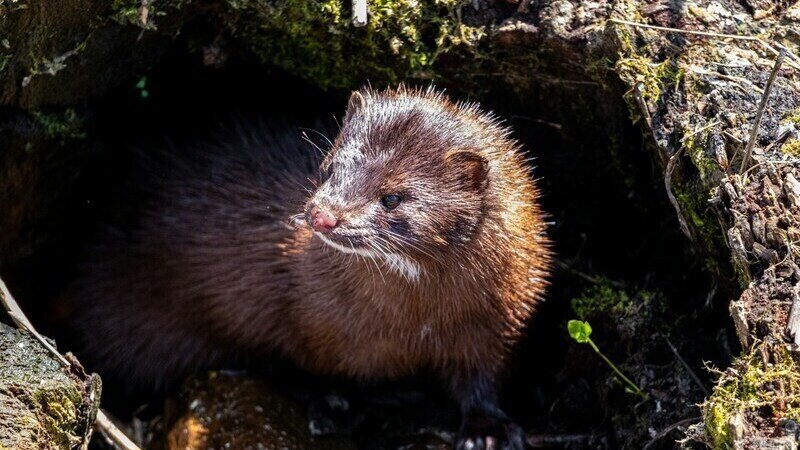
Ban Mink Fur Farming in the US to Protect Animals & Public Health
The Issue
In August, the U.S. Department of Agriculture (USDA) confirmed H5N1 bird flu on a Utah mink farm. It is the first time this dangerous strain has been recognized on a mink farm anywhere in the country. Reports cited by animal welfare groups say about 80 percent of the mink on the farm died.
Mink farms keep animals tightly confined in rows of small wire cages. Flu scientists pay close attention to mink because the virus can pass between them and pick up changes that help it infect other mammals. When H5N1 struck a mink farm in Spain in 2022, genetic testing found one of those changes, and every animal there was culled. Finland launched nationwide surveillance of its fur farms after outbreaks in 2023.
More than a month after the Utah case was confirmed, officials still have not said where the farm is, how many animals got sick, whether the virus spread from mink to mink, or whether any workers were exposed. The public only learned about it because independent disease trackers spotted the cases in a federal database.
The industry is already fading. Yearly U.S. mink pelt production dropped from about 5.46 million in 1969 to 771,200 in 2024. Even so, on September 16 the Senate Agriculture Committee approved Farm Bill language that would let mink industry trade groups receive federal export-promotion money for the first time in roughly three decades.
Animal Wellness Action and the Center for a Humane Economy describe mink farms as "inhumane factory farms that are well-known to incubate a variety of viruses that threaten human health," according to the groups' statement.
Congress should strip the mink subsidy from the Farm Bill and pass a law to phase out mink fur farming, with fair transition help for the farmers who depend on it. USDA should back that effort.
Sign the petition to end mink fur farming before another outbreak puts animals, workers and families at risk.

603
The Issue
In August, the U.S. Department of Agriculture (USDA) confirmed H5N1 bird flu on a Utah mink farm. It is the first time this dangerous strain has been recognized on a mink farm anywhere in the country. Reports cited by animal welfare groups say about 80 percent of the mink on the farm died.
Mink farms keep animals tightly confined in rows of small wire cages. Flu scientists pay close attention to mink because the virus can pass between them and pick up changes that help it infect other mammals. When H5N1 struck a mink farm in Spain in 2022, genetic testing found one of those changes, and every animal there was culled. Finland launched nationwide surveillance of its fur farms after outbreaks in 2023.
More than a month after the Utah case was confirmed, officials still have not said where the farm is, how many animals got sick, whether the virus spread from mink to mink, or whether any workers were exposed. The public only learned about it because independent disease trackers spotted the cases in a federal database.
The industry is already fading. Yearly U.S. mink pelt production dropped from about 5.46 million in 1969 to 771,200 in 2024. Even so, on September 16 the Senate Agriculture Committee approved Farm Bill language that would let mink industry trade groups receive federal export-promotion money for the first time in roughly three decades.
Animal Wellness Action and the Center for a Humane Economy describe mink farms as "inhumane factory farms that are well-known to incubate a variety of viruses that threaten human health," according to the groups' statement.
Congress should strip the mink subsidy from the Farm Bill and pass a law to phase out mink fur farming, with fair transition help for the farmers who depend on it. USDA should back that effort.
Sign the petition to end mink fur farming before another outbreak puts animals, workers and families at risk.
The Decision Makers

Petition Updates
Share this petition
Petition created on September 30, 2026