

Ban Carolina Jessamine from Shared-Use Landscaping in DC – Protect Our Pets and Children
The Issue
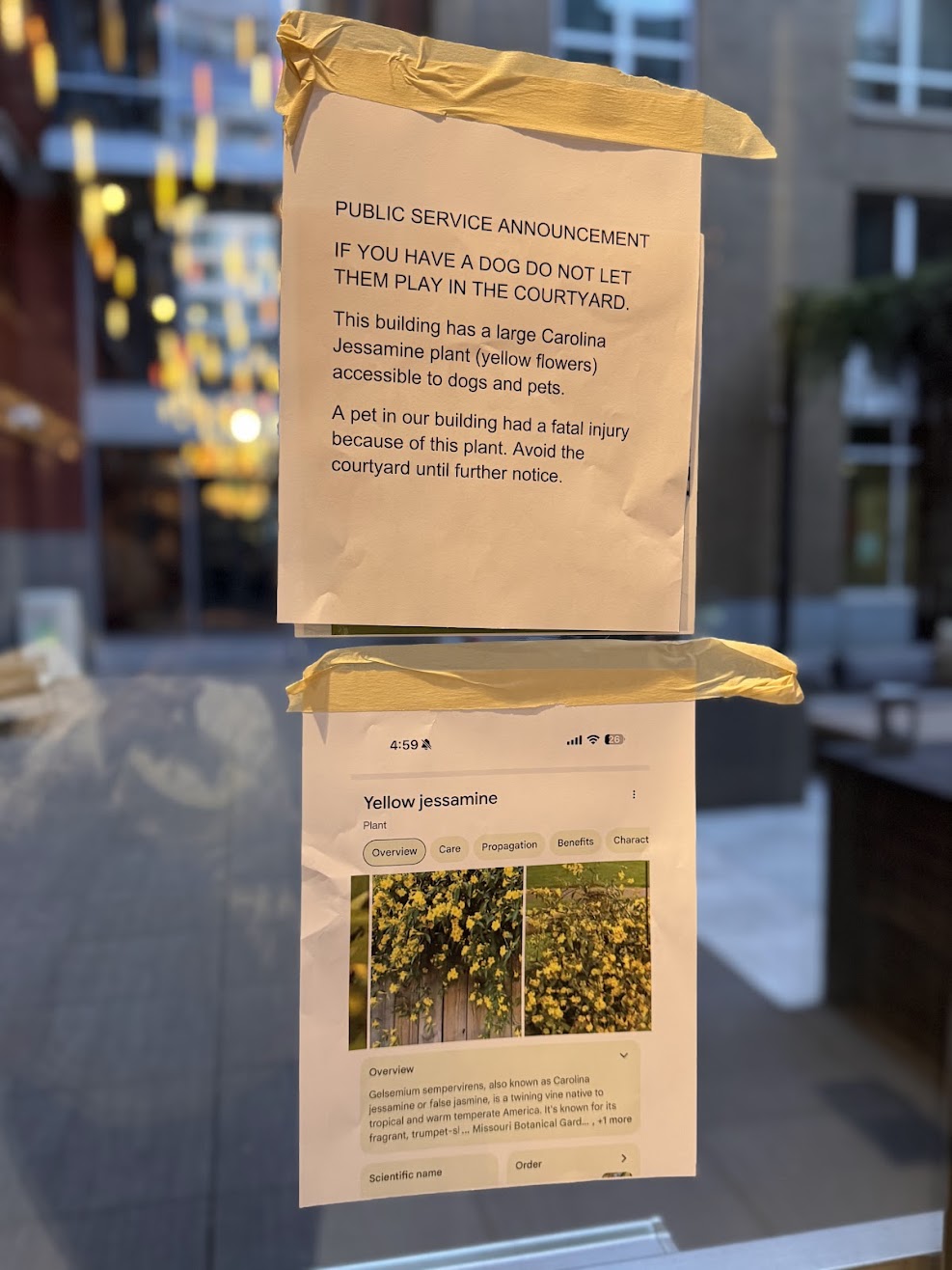
On April 16, 2025, a beloved dog died after ingesting a single flower from a Carolina jessamine vine in the courtyard of a luxury apartment complex in Shaw, Washington, DC.
This was entirely preventable. And it could happen again tomorrow.
Carolina jessamine (Gelsemium sempervirens) is a commonly used flowering vine in DC, favored for its bright yellow blooms. But what most residents don’t know is that it’s highly toxic. It contains neurotoxins like gelsemine and sempervirine that can cause respiratory failure and death in pets, children, and wildlife, even in small doses.
- The Pet Poison Helpline warns: “Even one flower can be fatal."
- The ASPCA lists it as toxic to dogs, cats, and horses.
- A 2022 toxicology study confirms its neurotoxic effects in animals and humans.
The dog’s death occurred in a shared, pet-friendly courtyard. There were no warning signs, and the plant was still in bloom. The landscaping company denied the risk, and the property management declined to act.
And this isn’t an isolated location. Carolina jessamine is used across DC in Apartment and condo courtyards, landscaped walkways, medians, tree boxes, and school-adjacent green spaces and parks.
We are calling on the DC Council and Mayor’s Office to act now by passing legislation that will:
- Ban the use of Carolina jessamine in all publicly accessible and shared-use landscaping across DC
- Mandate the removal of existing plantings in these areas
- Promote safe, non-toxic native alternatives such as coral honeysuckle, American wisteria, and Virginia creeper
This is not about banning backyard planting. It is about removing known, proven toxins from communal environments, just as DC has done with lead paint, secondhand smoke, and hazardous construction materials. If a dog can die silently in a courtyard, what will it take to act? A child?
We urge District leaders to act before another preventable tragedy occurs.
Sign this petition to protect DC’s pets, families, and shared spaces.
Frequently Asked Questions
Q: Isn’t this just a rare allergy?
A: No. Carolina jessamine contains gelsemine, a neurotoxin confirmed to cause respiratory failure and death. One flower can be fatal to a dog.
Q: Can’t people just supervise their pets?
A: The dog that died was in a pet-friendly courtyard. No warning was posted. You can’t “supervise away” a neurotoxic flower on your daily walk.
Q: Why not ban all toxic plants?
A: Carolina jessamine is a logical place to start: it caused a recent death, is widely used, and has clear toxicological evidence. The legislation may empower agencies to review other plants in future phases.
Q: What are the safer alternatives?
A: Beautiful, non-toxic native vines like coral honeysuckle, Virginia creeper, and American wisteria—which also support DC’s pollinators.
Q: Has anyone taken action?
A: Yes—draft legislation has already been submitted to the DC Council. With your signature, we can show this is not just a personal tragedy—it’s a citywide priority.

1,175
The Issue
On April 16, 2025, a beloved dog died after ingesting a single flower from a Carolina jessamine vine in the courtyard of a luxury apartment complex in Shaw, Washington, DC.
This was entirely preventable. And it could happen again tomorrow.
Carolina jessamine (Gelsemium sempervirens) is a commonly used flowering vine in DC, favored for its bright yellow blooms. But what most residents don’t know is that it’s highly toxic. It contains neurotoxins like gelsemine and sempervirine that can cause respiratory failure and death in pets, children, and wildlife, even in small doses.
- The Pet Poison Helpline warns: “Even one flower can be fatal."
- The ASPCA lists it as toxic to dogs, cats, and horses.
- A 2022 toxicology study confirms its neurotoxic effects in animals and humans.
The dog’s death occurred in a shared, pet-friendly courtyard. There were no warning signs, and the plant was still in bloom. The landscaping company denied the risk, and the property management declined to act.
And this isn’t an isolated location. Carolina jessamine is used across DC in Apartment and condo courtyards, landscaped walkways, medians, tree boxes, and school-adjacent green spaces and parks.
We are calling on the DC Council and Mayor’s Office to act now by passing legislation that will:
- Ban the use of Carolina jessamine in all publicly accessible and shared-use landscaping across DC
- Mandate the removal of existing plantings in these areas
- Promote safe, non-toxic native alternatives such as coral honeysuckle, American wisteria, and Virginia creeper
This is not about banning backyard planting. It is about removing known, proven toxins from communal environments, just as DC has done with lead paint, secondhand smoke, and hazardous construction materials. If a dog can die silently in a courtyard, what will it take to act? A child?
We urge District leaders to act before another preventable tragedy occurs.
Sign this petition to protect DC’s pets, families, and shared spaces.
Frequently Asked Questions
Q: Isn’t this just a rare allergy?
A: No. Carolina jessamine contains gelsemine, a neurotoxin confirmed to cause respiratory failure and death. One flower can be fatal to a dog.
Q: Can’t people just supervise their pets?
A: The dog that died was in a pet-friendly courtyard. No warning was posted. You can’t “supervise away” a neurotoxic flower on your daily walk.
Q: Why not ban all toxic plants?
A: Carolina jessamine is a logical place to start: it caused a recent death, is widely used, and has clear toxicological evidence. The legislation may empower agencies to review other plants in future phases.
Q: What are the safer alternatives?
A: Beautiful, non-toxic native vines like coral honeysuckle, Virginia creeper, and American wisteria—which also support DC’s pollinators.
Q: Has anyone taken action?
A: Yes—draft legislation has already been submitted to the DC Council. With your signature, we can show this is not just a personal tragedy—it’s a citywide priority.
Supporter Voices
Petition Updates
Share this petition
Petition created on April 21, 2025