
Amend landscape regulations in the City of Chino
The Issue
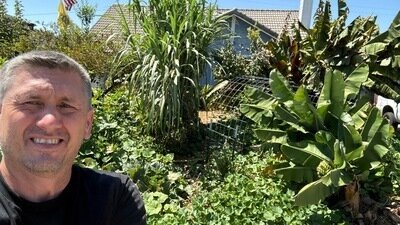
Our family has experienced firsthand the challenges of maintaining an edible landscape under the current, vague regulations in the City of Chino. These unclear and subjective landscape standards have not only created conflicts but have also discouraged responsible food production crucial for a sustainable future. We believe that residents should have the autonomy to grow food, conserve water, and maintain their landscapes without fear of inconsistent and subjective enforcement.
Chino, with its rich agricultural heritage, is perfectly poised to embrace modern landscaping practices that support responsible residential food production. This proposed amendment seeks to provide clarity in landscape regulations, ensuring that they serve multiple purposes such as beauty, sustainability, habitat preservation, and food production, while encouraging drought resilience, pollinator support, and environmental stewardship.
Currently, homeowners face potential penalties and objections for landscape choices that are beneficial but unrecognizable under the outdated framework. By adopting this amendment, Chino can protect its residents from inconsistent or subjective enforcement, promote environmentally friendly practices, and strengthen the community's resilience against climate challenges.
Data from similar initiatives in other municipalities show significant improvements in community satisfaction, environmental health, and resource conservation. For instance, cities adopting clear and fair landscape regulations have seen increased biodiversity, reduced water usage, and enhanced local food security.
With your support, we aim to honor Chino’s agricultural roots by facilitating modern practices that align with today's environmental and social goals. This can be an opportunity for the City of Chino to lead by example, demonstrating a balanced approach to urban living in harmony with nature.
Sign this petition to support the amendment of landscape regulations in the City of Chino that reflect progressive values and meet the needs of all residents. Together, we can foster a more sustainable, beautiful, and thriving community. Please add your name today.
RESIDENTIAL LANDSCAPE AND URBAN FOOD
PRODUCTION ORDINANCE
Proposed Municipal Code Amendment - Complete Draft
Drafting note: This document is drafted as proposed municipal code language for review,
discussion, petition use, or city staff consideration. It should be reviewed by the City Clerk, City
Attorney, or qualified legal counsel before use as an official initiative or ordinance filing.
SECTION 1. PURPOSE AND INTENT
The purpose of this chapter is to establish clear, objective, and modern standards for residential
landscapes, edible landscapes, and residential food production within the City.
This chapter is intended to:
1. Promote reasonable residential property rights and landscape diversity;
2. Encourage sustainable land stewardship and water-wise landscaping practices;
3. Support California drought resilience goals through reduced turf dependency and climate-
adaptive landscaping;
4. Encourage pollinator habitat, biodiversity, and ecological landscaping practices;
5. Promote urban agriculture and localized food production for community food security and
resilience;
6. Clarify standards relating to edible landscapes, food forests, and residential food production;
7. Ensure nuisance determinations are based upon objective and documented conditions rather
than subjective aesthetic preferences;
8. Preserve public health and safety while allowing for the continued evolution of landscaping styles
and residential character within the City.
SECTION 2. DEFINITIONS
Edible Landscape
"Edible landscape" means a designed, planted, or maintained landscape containing food-producing,
medicinal, or useful plants, including but not limited to fruit trees, vegetables, herbs, vines, berries,
edible shrubs, pollinator-supporting plants, medicinal plants, companion plantings, agroforestry
systems, food forests, permaculture systems, and mixed ornamental-edible plantings.
Draft for community review - not legal adviceDraft Municipal Code Amendment - Residential Landscape and Urban Food Production
An edible landscape may include decorative, ecological, agricultural, regenerative, or naturalistic
characteristics and shall not be considered commercial agriculture solely because edible or useful
plants are present.
Residential Food Production
"Residential food production" means the cultivation of edible, medicinal, or useful plants on
residential property for personal consumption, household use, donation, education, barter where
lawful, or lawful retail sale in compliance with applicable state and local regulations.
Food Forest
"Food forest" means a layered edible or useful landscape system that may include trees, shrubs,
vines, herbs, groundcovers, perennial vegetables, annual crops, pollinator plants, mulch, compost,
and soil-building practices designed to mimic ecological relationships and produce food or other
beneficial products.
Ecological Landscape
"Ecological landscape" means a landscape designed or managed to support biodiversity, soil health,
pollinators, water conservation, habitat value, nutrient cycling, or other ecological functions.
Active Landscape Management
"Active landscape management" means ongoing horticultural care consistent with the intended
landscape type, which may include pruning, trimming, deadheading, harvesting, seasonal cutback,
removal of diseased or dead plant material, mulching, composting, irrigation management, soil
building, and vegetation management.
Substantially Different Landscape
"Substantially different landscape" shall mean a landscape condition that creates a documented
threat to public health or safety, or which constitutes an objectively verifiable nuisance as defined
by this code. A landscape shall not be deemed substantially different solely because it contains
edible plants, differs from neighboring aesthetic styles, uses naturalistic or regenerative methods,
contains mulch or compost, incorporates dense vegetation, or departs from conventional turf-grass
landscape patterns.
SECTION 3. RESIDENTIAL FOOD PRODUCTION RIGHTS
Residential properties within residential zoning districts may contain edible landscapes, food
forests, ecological landscapes, and food-producing plants within front yards, side yards, and rear
yards, subject to objective maintenance, access, visibility, and safety standards established by this
chapter.
Residential food production shall be considered a customary accessory use incidental to residential
occupancy. The presence of edible plants shall not, by itself, alter the residential character of the
property.
Draft for community review - not legal adviceDraft Municipal Code Amendment - Residential Landscape and Urban Food Production
The cultivation of food for personal use, household use, donation, education, barter where lawful, or
lawful sale shall be expressly permitted and shall not alone constitute crop cultivation requiring
commercial agricultural classification, nuisance, blight, or an unlawful landscape condition.
SECTION 4. LANDSCAPE DIVERSITY AND EVOLUTION
The City recognizes that landscaping styles, horticultural practices, and community preferences
evolve over time. Diverse landscape approaches may contribute to reduced water consumption,
improved biodiversity, pollinator support, localized food production, climate resilience,
neighborhood sustainability, and community character.
Permitted landscape approaches include but are not limited to:
� edible landscapes
� ecological landscapes
� native plant gardens
� pollinator habitats
� water-wise landscapes
� regenerative landscapes
� food forests
� cottage gardens
� naturalistic planting designs
� mixed ornamental-edible gardens
A landscape shall not be deemed incompatible, blighted, or substantially different solely because it
differs from conventional ornamental landscaping patterns or incorporates dense, layered, seasonal,
or mixed vegetation.
SECTION 5. LANDSCAPE MAINTENANCE STANDARDS
All landscapes, including edible and ecological landscapes, shall be maintained in a reasonably
orderly, healthy, and actively managed condition consistent with the intended landscape design.
Maintenance activities may include:
� pruning
� trimming
� deadheading
� harvesting
� removal of diseased or dead plant material
� seasonal cutback
� vegetation management
� plant health management
� general horticultural upkeep consistent with the intended landscape designDraft for community review - not legal adviceDraft Municipal Code Amendment - Residential Landscape and Urban Food Production
The presence of layered, overlapping, interconnected, or densely planted vegetation shall not alone
constitute evidence of neglect, blight, nuisance, or lack of maintenance. Plant spacing and growth
habits shall be evaluated in relation to the intended landscape style, plant species, and accepted
horticultural practices.
A landscape shall not be deemed unmaintained solely because plants are touching or overlapping,
vegetation appears naturalistic, mulch or organic matter is present, seasonal dieback occurs, seed
heads are retained for harvest or habitat, or the landscape differs from conventional turf-and-shrub
landscaping patterns.
Enforcement determinations shall consider the overall health, functionality, and active management
of the landscape rather than subjective aesthetic preference.
SECTION 6. MULCHING, COMPOST, AND ORGANIC LAND
MANAGEMENT
Organic land-management practices are permitted and encouraged where maintained so as not to
create a documented public health hazard or objective nuisance condition.
Permitted practices include but are not limited to:
� mulching
� sheet mulching
� wood chips
� straw mulch
� leaf mulch
� chop-and-drop vegetation management
� composting
� natural soil building
� seasonal plant cycling
� organic matter management
� water-conserving groundcover systems
The presence of mulch, organic matter, compost, or decomposing plant material used for legitimate
horticultural, ecological, or soil-building purposes shall not alone constitute blight, nuisance, or lack
of maintenance.
SECTION 7. RODENT, VERMIN, AND PEST STANDARDS
No landscape, edible garden, ecological landscape, or residential food-production area shall be
declared a nuisance solely based upon speculation, generalized concern, subjective objection, or the
mere possibility of rodents, pests, or vermin.
Enforcement relating to rodents, vermin, or infestations shall require:Draft for community review - not legal adviceDraft Municipal Code Amendment - Residential Landscape and Urban Food Production
1. documented evidence of an active infestation;
2. identification of conditions directly attributable to the subject property;
3. verification through objective inspection standards, qualified personnel, or appropriate public-
health inspection methods.
The existence of dense vegetation, hedges, mulch, compost, edible gardens, ecological landscaping
practices, or layered plantings shall not alone constitute evidence of infestation or nuisance.
Comparable ornamental landscapes containing dense vegetation, including but not limited to
hedges, screening plants, Italian Cypress, ivy, groundcover masses, ornamental grasses, shrubs, or
similar plantings commonly permitted throughout the City, shall be evaluated under identical
objective nuisance standards.
SECTION 8. OBJECTIVE NUISANCE DETERMINATIONS
No landscape, edible garden, or residential planting area shall be declared a nuisance based solely
upon speculation, subjective aesthetic disagreement, potential future impacts, generalized fears, or
nonconformity with prevailing landscape styles.
A nuisance determination shall require objective evidence of a documented condition that
materially affects public health, safety, access, or substantial neighboring property use.
The City shall identify the specific code section alleged to be violated, the factual basis for the alleged
violation, the corrective action required, and measurable compliance standards.
SECTION 9. COMMUNITY FOOD PRODUCTION AND PROPERTY
AUTHORIZATION
The City recognizes residential food production, edible landscaping, and ecological landscaping as
beneficial community practices that may contribute to food security, localized food production,
pollinator habitat, biodiversity, drought resilience, environmental stewardship, and neighborhood
sustainability.
Nothing in this chapter shall be construed to impair the lawful property rights of owners or
authorized property managers regarding landscape modification on privately owned property.
Residential occupants, including tenants and lessees, may participate in gardening, edible
landscaping, and food-production activities consistent with lease agreements, property rules, and
owner authorization where required.
Permanent landscape modifications, including but not limited to planting of trees, installation of
food forests, substantial grading, irrigation system installation, or long-term structural landscape
Draft for community review - not legal adviceDraft Municipal Code Amendment - Residential Landscape and Urban Food Production
conversion, shall require authorization from the property owner or lawful property manager where
the occupant is not the property owner.
Nothing in this chapter shall prohibit or discourage reasonable gardening activities conducted with
owner permission, including container gardening, seasonal vegetable gardening, herb cultivation,
raised beds, and other non-permanent food production practices.
SECTION 10. ENFORCEMENT STANDARDS AND REMEDIES
No lawful edible landscape, ecological landscape, or residential food-production area maintained in
compliance with this chapter shall be prohibited, removed, or declared a nuisance contrary to the
provisions of this chapter.
No enforcement action shall be initiated or maintained based solely upon subjective aesthetic
preference, generalized speculation, unsupported concerns regarding potential pests or rodents, or
nonconformity with prevailing landscape styles.
Any enforcement action inconsistent with this chapter shall be subject to administrative and judicial
review. Property owners adversely affected by enforcement contrary to this chapter may seek
administrative appeal, declaratory or injunctive relief, recovery of costs where authorized by law,
and any other remedies available under applicable law.
The City shall bear the burden of demonstrating substantial evidence supporting any alleged
violation. Enforcement standards shall be applied uniformly throughout the City and shall not treat
edible or ecological landscapes more restrictively than comparable ornamental landscapes.
SECTION 11. SEVERABILITY
If any section, subsection, sentence, clause, phrase, or portion of this chapter is for any reason held
invalid or unconstitutional by a court of competent jurisdiction, such decision shall not affect the
validity of the remaining portions of this chapter. The City declares that it would have adopted this
chapter and each section, subsection, sentence, clause, phrase, or portion thereof regardless of the
fact that any one or more sections, subsections, sentences, clauses, phrases, or portions may be
declared invalid.
SECTION 12. CONSTRUCTION
This chapter shall be liberally construed to protect lawful residential food production, edible
landscapes, drought-resilient landscaping, pollinator habitat, ecological landscaping, and objective
nuisance enforcement, while preserving the City's authority to address documented public health,
safety, access, or nuisance conditions consistent with this chapter and applicable law.

326
The Issue
Our family has experienced firsthand the challenges of maintaining an edible landscape under the current, vague regulations in the City of Chino. These unclear and subjective landscape standards have not only created conflicts but have also discouraged responsible food production crucial for a sustainable future. We believe that residents should have the autonomy to grow food, conserve water, and maintain their landscapes without fear of inconsistent and subjective enforcement.
Chino, with its rich agricultural heritage, is perfectly poised to embrace modern landscaping practices that support responsible residential food production. This proposed amendment seeks to provide clarity in landscape regulations, ensuring that they serve multiple purposes such as beauty, sustainability, habitat preservation, and food production, while encouraging drought resilience, pollinator support, and environmental stewardship.
Currently, homeowners face potential penalties and objections for landscape choices that are beneficial but unrecognizable under the outdated framework. By adopting this amendment, Chino can protect its residents from inconsistent or subjective enforcement, promote environmentally friendly practices, and strengthen the community's resilience against climate challenges.
Data from similar initiatives in other municipalities show significant improvements in community satisfaction, environmental health, and resource conservation. For instance, cities adopting clear and fair landscape regulations have seen increased biodiversity, reduced water usage, and enhanced local food security.
With your support, we aim to honor Chino’s agricultural roots by facilitating modern practices that align with today's environmental and social goals. This can be an opportunity for the City of Chino to lead by example, demonstrating a balanced approach to urban living in harmony with nature.
Sign this petition to support the amendment of landscape regulations in the City of Chino that reflect progressive values and meet the needs of all residents. Together, we can foster a more sustainable, beautiful, and thriving community. Please add your name today.
RESIDENTIAL LANDSCAPE AND URBAN FOOD
PRODUCTION ORDINANCE
Proposed Municipal Code Amendment - Complete Draft
Drafting note: This document is drafted as proposed municipal code language for review,
discussion, petition use, or city staff consideration. It should be reviewed by the City Clerk, City
Attorney, or qualified legal counsel before use as an official initiative or ordinance filing.
SECTION 1. PURPOSE AND INTENT
The purpose of this chapter is to establish clear, objective, and modern standards for residential
landscapes, edible landscapes, and residential food production within the City.
This chapter is intended to:
1. Promote reasonable residential property rights and landscape diversity;
2. Encourage sustainable land stewardship and water-wise landscaping practices;
3. Support California drought resilience goals through reduced turf dependency and climate-
adaptive landscaping;
4. Encourage pollinator habitat, biodiversity, and ecological landscaping practices;
5. Promote urban agriculture and localized food production for community food security and
resilience;
6. Clarify standards relating to edible landscapes, food forests, and residential food production;
7. Ensure nuisance determinations are based upon objective and documented conditions rather
than subjective aesthetic preferences;
8. Preserve public health and safety while allowing for the continued evolution of landscaping styles
and residential character within the City.
SECTION 2. DEFINITIONS
Edible Landscape
"Edible landscape" means a designed, planted, or maintained landscape containing food-producing,
medicinal, or useful plants, including but not limited to fruit trees, vegetables, herbs, vines, berries,
edible shrubs, pollinator-supporting plants, medicinal plants, companion plantings, agroforestry
systems, food forests, permaculture systems, and mixed ornamental-edible plantings.
Draft for community review - not legal adviceDraft Municipal Code Amendment - Residential Landscape and Urban Food Production
An edible landscape may include decorative, ecological, agricultural, regenerative, or naturalistic
characteristics and shall not be considered commercial agriculture solely because edible or useful
plants are present.
Residential Food Production
"Residential food production" means the cultivation of edible, medicinal, or useful plants on
residential property for personal consumption, household use, donation, education, barter where
lawful, or lawful retail sale in compliance with applicable state and local regulations.
Food Forest
"Food forest" means a layered edible or useful landscape system that may include trees, shrubs,
vines, herbs, groundcovers, perennial vegetables, annual crops, pollinator plants, mulch, compost,
and soil-building practices designed to mimic ecological relationships and produce food or other
beneficial products.
Ecological Landscape
"Ecological landscape" means a landscape designed or managed to support biodiversity, soil health,
pollinators, water conservation, habitat value, nutrient cycling, or other ecological functions.
Active Landscape Management
"Active landscape management" means ongoing horticultural care consistent with the intended
landscape type, which may include pruning, trimming, deadheading, harvesting, seasonal cutback,
removal of diseased or dead plant material, mulching, composting, irrigation management, soil
building, and vegetation management.
Substantially Different Landscape
"Substantially different landscape" shall mean a landscape condition that creates a documented
threat to public health or safety, or which constitutes an objectively verifiable nuisance as defined
by this code. A landscape shall not be deemed substantially different solely because it contains
edible plants, differs from neighboring aesthetic styles, uses naturalistic or regenerative methods,
contains mulch or compost, incorporates dense vegetation, or departs from conventional turf-grass
landscape patterns.
SECTION 3. RESIDENTIAL FOOD PRODUCTION RIGHTS
Residential properties within residential zoning districts may contain edible landscapes, food
forests, ecological landscapes, and food-producing plants within front yards, side yards, and rear
yards, subject to objective maintenance, access, visibility, and safety standards established by this
chapter.
Residential food production shall be considered a customary accessory use incidental to residential
occupancy. The presence of edible plants shall not, by itself, alter the residential character of the
property.
Draft for community review - not legal adviceDraft Municipal Code Amendment - Residential Landscape and Urban Food Production
The cultivation of food for personal use, household use, donation, education, barter where lawful, or
lawful sale shall be expressly permitted and shall not alone constitute crop cultivation requiring
commercial agricultural classification, nuisance, blight, or an unlawful landscape condition.
SECTION 4. LANDSCAPE DIVERSITY AND EVOLUTION
The City recognizes that landscaping styles, horticultural practices, and community preferences
evolve over time. Diverse landscape approaches may contribute to reduced water consumption,
improved biodiversity, pollinator support, localized food production, climate resilience,
neighborhood sustainability, and community character.
Permitted landscape approaches include but are not limited to:
� edible landscapes
� ecological landscapes
� native plant gardens
� pollinator habitats
� water-wise landscapes
� regenerative landscapes
� food forests
� cottage gardens
� naturalistic planting designs
� mixed ornamental-edible gardens
A landscape shall not be deemed incompatible, blighted, or substantially different solely because it
differs from conventional ornamental landscaping patterns or incorporates dense, layered, seasonal,
or mixed vegetation.
SECTION 5. LANDSCAPE MAINTENANCE STANDARDS
All landscapes, including edible and ecological landscapes, shall be maintained in a reasonably
orderly, healthy, and actively managed condition consistent with the intended landscape design.
Maintenance activities may include:
� pruning
� trimming
� deadheading
� harvesting
� removal of diseased or dead plant material
� seasonal cutback
� vegetation management
� plant health management
� general horticultural upkeep consistent with the intended landscape designDraft for community review - not legal adviceDraft Municipal Code Amendment - Residential Landscape and Urban Food Production
The presence of layered, overlapping, interconnected, or densely planted vegetation shall not alone
constitute evidence of neglect, blight, nuisance, or lack of maintenance. Plant spacing and growth
habits shall be evaluated in relation to the intended landscape style, plant species, and accepted
horticultural practices.
A landscape shall not be deemed unmaintained solely because plants are touching or overlapping,
vegetation appears naturalistic, mulch or organic matter is present, seasonal dieback occurs, seed
heads are retained for harvest or habitat, or the landscape differs from conventional turf-and-shrub
landscaping patterns.
Enforcement determinations shall consider the overall health, functionality, and active management
of the landscape rather than subjective aesthetic preference.
SECTION 6. MULCHING, COMPOST, AND ORGANIC LAND
MANAGEMENT
Organic land-management practices are permitted and encouraged where maintained so as not to
create a documented public health hazard or objective nuisance condition.
Permitted practices include but are not limited to:
� mulching
� sheet mulching
� wood chips
� straw mulch
� leaf mulch
� chop-and-drop vegetation management
� composting
� natural soil building
� seasonal plant cycling
� organic matter management
� water-conserving groundcover systems
The presence of mulch, organic matter, compost, or decomposing plant material used for legitimate
horticultural, ecological, or soil-building purposes shall not alone constitute blight, nuisance, or lack
of maintenance.
SECTION 7. RODENT, VERMIN, AND PEST STANDARDS
No landscape, edible garden, ecological landscape, or residential food-production area shall be
declared a nuisance solely based upon speculation, generalized concern, subjective objection, or the
mere possibility of rodents, pests, or vermin.
Enforcement relating to rodents, vermin, or infestations shall require:Draft for community review - not legal adviceDraft Municipal Code Amendment - Residential Landscape and Urban Food Production
1. documented evidence of an active infestation;
2. identification of conditions directly attributable to the subject property;
3. verification through objective inspection standards, qualified personnel, or appropriate public-
health inspection methods.
The existence of dense vegetation, hedges, mulch, compost, edible gardens, ecological landscaping
practices, or layered plantings shall not alone constitute evidence of infestation or nuisance.
Comparable ornamental landscapes containing dense vegetation, including but not limited to
hedges, screening plants, Italian Cypress, ivy, groundcover masses, ornamental grasses, shrubs, or
similar plantings commonly permitted throughout the City, shall be evaluated under identical
objective nuisance standards.
SECTION 8. OBJECTIVE NUISANCE DETERMINATIONS
No landscape, edible garden, or residential planting area shall be declared a nuisance based solely
upon speculation, subjective aesthetic disagreement, potential future impacts, generalized fears, or
nonconformity with prevailing landscape styles.
A nuisance determination shall require objective evidence of a documented condition that
materially affects public health, safety, access, or substantial neighboring property use.
The City shall identify the specific code section alleged to be violated, the factual basis for the alleged
violation, the corrective action required, and measurable compliance standards.
SECTION 9. COMMUNITY FOOD PRODUCTION AND PROPERTY
AUTHORIZATION
The City recognizes residential food production, edible landscaping, and ecological landscaping as
beneficial community practices that may contribute to food security, localized food production,
pollinator habitat, biodiversity, drought resilience, environmental stewardship, and neighborhood
sustainability.
Nothing in this chapter shall be construed to impair the lawful property rights of owners or
authorized property managers regarding landscape modification on privately owned property.
Residential occupants, including tenants and lessees, may participate in gardening, edible
landscaping, and food-production activities consistent with lease agreements, property rules, and
owner authorization where required.
Permanent landscape modifications, including but not limited to planting of trees, installation of
food forests, substantial grading, irrigation system installation, or long-term structural landscape
Draft for community review - not legal adviceDraft Municipal Code Amendment - Residential Landscape and Urban Food Production
conversion, shall require authorization from the property owner or lawful property manager where
the occupant is not the property owner.
Nothing in this chapter shall prohibit or discourage reasonable gardening activities conducted with
owner permission, including container gardening, seasonal vegetable gardening, herb cultivation,
raised beds, and other non-permanent food production practices.
SECTION 10. ENFORCEMENT STANDARDS AND REMEDIES
No lawful edible landscape, ecological landscape, or residential food-production area maintained in
compliance with this chapter shall be prohibited, removed, or declared a nuisance contrary to the
provisions of this chapter.
No enforcement action shall be initiated or maintained based solely upon subjective aesthetic
preference, generalized speculation, unsupported concerns regarding potential pests or rodents, or
nonconformity with prevailing landscape styles.
Any enforcement action inconsistent with this chapter shall be subject to administrative and judicial
review. Property owners adversely affected by enforcement contrary to this chapter may seek
administrative appeal, declaratory or injunctive relief, recovery of costs where authorized by law,
and any other remedies available under applicable law.
The City shall bear the burden of demonstrating substantial evidence supporting any alleged
violation. Enforcement standards shall be applied uniformly throughout the City and shall not treat
edible or ecological landscapes more restrictively than comparable ornamental landscapes.
SECTION 11. SEVERABILITY
If any section, subsection, sentence, clause, phrase, or portion of this chapter is for any reason held
invalid or unconstitutional by a court of competent jurisdiction, such decision shall not affect the
validity of the remaining portions of this chapter. The City declares that it would have adopted this
chapter and each section, subsection, sentence, clause, phrase, or portion thereof regardless of the
fact that any one or more sections, subsections, sentences, clauses, phrases, or portions may be
declared invalid.
SECTION 12. CONSTRUCTION
This chapter shall be liberally construed to protect lawful residential food production, edible
landscapes, drought-resilient landscaping, pollinator habitat, ecological landscaping, and objective
nuisance enforcement, while preserving the City's authority to address documented public health,
safety, access, or nuisance conditions consistent with this chapter and applicable law.
The Decision Makers


Supporter Voices
Petition Updates
Share this petition
Petition created on May 25, 2026