

Allow Shore Fishing in SMCAs
The Issue
Goal:
Allow recreational hook-and-line shore fishing in California's highly protected State Marine Conservation Areas (SMCAs)
The Issue:
The California Fish and Game Commission is considering updates to the Marine Protected Area (MPA) network. Without careful consideration, these changes could disproportionately restrict shore-based anglers—despite their low environmental impact.
Why It Matters:
Shore fishing is the most accessible, affordable, and low-impact form of ocean fishing. It provides equitable coastal access for diverse communities while placing relatively little pressure on marine ecosystems.
The Latest Science:
The low impact of hook and line shore fishing in SMCAs is corroborated by the latest science:
- The latest ten year study of California MPAs found little difference in surf fish populations inside and outside MPAs. Please see the figure referenced at the bottom of this page.
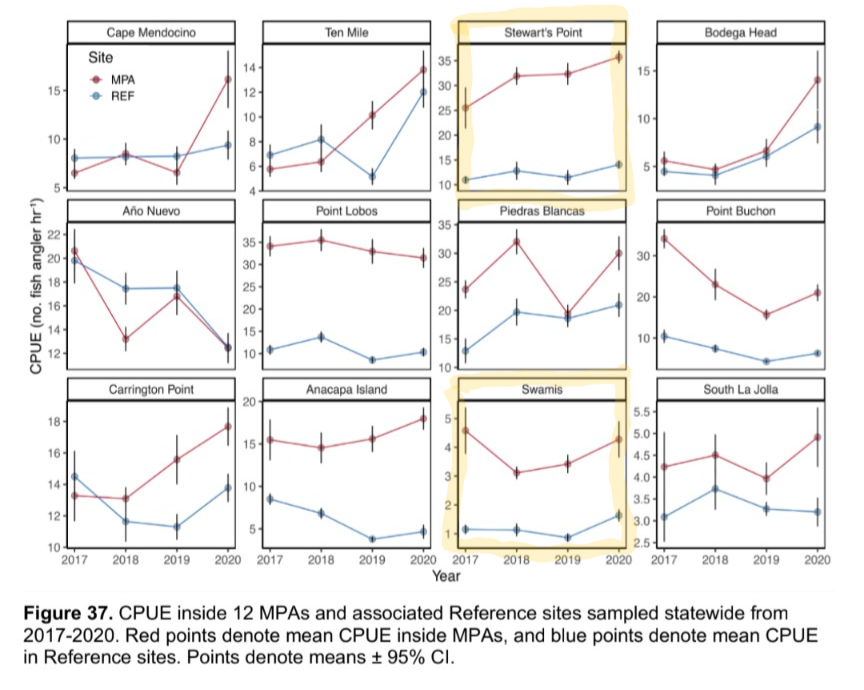
- The 2021 CCFRP Final Report shows strong fish populations and biomass in SMCAs that already allow shore-only hook-and-line fishing, on par with fully protected reserves. Shore fishing is not affecting reef fish populations, which was an original concern of the Scientific Advisory Team when the MPA Network was created in 2009. Please see the figure referenced at the bottom of this page.
- The recently published and internationally accepted MPA Guide identifies hook-and-line fishing as the lowest-impact gear type, with a high level of protection.
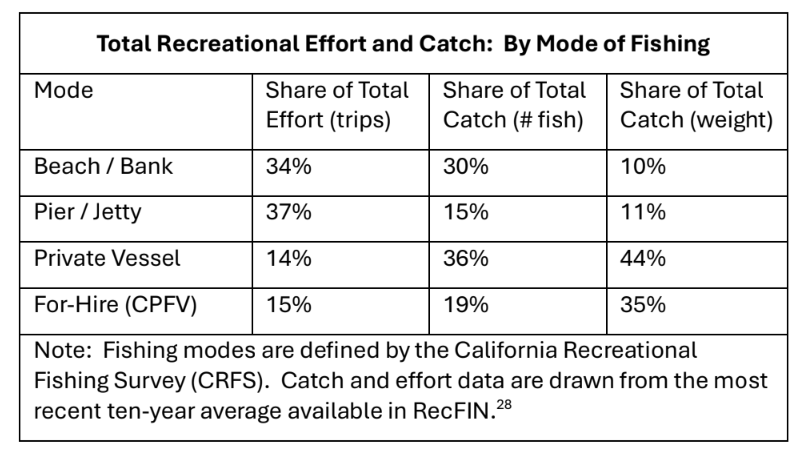
- The latest CRFS data (10-year average) shows shore fishing accounts for only ~10% of California’s recreational ocean catch by weight. Please see the table referenced at the bottom of this page.
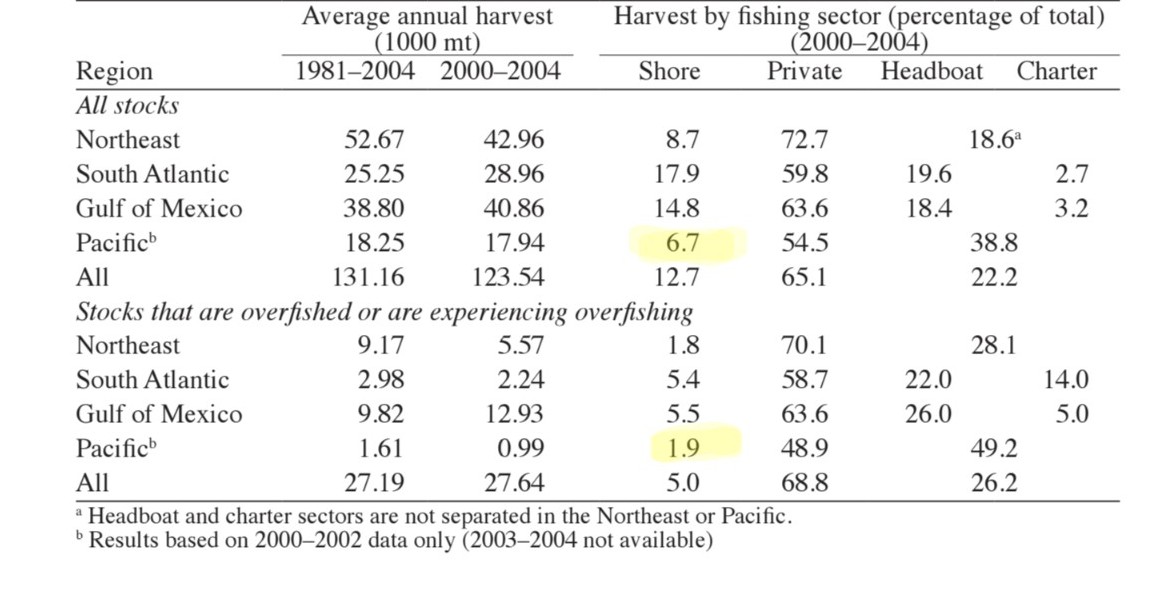
- A 2010 Bulletin of Marine Science study (Figueira and Coleman) found shore fishing represents just 6.7% of recreational ocean catch (by weight) from the Pacific coast. Shore fishing represents only 1.9% of recreational ocean catch (by weight) of vulnerable species from the Pacific Coast. Please see the table and link to the article at the bottom of this page.
Per MPA Decadal Management Review (DMR) recommendation 4b and MLPA goal #5, the latest science must be taken into account to when managing the MPA network. We believe the latest science, as described above, shows that allowing shore fishing in SMCAs will maintain a high level of protection.
Equity and Access:
Restricting shore fishing limits access for those without boats or expensive gear, conflicting with California’s equity and environmental justice goals (DMR recommendations #8 and #9). Shore fishing enables broad, inclusive participation in coastal recreation. Expansions of MPAs could unfairly limit access to shore-based fishermen, which would oppose the state's fair access recommendation from DMR Appendix A (JEDI recommendations).
Proven Precedent:
Since Swamis SMCA allows shore fishing and is performing well in a heavily populated and frequented area of Southern California, other SMCAs should follow and allow shore fishing as well. Please see the figure at the bottom of this page for data on Swamis SMCA fish populations.
Since the recent Decadal Management Review showed little difference in surf fish populations inside and outside of MPAs, we believe SMCAs should allow shore fishing moving forward. Please see the figure at the bottom of this page for a ten year summary of California's surf fish data.
Allowing shore fishing in other SMCAs —such as Point Dume and the proposed Mishopshno SMCA—will offer low-impact recreational opportunities without compromising conservation goals.
Why Shore Fishing Has Low Impact:
- Fishable area from shore is limited by cast distance, inherently protecting deeper habitats and larger breeding fish with small home ranges
- From shore, it is impossible to use fish finders (with rapidly advancing sonar technology) to target the largest fish
- No barotrauma concerns when releasing fish in shallow water close to shore
- Fish in sandy surf zones having high growth rates and high mobility, making them less vulnerable to fishing than deeper reef fish
- Access is naturally constrained to publicly reachable shoreline
Take Action:
Sign this petition to support fair, science-based policy. Your voice will be shared with the California Fish and Game Commission during upcoming decisions.
Who We Are:
We are California Surf Fishing. We are committed to representing surf fishermen in all ongoing Marine Protected Area discussions.
instagram.com/californiasurffishing
Referenced Attachments:
FIGURE 4.1 FROM CALIFORNIA'S MPA DECADAL MANAGEMENT REVIEW summarizes ten years of surf fish data collection, showing little difference in fish populations inside MPAs and outside MPAs
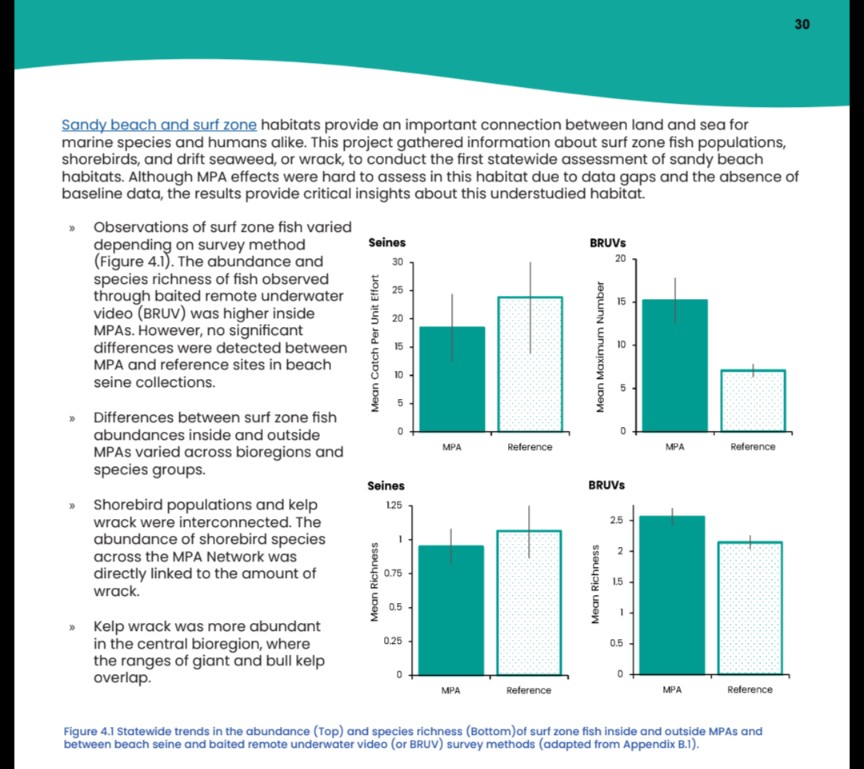
FIGURE 37 BELOW FROM THE 2021 CCFRP FINAL REPORT shows catch data from Swamis SMCA, which only allows hook and line fishing from shore. Swamis SMCA has thriving fish populations, on par with fully protected SMRs in the same figure. Figure 37 also shows Stewarts Point having thriving populations even with most of its shoreline being a shore fishing-only SMCA. Note that CPUE is short for Catch Per Unit Effort of fishing time.
THE TABLE BELOW was created using publicly available CRFS catch data, showing only 10% recreational catch by weight attributed to shore fishermen.
THE TABLE BELOW is from Figueira and Coleman's 2010 article in the Bulletin Of Marine Science shows, highlighting the low catch percentage of shore fishermen on the Pacific Coast.
Click on the following link to access Figueira and Coleman's 2010 article in the Bulletin Of Marine Science

1,559
The Issue
Goal:
Allow recreational hook-and-line shore fishing in California's highly protected State Marine Conservation Areas (SMCAs)
The Issue:
The California Fish and Game Commission is considering updates to the Marine Protected Area (MPA) network. Without careful consideration, these changes could disproportionately restrict shore-based anglers—despite their low environmental impact.
Why It Matters:
Shore fishing is the most accessible, affordable, and low-impact form of ocean fishing. It provides equitable coastal access for diverse communities while placing relatively little pressure on marine ecosystems.
The Latest Science:
The low impact of hook and line shore fishing in SMCAs is corroborated by the latest science:
- The latest ten year study of California MPAs found little difference in surf fish populations inside and outside MPAs. Please see the figure referenced at the bottom of this page.
- The 2021 CCFRP Final Report shows strong fish populations and biomass in SMCAs that already allow shore-only hook-and-line fishing, on par with fully protected reserves. Shore fishing is not affecting reef fish populations, which was an original concern of the Scientific Advisory Team when the MPA Network was created in 2009. Please see the figure referenced at the bottom of this page.
- The recently published and internationally accepted MPA Guide identifies hook-and-line fishing as the lowest-impact gear type, with a high level of protection.
- The latest CRFS data (10-year average) shows shore fishing accounts for only ~10% of California’s recreational ocean catch by weight. Please see the table referenced at the bottom of this page.
- A 2010 Bulletin of Marine Science study (Figueira and Coleman) found shore fishing represents just 6.7% of recreational ocean catch (by weight) from the Pacific coast. Shore fishing represents only 1.9% of recreational ocean catch (by weight) of vulnerable species from the Pacific Coast. Please see the table and link to the article at the bottom of this page.
Per MPA Decadal Management Review (DMR) recommendation 4b and MLPA goal #5, the latest science must be taken into account to when managing the MPA network. We believe the latest science, as described above, shows that allowing shore fishing in SMCAs will maintain a high level of protection.
Equity and Access:
Restricting shore fishing limits access for those without boats or expensive gear, conflicting with California’s equity and environmental justice goals (DMR recommendations #8 and #9). Shore fishing enables broad, inclusive participation in coastal recreation. Expansions of MPAs could unfairly limit access to shore-based fishermen, which would oppose the state's fair access recommendation from DMR Appendix A (JEDI recommendations).
Proven Precedent:
Since Swamis SMCA allows shore fishing and is performing well in a heavily populated and frequented area of Southern California, other SMCAs should follow and allow shore fishing as well. Please see the figure at the bottom of this page for data on Swamis SMCA fish populations.
Since the recent Decadal Management Review showed little difference in surf fish populations inside and outside of MPAs, we believe SMCAs should allow shore fishing moving forward. Please see the figure at the bottom of this page for a ten year summary of California's surf fish data.
Allowing shore fishing in other SMCAs —such as Point Dume and the proposed Mishopshno SMCA—will offer low-impact recreational opportunities without compromising conservation goals.
Why Shore Fishing Has Low Impact:
- Fishable area from shore is limited by cast distance, inherently protecting deeper habitats and larger breeding fish with small home ranges
- From shore, it is impossible to use fish finders (with rapidly advancing sonar technology) to target the largest fish
- No barotrauma concerns when releasing fish in shallow water close to shore
- Fish in sandy surf zones having high growth rates and high mobility, making them less vulnerable to fishing than deeper reef fish
- Access is naturally constrained to publicly reachable shoreline
Take Action:
Sign this petition to support fair, science-based policy. Your voice will be shared with the California Fish and Game Commission during upcoming decisions.
Who We Are:
We are California Surf Fishing. We are committed to representing surf fishermen in all ongoing Marine Protected Area discussions.
instagram.com/californiasurffishing
Referenced Attachments:
FIGURE 4.1 FROM CALIFORNIA'S MPA DECADAL MANAGEMENT REVIEW summarizes ten years of surf fish data collection, showing little difference in fish populations inside MPAs and outside MPAs
FIGURE 37 BELOW FROM THE 2021 CCFRP FINAL REPORT shows catch data from Swamis SMCA, which only allows hook and line fishing from shore. Swamis SMCA has thriving fish populations, on par with fully protected SMRs in the same figure. Figure 37 also shows Stewarts Point having thriving populations even with most of its shoreline being a shore fishing-only SMCA. Note that CPUE is short for Catch Per Unit Effort of fishing time.
THE TABLE BELOW was created using publicly available CRFS catch data, showing only 10% recreational catch by weight attributed to shore fishermen.
THE TABLE BELOW is from Figueira and Coleman's 2010 article in the Bulletin Of Marine Science shows, highlighting the low catch percentage of shore fishermen on the Pacific Coast.
Click on the following link to access Figueira and Coleman's 2010 article in the Bulletin Of Marine Science
Supporter Voices
Petition Updates
Share this petition
Petition created on June 28, 2024