
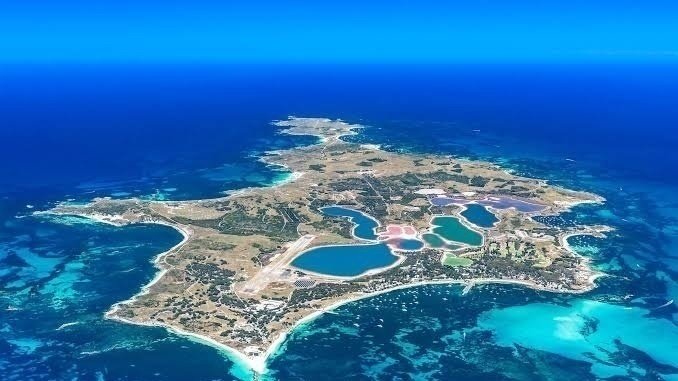
Start the conversation to rename Rottnest Island to Wadjemup
Start the conversation to rename Rottnest Island to Wadjemup
The issue
Dutch sea captain Willem de Vlamingh makes landfall on an island off the coast of Western Australia on December 29, 1696.
Mistaking the local quokkas for large rats, he names it Rat's Nest Island, or Rottnest Island, in Dutch.
The traditional owners of Rottnest Island are the Whadjuk Noongar people.
The name for Rottnest Island in the Noongar language is Wadjemup, which means ‘place across the water where the spirits are’. Renaming Rottnest to Wadjemup like the renaming of Ayres Rock to Uluṟu or the renaming of Fraser Island to K'gari is a wonderful and symbolic idea. It is a much more beautiful and meaningful name.
During the last ice age, approximately 6,000-7,000 years ago, Wadjemup was connected to the mainland. At that time Whadjuk and other Nyoongar people could walk to Wadjemup and it was known as an important meeting place and ceremonial site. Following the last ice age global sea levels rose and formed the islands off the coast of Fremantle, including Wadjemup, Carnac Island (Ngooloomayup) and Garden Island (Meandup).
Whadjuk people were present while these changes to the coast line occurred and their observations of this significant geological event were recorded in the form of oral histories or stories. Amazingly these stories have been passed down from one generation to the next for over 7,000 years and this tradition of is still being carried out today. Artefacts found at a number of sites on Rottnest Island predating 6,500 years ago provide scientific proof of Whadjuk occupation prior to sea level rise.
After Wadjemup was cut off from the mainland there is no evidence, either cultural or scientific to suggest that Whadjuk people continued to inhabit or journey to the Island. Despite this, Wadjemup still remained extremely significant to Whadjuk cultural beliefs related to ‘life after death’.
Today, the Island is known by Whadjuk people as the resting place of the spirits. The Island is considered to be a place of transition between the physical and spiritual world and the spirit of the deceased is believed to travel to Wadjemup during its journey towards to the afterlife. When the spirit is ready to leave the physical world it moves to the west end of the Island, where the whale takes the spirit on to its final resting place known as Kooranup, located on the horizon in the deep ocean west of the Island. From this traditional cultural context Whadjuk people consider the Island to be a spiritual paradise.
The intent of this petition is to start a community conversation with the hope of gaining traction on this issue.
Historical information from Rottnest Island website
https://rottnestisland.com/the-island/about-the-island/our-history/aboriginal-history
Destination WA story on Wadjemup
31
The issue
Dutch sea captain Willem de Vlamingh makes landfall on an island off the coast of Western Australia on December 29, 1696.
Mistaking the local quokkas for large rats, he names it Rat's Nest Island, or Rottnest Island, in Dutch.
The traditional owners of Rottnest Island are the Whadjuk Noongar people.
The name for Rottnest Island in the Noongar language is Wadjemup, which means ‘place across the water where the spirits are’. Renaming Rottnest to Wadjemup like the renaming of Ayres Rock to Uluṟu or the renaming of Fraser Island to K'gari is a wonderful and symbolic idea. It is a much more beautiful and meaningful name.
During the last ice age, approximately 6,000-7,000 years ago, Wadjemup was connected to the mainland. At that time Whadjuk and other Nyoongar people could walk to Wadjemup and it was known as an important meeting place and ceremonial site. Following the last ice age global sea levels rose and formed the islands off the coast of Fremantle, including Wadjemup, Carnac Island (Ngooloomayup) and Garden Island (Meandup).
Whadjuk people were present while these changes to the coast line occurred and their observations of this significant geological event were recorded in the form of oral histories or stories. Amazingly these stories have been passed down from one generation to the next for over 7,000 years and this tradition of is still being carried out today. Artefacts found at a number of sites on Rottnest Island predating 6,500 years ago provide scientific proof of Whadjuk occupation prior to sea level rise.
After Wadjemup was cut off from the mainland there is no evidence, either cultural or scientific to suggest that Whadjuk people continued to inhabit or journey to the Island. Despite this, Wadjemup still remained extremely significant to Whadjuk cultural beliefs related to ‘life after death’.
Today, the Island is known by Whadjuk people as the resting place of the spirits. The Island is considered to be a place of transition between the physical and spiritual world and the spirit of the deceased is believed to travel to Wadjemup during its journey towards to the afterlife. When the spirit is ready to leave the physical world it moves to the west end of the Island, where the whale takes the spirit on to its final resting place known as Kooranup, located on the horizon in the deep ocean west of the Island. From this traditional cultural context Whadjuk people consider the Island to be a spiritual paradise.
The intent of this petition is to start a community conversation with the hope of gaining traction on this issue.
Historical information from Rottnest Island website
https://rottnestisland.com/the-island/about-the-island/our-history/aboriginal-history
Destination WA story on Wadjemup
31
The Decision Makers

Petition Updates
Share this petition
Petition created on 22 December 2021