Affordable Housing Tax Credit process: Oversaturation along the 281 North Corridor
Affordable Housing Tax Credit process: Oversaturation along the 281 North Corridor
The Issue
What’s right, and wrong, with the current Texas’ Affordable Housing Tax Credit selection process?
The approval and public input process of Affordable Housing tax credits is causing oversaturation along the US 281 north corridor.
Goals:
1. Protective measures to prevent oversaturation of affordable housing in a specific area
2. Client surveys to place housing in areas desired by those in need
3. A permanent moratorium on the construction of Stones Crossing in the 281N corridor
4. A temporary moratorium on affordable housing to optimize approval transparency
Desired Outcome: We request a permanent moratorium on the development of Stones Crossing. Affordable housing developments are needed within our community, but they must be managed responsibly, with nearby, similar, developments considered in the process. We ask the City to reevaluate the selection and approval process to better provide transparency to the adjacent communities that would be affected and prevent oversaturation.
Facts:
Mahatma Gandhi once said, “A nation's greatness is measured by how it treats its weakest members.”
The City of San Antonio began work on a Strategic Housing Implementation Plan (SHIP) in 2020 to address an increasing problem for our city, the lack of affordable housing. In 2022, the City of San Antonio voters approved 6 propositions outlined in the 5-year Bond Program. One of those 6 propositions was intended to earmark funds for the development of affordable housing.
The Housing Tax Credit Program, governed by the IRS and administering credits at the State level, is one way to steer private equity towards the development of affordable housing for individuals or families that earn less than a municipality’s calculated AMI (average median income).
The Low-Income Housing Tax Credits (LIHTC) are directed through the Texas Department of Housing and Community Affairs (TDHCA) using a scorecard. The subsidized construction allows the developer/owner to operate with tenants who can pay only a percentage of market rate based on the AMI.
Investors claim the credits over a 10-year period to reduce their annual tax liability. Once the 10-year period ends, the investor can maintain the property as is, sell, or bring rents up to market rate (eliminating the affordable housing option).
The approval process for choosing which project/developer receives the tax credits is disjointed and has resulted in an oversaturation of affordable housing along US 281, from Loop 1604 to the Bexar County Line. These projects are approved in silos and most are not community driven.
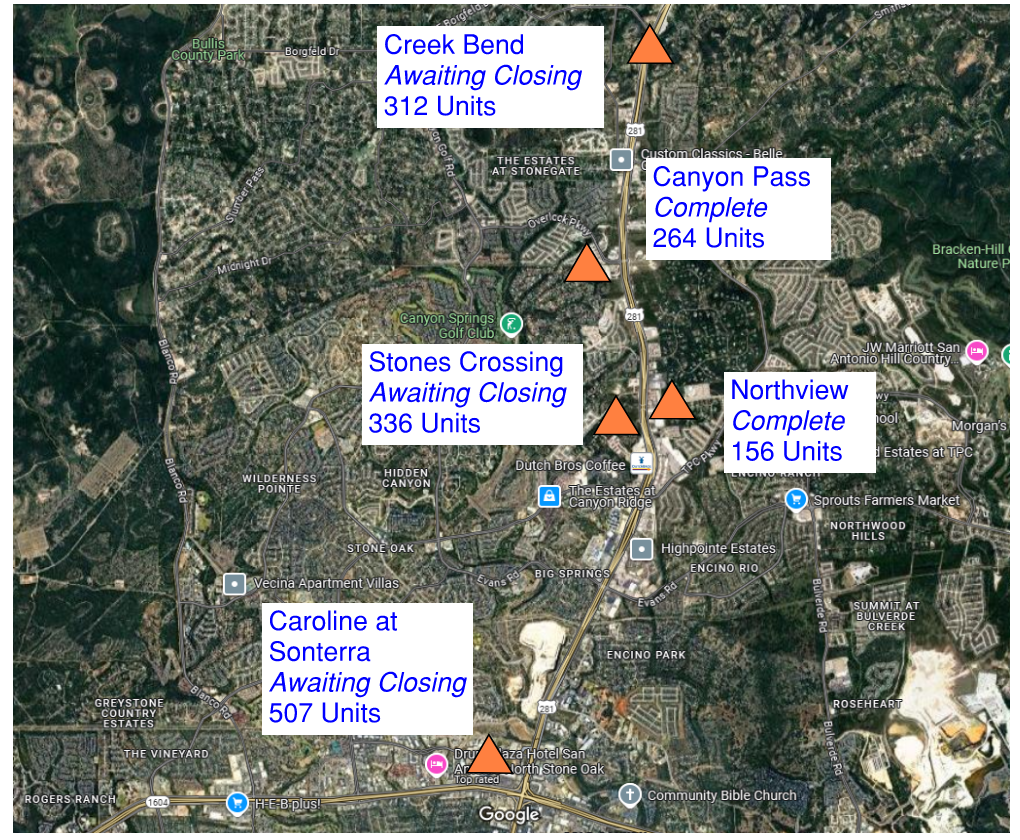
For example, the Northview Apartments, located at 23142 US Hwy 281, is a fairly new development with each of its 156 units income restricted (ranging from 30% to 70% AMI).
Directly across US 281 from the Northview Apartments is another affordable housing project making its way through the approval process. This complex, Stones Crossing, will have all 336 units income restricted (60% AMI).
The only public notification currently cited in the scorecard (and only required if the developer chooses to obtain the allotted points) is providing a project information package to neighborhoods, HOAs, and community organizations located within ½ mile of the project and all property owners within 200 feet of the site. We strongly recommend the notification process, and vote of approval by local residents, POAs, and community organizations, within 0.5 miles, be mandated.
The approval process often involves changes in zoning, even in areas where the high density of multifamily housing was never meant to handle the associated traffic. School overcrowding, law enforcement incidents, call volume, and response times are concerns that go unaddressed with the current process. The projects are not studied afterward to determine the effect that a development has on an area.
There are 5 affordable housing complexes within the stretch of US 281 mentioned earlier. 3 have been awarded tax credits and await various punch list items through the City to close. 2 are complete and open.
Additionally, there are 9 market rate complexes within a half mile of the 281 corridor between 1604 and TPC Parkway, a 2.5 mile stretch.
Affordable housing developments are needed within our community but they must be managed responsibly, with nearby, similar, developments considered in the process. We are asking for a moratorium on the development of Stones Crossing and for the City to reevaluate the selection and approval process to better provide transparency to the adjacent communities that would be affected.
Graphic of Properties complete and those awaiting closing, along with number of units:

356
The Issue
What’s right, and wrong, with the current Texas’ Affordable Housing Tax Credit selection process?
The approval and public input process of Affordable Housing tax credits is causing oversaturation along the US 281 north corridor.
Goals:
1. Protective measures to prevent oversaturation of affordable housing in a specific area
2. Client surveys to place housing in areas desired by those in need
3. A permanent moratorium on the construction of Stones Crossing in the 281N corridor
4. A temporary moratorium on affordable housing to optimize approval transparency
Desired Outcome: We request a permanent moratorium on the development of Stones Crossing. Affordable housing developments are needed within our community, but they must be managed responsibly, with nearby, similar, developments considered in the process. We ask the City to reevaluate the selection and approval process to better provide transparency to the adjacent communities that would be affected and prevent oversaturation.
Facts:
Mahatma Gandhi once said, “A nation's greatness is measured by how it treats its weakest members.”
The City of San Antonio began work on a Strategic Housing Implementation Plan (SHIP) in 2020 to address an increasing problem for our city, the lack of affordable housing. In 2022, the City of San Antonio voters approved 6 propositions outlined in the 5-year Bond Program. One of those 6 propositions was intended to earmark funds for the development of affordable housing.
The Housing Tax Credit Program, governed by the IRS and administering credits at the State level, is one way to steer private equity towards the development of affordable housing for individuals or families that earn less than a municipality’s calculated AMI (average median income).
The Low-Income Housing Tax Credits (LIHTC) are directed through the Texas Department of Housing and Community Affairs (TDHCA) using a scorecard. The subsidized construction allows the developer/owner to operate with tenants who can pay only a percentage of market rate based on the AMI.
Investors claim the credits over a 10-year period to reduce their annual tax liability. Once the 10-year period ends, the investor can maintain the property as is, sell, or bring rents up to market rate (eliminating the affordable housing option).
The approval process for choosing which project/developer receives the tax credits is disjointed and has resulted in an oversaturation of affordable housing along US 281, from Loop 1604 to the Bexar County Line. These projects are approved in silos and most are not community driven.
For example, the Northview Apartments, located at 23142 US Hwy 281, is a fairly new development with each of its 156 units income restricted (ranging from 30% to 70% AMI).
Directly across US 281 from the Northview Apartments is another affordable housing project making its way through the approval process. This complex, Stones Crossing, will have all 336 units income restricted (60% AMI).
The only public notification currently cited in the scorecard (and only required if the developer chooses to obtain the allotted points) is providing a project information package to neighborhoods, HOAs, and community organizations located within ½ mile of the project and all property owners within 200 feet of the site. We strongly recommend the notification process, and vote of approval by local residents, POAs, and community organizations, within 0.5 miles, be mandated.
The approval process often involves changes in zoning, even in areas where the high density of multifamily housing was never meant to handle the associated traffic. School overcrowding, law enforcement incidents, call volume, and response times are concerns that go unaddressed with the current process. The projects are not studied afterward to determine the effect that a development has on an area.
There are 5 affordable housing complexes within the stretch of US 281 mentioned earlier. 3 have been awarded tax credits and await various punch list items through the City to close. 2 are complete and open.
Additionally, there are 9 market rate complexes within a half mile of the 281 corridor between 1604 and TPC Parkway, a 2.5 mile stretch.
Affordable housing developments are needed within our community but they must be managed responsibly, with nearby, similar, developments considered in the process. We are asking for a moratorium on the development of Stones Crossing and for the City to reevaluate the selection and approval process to better provide transparency to the adjacent communities that would be affected.
Graphic of Properties complete and those awaiting closing, along with number of units:
The Decision Makers

Supporter Voices
Petition Updates
Share this petition
Petition created on November 17, 2024