Advocate for the Redesign of the Lockheed Martin S-3 Viking as a COD Plane

Advocate for the Redesign of the Lockheed Martin S-3 Viking as a COD Plane
The Issue
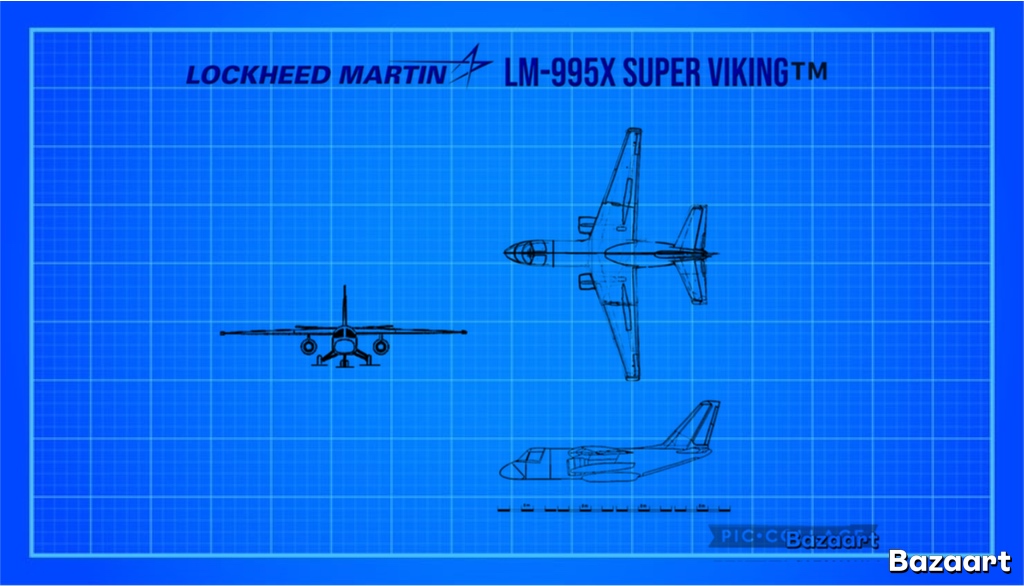
Dear Lockheed Martin
As someone who is personally invested in the future of our Navy's aircraft fleet, I am deeply concerned about Lockheed Martin's proposal to rebuild the now retired Lockheed S-3 Viking anti-submarine warfare aircraft to replace the aging fleet of Northrop Grumman C-2 Greyhound carrier onboard delivery (COD) aircraft. The rebuilt aircraft would be designated as the S-3X and would replace the Bell-Boeing CMV-22 Osprey in United States Navy service.
The current Northrop Grumman C-2 Greyhound has been in service since 1964 and is due for replacement. The proposed rebuilding of the Lockheed S-3 Viking could potentially offer an advanced, cost-effective solution that meets all operational requirements while maintaining compatibility with existing naval operations.
However, it is crucial that this decision be made with careful consideration and thorough evaluation. It should not just be about replacing old with new but ensuring that any new addition will enhance our naval capabilities while ensuring safety and efficiency by enticing Other Buyers.
Reverse engineering is a process or method through which one attempts to understand through deductive reasoning how a previously made device, process, system, or piece of software accomplishes a task with very little (if any) insight into exactly how it does so. Depending on the system under consideration and the technologies employed, the knowledge gained during reverse engineering can help with repurposing obsolete objects, doing security analysis, or learning how something works.
To redesign the S-3, Lockheed would have to completely reverse engineer the Viking airframe such as the nose, wings, tail surfaces, and flight control systems, the S-3 would receive a new but much larger fuselage purposely built for the COD mission. The new fuselage is two feet wider and six feet longer and the aircraft would stand about three feet taller.
it will also possess the civilian CF34 turbofan engines found on many business and regional jets as long as it has a thrust range between no less than 9,220 and no more than 20,360 pounds of thrust
I acknowledged that the S-3X Super Viking would have to effectively be flight tested as a new aircraft.
This petition comes as the Bell Boeing V-22 Osprey whose history of accidents have provoked concerns about its safety. The aircraft was developed by Bell Helicopter Textron and Boeing Rotorcraft Systems, which build and support the aircraft.
As of late 2023, 16 V-22 Ospreys have been damaged beyond repair in accidents that have killed a total of 62 people. Four of the crashes occurred during developmental flight tests; these killed a total of 30 people from 1991 to 2000. Since the V-22 became operational in 2007, 12 crashes and several other accidents and incidents have killed a total of 32 people.
Most of the crashes have involved the most numerous of the aircraft's three variants: the MV-22B, procured and flown by the U.S. Marine Corps. A handful of crashes have involved CV-22Bs, flown by U.S. Air Force Special Operations Command. No crashes have involved the CMV-22B, the carrier onboard delivery variant flown by the U.S. Navy.
Please join us in advocating for a thoughtful approach towards modernizing our Navy’s COD aircraft fleet by signing this petition today!

The Issue
Dear Lockheed Martin
As someone who is personally invested in the future of our Navy's aircraft fleet, I am deeply concerned about Lockheed Martin's proposal to rebuild the now retired Lockheed S-3 Viking anti-submarine warfare aircraft to replace the aging fleet of Northrop Grumman C-2 Greyhound carrier onboard delivery (COD) aircraft. The rebuilt aircraft would be designated as the S-3X and would replace the Bell-Boeing CMV-22 Osprey in United States Navy service.
The current Northrop Grumman C-2 Greyhound has been in service since 1964 and is due for replacement. The proposed rebuilding of the Lockheed S-3 Viking could potentially offer an advanced, cost-effective solution that meets all operational requirements while maintaining compatibility with existing naval operations.
However, it is crucial that this decision be made with careful consideration and thorough evaluation. It should not just be about replacing old with new but ensuring that any new addition will enhance our naval capabilities while ensuring safety and efficiency by enticing Other Buyers.
Reverse engineering is a process or method through which one attempts to understand through deductive reasoning how a previously made device, process, system, or piece of software accomplishes a task with very little (if any) insight into exactly how it does so. Depending on the system under consideration and the technologies employed, the knowledge gained during reverse engineering can help with repurposing obsolete objects, doing security analysis, or learning how something works.
To redesign the S-3, Lockheed would have to completely reverse engineer the Viking airframe such as the nose, wings, tail surfaces, and flight control systems, the S-3 would receive a new but much larger fuselage purposely built for the COD mission. The new fuselage is two feet wider and six feet longer and the aircraft would stand about three feet taller.
it will also possess the civilian CF34 turbofan engines found on many business and regional jets as long as it has a thrust range between no less than 9,220 and no more than 20,360 pounds of thrust
I acknowledged that the S-3X Super Viking would have to effectively be flight tested as a new aircraft.
This petition comes as the Bell Boeing V-22 Osprey whose history of accidents have provoked concerns about its safety. The aircraft was developed by Bell Helicopter Textron and Boeing Rotorcraft Systems, which build and support the aircraft.
As of late 2023, 16 V-22 Ospreys have been damaged beyond repair in accidents that have killed a total of 62 people. Four of the crashes occurred during developmental flight tests; these killed a total of 30 people from 1991 to 2000. Since the V-22 became operational in 2007, 12 crashes and several other accidents and incidents have killed a total of 32 people.
Most of the crashes have involved the most numerous of the aircraft's three variants: the MV-22B, procured and flown by the U.S. Marine Corps. A handful of crashes have involved CV-22Bs, flown by U.S. Air Force Special Operations Command. No crashes have involved the CMV-22B, the carrier onboard delivery variant flown by the U.S. Navy.
Please join us in advocating for a thoughtful approach towards modernizing our Navy’s COD aircraft fleet by signing this petition today!
Petition Closed
Share this petition
The Decision Makers

Petition created on April 20, 2024