

Advertising Standards Authority: take down your Bulldog ad + stand up for animal welfare
The Issue
This petition calls on the Advertising Standards Authority to:
• take down its current Bulldog campaign
• meet with animal welfare experts to ensure that the advertising industry complies with existing veterinary guidelines regarding the use of animals with health-compromising characteristics.
Making the BBC documentary Pedigree Dogs Exposed in 2008 changed my life - turning me into a campaigner who has lobbied ever since for reform in dog breeding.
In 2015, I launched CRUFFA - the Campaign for the Responsible Use of Flat-Faced Animals - arguing that breeds such as Bulldogs, French Bulldogs and Pugs suffer so much that they should no longer be used in advertising/the media.
The idea took off - today supported by numerous veterinary associations worldwide, the Kennel Club, all the major animal welfare charities in the UK. In 2018, the British Veterinary Association produced guidelines for advertisers in an effort to steer companies/organisations away from using animals with significant health concerns.
It's been a big success, with brands from Costa to Heinz to Comic Relief removing 'brachy' imaging. As a consequence, it is increasingly unusual today to see Bulldogs, French Bulldogs and Pugs featured in national campaigns - with the exception of those with a historic link such as the Churchill Insurance Bulldog or the Bulldog men’s skincare brand. Other countries report similar successes.
Imagine our shock, then, that the UK's Advertising Standards Authority is currently featuring the Churchill Bulldog in an advertising campaign promoting its role as the advertising industry's watchdog - in flagrant breach of its own advice which urges advertisers to follow the British Veterinary Association's guidelines (https://www.bva.co.uk/resources-support/ethical-guidance/advertising-guidelines-pets-in-advertising-a-social-concern/
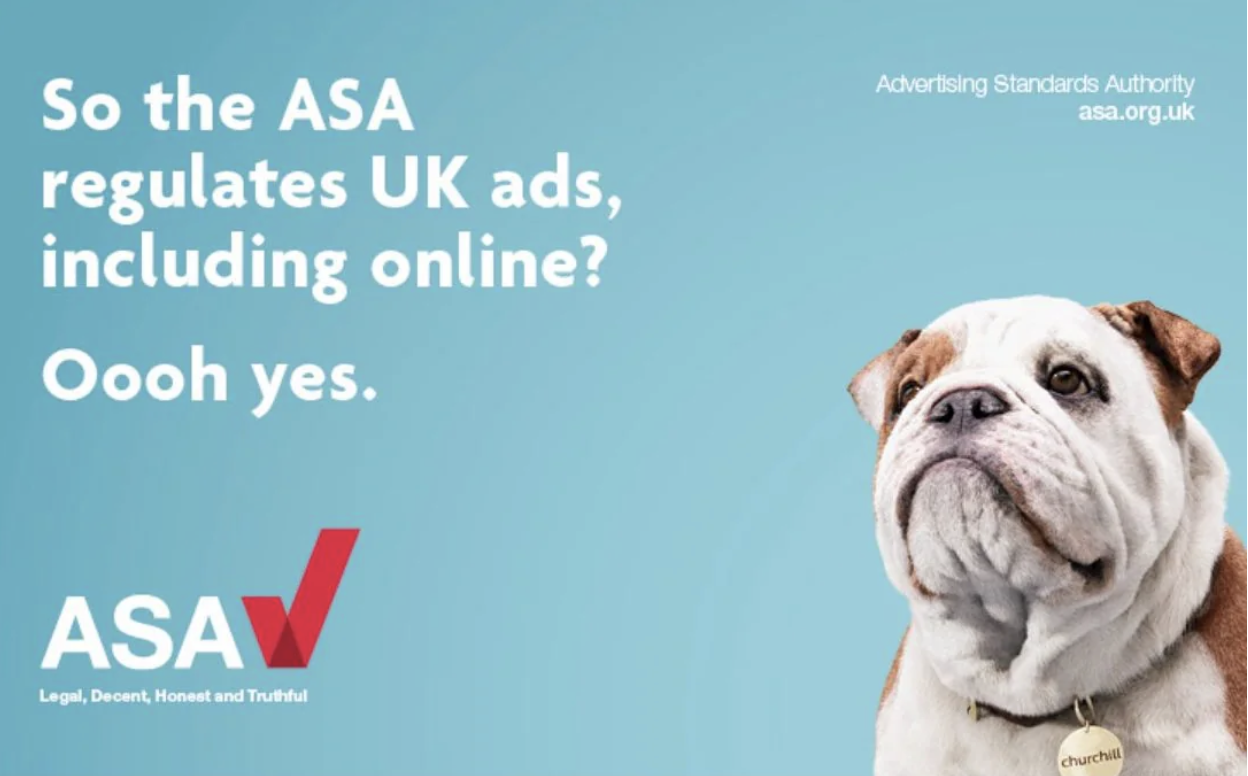
When challenged by UK vets/welfare campaigners, the ASA argued that it did not believe the use of a Bulldog in this instance promoted the breed or encouraged people to go out and buy them.
“We respectfully disagree that our ad campaign is playing a part in perpetuating or encouraging harmful breeding practices, ownership or leads to animal harm” a spokesperson told the Telegraph last week.
“It is our strong view that our ad featuring the Churchill bulldog does not encourage people to want to own that particular breed. Further, we do not believe that seeing it will contribute to the popularity of bulldogs.”
The uptick in demand for particular breeds of dog when featured in moves, television programmes or advertising campaigns is very well documented - ever since the 1943 hit Lassie Come Home was associated, in the following two years, with a 40 per cent increase in Collie registrations in the American Kennel Club.
Churchill began using its Bulldog mascot in 1994 in the UK, coinciding with a Bulldog boom which has seen registrations for the breed triple in the past 30 years.
The use, since 2015, of a miniature dachshund (another breed with known health issues) in the UK’s Vitality ads has coincided with a 300% increase in registrations in this breed, too (bucking an overall trend of decreasing registrations). And while not every public exposure creates demand, there is the very real risk that such exposure normalises features that we know confer harm.
Recently, the International Collaborative on Extreme Conformations in Dogs (www.icecdogs.com) has called on “all organisations worldwide to avoid the use of images of dogs with extreme conformations in all forms of public communications that are not directly aimed at protecting the health and welfare of dogs and to instead focus on using images that promote physically healthy conformations in dogs”.
In these days of increased social responsibility, the portrayal of animals with known welfare challenges is not only unethical but implies an acceptance and endorsement of the issues, desensitising the public to the cruelty these animals endure.
Please sign this petition to use our collective voice for those that cannot speak for themselves. We have the power to make a difference.

297
The Issue
This petition calls on the Advertising Standards Authority to:
• take down its current Bulldog campaign
• meet with animal welfare experts to ensure that the advertising industry complies with existing veterinary guidelines regarding the use of animals with health-compromising characteristics.
Making the BBC documentary Pedigree Dogs Exposed in 2008 changed my life - turning me into a campaigner who has lobbied ever since for reform in dog breeding.
In 2015, I launched CRUFFA - the Campaign for the Responsible Use of Flat-Faced Animals - arguing that breeds such as Bulldogs, French Bulldogs and Pugs suffer so much that they should no longer be used in advertising/the media.
The idea took off - today supported by numerous veterinary associations worldwide, the Kennel Club, all the major animal welfare charities in the UK. In 2018, the British Veterinary Association produced guidelines for advertisers in an effort to steer companies/organisations away from using animals with significant health concerns.
It's been a big success, with brands from Costa to Heinz to Comic Relief removing 'brachy' imaging. As a consequence, it is increasingly unusual today to see Bulldogs, French Bulldogs and Pugs featured in national campaigns - with the exception of those with a historic link such as the Churchill Insurance Bulldog or the Bulldog men’s skincare brand. Other countries report similar successes.
Imagine our shock, then, that the UK's Advertising Standards Authority is currently featuring the Churchill Bulldog in an advertising campaign promoting its role as the advertising industry's watchdog - in flagrant breach of its own advice which urges advertisers to follow the British Veterinary Association's guidelines (https://www.bva.co.uk/resources-support/ethical-guidance/advertising-guidelines-pets-in-advertising-a-social-concern/
When challenged by UK vets/welfare campaigners, the ASA argued that it did not believe the use of a Bulldog in this instance promoted the breed or encouraged people to go out and buy them.
“We respectfully disagree that our ad campaign is playing a part in perpetuating or encouraging harmful breeding practices, ownership or leads to animal harm” a spokesperson told the Telegraph last week.
“It is our strong view that our ad featuring the Churchill bulldog does not encourage people to want to own that particular breed. Further, we do not believe that seeing it will contribute to the popularity of bulldogs.”
The uptick in demand for particular breeds of dog when featured in moves, television programmes or advertising campaigns is very well documented - ever since the 1943 hit Lassie Come Home was associated, in the following two years, with a 40 per cent increase in Collie registrations in the American Kennel Club.
Churchill began using its Bulldog mascot in 1994 in the UK, coinciding with a Bulldog boom which has seen registrations for the breed triple in the past 30 years.
The use, since 2015, of a miniature dachshund (another breed with known health issues) in the UK’s Vitality ads has coincided with a 300% increase in registrations in this breed, too (bucking an overall trend of decreasing registrations). And while not every public exposure creates demand, there is the very real risk that such exposure normalises features that we know confer harm.
Recently, the International Collaborative on Extreme Conformations in Dogs (www.icecdogs.com) has called on “all organisations worldwide to avoid the use of images of dogs with extreme conformations in all forms of public communications that are not directly aimed at protecting the health and welfare of dogs and to instead focus on using images that promote physically healthy conformations in dogs”.
In these days of increased social responsibility, the portrayal of animals with known welfare challenges is not only unethical but implies an acceptance and endorsement of the issues, desensitising the public to the cruelty these animals endure.
Please sign this petition to use our collective voice for those that cannot speak for themselves. We have the power to make a difference.
The Decision Makers
Petition Updates
Share this petition
Petition created on 20 October 2024