
Adoption of a rights-based lens on land development and property management
The Issue
Given widescale ecological repercussions associated with current development regimes, as well as the worsening crises of homelessness and poverty in Winnipeg and the challenges in addressing these issues, we are calling upon the City of Winnipeg and the Province of Manitoba to adopt a rights-based lens on land development and property management in order to protect people and ecosystems.
Although many theories explore the relationship between urban sprawl and inner-city divestment and decline, a comprehensive strategy has yet to be developed that takes a rights-based approach in considering the connection between the environmental, quality of life, and equity-based issues related to suburbanization and the perpetuating of colonial ideologies in property and land development. The following seeks to investigate these connections and advocates for the development of protocols, policies, and the tabling of legislation that identifies these issues as human rights violations and creates mechanisms to hold perpetrators accountable for environmental and social harms, such as contributing to the affordable housing crisis in Winnipeg, that have until now fallen upon the public to remediate.
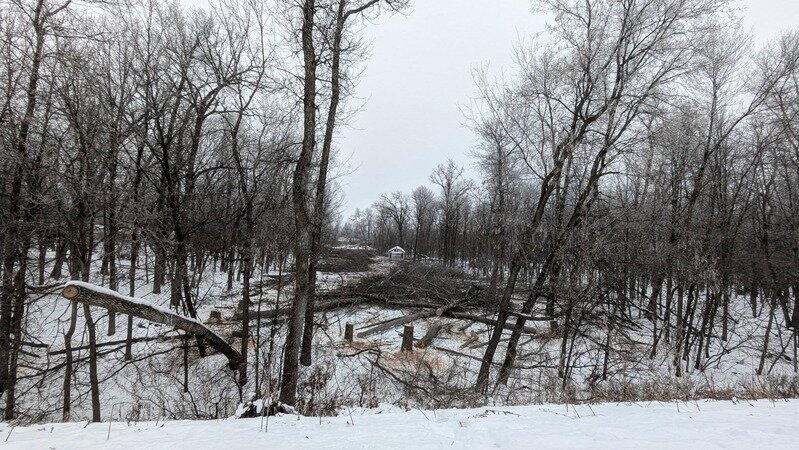
We must hold developers accountable for the devastation they cause not only to our ecosystems but to our communities. It is no longer appropriate or acceptable to assume that developers will act in good faith, adhere to best practices, and align their operations with community interests and priorities. The situation unfolding with Lemay Forest is a perfect example of corporate interests utilizing every available mechanism to push their plans through, despite being explicitly contrary to what the community is calling for. These plans are premised on exploiting this space in the interest of tremendous profit, without regard to how it will actively impact long-established Indigenous cultural grounds, habitat to critically endangered wildlife, and historically significant spaces. Even a direct appeal from the community, with concrete evidence and a substantial offer (2.95 mil) to buy the land, has not deterred the developers from proceeding as they wish. Investors interested solely in profit must be prevented from exploiting our housing crisis to justify wreaking havoc on our wildlife, flora, and citizens. These are the places we call home, not playgrounds for profiteers.
Without stronger protections, these parties feel free to operate in bad faith, to leverage the community’s connection to the land, and all available legal mechanisms, to ensure they’ve obtained the maximum return on their investment. Without these protections, land defenders have had to step in to prevent further destruction of this important space, placing them in the legal crossfire. This is quite frankly a completely unacceptable outcome.
We call upon Standing Policy Committee on Property and Development to table legislation that would take a no-nonsense, ‘you broke it, you fix it’ approach to holding Property and Land Developers as well as Property Managers and Landlords accountable for their ecological, economic, and social human rights abuses, while simultaneously empowering the community through the restoration and revitalization of its spaces, in a manner that promotes the balancing of voices, the redistribution of power and the provision of housing as a human right, through increased access to appropriate, affordable, hygienic and safe housing options as well as ecosystem-friendly, food-secure communities and housing developments.

536
The Issue
Given widescale ecological repercussions associated with current development regimes, as well as the worsening crises of homelessness and poverty in Winnipeg and the challenges in addressing these issues, we are calling upon the City of Winnipeg and the Province of Manitoba to adopt a rights-based lens on land development and property management in order to protect people and ecosystems.
Although many theories explore the relationship between urban sprawl and inner-city divestment and decline, a comprehensive strategy has yet to be developed that takes a rights-based approach in considering the connection between the environmental, quality of life, and equity-based issues related to suburbanization and the perpetuating of colonial ideologies in property and land development. The following seeks to investigate these connections and advocates for the development of protocols, policies, and the tabling of legislation that identifies these issues as human rights violations and creates mechanisms to hold perpetrators accountable for environmental and social harms, such as contributing to the affordable housing crisis in Winnipeg, that have until now fallen upon the public to remediate.
We must hold developers accountable for the devastation they cause not only to our ecosystems but to our communities. It is no longer appropriate or acceptable to assume that developers will act in good faith, adhere to best practices, and align their operations with community interests and priorities. The situation unfolding with Lemay Forest is a perfect example of corporate interests utilizing every available mechanism to push their plans through, despite being explicitly contrary to what the community is calling for. These plans are premised on exploiting this space in the interest of tremendous profit, without regard to how it will actively impact long-established Indigenous cultural grounds, habitat to critically endangered wildlife, and historically significant spaces. Even a direct appeal from the community, with concrete evidence and a substantial offer (2.95 mil) to buy the land, has not deterred the developers from proceeding as they wish. Investors interested solely in profit must be prevented from exploiting our housing crisis to justify wreaking havoc on our wildlife, flora, and citizens. These are the places we call home, not playgrounds for profiteers.
Without stronger protections, these parties feel free to operate in bad faith, to leverage the community’s connection to the land, and all available legal mechanisms, to ensure they’ve obtained the maximum return on their investment. Without these protections, land defenders have had to step in to prevent further destruction of this important space, placing them in the legal crossfire. This is quite frankly a completely unacceptable outcome.
We call upon Standing Policy Committee on Property and Development to table legislation that would take a no-nonsense, ‘you broke it, you fix it’ approach to holding Property and Land Developers as well as Property Managers and Landlords accountable for their ecological, economic, and social human rights abuses, while simultaneously empowering the community through the restoration and revitalization of its spaces, in a manner that promotes the balancing of voices, the redistribution of power and the provision of housing as a human right, through increased access to appropriate, affordable, hygienic and safe housing options as well as ecosystem-friendly, food-secure communities and housing developments.
Petition Updates
Share this petition
Petition created on January 1, 2025