

Add Cauliflower (Gobi) Emoji to Unicode
The Issue
THE ASK
The Unicode Consortium should add a cauliflower emoji to represent one of the world's most consumed vegetables. The global cauliflower and broccoli market reached $24.5-26.1 billion in 2024, with projections to reach $33.3-39.7 billion by 2033. U.S. fresh cauliflower consumption has continued its dramatic surge from 1.2 pounds per capita in 2012 to 3.35-4.09 pounds per person in 2023, with projections reaching 4.79 pounds by 2028. Despite this massive global consumption and 300% growth in U.S. consumption over the past decade, cauliflower remains digitally invisible while broccoli has its emoji (🥦).
THE PROBLEM (Why This Matters)
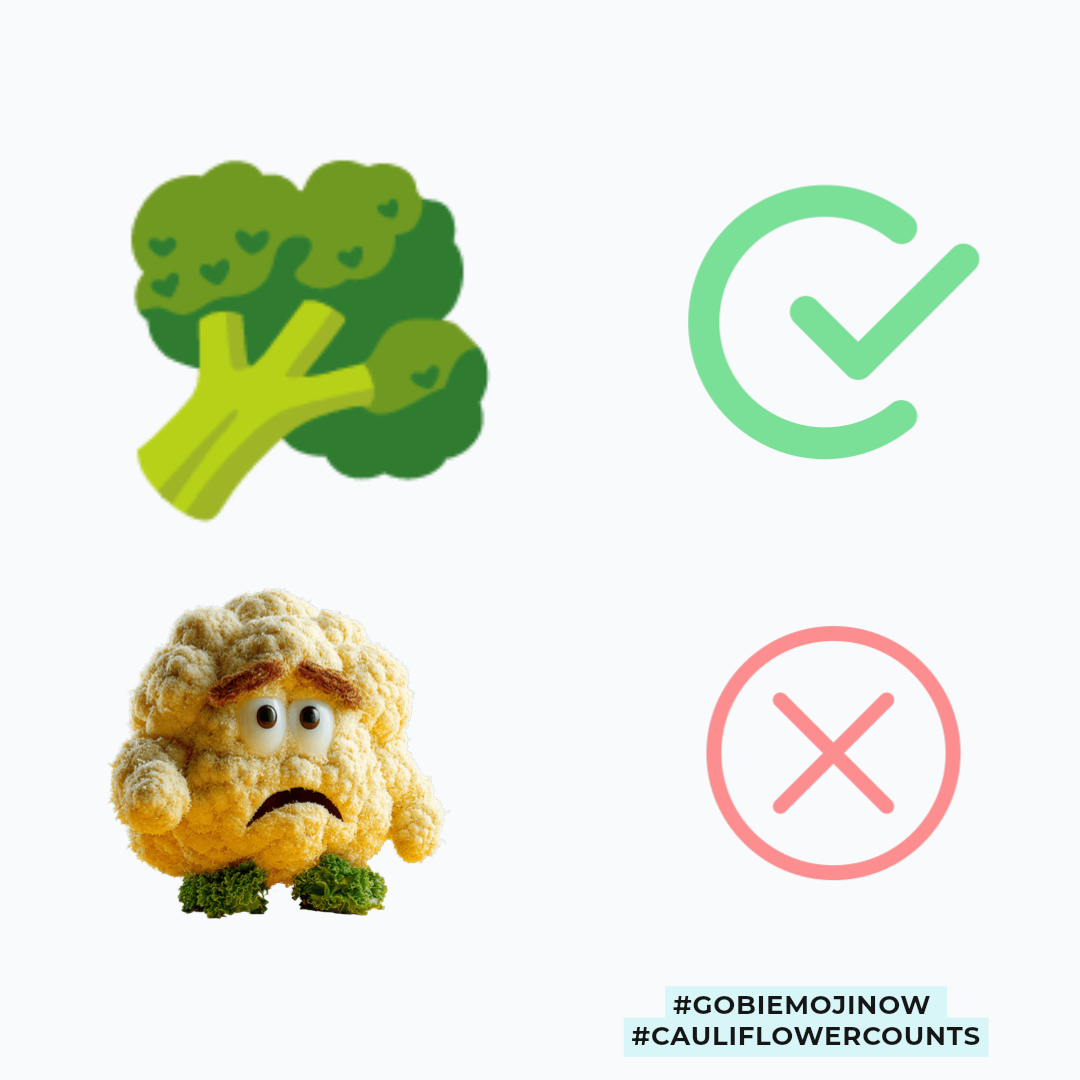
Every day, millions of people try to text about cauliflower dishes and settle for generic vegetable emojis or broccoli. This creates a cultural gap in digital communication, especially impacting South Asian communities where "gobi" (cauliflower) is a cornerstone of cuisine.
The numbers tell a compelling story:
Market Growth & Economic Impact:
- Global cauliflower and broccoli market: $24.5-26.1 billion (2024) growing at 4.19-5.6% CAGR
- Global production reached 27 million tons in 2024, with consumption at 26 million tons
- North America market alone: $1.9 billion (2024), projected to reach $2.2 billion by 2035
Consumption Surge in the United States:
- U.S. per capita consumption: 3.35-4.09 pounds (2023) vs 1.2 pounds in 2012 - representing a 180-240% increase
- Projected to reach 4.79 pounds per capita by 2028 - 3.17% annual growth rate
- 2024 consumption estimated at 3.5-4.2 pounds per person, showing continued upward trajectory
Global Production Leaders (2024):
- China: 9.7-11.5 million tons (39.91% global share)
- India: 9.6-9.8 million tons (34.04% global share)
- United States: 1.0-1.3 million tons (4.4% global share)
- Mexico: 696-826K tons (growing at 6.2% CAGR)
- Spain: 737-784K tons
THE CULTURAL IMPACT
Cauliflower isn't just a vegetable, it's cultural heritage spanning continents:
In South Asia: Gobi Aloo, Gobi Paratha, Gobi Pakora, Gobi Manchurian, and Gobi 65 are household staples connecting generations through food. Pakistan produced 313,630 tons in 2024, while India leads global production with 9.8 million tons (second only to China).
Globally: The vegetable's cultural significance spans from Asian cuisines to Mediterranean dishes to the new American health food movement.
In America: The renewed interest is driven by low-carb and gluten-free dietary trends, with cauliflower featured in pizza crusts, pasta alternatives, and rice substitutes. The riced cauliflower market alone was valued at $500 million-1.2 billion in 2024 and is projected to reach $1.8-3.5 billion by 2033 with a 12.3-15% CAGR.
WHY NOW - PERFECT TIMING FOR 2026 SUBMISSION
Strategic Opportunity Window: An 8-month window to build unprecedented petition momentum before the next submission opens April 2, 2026.
Market Momentum: While overall fresh vegetable consumption declined 3% in 2024, cauliflower bucked the trend with a 7% increase in availability, showing its resilience and growing consumer preference.
REASONS TO SIGN
Some reasons we could think of at The Weekly Chai :
- "My grandmother's gobi recipes deserve emoji representation"
- "As a chef, I text about cauliflower daily but have no proper emoji"
- "Food emojis should reflect global cuisine diversity"
- "My kids ask why there's broccoli but no cauliflower emoji"
- "This vegetable feeds millions and deserves digital recognition"
- "The $26B global market proves cauliflower's cultural importance"
- "Perfect timing to build support for April 2026 submission"
HOW YOU CAN HELP
- Sign this petition and share it with your networks
- Share your cauliflower photos on social media with #GobiEmojiNow
- Tell your story: Comment below about what cauliflower means to your culture/cooking
- Forward to foodie friends: Chefs, food bloggers, and cooking enthusiasts
- Tag Unicode: Share this petition on Twitter/X mentioning @unicode

23
The Issue
THE ASK
The Unicode Consortium should add a cauliflower emoji to represent one of the world's most consumed vegetables. The global cauliflower and broccoli market reached $24.5-26.1 billion in 2024, with projections to reach $33.3-39.7 billion by 2033. U.S. fresh cauliflower consumption has continued its dramatic surge from 1.2 pounds per capita in 2012 to 3.35-4.09 pounds per person in 2023, with projections reaching 4.79 pounds by 2028. Despite this massive global consumption and 300% growth in U.S. consumption over the past decade, cauliflower remains digitally invisible while broccoli has its emoji (🥦).
THE PROBLEM (Why This Matters)
Every day, millions of people try to text about cauliflower dishes and settle for generic vegetable emojis or broccoli. This creates a cultural gap in digital communication, especially impacting South Asian communities where "gobi" (cauliflower) is a cornerstone of cuisine.
The numbers tell a compelling story:
Market Growth & Economic Impact:
- Global cauliflower and broccoli market: $24.5-26.1 billion (2024) growing at 4.19-5.6% CAGR
- Global production reached 27 million tons in 2024, with consumption at 26 million tons
- North America market alone: $1.9 billion (2024), projected to reach $2.2 billion by 2035
Consumption Surge in the United States:
- U.S. per capita consumption: 3.35-4.09 pounds (2023) vs 1.2 pounds in 2012 - representing a 180-240% increase
- Projected to reach 4.79 pounds per capita by 2028 - 3.17% annual growth rate
- 2024 consumption estimated at 3.5-4.2 pounds per person, showing continued upward trajectory
Global Production Leaders (2024):
- China: 9.7-11.5 million tons (39.91% global share)
- India: 9.6-9.8 million tons (34.04% global share)
- United States: 1.0-1.3 million tons (4.4% global share)
- Mexico: 696-826K tons (growing at 6.2% CAGR)
- Spain: 737-784K tons
THE CULTURAL IMPACT
Cauliflower isn't just a vegetable, it's cultural heritage spanning continents:
In South Asia: Gobi Aloo, Gobi Paratha, Gobi Pakora, Gobi Manchurian, and Gobi 65 are household staples connecting generations through food. Pakistan produced 313,630 tons in 2024, while India leads global production with 9.8 million tons (second only to China).
Globally: The vegetable's cultural significance spans from Asian cuisines to Mediterranean dishes to the new American health food movement.
In America: The renewed interest is driven by low-carb and gluten-free dietary trends, with cauliflower featured in pizza crusts, pasta alternatives, and rice substitutes. The riced cauliflower market alone was valued at $500 million-1.2 billion in 2024 and is projected to reach $1.8-3.5 billion by 2033 with a 12.3-15% CAGR.
WHY NOW - PERFECT TIMING FOR 2026 SUBMISSION
Strategic Opportunity Window: An 8-month window to build unprecedented petition momentum before the next submission opens April 2, 2026.
Market Momentum: While overall fresh vegetable consumption declined 3% in 2024, cauliflower bucked the trend with a 7% increase in availability, showing its resilience and growing consumer preference.
REASONS TO SIGN
Some reasons we could think of at The Weekly Chai :
- "My grandmother's gobi recipes deserve emoji representation"
- "As a chef, I text about cauliflower daily but have no proper emoji"
- "Food emojis should reflect global cuisine diversity"
- "My kids ask why there's broccoli but no cauliflower emoji"
- "This vegetable feeds millions and deserves digital recognition"
- "The $26B global market proves cauliflower's cultural importance"
- "Perfect timing to build support for April 2026 submission"
HOW YOU CAN HELP
- Sign this petition and share it with your networks
- Share your cauliflower photos on social media with #GobiEmojiNow
- Tell your story: Comment below about what cauliflower means to your culture/cooking
- Forward to foodie friends: Chefs, food bloggers, and cooking enthusiasts
- Tag Unicode: Share this petition on Twitter/X mentioning @unicode
The Decision Makers

Supporter Voices
Petition Updates
Share this petition
Petition created on August 27, 2025