

Action for Wildlife: Urgent Laws Needed to Protect Hawaiian Species from Toxoplasmosis
The Issue
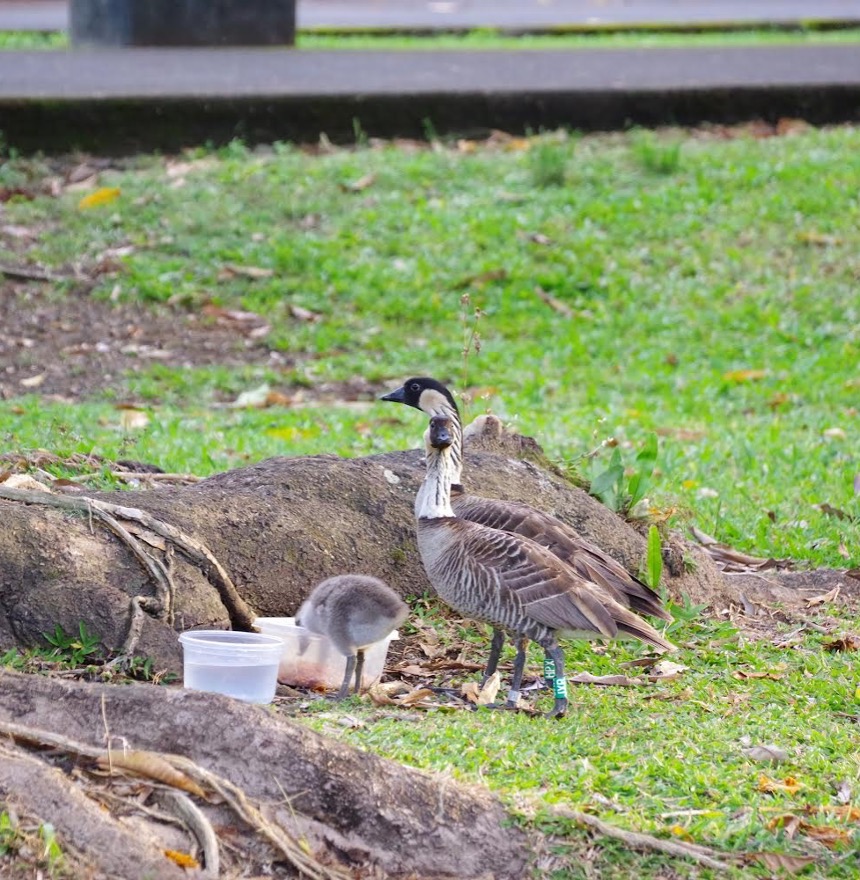
On March 5th 2024, a nēnē gosling at Liliʻuokalani Park and Gardens died from Toxoplasmosis - an infection caused by a parasite called Toxoplasma gondii. Cats are the only definitive host of Toxoplasma.
In 2023, The Hawaiʻi Department of Land and Natural Resources (DLNR) issued a letter to Alexander and Baldwin to immediately remove cat feeding stations after nēnē were observed to be eating cat food. In a letter circulated to the public they made clear that:
- Cat food is not a natural diet item for nēnē.
- Cat feeding affects the natural behaviors of nēnē, bringing them into close contact with people and roads, exposing them to dangers from vehicles, dogs, feral cats and mongoose.
- Feeding ‘habituates’ nēnē to humans, leading to separation from their natural environment and further reliance on feeding stations.
- Cats are known carriers of the infection toxoplasmosis which is a leading cause of death for nēnē.
Feral cats can be serious predators of our native species and can vector deadly diseases including toxoplasmosis. For this reason, the DLNR has previously noted its support for keeping cats indoors and not feeding or maintaining cat colonies, as described in Hawaiʻi Invasive Species Council Resolution 19-2, supporting the keeping of pet cats indoors and the use of peer-reviewed science in pursuing humane mitigation of the impacts of feral cats on wildlife and people.
Toxoplasmosis has been linked to the deaths of the following Hawaiian species:
- Spinner dolphins
- Hawaiian monk seals
- False killer whales
- ‘Alae ke‘oke‘o
- ʻAlalā
- Nēnē
- Red-footed booby
- Koloa
We cannot stand by while our unique ecosystem is under threat from this preventable problem. We urge Hawaiʻi County officials to address this issue urgently by implementing the following feral cat laws:
- It is unlawful for a cat owner to allow a cat over the age of three (3) months to be at large unless the cat has been sterilized by a veterinarian.
- It is unlawful to feed cats on any County property.
- All owned cats are required to have a microchip.
- It shall be unlawful for the owner of any cat, whether the cat is microchipped or not, to abandon the cat. For the purpose of this section, a cat shall be deemed abandoned if it is intentionally left on the property of someone other than the cat's owner without first obtaining written or oral consent by the property owner to do so.
In discussions with cat colony managers we often hear that pet abandonment is a significant burden that hampers the efficacy of trap, neuter, and release. While we firmly believe in advocating for keeping cats inside we acknowledge the dedication many of these cat feeders and colony managers have to supporting unowned cats in the wild. We feel these laws are a step in the right direction to addressing the underlying issues of the out of control unowned cat population.
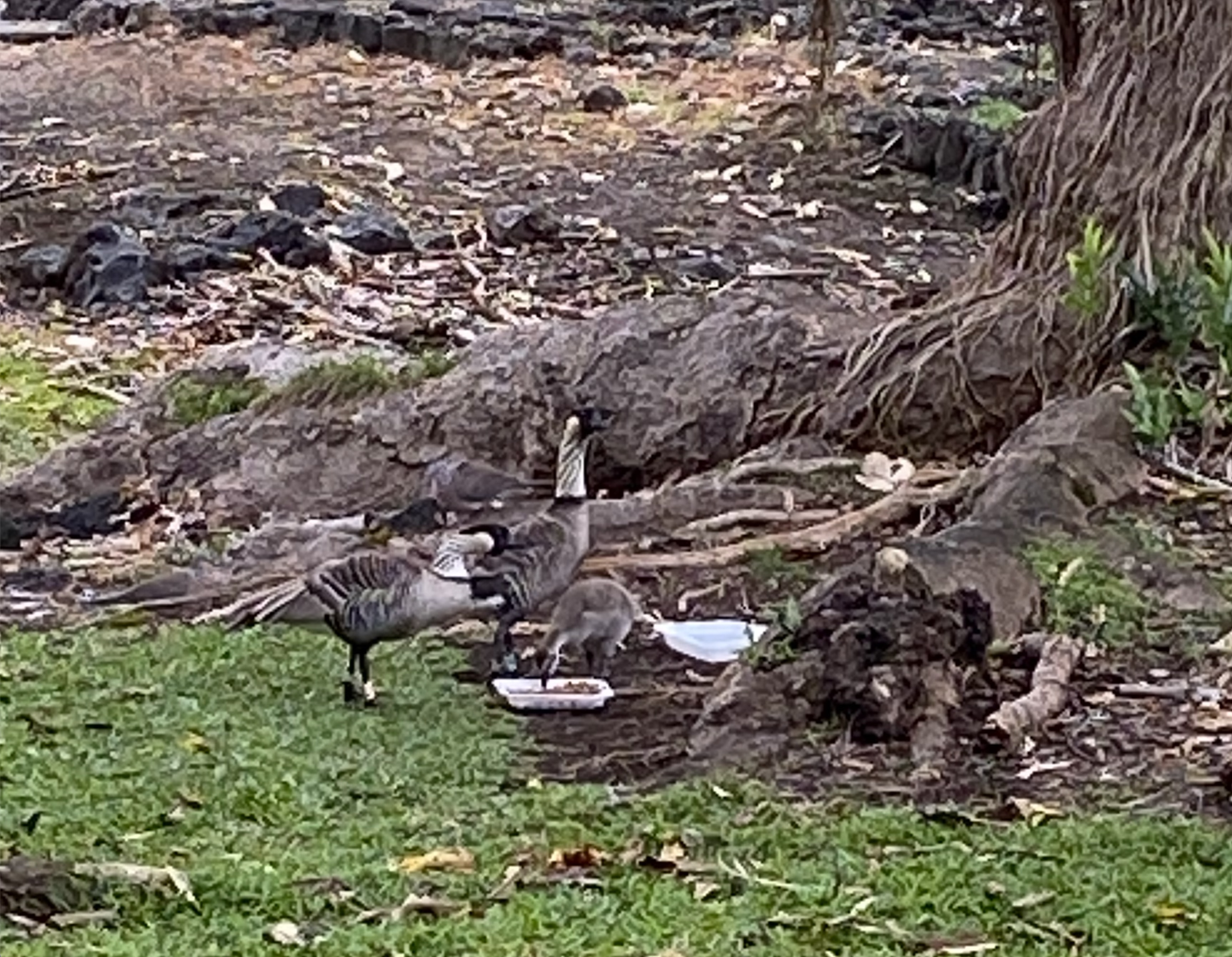
Photo provided by Rachel Kingsley

1,073
The Issue
On March 5th 2024, a nēnē gosling at Liliʻuokalani Park and Gardens died from Toxoplasmosis - an infection caused by a parasite called Toxoplasma gondii. Cats are the only definitive host of Toxoplasma.
In 2023, The Hawaiʻi Department of Land and Natural Resources (DLNR) issued a letter to Alexander and Baldwin to immediately remove cat feeding stations after nēnē were observed to be eating cat food. In a letter circulated to the public they made clear that:
- Cat food is not a natural diet item for nēnē.
- Cat feeding affects the natural behaviors of nēnē, bringing them into close contact with people and roads, exposing them to dangers from vehicles, dogs, feral cats and mongoose.
- Feeding ‘habituates’ nēnē to humans, leading to separation from their natural environment and further reliance on feeding stations.
- Cats are known carriers of the infection toxoplasmosis which is a leading cause of death for nēnē.
Feral cats can be serious predators of our native species and can vector deadly diseases including toxoplasmosis. For this reason, the DLNR has previously noted its support for keeping cats indoors and not feeding or maintaining cat colonies, as described in Hawaiʻi Invasive Species Council Resolution 19-2, supporting the keeping of pet cats indoors and the use of peer-reviewed science in pursuing humane mitigation of the impacts of feral cats on wildlife and people.
Toxoplasmosis has been linked to the deaths of the following Hawaiian species:
- Spinner dolphins
- Hawaiian monk seals
- False killer whales
- ‘Alae ke‘oke‘o
- ʻAlalā
- Nēnē
- Red-footed booby
- Koloa
We cannot stand by while our unique ecosystem is under threat from this preventable problem. We urge Hawaiʻi County officials to address this issue urgently by implementing the following feral cat laws:
- It is unlawful for a cat owner to allow a cat over the age of three (3) months to be at large unless the cat has been sterilized by a veterinarian.
- It is unlawful to feed cats on any County property.
- All owned cats are required to have a microchip.
- It shall be unlawful for the owner of any cat, whether the cat is microchipped or not, to abandon the cat. For the purpose of this section, a cat shall be deemed abandoned if it is intentionally left on the property of someone other than the cat's owner without first obtaining written or oral consent by the property owner to do so.
In discussions with cat colony managers we often hear that pet abandonment is a significant burden that hampers the efficacy of trap, neuter, and release. While we firmly believe in advocating for keeping cats inside we acknowledge the dedication many of these cat feeders and colony managers have to supporting unowned cats in the wild. We feel these laws are a step in the right direction to addressing the underlying issues of the out of control unowned cat population.
Photo provided by Rachel Kingsley
Supporter Voices
Petition Updates
Share this petition
Petition created on April 22, 2024