

Abolish COVID-19 Tax in Ghana
The Issue
In the 2021 Budget Statement and Economic Policy, Government introduced new tax measures to provide some relief to sections of the population hardest hit by the COVID-19 pandemic, raise additional revenue and improve tax compliance. Revenue enhancement enactments were also passed to raise the requisite resources to: sustain the implementation of COVID-19 measures; pay excess capacity charges resulting from power purchase agreements signed prior to 2017; ensure sustainable sanitation management; and help defray outstanding commitments in the financial sector due to the clean-up.
The Covid-19 levy was introduced as a special levy on the supply of goods and services and imports to raise revenue to support the Covid-19 expenditures and other related matters. However, there are some goods and services that do not attract this levy. These are
- Exempt goods and services under the First Schedule of the VAT Act 870.
- Zero rated and relief supplies
- Deductible input tax
According to a press release by the Ministry of Finance on 9th March, 2021, the details of the usage of the funds from the Covid-19 levy are listed on Page 75 of the 2021 budget as follows;
- Procurement, distribution and administration of vaccines including the 600,000 COVAX vaccines which was stated as a donation to the country.
- Establishment of 14 medical waste treatment facilities across the country for safe disposal of medical waste in collaboration with the private sector. In view of this, only one of the 14 has been completed and commissioned. This was done in July, 2023 and can be located in Adagya in the Ashanti Region. This was collaboration between the Government of Ghana and Jospong Group of Companies.
- Thirty-three (33) major health projects approved for implementation at a cost of €890million.
- 14.6million pieces of personal protective equipment produced domestically and distributed to health workers, students, teaching and non-teaching staff of tertiary and secondary institutions.
- Fumigation and disinfection of public places including airports, markets, schools, hospitals, offices etc.
- Agenda 111 – With this policy, it is believed that all promises in this will be completed before the end of the tenure of the current President. However, in April, 2024, the Presidential Advisor on Health, Dr. Anthony Nsiah Asare stated that “50% of the Agenda 111 hospitals will be completed by the end of 2024”.
- The need to recruit more health care professionals, in addition to the 100,000 recruited in the first term of the President.
It can be stated emphatically that usage of the COVID-19 funds have not been impactful but wasteful.
Facts and Figures on COVID-19 Levy from the Budget Statements
Before the first case of COVID-19 in Ghana was confirmed on 12th March, 2020, Government had proactively put together the GH¢560 million National Emergency Preparedness and Response Plan (EPRP) for COVID-19 to manage and contain the spread of the virus and strengthen the national capacity for surveillance, diagnosis, and case management. In March, 2021, the then Information Minister, Hon. Kwadwo Oppong Nkrumah made it known to the media and the general public that, government spent GH¢19 billion on COVID-19 as at the end of December 2020. According to the 2022 budget, COVID-19-related expenditures accounted for GH¢1,892 million. However, COVID-19 vaccines procured through a loan of GH¢753.8 million are reported as part of Foreign financed CAPEX. This brings total COVID-19 related expenditures to GH¢2,646 million against the target of GH¢2,877 million.
Are the Free Water, Food and PPEs to be paid using the COVID-19 levy?
The former finance minister, Hon Ken Ofori-Atta, revealed in 2022 that the government of Ghana spent Gh¢143million on the provision of free water and electricity to citizens during the Covid-19 era.
In March, 2021, the then Information Minister, Hon. Kwadwo Oppong Nkrumah went ahead to state that, “Government has never said that we have to pay for the free water and free electricity of 2022. The COVID-19 levy is not for free water and electricity”. According to the 2021 budget statement, page 58, the sole aim for the introduction of the COVID-19 tax is to provide the requisite resources to sustain the implementation of these measures thus increase in the health spending that exceeds the annual budget for health. This levy was to be charged as
- A 1% point increase in the National Health Insurance Levy. This means that the NHIL was going to be increased form 2.5% to 3.5%
- 1% percentage point increase in the VAT Flat Rate indicating an increase from 3% to 4%.
According to the 2022 budget, paragraph 1146, in 2020 during the Covid-19 period, the Government of Ghana provided free water and electricity for citizens for the months of April, May and June. GoG also provided Gh¢ 600million fund for small businesses.
Did Government take Loans for COVID-19 or It was Free Support?
On 9th September, 2021, the USAID donated oxygen generation support equipment and a negative pressure isolation system. This equipment contained 4 oxygen plants each with the capacity to produce 250 litres of oxygen per minute, enough for approximately 25 severely ill patients per day. The negative pressure isolation system worth $1.5million was to provide critical care support for up to 30 covid-19 patients. Before the donations of this equipment, the United States had donated over $1.2million Modern vaccines to Ghana on 4th September, 2021, which was the largest vaccine donation. So far, the United States had donated over $30million support to Ghana’s Covid-19 response to address the immediate and medium-term effects of Covid-19.
In the 2022 budget statement, COVID-19 vaccines procured through a loan of GH¢753.8 million are reported as part of Foreign financed CAPEX. However, there was a donation of 600,000 doses of COVID-19 COVAX vaccines to Ghana by the United Nations.
Vaccines that were delivered globally to low income economies were considered as donations as stated by BBC and I quote “The doses being sent to lower-income countries such as Ghana are funded by donations”. Again, UK which had ordered 400 million doses and would have leftovers, decided to donate most of its surplus vaccine supply to poorer countries.
15 million doses of Johnson and Johnson vaccines were to be purchased by the Government of Ghana with support from a World Bank facility through the African Vaccine Acquisition Trust (AVAT) of the African Union, and are expected over scheduled monthly deliveries through 2023.
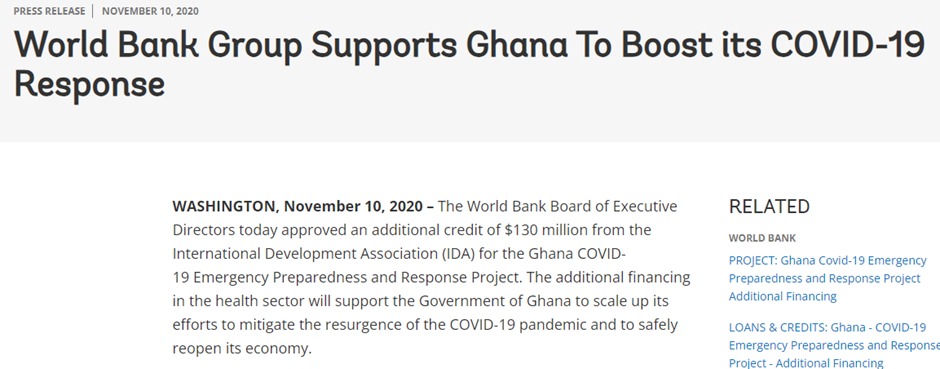
According to the World Bank website, on November 10, 2020, the World Bank Board of Executive Directors approved an additional credit of $130million from the International Development Association (IDA) for the Ghana COVID-19 Emergency Preparedness and Response Project.
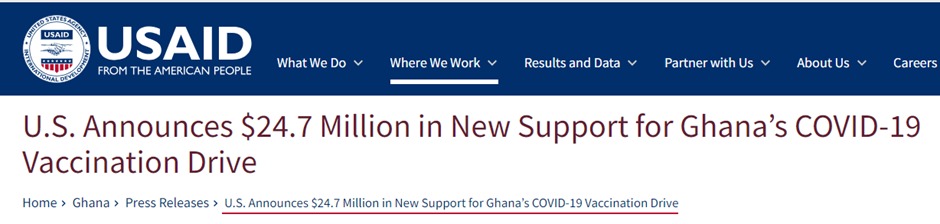
Again, the United States through USAID supported Ghana with an additional amount of $24.7million to help combat Covid-19 vaccination in the country. In that same release, it was stated that since September 2021, the United States had donated more than $9.6million doses of Covid-19 vaccines to Ghana which represented more than 30% of all vaccines available in the country.
In conclusion, the Government of Ghana led by President Nana Addo and Vice President Dr. Mahamudu Bawumia have received enough funding to dealing with COVID-19 particularly for developing partners. Also, the free electricity, food and water given for three months to Ghanaians during COVID-19 were supports received from foreign partners. Despite this fact, the government has continued to collect the COVID-19 Levy for almost three (3) years even though the magnitude of the pandemic has reduced. The pandemic may have ended but Ghanaians would have COVID-19 Levy for the rest of their levy. We call on you to join the call to abolish COVID-19 Levy.

251
The Issue
In the 2021 Budget Statement and Economic Policy, Government introduced new tax measures to provide some relief to sections of the population hardest hit by the COVID-19 pandemic, raise additional revenue and improve tax compliance. Revenue enhancement enactments were also passed to raise the requisite resources to: sustain the implementation of COVID-19 measures; pay excess capacity charges resulting from power purchase agreements signed prior to 2017; ensure sustainable sanitation management; and help defray outstanding commitments in the financial sector due to the clean-up.
The Covid-19 levy was introduced as a special levy on the supply of goods and services and imports to raise revenue to support the Covid-19 expenditures and other related matters. However, there are some goods and services that do not attract this levy. These are
- Exempt goods and services under the First Schedule of the VAT Act 870.
- Zero rated and relief supplies
- Deductible input tax
According to a press release by the Ministry of Finance on 9th March, 2021, the details of the usage of the funds from the Covid-19 levy are listed on Page 75 of the 2021 budget as follows;
- Procurement, distribution and administration of vaccines including the 600,000 COVAX vaccines which was stated as a donation to the country.
- Establishment of 14 medical waste treatment facilities across the country for safe disposal of medical waste in collaboration with the private sector. In view of this, only one of the 14 has been completed and commissioned. This was done in July, 2023 and can be located in Adagya in the Ashanti Region. This was collaboration between the Government of Ghana and Jospong Group of Companies.
- Thirty-three (33) major health projects approved for implementation at a cost of €890million.
- 14.6million pieces of personal protective equipment produced domestically and distributed to health workers, students, teaching and non-teaching staff of tertiary and secondary institutions.
- Fumigation and disinfection of public places including airports, markets, schools, hospitals, offices etc.
- Agenda 111 – With this policy, it is believed that all promises in this will be completed before the end of the tenure of the current President. However, in April, 2024, the Presidential Advisor on Health, Dr. Anthony Nsiah Asare stated that “50% of the Agenda 111 hospitals will be completed by the end of 2024”.
- The need to recruit more health care professionals, in addition to the 100,000 recruited in the first term of the President.
It can be stated emphatically that usage of the COVID-19 funds have not been impactful but wasteful.
Facts and Figures on COVID-19 Levy from the Budget Statements
Before the first case of COVID-19 in Ghana was confirmed on 12th March, 2020, Government had proactively put together the GH¢560 million National Emergency Preparedness and Response Plan (EPRP) for COVID-19 to manage and contain the spread of the virus and strengthen the national capacity for surveillance, diagnosis, and case management. In March, 2021, the then Information Minister, Hon. Kwadwo Oppong Nkrumah made it known to the media and the general public that, government spent GH¢19 billion on COVID-19 as at the end of December 2020. According to the 2022 budget, COVID-19-related expenditures accounted for GH¢1,892 million. However, COVID-19 vaccines procured through a loan of GH¢753.8 million are reported as part of Foreign financed CAPEX. This brings total COVID-19 related expenditures to GH¢2,646 million against the target of GH¢2,877 million.
Are the Free Water, Food and PPEs to be paid using the COVID-19 levy?
The former finance minister, Hon Ken Ofori-Atta, revealed in 2022 that the government of Ghana spent Gh¢143million on the provision of free water and electricity to citizens during the Covid-19 era.
In March, 2021, the then Information Minister, Hon. Kwadwo Oppong Nkrumah went ahead to state that, “Government has never said that we have to pay for the free water and free electricity of 2022. The COVID-19 levy is not for free water and electricity”. According to the 2021 budget statement, page 58, the sole aim for the introduction of the COVID-19 tax is to provide the requisite resources to sustain the implementation of these measures thus increase in the health spending that exceeds the annual budget for health. This levy was to be charged as
- A 1% point increase in the National Health Insurance Levy. This means that the NHIL was going to be increased form 2.5% to 3.5%
- 1% percentage point increase in the VAT Flat Rate indicating an increase from 3% to 4%.
According to the 2022 budget, paragraph 1146, in 2020 during the Covid-19 period, the Government of Ghana provided free water and electricity for citizens for the months of April, May and June. GoG also provided Gh¢ 600million fund for small businesses.
Did Government take Loans for COVID-19 or It was Free Support?
On 9th September, 2021, the USAID donated oxygen generation support equipment and a negative pressure isolation system. This equipment contained 4 oxygen plants each with the capacity to produce 250 litres of oxygen per minute, enough for approximately 25 severely ill patients per day. The negative pressure isolation system worth $1.5million was to provide critical care support for up to 30 covid-19 patients. Before the donations of this equipment, the United States had donated over $1.2million Modern vaccines to Ghana on 4th September, 2021, which was the largest vaccine donation. So far, the United States had donated over $30million support to Ghana’s Covid-19 response to address the immediate and medium-term effects of Covid-19.
In the 2022 budget statement, COVID-19 vaccines procured through a loan of GH¢753.8 million are reported as part of Foreign financed CAPEX. However, there was a donation of 600,000 doses of COVID-19 COVAX vaccines to Ghana by the United Nations.
Vaccines that were delivered globally to low income economies were considered as donations as stated by BBC and I quote “The doses being sent to lower-income countries such as Ghana are funded by donations”. Again, UK which had ordered 400 million doses and would have leftovers, decided to donate most of its surplus vaccine supply to poorer countries.
15 million doses of Johnson and Johnson vaccines were to be purchased by the Government of Ghana with support from a World Bank facility through the African Vaccine Acquisition Trust (AVAT) of the African Union, and are expected over scheduled monthly deliveries through 2023.
According to the World Bank website, on November 10, 2020, the World Bank Board of Executive Directors approved an additional credit of $130million from the International Development Association (IDA) for the Ghana COVID-19 Emergency Preparedness and Response Project.
Again, the United States through USAID supported Ghana with an additional amount of $24.7million to help combat Covid-19 vaccination in the country. In that same release, it was stated that since September 2021, the United States had donated more than $9.6million doses of Covid-19 vaccines to Ghana which represented more than 30% of all vaccines available in the country.
In conclusion, the Government of Ghana led by President Nana Addo and Vice President Dr. Mahamudu Bawumia have received enough funding to dealing with COVID-19 particularly for developing partners. Also, the free electricity, food and water given for three months to Ghanaians during COVID-19 were supports received from foreign partners. Despite this fact, the government has continued to collect the COVID-19 Levy for almost three (3) years even though the magnitude of the pandemic has reduced. The pandemic may have ended but Ghanaians would have COVID-19 Levy for the rest of their levy. We call on you to join the call to abolish COVID-19 Levy.
Petition Updates
Share this petition
Petition created on May 7, 2024