

A Clean Bus for All of Us: Prioritize bus transit & lane corridor via ComEd EV funding
The Issue
Clean Bus for All of Us
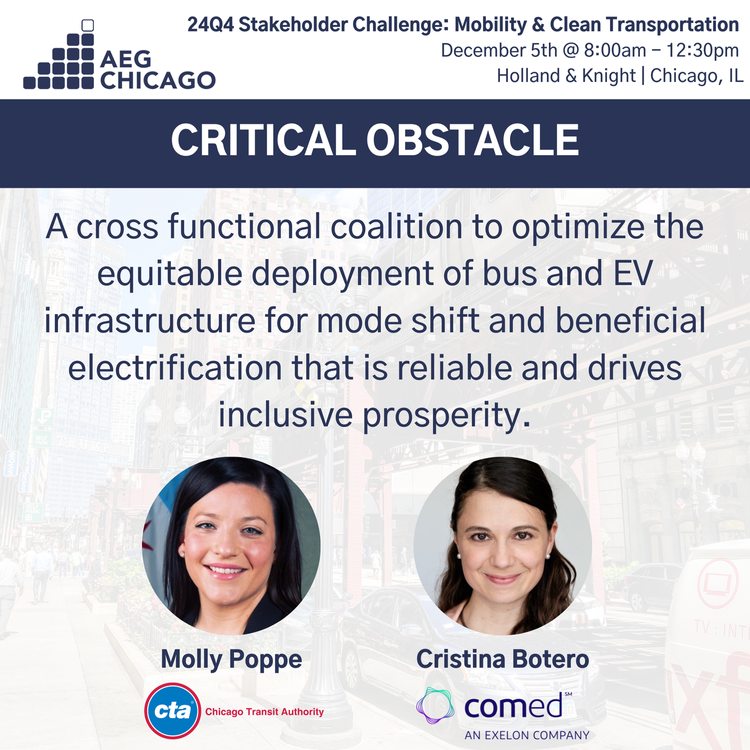
Please sign today to show your support for the Clean Bus for All of Us initiative -- a collaborative effort led by over 50 public, private, and civic leaders to build a cross-sector EV infrastructure coalition that champions environmentally-friendly bus transit. This visionary proposal, spearheaded by Molly Poppe, Chief Innovation Officer at the Chicago Transit Authority, aims to drive equitable and sustainable transit solutions for a greener and more inclusive future.
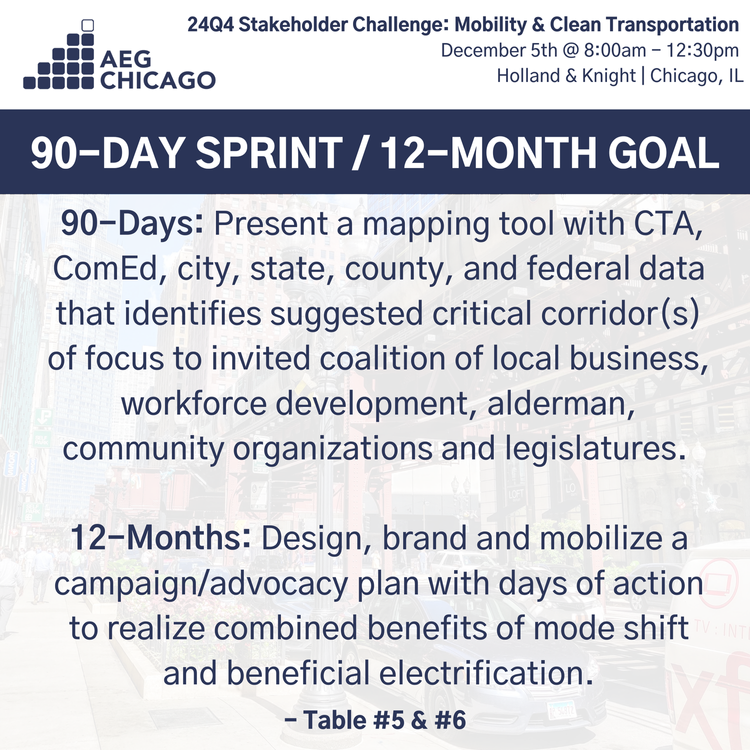
Your signature of support will validate our concerns and strengthen our efforts to deliver equitable beneficial electrification for Greater Chicago, starting with a 90-day sprint and 12-month goal.
Please say yes to a Clean Bus for All Us.
Context:
"Tragically, 95 percent of Chicagoland residents are experiencing less access to jobs by public transit compared to February 2022. The economic vitality of the region is being undercut by the lack of public transportation investment. Even if you never use public transportation, people you rely upon, such as those who clean offices, staff stocking grocery stores, and workers who keep hospitals running, do." - Robert Schulz III, advocacy co-chair of the Transportation Equity Network in Chicago.
The CTA, plus regional transit agencies Metra and Pace, are facing a post-pandemic fiscal cliff — a $730 million combined budget shortfall expected in FY2026 while thousands of riders, including many essential workers experience a double hit - less reliable service and less access to destinations.
96% of Chicagoans live near a CTA Bus stop while only Only 30% live near a CTA Rail station. Chicago lags behind most major cities in bus priority with only 10 miles of dedicated bus lanes whereas NYC has over 140 miles of dedicated bus lanes (or HOV lanes). In 2023, New York are bus ridership exceeded total subway ridership of the entire county. - FTA National Transit Database.
Reliable, fast, clean bus service requires priority bus lanes to increase ridership so that workers and employers can experience inclusive prosperity and better health outcomes. Over the next two years, nearly $85 million will fund ComEd rebates for light-duty and medium-heavy duty cars, trucks, and buses with at least 50% of funds directed to fleets located in or primarily servicing low-income and equity investment eligible communities.
“A cohesive, cross-functional coalition at the state and local level is needed to advocate for bus infrastructure and funding, driving transformational changes in the region.” - Molly Poppe, Chief Innovation Officer, Chicago Transit Authority
For regional health, equity and prosperity, an intersectional coalition is needed to align ComEd’s Beneficial Electrification funding regarding bus fleets with CTA needs for bus prioritization -from EV infrastructure to garage upgrades, bus lanes and customer amenities.
Developing tools to identify communities most in need of EV charging infrastructure, using inputs like socio-economic data, air quality, and grid capacity, is essential for equitable resource allocation of Beneficial Electrification funding as part of the Illinois Climate Equitable Jobs Act.
“The lack of a tool to understand which communities could benefit most from EV charging infrastructure is a critical obstacle to address within the next 12 months.” - Cristina Botero, Senior Manager Beneficial Electrification, ComEd
Please sign in support of addressing this critical obstacle and corresponding 90 day sprint and 12 month action plan.
Please note: Donations made on Change.org do not reach our campaign. If you would like to donate directly to The Carbon League to support volunteer graduate students working on this issue and allow for flexible use of funding, you may do so here.

8
The Issue
Clean Bus for All of Us
Please sign today to show your support for the Clean Bus for All of Us initiative -- a collaborative effort led by over 50 public, private, and civic leaders to build a cross-sector EV infrastructure coalition that champions environmentally-friendly bus transit. This visionary proposal, spearheaded by Molly Poppe, Chief Innovation Officer at the Chicago Transit Authority, aims to drive equitable and sustainable transit solutions for a greener and more inclusive future.
Your signature of support will validate our concerns and strengthen our efforts to deliver equitable beneficial electrification for Greater Chicago, starting with a 90-day sprint and 12-month goal.
Please say yes to a Clean Bus for All Us.
Context:
"Tragically, 95 percent of Chicagoland residents are experiencing less access to jobs by public transit compared to February 2022. The economic vitality of the region is being undercut by the lack of public transportation investment. Even if you never use public transportation, people you rely upon, such as those who clean offices, staff stocking grocery stores, and workers who keep hospitals running, do." - Robert Schulz III, advocacy co-chair of the Transportation Equity Network in Chicago.
The CTA, plus regional transit agencies Metra and Pace, are facing a post-pandemic fiscal cliff — a $730 million combined budget shortfall expected in FY2026 while thousands of riders, including many essential workers experience a double hit - less reliable service and less access to destinations.
96% of Chicagoans live near a CTA Bus stop while only Only 30% live near a CTA Rail station. Chicago lags behind most major cities in bus priority with only 10 miles of dedicated bus lanes whereas NYC has over 140 miles of dedicated bus lanes (or HOV lanes). In 2023, New York are bus ridership exceeded total subway ridership of the entire county. - FTA National Transit Database.
Reliable, fast, clean bus service requires priority bus lanes to increase ridership so that workers and employers can experience inclusive prosperity and better health outcomes. Over the next two years, nearly $85 million will fund ComEd rebates for light-duty and medium-heavy duty cars, trucks, and buses with at least 50% of funds directed to fleets located in or primarily servicing low-income and equity investment eligible communities.
“A cohesive, cross-functional coalition at the state and local level is needed to advocate for bus infrastructure and funding, driving transformational changes in the region.” - Molly Poppe, Chief Innovation Officer, Chicago Transit Authority
For regional health, equity and prosperity, an intersectional coalition is needed to align ComEd’s Beneficial Electrification funding regarding bus fleets with CTA needs for bus prioritization -from EV infrastructure to garage upgrades, bus lanes and customer amenities.
Developing tools to identify communities most in need of EV charging infrastructure, using inputs like socio-economic data, air quality, and grid capacity, is essential for equitable resource allocation of Beneficial Electrification funding as part of the Illinois Climate Equitable Jobs Act.
“The lack of a tool to understand which communities could benefit most from EV charging infrastructure is a critical obstacle to address within the next 12 months.” - Cristina Botero, Senior Manager Beneficial Electrification, ComEd
Please sign in support of addressing this critical obstacle and corresponding 90 day sprint and 12 month action plan.
Please note: Donations made on Change.org do not reach our campaign. If you would like to donate directly to The Carbon League to support volunteer graduate students working on this issue and allow for flexible use of funding, you may do so here.
Petition Updates
Share this petition
Petition created on December 8, 2024