
90 minutes less on school bus is 90 minutes more for childhood
The Issue
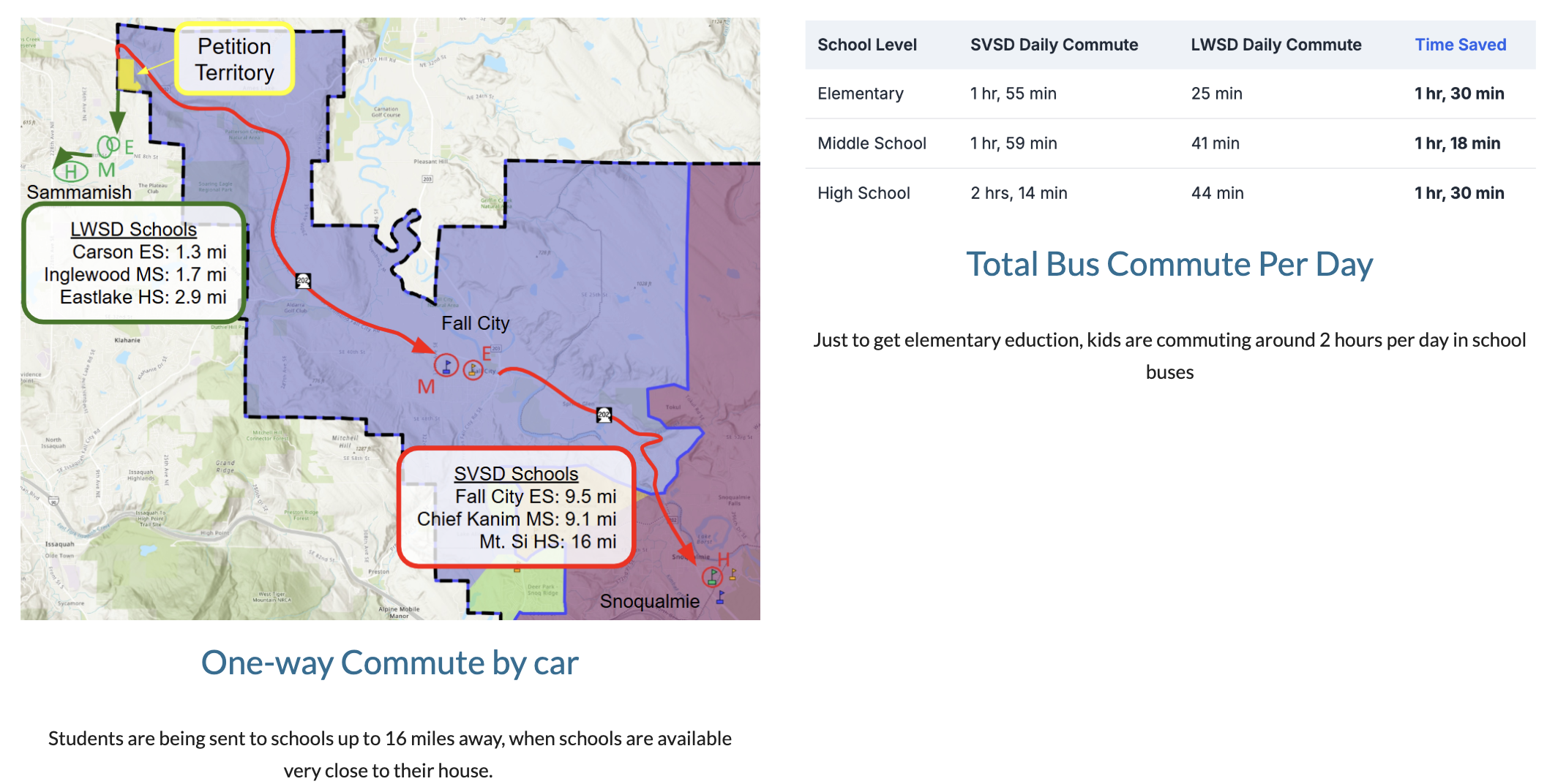
A small Sammamish neighborhood is asking for a logical change. Our kids live less than 3 miles from Lake Washington School District (LWSD) schools, but an outdated boundary forces them on a 16-mile journey via rural 55mph single lane freeway to the Snoqualmie Valley School District (SVSD). This is about student well-being, safety, and community.
WHAT WE WANT
- Reduce Commutes: Slash daily bus travel by up to 90 minutes, giving students more time for homework, activities, sleep, and family.
- Improve Kids Safety: Eliminate the need for students to travel on the high-speed, rural SR 202, which has a documented history of serious accidents.
- Strengthen Community: Allow children to attend school with their neighbors in Sammamish, the city where they live, play, and socialize.
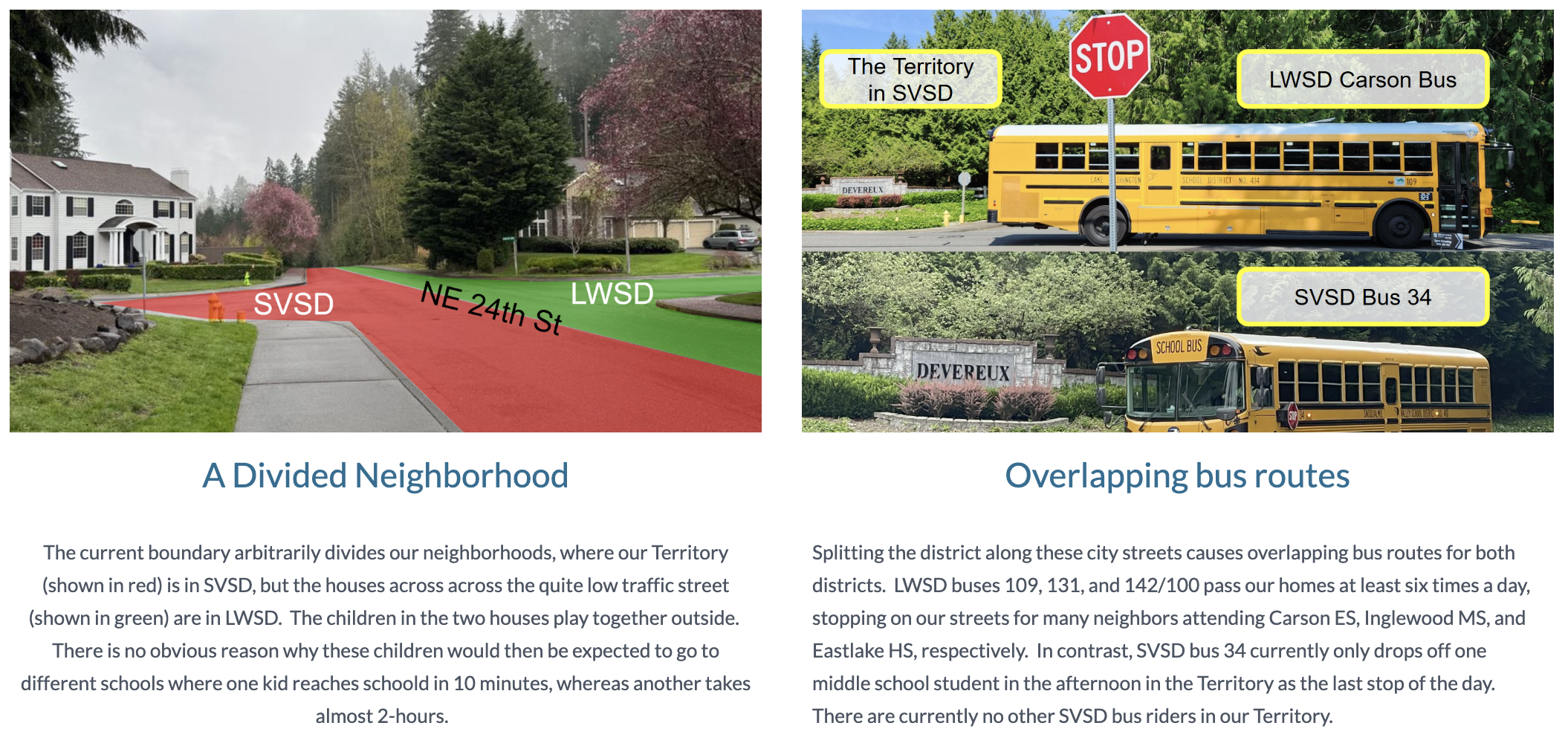
- Stop Tax Dollar Wastage: Overlapping school buses from the two school districts serve this neighborhood. Multiple LWSD buses already come to the neighborhood to pick kids across the street. SVSD adds extra 8 miles to their existing route to cover this neighborhood, which is a wastage of tax dollars.
- Provide a Common-Sense Solution: Established in 1944, this boundary is a relic of the past that creates unnecessary and unsafe burdens on our families. More than 75% students in this neighborhood opted out of assigned district as it is not practical. But still paying the property tax to this school district.
THE COMMUTE: A QUICK GLANCE
AN ARBRITRARY BOUNDARY: DIVIDING NEIGHBORS, WASTING FUNDS
OUR REAL COMMUNITY IS IN SAMMAMISH (LWSD)
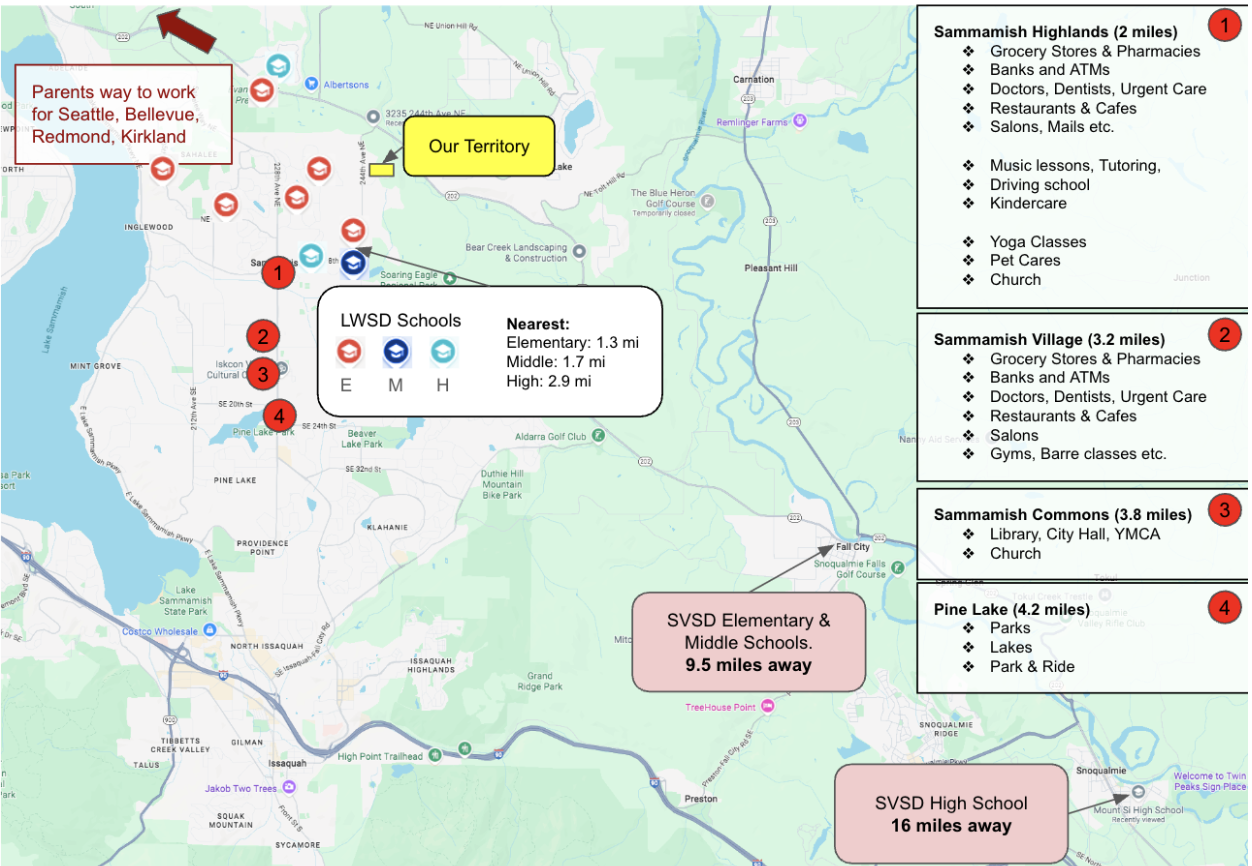
We send our children to Sammamish daycares, take them to play in Sammamish parks, and form bonds with fellow community members at the Sammamish library and YMCA. We work, shop, play, and build community in Sammamish. Snoqualmie Valley is a great community, but it is not our community.
There are 6 LWSD elementary schools closer to us than our assigned SVSD elementary school.
KIDS SAFETY IS GETTING COMPROMISED
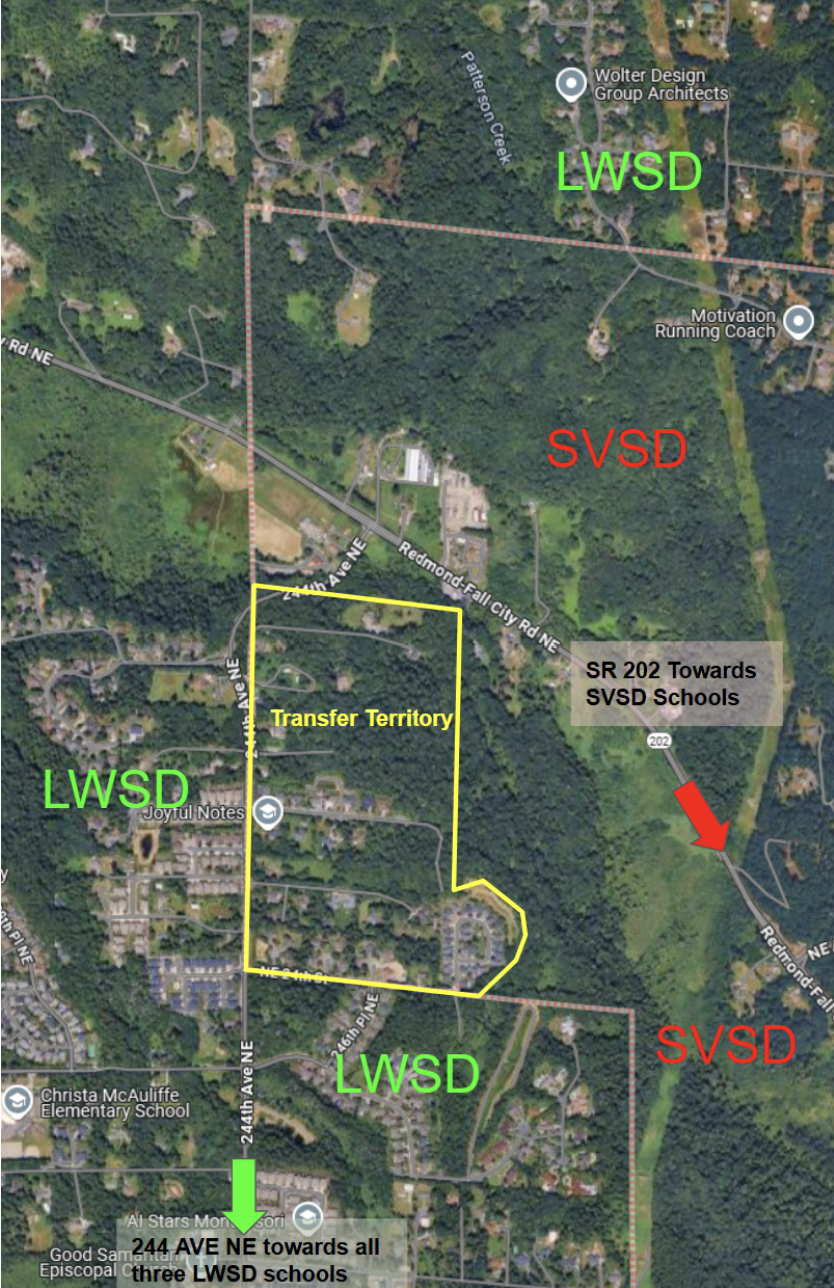
- Dangerous Roads: The route to SVSD forces students onto SR 202, a 55-mph rural highway with a history of 226 crashes and 3 fatalities in a 5-year span per a WSDOT study. Not only we are busing elementary and middle school kids on this route, we are also expecting 16-17 high school kids to drive 16 miles each way on this road which can be frequented by wild animals and is usually wet and foggy.
- Inclement Weather: On snow days, the assigned bus stop is 2.5 miles away down a hazardous road, making it inaccessible and forcing kids to miss school.
- Health Implications: The State of Washington has recognized detrimental health impacts from riding on diesel-powered buses. The National Resources Defense Council Coalition for Clean Air study on school buses found excessive exposure of children to diesel can lead to cancer and asthma.
Quotes from official sources:
This road is kind of notorious. It's unfortunate -- collisions out here are bad, they're just not ever easy little fender-benders," [Trooper Nick] King said. "This type of road where you have single lanes and blind corners, wet roadways... this is a kind of area that gets a lot of fog. All those factors seems to make this a dangerous piece of road stretch.
-WSDOT Study
“The rural segment”… “located between 244th Avenue Northeast and 324th Avenue Southeast in rural King County, as a high-speed, two-lane highway. This segment was highlighted for review of the intersections due to the area’s recent growth and feedback from the community which expressed concerns following two fatal crashes in the summer of 2019.”
-WSDOT Study
On the rural segment of SR 202 west of Fall City, key operational and safety performance gaps were identified, with two intersections highlighted for their crash history – Northeast Ames Lake Road and Tolt Hill Road Northeast.
-WSDOT Study
Exposure levels were higher in the back of the bus and when windows were closed. The study indicated that exposure of children to diesel exhaust while riding in a school bus for 1–2 hours a day, 180 days a year for 10 years might result in 23–46 additional cancer deaths per 1 million children. In addition, the investigators stated that the implications of this exposure for asthma are very troubling.”
-The National Resources Defense Council Coalition for Clean Air study
STUDENT INEQUITY
Students in our neighborhood face long commute, while children across the street in LWSD get home earlier and enjoy after-school activities like music, sports, and tutoring. This inequity robs our kids of opportunities to learn, grow, and connect.
- Elementary School: LWSD offers advanced programs within 3.5 miles, but SVSD’s STREAM program is 16 miles away with no transportation, making participation unrealistic.
- Middle School: SVSD buses pick up as early as 6:39 AM to align with High school bus, leaving students waiting 35 minutes before class. LWSD’s Inglewood MS is nearby and direct, saving time and energy.
- High School: SVSD students wake up 81 minutes earlier and spend 90 extra minutes commuting each day compared to Eastlake HS students across the street. This cuts into sleep, study, and extracurricular time, putting them at a significant disadvantage.
These children deserve the same opportunities as their neighbors — not longer bus rides, missed activities, and lost learning time.
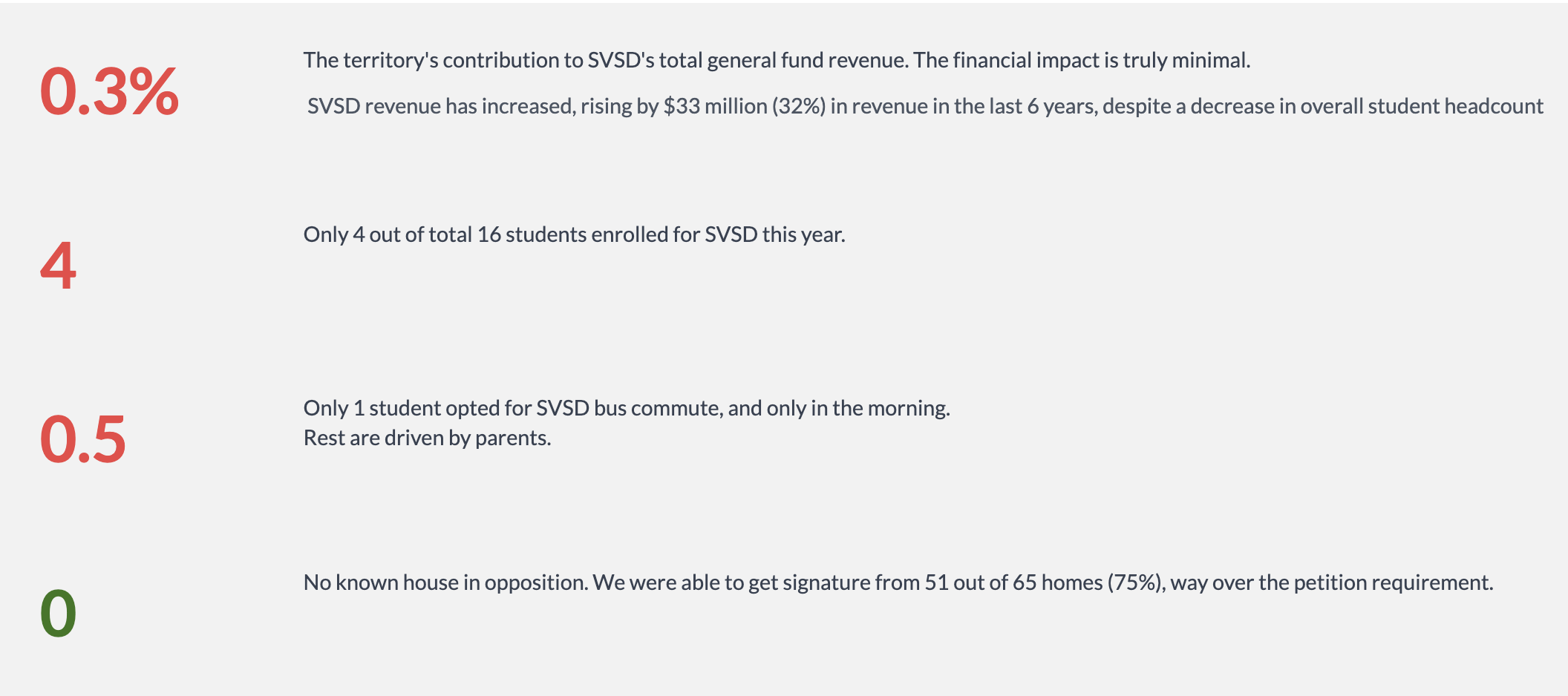
FINANCIAL IMPACT TO DISTRICTS AND COMMUNITY IMPACT
OUR STORIES
The Shrivastava family chose private school to avoid the one-hour bus rides with no restroom access for their child.
The Bald family was forced to leave their home and rent a property within LWSD boundaries so their child could continue to middle school with their elementary school friends.
The Harper family had two children in LWSD and one in SVSD, who was denied a transfer, splitting the family between districts.
The Druckman family had to follow a legal route to just let their 6 year old daughter continuity in her Choice Transfer school in LWSD.
These aren't isolated incidents. They represent a consistent history of hardship that has been formally petitioned three times before.

15
The Issue
A small Sammamish neighborhood is asking for a logical change. Our kids live less than 3 miles from Lake Washington School District (LWSD) schools, but an outdated boundary forces them on a 16-mile journey via rural 55mph single lane freeway to the Snoqualmie Valley School District (SVSD). This is about student well-being, safety, and community.
WHAT WE WANT
- Reduce Commutes: Slash daily bus travel by up to 90 minutes, giving students more time for homework, activities, sleep, and family.
- Improve Kids Safety: Eliminate the need for students to travel on the high-speed, rural SR 202, which has a documented history of serious accidents.
- Strengthen Community: Allow children to attend school with their neighbors in Sammamish, the city where they live, play, and socialize.
- Stop Tax Dollar Wastage: Overlapping school buses from the two school districts serve this neighborhood. Multiple LWSD buses already come to the neighborhood to pick kids across the street. SVSD adds extra 8 miles to their existing route to cover this neighborhood, which is a wastage of tax dollars.
- Provide a Common-Sense Solution: Established in 1944, this boundary is a relic of the past that creates unnecessary and unsafe burdens on our families. More than 75% students in this neighborhood opted out of assigned district as it is not practical. But still paying the property tax to this school district.
THE COMMUTE: A QUICK GLANCE
AN ARBRITRARY BOUNDARY: DIVIDING NEIGHBORS, WASTING FUNDS
OUR REAL COMMUNITY IS IN SAMMAMISH (LWSD)
We send our children to Sammamish daycares, take them to play in Sammamish parks, and form bonds with fellow community members at the Sammamish library and YMCA. We work, shop, play, and build community in Sammamish. Snoqualmie Valley is a great community, but it is not our community.
There are 6 LWSD elementary schools closer to us than our assigned SVSD elementary school.
KIDS SAFETY IS GETTING COMPROMISED
- Dangerous Roads: The route to SVSD forces students onto SR 202, a 55-mph rural highway with a history of 226 crashes and 3 fatalities in a 5-year span per a WSDOT study. Not only we are busing elementary and middle school kids on this route, we are also expecting 16-17 high school kids to drive 16 miles each way on this road which can be frequented by wild animals and is usually wet and foggy.
- Inclement Weather: On snow days, the assigned bus stop is 2.5 miles away down a hazardous road, making it inaccessible and forcing kids to miss school.
- Health Implications: The State of Washington has recognized detrimental health impacts from riding on diesel-powered buses. The National Resources Defense Council Coalition for Clean Air study on school buses found excessive exposure of children to diesel can lead to cancer and asthma.
Quotes from official sources:
This road is kind of notorious. It's unfortunate -- collisions out here are bad, they're just not ever easy little fender-benders," [Trooper Nick] King said. "This type of road where you have single lanes and blind corners, wet roadways... this is a kind of area that gets a lot of fog. All those factors seems to make this a dangerous piece of road stretch.
-WSDOT Study
“The rural segment”… “located between 244th Avenue Northeast and 324th Avenue Southeast in rural King County, as a high-speed, two-lane highway. This segment was highlighted for review of the intersections due to the area’s recent growth and feedback from the community which expressed concerns following two fatal crashes in the summer of 2019.”
-WSDOT Study
On the rural segment of SR 202 west of Fall City, key operational and safety performance gaps were identified, with two intersections highlighted for their crash history – Northeast Ames Lake Road and Tolt Hill Road Northeast.
-WSDOT Study
Exposure levels were higher in the back of the bus and when windows were closed. The study indicated that exposure of children to diesel exhaust while riding in a school bus for 1–2 hours a day, 180 days a year for 10 years might result in 23–46 additional cancer deaths per 1 million children. In addition, the investigators stated that the implications of this exposure for asthma are very troubling.”
-The National Resources Defense Council Coalition for Clean Air study
STUDENT INEQUITY
Students in our neighborhood face long commute, while children across the street in LWSD get home earlier and enjoy after-school activities like music, sports, and tutoring. This inequity robs our kids of opportunities to learn, grow, and connect.
- Elementary School: LWSD offers advanced programs within 3.5 miles, but SVSD’s STREAM program is 16 miles away with no transportation, making participation unrealistic.
- Middle School: SVSD buses pick up as early as 6:39 AM to align with High school bus, leaving students waiting 35 minutes before class. LWSD’s Inglewood MS is nearby and direct, saving time and energy.
- High School: SVSD students wake up 81 minutes earlier and spend 90 extra minutes commuting each day compared to Eastlake HS students across the street. This cuts into sleep, study, and extracurricular time, putting them at a significant disadvantage.
These children deserve the same opportunities as their neighbors — not longer bus rides, missed activities, and lost learning time.
FINANCIAL IMPACT TO DISTRICTS AND COMMUNITY IMPACT
OUR STORIES
The Shrivastava family chose private school to avoid the one-hour bus rides with no restroom access for their child.
The Bald family was forced to leave their home and rent a property within LWSD boundaries so their child could continue to middle school with their elementary school friends.
The Harper family had two children in LWSD and one in SVSD, who was denied a transfer, splitting the family between districts.
The Druckman family had to follow a legal route to just let their 6 year old daughter continuity in her Choice Transfer school in LWSD.
These aren't isolated incidents. They represent a consistent history of hardship that has been formally petitioned three times before.
The Decision Makers


Petition Updates
Share this petition
Petition created on 15 September 2025