

Strong Vision, Strong Voices, Strong Towns
Strong Vision, Strong Voices, Strong Towns
The Issue
Strong Towns Regina is a chapter of the greater Strong Towns movement, which advocates for a pattern of development that is financially strong and resilient. We work to elevate local government to be the highest level of collaboration for people working together in a place, not merely the lowest level in a hierarchy of governments.
It’s budget time - tell Regina City Council YES! Join Strong Towns Regina in our campaign, or write a letter of your own
- Read Strong Towns Regina’s open letter BELOW and sign on to our campaign to endorse it with your voice
OR - Write your own letter to city council and email it to strong.towns.regina@gmail.com to be delivered with Strong Town’s letter
OR - Email your concerns to your ward councilor or sign up to be a delegate (in-person, online, or via a submission). Don't know who your councilor is? Check here to find your ward (they have moved since 2024!), and this page will let you know who represents you. Budget discussions will be happening from December 15th through 19th - watch the upcoming meetings agenda page and register to be a delegate (in person or otherwise)
Find us at https://www.strongtownsregina.com !
_________________________________________________
Strong Vision, Strong Voices, Strong Towns
Dear Regina City Councillors,
We are Strong Towns Regina, a group of residents dedicated to the long-term resilience of our city. Strong Towns is a movement that aims to revitalise communities through smart land-use investments, financial responsibility, and people-first design. Previous councils created financial liabilities through decades of planning that prioritised outward expansion without developing a tax base that could support the maintenance costs of our infrastructure. Regina is at a crossroads where we must decide what we do next - do we continue with the status quo and focus on growth through greenfield development, or take a more fiscally resilient approach towards city-building with a focus on building wealth in the neighbourhoods we already have? As you prepare for another difficult budget cycle, we’re asking you to consider a Strong Towns approach to funding our city.
In the recent Special Meetings around the city budget, most of the conversation has been centred around where the city can save money by cutting services. We’ve gotten here through years of low to zero mill rate increases* (since 2020, mill rates have only grown 1.21% compared to inflation) as well as lack of investment in the built areas of the city in favour of greenfield development. Now we are at the point where we need to both decrease city services AND increase taxes. This is just reality: to have a city that functions for the people who live here, we can’t continue to cut services away to nothing.
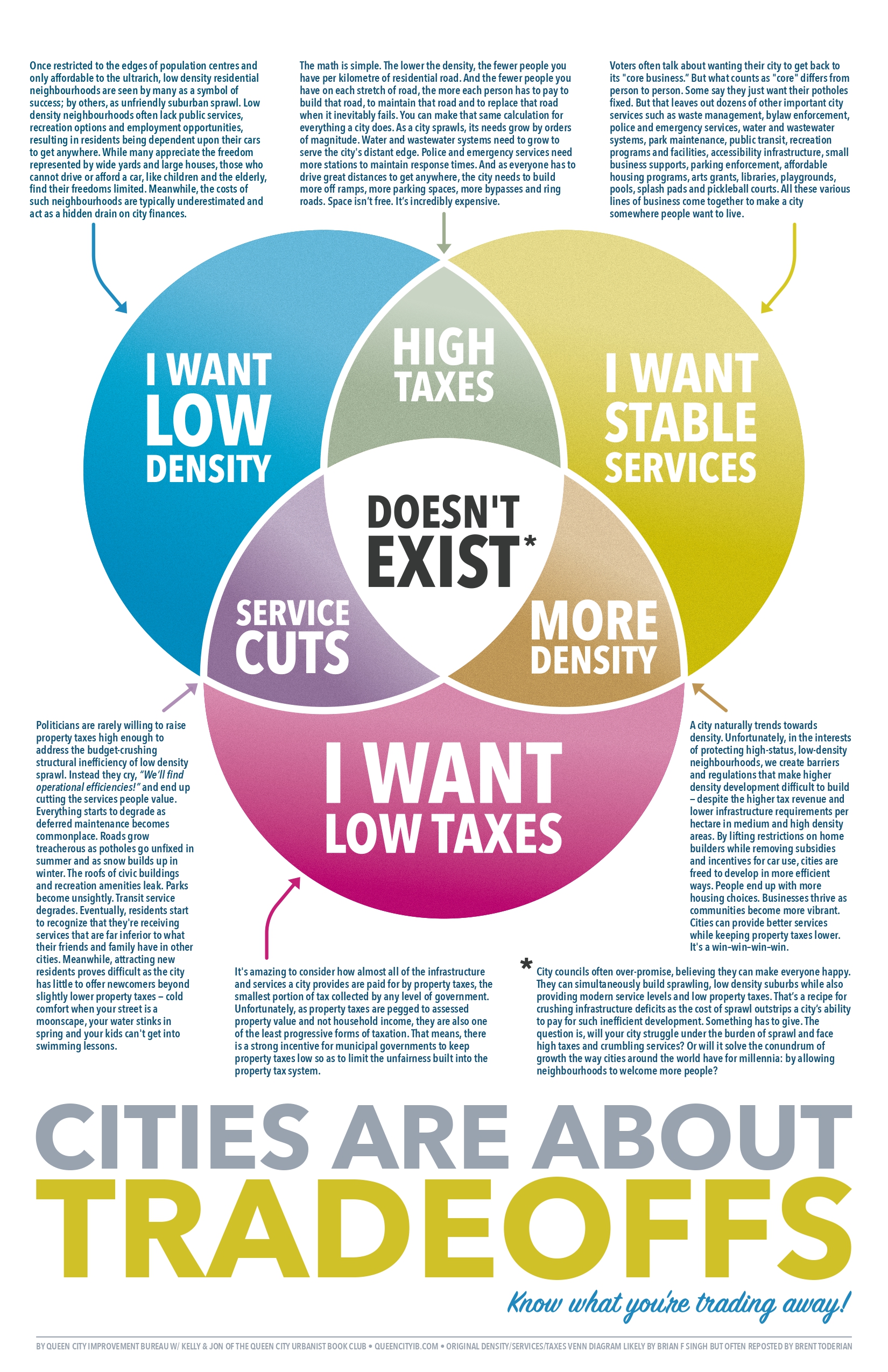
In Appendix 1, we are living in the “low taxes” end of the spectrum - if we want to stay there, further efforts towards allowing natural densification are necessary; otherwise, we face service cuts like decreased snow removal, higher waits for recreational venues, or crumbling infrastructure. Particularly, we think there could be some creative solutions to be had in relaxing commercial zoning in residential zones, supporting the “complete neighbourhoods” idea, and continuing the idea of gentle densification with efforts like the Missing Middle competition.
Property taxes are the primary way a city generates revenue; therefore, value per acre is critical in fiscal responsibility. Preventing land from increasing its value by restricting its use with exclusionary zoning robs the city of future wealth. A farmer would not intentionally grow a crop that would return less than the cost to grow it. In the short term, the farmer would need to take on debt; in the long term, the farmer would not survive. A city cannot fold the way that a farmer can. It’s not just about balancing the books on a yearly basis, it’s about building an enduring foundation.
An additional way a city generates revenue is through new development, which happens when the city is going through an active growth period. Relying on developer charges through greenfield development is an unreliable source of revenue - they are one-time payments. Long-term, the city still needs to fund the maintenance of the infrastructure when the developer's responsibility has ended. When we are building fiscal policy for the city, we need to frame our spending towards resilient growth. Regina will meet the goals of the Housing Accelerator plan, but much of this growth has been greenfield. Strong Towns, as a philosophy, would caution too much reliance on “growth that pays for growth”. Consider pushing further - challenging exclusionary zoning across the city!
Recognising the inherent time lag between planning and implementation, the City of Regina must commit to rigorously following through on its established master plans (e.g, Transit Master Plan, Downtown Revitalisation Plan), utilising them as a core decision-making framework. These are GOOD PLANS, made with community input! This commitment should be paired with a strong emphasis on fiscal responsibility. To foster improvement and mitigate risk, Regina should adopt an iterative approach of making smaller, faster "bets" on pilot projects or minor infrastructure changes. If these small-scale initiatives prove successful, the City can confidently scale the investment; conversely, if they fail, the resulting loss remains small, providing valuable lessons without significant financial detriment. This strategy allows for more rapid adaptation and tangible progress while safeguarding public funds. A strong example of this is the Vision Zero temporary road infrastructure in the Cathedral Neighbourhood, or the free youth transit pilot. This avoids making long-term commitments that might not have worked out and is how the city should be moving forward, with smart, small-scale investment in new, creative areas.
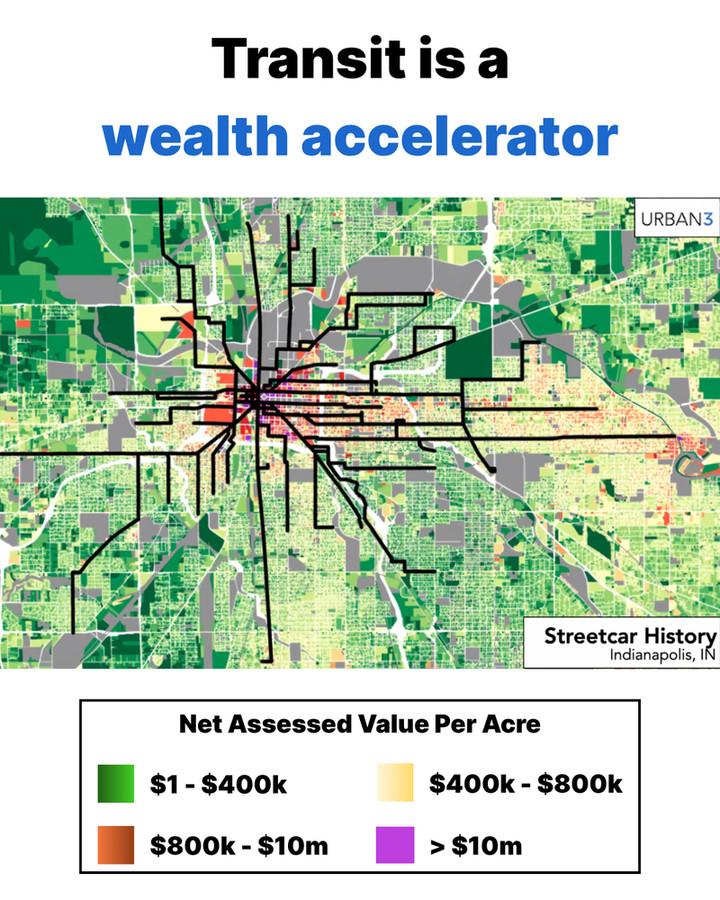
If the city’s goals are towards maximising revenue while minimising expenses, favouring one form of movement over others is neither efficient nor fiscally sustainable. Funding multi-modal transportation options allows people the freedom to choose how they move and can be a wealth multiplier. As Urban3 (appendix 2) evaluated Indianapolis’ most financially productive land (a city with similar snowfall and sprawl!), they found that it followed the routes of Indianapolis’ former streetcar system. As early downtowns became more productive, they had enough money to support transit systems which connected nearby areas, developing them in similar ways and providing more tax bases to fund expansions. We can still capitalise on this pattern - prioritising transit through highly financially productive areas helps stabalize our financial situation. Making investments in alternative transportation options also supports the city’s goals set out in the 2025 Strategic Plan and is a driver of fiscal responsibility.
Strong Towns Regina wants to encourage the city to focus on saying yes instead of no. We’ve gotten to where we are through no - no to density, no to mill rate increases, no to change. Regina IS a great place to live, it just needs more yes! Strong Towns Regina would recommend:
- Scrutiny on road infrastructure projects & greater emphasis on complete, multi-modal networks.
- Reframing density discussions around value to both the city and the residents
- Maintaining direction of current zoning goals
- Avoiding backsliding pressure, advancing more zoning changes in aid of financial sustainability
With this letter, we have included a copy of Strong Towns Regina for those councillors who have not yet received a copy from the last council session. We hope you find this framework useful in thinking about Regina’s future growth, and you are always welcome at any future Strong Towns Regina meetings.
Thanks,
Strong Towns Regina
Appendix 1:
Appendix 2:

Victory
The Issue
Strong Towns Regina is a chapter of the greater Strong Towns movement, which advocates for a pattern of development that is financially strong and resilient. We work to elevate local government to be the highest level of collaboration for people working together in a place, not merely the lowest level in a hierarchy of governments.
It’s budget time - tell Regina City Council YES! Join Strong Towns Regina in our campaign, or write a letter of your own
- Read Strong Towns Regina’s open letter BELOW and sign on to our campaign to endorse it with your voice
OR - Write your own letter to city council and email it to strong.towns.regina@gmail.com to be delivered with Strong Town’s letter
OR - Email your concerns to your ward councilor or sign up to be a delegate (in-person, online, or via a submission). Don't know who your councilor is? Check here to find your ward (they have moved since 2024!), and this page will let you know who represents you. Budget discussions will be happening from December 15th through 19th - watch the upcoming meetings agenda page and register to be a delegate (in person or otherwise)
Find us at https://www.strongtownsregina.com !
_________________________________________________
Strong Vision, Strong Voices, Strong Towns
Dear Regina City Councillors,
We are Strong Towns Regina, a group of residents dedicated to the long-term resilience of our city. Strong Towns is a movement that aims to revitalise communities through smart land-use investments, financial responsibility, and people-first design. Previous councils created financial liabilities through decades of planning that prioritised outward expansion without developing a tax base that could support the maintenance costs of our infrastructure. Regina is at a crossroads where we must decide what we do next - do we continue with the status quo and focus on growth through greenfield development, or take a more fiscally resilient approach towards city-building with a focus on building wealth in the neighbourhoods we already have? As you prepare for another difficult budget cycle, we’re asking you to consider a Strong Towns approach to funding our city.
In the recent Special Meetings around the city budget, most of the conversation has been centred around where the city can save money by cutting services. We’ve gotten here through years of low to zero mill rate increases* (since 2020, mill rates have only grown 1.21% compared to inflation) as well as lack of investment in the built areas of the city in favour of greenfield development. Now we are at the point where we need to both decrease city services AND increase taxes. This is just reality: to have a city that functions for the people who live here, we can’t continue to cut services away to nothing.
In Appendix 1, we are living in the “low taxes” end of the spectrum - if we want to stay there, further efforts towards allowing natural densification are necessary; otherwise, we face service cuts like decreased snow removal, higher waits for recreational venues, or crumbling infrastructure. Particularly, we think there could be some creative solutions to be had in relaxing commercial zoning in residential zones, supporting the “complete neighbourhoods” idea, and continuing the idea of gentle densification with efforts like the Missing Middle competition.
Property taxes are the primary way a city generates revenue; therefore, value per acre is critical in fiscal responsibility. Preventing land from increasing its value by restricting its use with exclusionary zoning robs the city of future wealth. A farmer would not intentionally grow a crop that would return less than the cost to grow it. In the short term, the farmer would need to take on debt; in the long term, the farmer would not survive. A city cannot fold the way that a farmer can. It’s not just about balancing the books on a yearly basis, it’s about building an enduring foundation.
An additional way a city generates revenue is through new development, which happens when the city is going through an active growth period. Relying on developer charges through greenfield development is an unreliable source of revenue - they are one-time payments. Long-term, the city still needs to fund the maintenance of the infrastructure when the developer's responsibility has ended. When we are building fiscal policy for the city, we need to frame our spending towards resilient growth. Regina will meet the goals of the Housing Accelerator plan, but much of this growth has been greenfield. Strong Towns, as a philosophy, would caution too much reliance on “growth that pays for growth”. Consider pushing further - challenging exclusionary zoning across the city!
Recognising the inherent time lag between planning and implementation, the City of Regina must commit to rigorously following through on its established master plans (e.g, Transit Master Plan, Downtown Revitalisation Plan), utilising them as a core decision-making framework. These are GOOD PLANS, made with community input! This commitment should be paired with a strong emphasis on fiscal responsibility. To foster improvement and mitigate risk, Regina should adopt an iterative approach of making smaller, faster "bets" on pilot projects or minor infrastructure changes. If these small-scale initiatives prove successful, the City can confidently scale the investment; conversely, if they fail, the resulting loss remains small, providing valuable lessons without significant financial detriment. This strategy allows for more rapid adaptation and tangible progress while safeguarding public funds. A strong example of this is the Vision Zero temporary road infrastructure in the Cathedral Neighbourhood, or the free youth transit pilot. This avoids making long-term commitments that might not have worked out and is how the city should be moving forward, with smart, small-scale investment in new, creative areas.
If the city’s goals are towards maximising revenue while minimising expenses, favouring one form of movement over others is neither efficient nor fiscally sustainable. Funding multi-modal transportation options allows people the freedom to choose how they move and can be a wealth multiplier. As Urban3 (appendix 2) evaluated Indianapolis’ most financially productive land (a city with similar snowfall and sprawl!), they found that it followed the routes of Indianapolis’ former streetcar system. As early downtowns became more productive, they had enough money to support transit systems which connected nearby areas, developing them in similar ways and providing more tax bases to fund expansions. We can still capitalise on this pattern - prioritising transit through highly financially productive areas helps stabalize our financial situation. Making investments in alternative transportation options also supports the city’s goals set out in the 2025 Strategic Plan and is a driver of fiscal responsibility.
Strong Towns Regina wants to encourage the city to focus on saying yes instead of no. We’ve gotten to where we are through no - no to density, no to mill rate increases, no to change. Regina IS a great place to live, it just needs more yes! Strong Towns Regina would recommend:
- Scrutiny on road infrastructure projects & greater emphasis on complete, multi-modal networks.
- Reframing density discussions around value to both the city and the residents
- Maintaining direction of current zoning goals
- Avoiding backsliding pressure, advancing more zoning changes in aid of financial sustainability
With this letter, we have included a copy of Strong Towns Regina for those councillors who have not yet received a copy from the last council session. We hope you find this framework useful in thinking about Regina’s future growth, and you are always welcome at any future Strong Towns Regina meetings.
Thanks,
Strong Towns Regina
Appendix 1:
Appendix 2:
Victory
Share this petition
Petition Updates
Share this petition
Petition created on October 20, 2025