

Women deserve the facts about MST before enlisting
The Issue
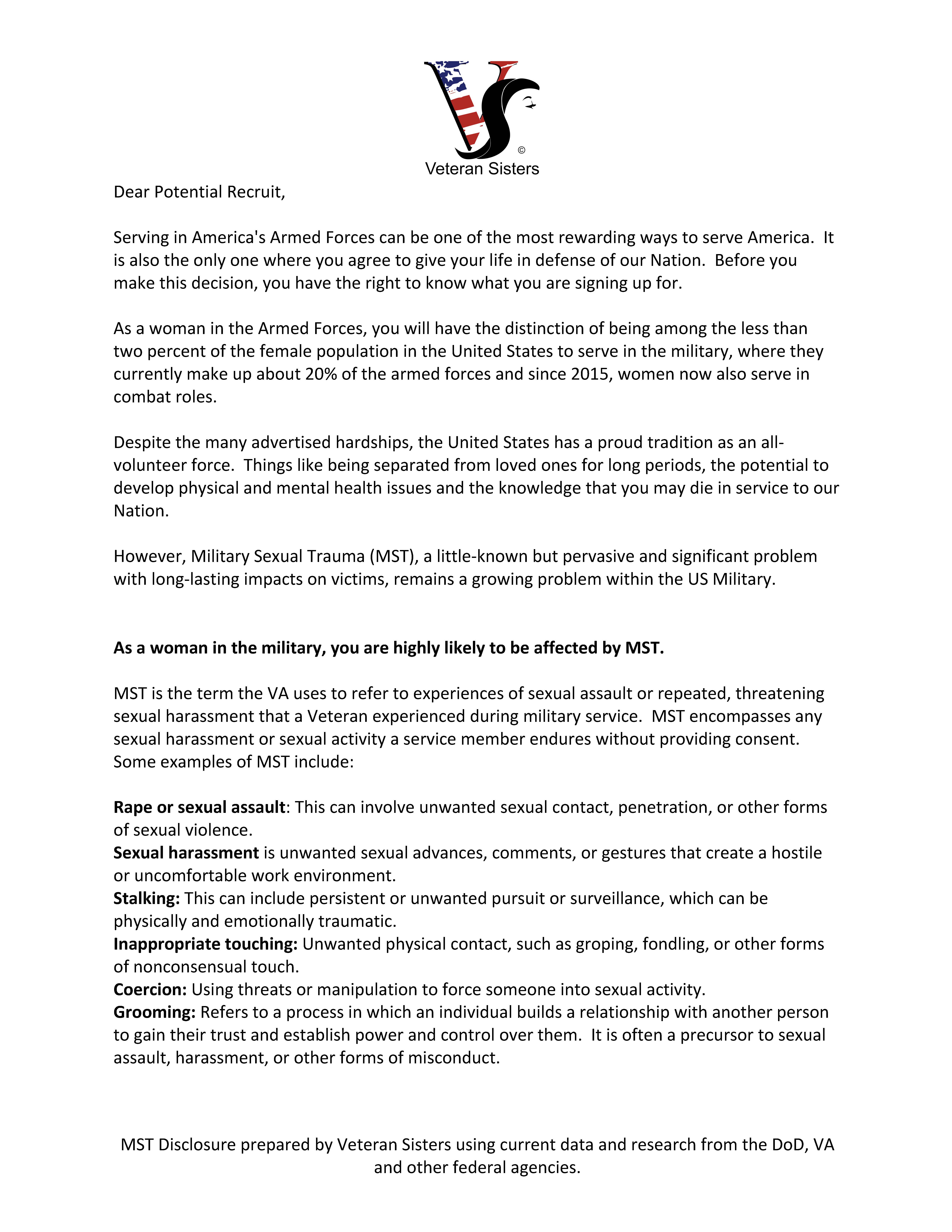
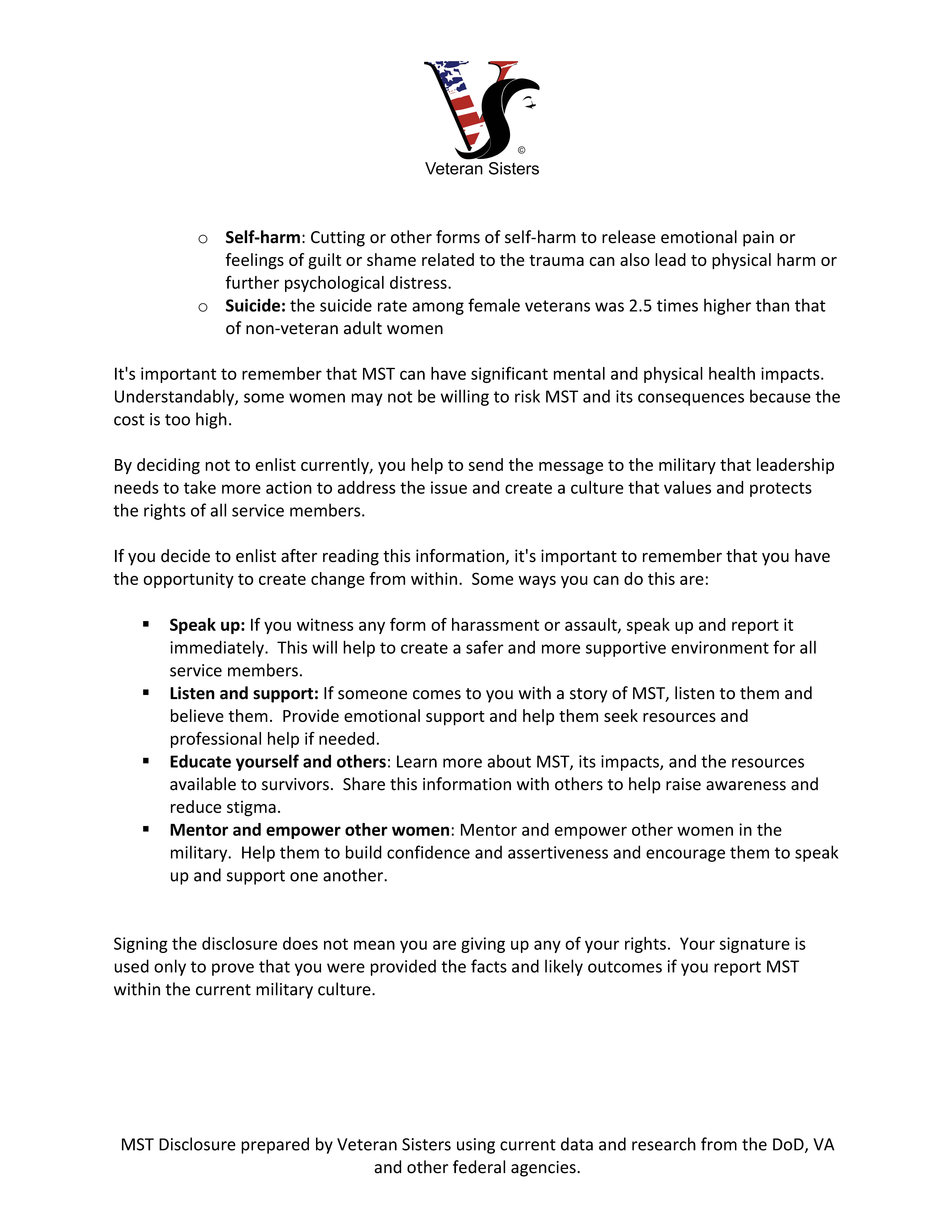
Since there is no real effort to stop MST, we owe it to America's daughters to warn them about the potential dangers of MST and what is likely to happen to them based on the current situation. Congress must pass legislation requiring the DoD to provide written disclosure to all potential female recruits about the dangers of Military Sexual Trauma (MST), so they can decide whether enlisting is worth the risk of experiencing MST and its consequences.
The United States military is one of the most trusted institutions in America, and as a nation, we revere those who wear the uniform in defense of our way of life. Today, women make up about 20% of the armed forces, and since 2015, they have served in all military jobs, including combat roles.
Despite the many advertised hardships, the United States has a proud tradition as an all-volunteer force. Things like being separated from loved ones for long periods, the potential to develop physical and mental health issues and the knowledge that you may die in service to our Nation.
However, Military Sexual Trauma (MST), a little-known but pervasive and significant problem with long-lasting impacts on victims, remains a growing problem within the US Military.
MST is the term the VA uses to refer to experiences of sexual assault or repeated, threatening sexual harassment that a Veteran experienced during military service. MST encompasses any sexual harassment or sexual activity a service member endures without providing consent.
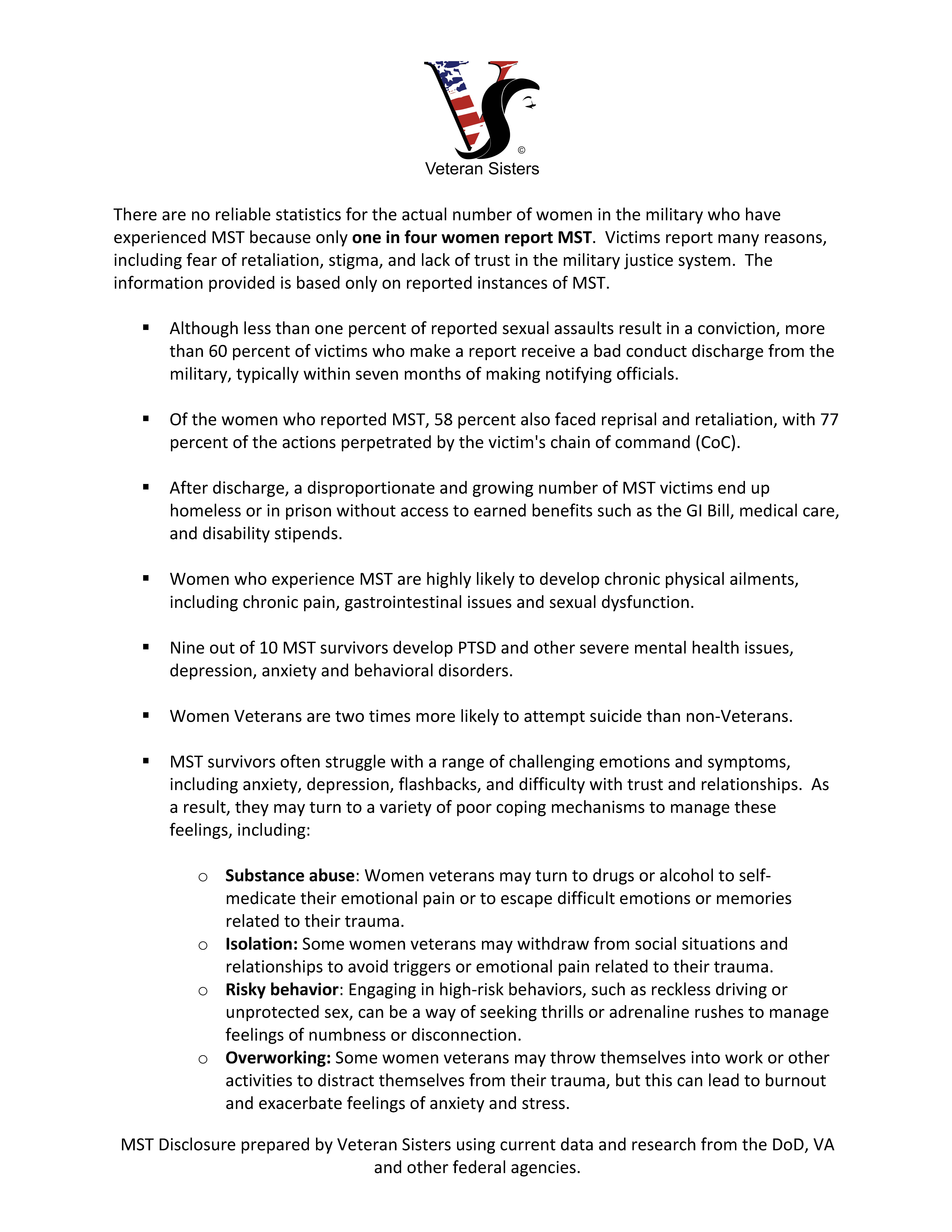
The United States has spent millions of dollars of tax-payer money "studying the MST issue," but a less than 1% prosecution and conviction rate prove there is no genuine desire to stop MST. There are no reliable statistics for the actual number of women in the military who have experienced MST because only one in four women report MST. There are many reasons for this, including fear of retaliation, stigma, and lack of trust in the military justice system.
Although less than one percent of sexual assault reports result in a conviction, more than 60 percent of victims who make a report receive a bad conduct discharge from the military, typically within seven months of making notifying officials. Most active-duty victims who report sexual assault or rape will face reprisal and retaliation, primarily from their chain of command (CoC), the very individuals they are obligated to report to.
After discharge, a disproportionate and growing number of MST victims end up homeless or in prison without access to earned benefits such as the GI Bill, medical care, and disability stipends because of bad conduct discharges. And the problem is only getting worse. Nine out of 10 MST survivors develop PTSD and other severe mental health issues, depression, anxiety and behavioral disorders. Issues that will destroy their lives and takes years, if not decades, to come to terms with.
Women are an increasingly important part of the US military. They have served in the military for centuries, and their roles have expanded over time, and they are enlisting at higher rates than ever before. However, the prevalence of sexual crimes against women also continues to grow and research shows the shocking and destructive impact MST can have on its victims.
Signing this petition will show your support to our women warfighters and give them the facts about MST before they choose to serve in a military that does not value their lives.

1,091
The Issue
Since there is no real effort to stop MST, we owe it to America's daughters to warn them about the potential dangers of MST and what is likely to happen to them based on the current situation. Congress must pass legislation requiring the DoD to provide written disclosure to all potential female recruits about the dangers of Military Sexual Trauma (MST), so they can decide whether enlisting is worth the risk of experiencing MST and its consequences.
The United States military is one of the most trusted institutions in America, and as a nation, we revere those who wear the uniform in defense of our way of life. Today, women make up about 20% of the armed forces, and since 2015, they have served in all military jobs, including combat roles.
Despite the many advertised hardships, the United States has a proud tradition as an all-volunteer force. Things like being separated from loved ones for long periods, the potential to develop physical and mental health issues and the knowledge that you may die in service to our Nation.
However, Military Sexual Trauma (MST), a little-known but pervasive and significant problem with long-lasting impacts on victims, remains a growing problem within the US Military.
MST is the term the VA uses to refer to experiences of sexual assault or repeated, threatening sexual harassment that a Veteran experienced during military service. MST encompasses any sexual harassment or sexual activity a service member endures without providing consent.
The United States has spent millions of dollars of tax-payer money "studying the MST issue," but a less than 1% prosecution and conviction rate prove there is no genuine desire to stop MST. There are no reliable statistics for the actual number of women in the military who have experienced MST because only one in four women report MST. There are many reasons for this, including fear of retaliation, stigma, and lack of trust in the military justice system.
Although less than one percent of sexual assault reports result in a conviction, more than 60 percent of victims who make a report receive a bad conduct discharge from the military, typically within seven months of making notifying officials. Most active-duty victims who report sexual assault or rape will face reprisal and retaliation, primarily from their chain of command (CoC), the very individuals they are obligated to report to.
After discharge, a disproportionate and growing number of MST victims end up homeless or in prison without access to earned benefits such as the GI Bill, medical care, and disability stipends because of bad conduct discharges. And the problem is only getting worse. Nine out of 10 MST survivors develop PTSD and other severe mental health issues, depression, anxiety and behavioral disorders. Issues that will destroy their lives and takes years, if not decades, to come to terms with.
Women are an increasingly important part of the US military. They have served in the military for centuries, and their roles have expanded over time, and they are enlisting at higher rates than ever before. However, the prevalence of sexual crimes against women also continues to grow and research shows the shocking and destructive impact MST can have on its victims.
Signing this petition will show your support to our women warfighters and give them the facts about MST before they choose to serve in a military that does not value their lives.
The Decision Makers

Petition Updates
Share this petition
Petition created on March 19, 2023