

Why Does It Matter? — A $1,500 Referral Denied Led to Over $1,000,000 in Damage
The Issue
Why Does It Matter? — A $1,500 Referral Denied Led to Over $1,000,000 in Damage
A court-appointed psychologist asked:
“Why does it matter?”
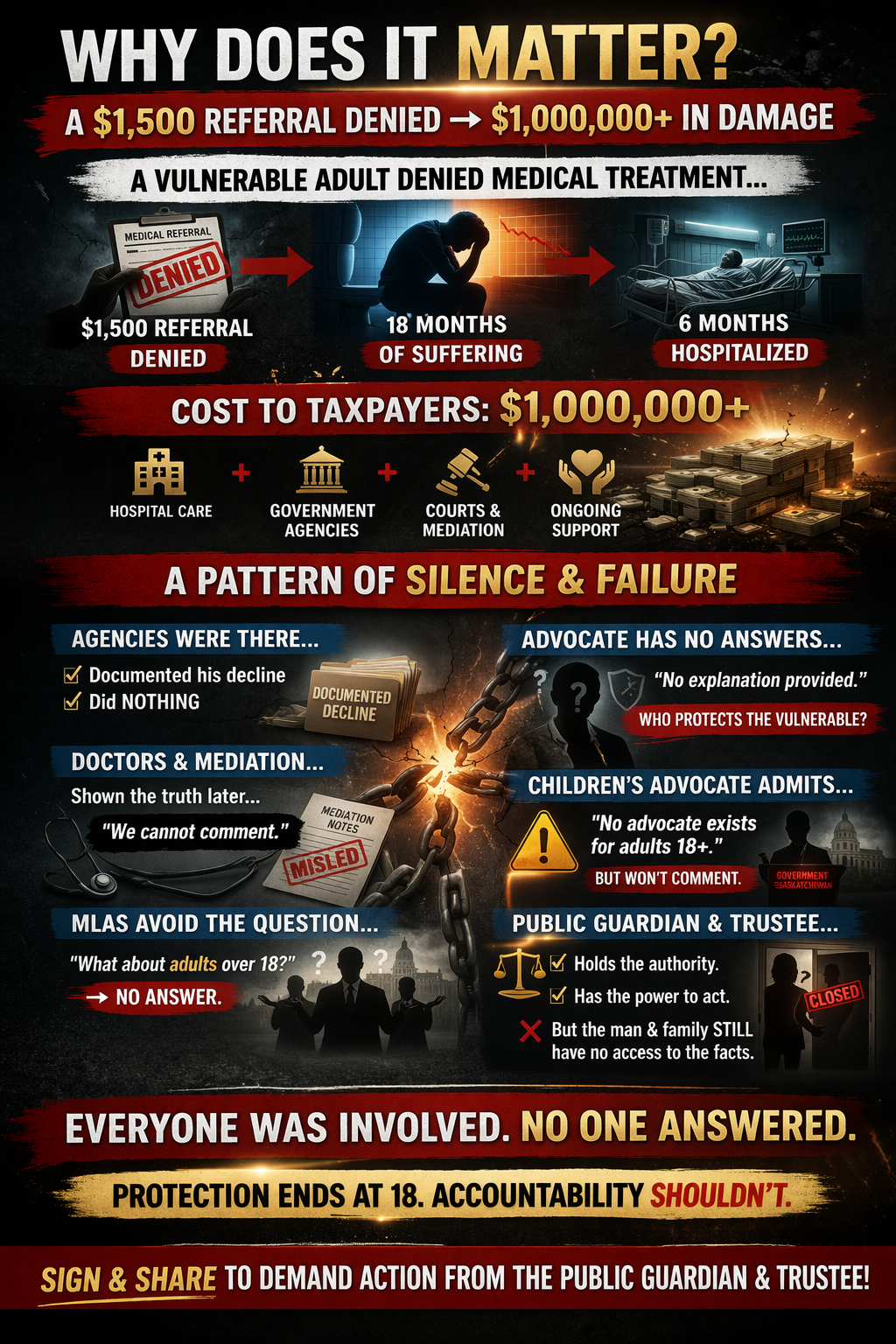
Why does it matter that a vulnerable adult was denied a $1,500 medical referral…
…only to suffer for 18 months, nearly die, and cost taxpayers over $1,000,000?
What Happened
A medical referral for proper gastro treatment — expected care for his condition — was made.
It was not disclosed.
Instead of receiving treatment:
His condition worsened over 18 months
He experienced severe physical distress:Could not eat properly
Spent hours a day in the bathroom
Ongoing medical and behavioral decline
During this time:
Multiple agencies were involved
His decline was observed and documented
But the underlying medical issue was not treated
Instead, the focus shifted to behavioral intervention, while his physical condition continued to deteriorate.
The Outcome
6 months of hospitalization
Intensive care and psychiatric management
Loss of quality of life, independence, and community connection
The Cost
What was denied:
A $1,500 medical referral
Basic, expected treatment
What it became:
Long-term hospitalization
Multiple government agencies involved
Court proceedings and mediation
Ongoing support services
👉 Estimated total cost: $1,000,000+
And After All of This…
After the suffering.
After the hospitalization.
After the cost to taxpayers.
We were asked:
“Why does it matter?”
Why It Matters
1. It Matters to the Individual
18 months of preventable suffering
Loss of dignity and quality of life
Severe physical and emotional distress
Lasting impact on his life
2. It Matters to Other Vulnerable Adults
There is no independent advocate in Saskatchewan for adults over 18
Families often cannot effectively report concerns
Systems can fail without accountability
👉 This can happen again.
3. It Matters to Taxpayers
A $1,500 solution turned into $1,000,000+ in costs
Public resources were used to manage a crisis that should have been prevented
4. It Matters to Accountability and Truth
Critical medical information was not disclosed
Decisions were made based on incomplete information
Those decisions changed the course of a life
A System That Was Present — But Did Not Act
Throughout the 18-month decline:
Agencies were involved
The condition was observed and documented
Yet when the situation reached crisis:
“Don't talk to us"
And later:
“We were the ones to report to.”
The Question
If the system was already there…
👉 Who was responsible for acting — and why didn’t it happen?
When the Advocate Has No Answer
An independent advocate is supposed to:
Protect vulnerable individuals
Speak when something goes wrong
Ensure accountability
But in this case:
The decline was documented
A preventable crisis occurred
And yet:
There is no clear explanation.
If the advocate does not speak — who does?
When Key Decision-Makers Decline to Answer
A court-involved psychologist was aware of the situation during the process.
After the full medical context was raised:
“Why does it matter now that he is receiving treatment?”
Requests for clarification resulted in:
“We cannot comment.”
Why this matters
Decisions were made without full medical information
The individual has a right to know how those decisions were made
Silence prevents accountability and learning
A System That Acknowledges Risk — But Avoids Responsibility
Children’s Advocate
Acknowledges there is no advocate for adults over 18
Recognizes increased risk
Has raised concerns with government
But:
Cannot comment further
Elected Officials
Advocate publicly for children
Speak about protection and accountability
But when asked about vulnerable adults over 18:
👉 The question has gone unanswered.
Public Guardian and Trustee (PGT)
The PGT holds authority in matters involving vulnerable adults.
In this case:
A vulnerable adult experienced prolonged decline
Critical medical information was not disclosed
Life-altering decisions were made
Yet:
The individual does not have access to the full facts
The family has not received clear answers
Why This Matters
Authority must include accountability
If authority exists — so must transparency.
The individual has the right to know
Why care was delayed.
What decisions were made.
Who made them.
Known risk + no oversight = system failure
Risk is acknowledged.
Protection ends at 18.
No clear accountability follows.
A Pattern of Silence
A referral was not disclosed
A decline was documented but not addressed
Agencies redirect responsibility
Advocates have no explanation
Decision-makers decline to comment
Oversight bodies acknowledge gaps but remain silent
When the truth was finally presented…
the response was silence.
What We Are Asking For
We are calling for:
1. A Transparent, Independent Review
What happened
Why the referral was not disclosed
Why proper care was delayed
2. An Independent Advocate for Vulnerable Adults (18+) in Saskatchewan
Protection must not end at age 18
3. Mandatory Disclosure of Medical Information
In all care, legal, and mediation processes
4. Accountability
Clear answers
System improvements
Protection moving forward
5. Action from the Public Guardian and Trustee
Ensure access to information
Initiate a review
Uphold the rights of the individual
Final Question
If the system acknowledges risk…
documents decline…
holds authority…
and still provides no answers…
why does it matter?
Or does it not matter at all?
Sign This Petition
If you believe:
Preventable suffering matters
Accountability matters
Truth matters
Vulnerable adults deserve protection
👉 Sign and share.

723
The Issue
Why Does It Matter? — A $1,500 Referral Denied Led to Over $1,000,000 in Damage
A court-appointed psychologist asked:
“Why does it matter?”
Why does it matter that a vulnerable adult was denied a $1,500 medical referral…
…only to suffer for 18 months, nearly die, and cost taxpayers over $1,000,000?
What Happened
A medical referral for proper gastro treatment — expected care for his condition — was made.
It was not disclosed.
Instead of receiving treatment:
His condition worsened over 18 months
He experienced severe physical distress:Could not eat properly
Spent hours a day in the bathroom
Ongoing medical and behavioral decline
During this time:
Multiple agencies were involved
His decline was observed and documented
But the underlying medical issue was not treated
Instead, the focus shifted to behavioral intervention, while his physical condition continued to deteriorate.
The Outcome
6 months of hospitalization
Intensive care and psychiatric management
Loss of quality of life, independence, and community connection
The Cost
What was denied:
A $1,500 medical referral
Basic, expected treatment
What it became:
Long-term hospitalization
Multiple government agencies involved
Court proceedings and mediation
Ongoing support services
👉 Estimated total cost: $1,000,000+
And After All of This…
After the suffering.
After the hospitalization.
After the cost to taxpayers.
We were asked:
“Why does it matter?”
Why It Matters
1. It Matters to the Individual
18 months of preventable suffering
Loss of dignity and quality of life
Severe physical and emotional distress
Lasting impact on his life
2. It Matters to Other Vulnerable Adults
There is no independent advocate in Saskatchewan for adults over 18
Families often cannot effectively report concerns
Systems can fail without accountability
👉 This can happen again.
3. It Matters to Taxpayers
A $1,500 solution turned into $1,000,000+ in costs
Public resources were used to manage a crisis that should have been prevented
4. It Matters to Accountability and Truth
Critical medical information was not disclosed
Decisions were made based on incomplete information
Those decisions changed the course of a life
A System That Was Present — But Did Not Act
Throughout the 18-month decline:
Agencies were involved
The condition was observed and documented
Yet when the situation reached crisis:
“Don't talk to us"
And later:
“We were the ones to report to.”
The Question
If the system was already there…
👉 Who was responsible for acting — and why didn’t it happen?
When the Advocate Has No Answer
An independent advocate is supposed to:
Protect vulnerable individuals
Speak when something goes wrong
Ensure accountability
But in this case:
The decline was documented
A preventable crisis occurred
And yet:
There is no clear explanation.
If the advocate does not speak — who does?
When Key Decision-Makers Decline to Answer
A court-involved psychologist was aware of the situation during the process.
After the full medical context was raised:
“Why does it matter now that he is receiving treatment?”
Requests for clarification resulted in:
“We cannot comment.”
Why this matters
Decisions were made without full medical information
The individual has a right to know how those decisions were made
Silence prevents accountability and learning
A System That Acknowledges Risk — But Avoids Responsibility
Children’s Advocate
Acknowledges there is no advocate for adults over 18
Recognizes increased risk
Has raised concerns with government
But:
Cannot comment further
Elected Officials
Advocate publicly for children
Speak about protection and accountability
But when asked about vulnerable adults over 18:
👉 The question has gone unanswered.
Public Guardian and Trustee (PGT)
The PGT holds authority in matters involving vulnerable adults.
In this case:
A vulnerable adult experienced prolonged decline
Critical medical information was not disclosed
Life-altering decisions were made
Yet:
The individual does not have access to the full facts
The family has not received clear answers
Why This Matters
Authority must include accountability
If authority exists — so must transparency.
The individual has the right to know
Why care was delayed.
What decisions were made.
Who made them.
Known risk + no oversight = system failure
Risk is acknowledged.
Protection ends at 18.
No clear accountability follows.
A Pattern of Silence
A referral was not disclosed
A decline was documented but not addressed
Agencies redirect responsibility
Advocates have no explanation
Decision-makers decline to comment
Oversight bodies acknowledge gaps but remain silent
When the truth was finally presented…
the response was silence.
What We Are Asking For
We are calling for:
1. A Transparent, Independent Review
What happened
Why the referral was not disclosed
Why proper care was delayed
2. An Independent Advocate for Vulnerable Adults (18+) in Saskatchewan
Protection must not end at age 18
3. Mandatory Disclosure of Medical Information
In all care, legal, and mediation processes
4. Accountability
Clear answers
System improvements
Protection moving forward
5. Action from the Public Guardian and Trustee
Ensure access to information
Initiate a review
Uphold the rights of the individual
Final Question
If the system acknowledges risk…
documents decline…
holds authority…
and still provides no answers…
why does it matter?
Or does it not matter at all?
Sign This Petition
If you believe:
Preventable suffering matters
Accountability matters
Truth matters
Vulnerable adults deserve protection
👉 Sign and share.
The Decision Makers

Petition Updates
Share this petition
Petition created on February 26, 2014