

Urgent Help Needed for Sedro-Woolley: Stop the Lithium Battery Energy Storage System
The Issue
NOTE: Please do not donate money through this petition, as that money only goes to Change.org.
However, if you are able, please donate what you can to help us secure an attorney for the fight by visiting stewardsofskagit.org
Stop the Installation of the lithium Battery Energy Storage System (BESS) near Sedro Woolley, WA on sensitive farmland.
The Nebraska-based energy company Tenaska wants to build a battery energy storage system on a 14- acre site in unincorporated Skagit County just outside the Sedro Woolley city limits. The land is within the Ag-NRL and RRv zones. The complex named Goldeneye, would consist of 10 feet tall storage containers (like shipping containers) for lithium batteries, capable of storing up to 200 megawatts/800MWh of electricity. This would be the largest Battery Energy Storage System (BESS) installation in Washington State. The site is next to Hansen Creek- a salmon-bearing water source which flows directly to the Skagit River. The site is in close proximity to downtown Sedro Woolley, many residential homes, farmland, and there are known wetlands in the vicinity and on the property.
The project presents significant dangers to public health, safety, and general welfare. If this project is approved it will set precedent for Skagit County, and it will be used as justification for future BESS projects in close proximity to homes, schools, hospitals, agricultural land and other sensitive sites.
While most of us agree that we need to transform how we store and use energy due to the ever-increasing demands on our power grid infrastructure, we feel that it can be done in a way that is safe and does not put public health at risk.
SIGNIFICANT RISKS TO OUR COMMUNITY
Extreme Fire Hazard
Toxic Environmental Contamination
Increased Risk of Health Issues
Light and Noise Pollution -106 db 24/7
Depreciating Property Values
Decreased Property Tax Revenue
Risk of Being Uninsurable
Target for Cyber & Terrorist Attacks
Disruption to Salmon spawning grounds and Wetlands
Decommissioning Issues
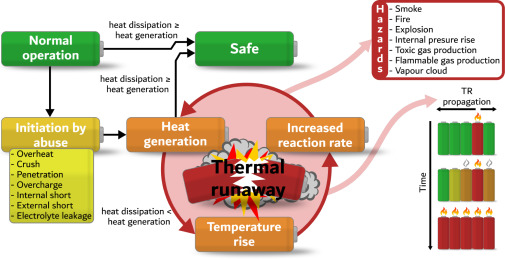
FIRE HAZARD:Lithium-ion batteries are constructed with flammable electrolytes and reactive lithium salts, which can generate a violent exothermic chemical reaction if the battery is damaged, overcharged, or exposed to high temperatures. The thermal energy generated by these reactions can cause a thermal runaway condition, which in turn enters a cycle of rapid increase in temperature and pressure within the battery. This is accompanied by the generation of gasses from the decomposition process that can be flammable and toxic, and can lead to smoke, hot sparks and jet flames ejected from the cell, resulting in an explosion or fire. These fires cannot be contained by normal firefighting tactics and the current recommended method of control is to allow the fire to burn while cooling the surrounding systems to prevent further explosion.
There are currently 482 Battery Energy Storage Facilities in operation in the US. "Over the past decade, more than 60 fires and battery overheating events have occurred at utility, commercial and industrial energy storage installations worldwide. (Electric Power Research Institute). That includes at least 18 in the US since 2019, when a broader market began to emerge, and with at least six or more occurring this year. The incidents range from minor hiccups to catastrophic accidents, such as a 2019 explosion at an Arizona Public Service Company battery system in Surprise, Arizona., that injured eight firefighters and destroyed the project.", Hering, S&P Global Market Intelligence.
Although the fire service routinely responds to explosive scenarios, such as those associated with natural gas leaks, standard operating procedures do not exist for scenarios like a battery energy storage system for which there is no way to cut off the gas supply. The fire service is unaware and inexperienced with the fire and explosion hazards of BESS.
Chemical Hazard From Fire or Thermal Runaway:
CALL TO ACTION
Finding better energy solutions is imperative, but not by compromising or threatening residents, wildlife, clean air and water, and firefighter safety. This is a high risk location for citing this kind of battery facility given its close proximity to homes, hospitals, and schools.
The importance of renewable energy is not in dispute. Still, we urge city, county and state officials to take a stance to oppose the location of this Battery Energy Storage System. As we begin to create policy for where to locate these facilities, we call on those officials to establish BESS guidelines, requirements, safety measures, and decommissioning plans to include thorough environmental, social, and governance analysis, mandating ample distance between BESS and residential neighborhoods, and requiring a Major Use Permit for these projects.
Among more than 3,000 U.S. jurisdictions recently studied by the Pacific Northwest National Laboratory, only 12 had regulations tailored to BESS. And yet, “If you haven’t already seen an application … in your jurisdiction, you likely will,” PNNL research analyst Jeremy Twitchell said during a Washington State Energy Office workshop last year.
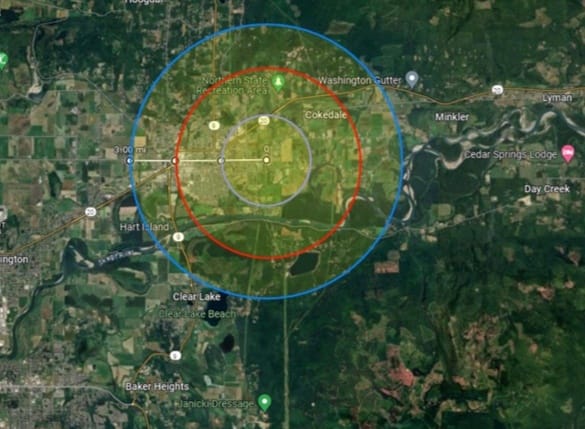
3 mile radius from proposed BESS facility:
- Evergreen Elementary School - 4,600ft
- Mary Purcell Elementary School - 1.29mi
- Central Elementary School - 1.37mi
- Cascade middle School - 5,192 feet
- Sedro Woolley High School - 1.61mi
- Upper Skagit tribal clinic 2.37mi
- Peace Health United General, Skagit Regional Clinics, United Family Medicine - 3.43mi
- Lifecare of Skagit – 2.92mi
Wa State Growth Management Act, Ecosystem Services Program:
Critical Areas
Washington’s Growth Management Act (GMA) requires all cities and counties to designate and regulate Critical Areas, which are defined as wetlands, areas with a critical recharging effect on aquifers use for potable water, fish and wildlife habitat conservation areas, frequently flooded areas, and geologically hazardous areas. Critical areas perform key functions that enhance our environment and protect us from hazards.
The Ecosystem Services program is responsible for implementing natural environment protection and restoration policy in the Washington Growth Management Act. This includes critical areas protection, and implementation of the Commerce role in the Governor’s salmon recovery strategy, and the Commerce role in the Puget Sound National Estuary Program.
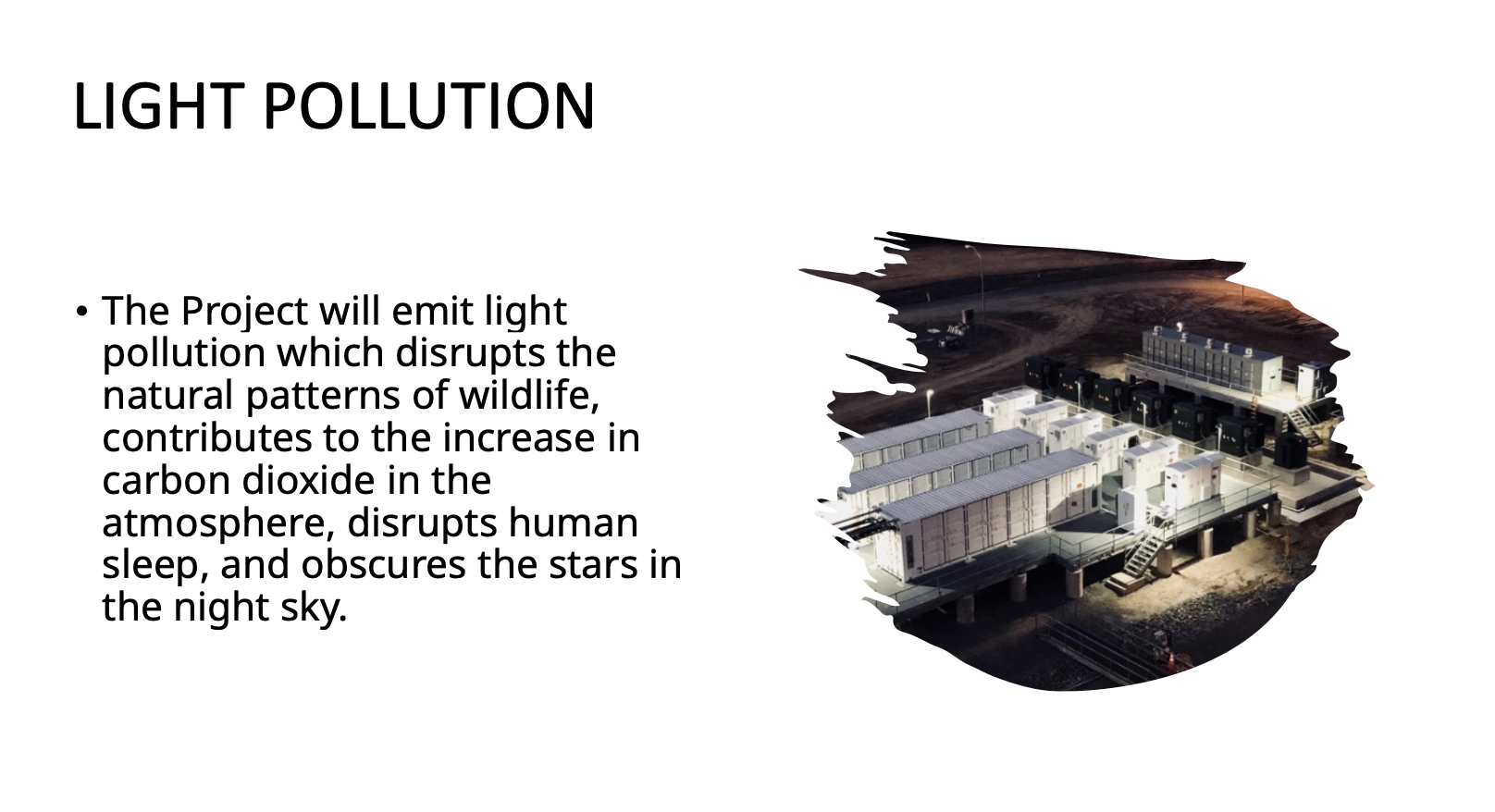
LIGHT & NOISE POLLUTION: The neighborhood is predominantly rural with a 55+ community at Van Fleets Mobile Home Park 1,500 feet from the proposed site. This facility would create light similar to a baseball field and emit a constant buzzing noise, creating significant impacts for nearby residents.
DEPRECIATED PROPERTY VALUES & DECREASED PROPERTY TAX REVENUE:
The EPA used hedonic property value methods to examine how chemical accidents impact home values. The study determined that accidents resulting in offsite injuries, property damage, evacuations, or shelter-in-place orders lead to a 5% to 7% decrease in the value of homes within three miles.
Other studies estimate up to 40% reduction of home values for properties located in the direct vicinity of hazardous waste facilities, especially after chemical exposure or in the event of neglected decommissioning efforts. Current homeowners will suffer a significant loss of value in their homes.
RISK OF BEING UNINSURABLE: Insurance premiums may rise due to increased fire risk associated with battery storage facilities (Insurance Information Institute).
CYBER & TERRORIST ATTACKS: This type of infrastructure is also a potential target for cyber and terrorist attacks which could disrupt power supply or even cause damage if hackers were able to manipulate control systems (Department of Homeland Security).
Energy businesses are facing an increasingly complex cyber risk landscape, with new forms of volatility and current geopolitical tensions driving scrutiny on the security of essential energy infrastructure, Aon stated.
While only a handful of successful attacks on clean energy systems have been reported to date, new forms of sophisticated malware emerged in 2022 – including Chernovite’s ‘Pipedream’ – that pose a significant threat to industrial control systems connected to the energy grid, including BESS."(Mukhopadhyay, Reinsurance News)
DECOMMISSIONING: Most jurisdictions do not have decommissioning plans and requirements. All jurisdictions establishing these plans are operating off limited knowledge of the rapidly expanding risk factors of BESS. The Goldeneye Battery Storage System is proposing a 25-year project, but the lifespan of these batteries is 10 to 20 years. Decommissioning batteries increases the likelihood of environmental contamination, posing extensive degradation risk. Decommissioning the facility could lead to a brownfield, especially if Tenaska (Goldeneye LLC) is not held to accountable decommissioning guidelines or if they file bankruptcy. The County would then be responsible for cleaning up the project site.
Wa State Growth Management Act (GMA): mandates counties plan for housing for all levels of the economic ladder. This project will be destroying the home currently on the land.
Skagit County:
Median Household Income: $82,029
Max Purchase Price: $384,800
Median Home Sales Price: $570,546
Income Required to Qualify: $135,000
Households CAN afford: 24.9%
Households CANNOT afford: 75.1%
"When looking at available inventory in the state of homes priced at or below $450,000 – selected as a realistic ‘starter home’ – only 3,592 homes were available as of May 8, 2024. The scarcity of inventory works alongside regulatory and lending hurdles to increase the final sales price of a home". -Washington State’s Housing Affordability Index, May 8,2024
What our representatives saying:
MEDIA:

2,335
The Issue
NOTE: Please do not donate money through this petition, as that money only goes to Change.org.
However, if you are able, please donate what you can to help us secure an attorney for the fight by visiting stewardsofskagit.org
Stop the Installation of the lithium Battery Energy Storage System (BESS) near Sedro Woolley, WA on sensitive farmland.
The Nebraska-based energy company Tenaska wants to build a battery energy storage system on a 14- acre site in unincorporated Skagit County just outside the Sedro Woolley city limits. The land is within the Ag-NRL and RRv zones. The complex named Goldeneye, would consist of 10 feet tall storage containers (like shipping containers) for lithium batteries, capable of storing up to 200 megawatts/800MWh of electricity. This would be the largest Battery Energy Storage System (BESS) installation in Washington State. The site is next to Hansen Creek- a salmon-bearing water source which flows directly to the Skagit River. The site is in close proximity to downtown Sedro Woolley, many residential homes, farmland, and there are known wetlands in the vicinity and on the property.
The project presents significant dangers to public health, safety, and general welfare. If this project is approved it will set precedent for Skagit County, and it will be used as justification for future BESS projects in close proximity to homes, schools, hospitals, agricultural land and other sensitive sites.
While most of us agree that we need to transform how we store and use energy due to the ever-increasing demands on our power grid infrastructure, we feel that it can be done in a way that is safe and does not put public health at risk.
SIGNIFICANT RISKS TO OUR COMMUNITY
Extreme Fire Hazard
Toxic Environmental Contamination
Increased Risk of Health Issues
Light and Noise Pollution -106 db 24/7
Depreciating Property Values
Decreased Property Tax Revenue
Risk of Being Uninsurable
Target for Cyber & Terrorist Attacks
Disruption to Salmon spawning grounds and Wetlands
Decommissioning Issues
FIRE HAZARD:Lithium-ion batteries are constructed with flammable electrolytes and reactive lithium salts, which can generate a violent exothermic chemical reaction if the battery is damaged, overcharged, or exposed to high temperatures. The thermal energy generated by these reactions can cause a thermal runaway condition, which in turn enters a cycle of rapid increase in temperature and pressure within the battery. This is accompanied by the generation of gasses from the decomposition process that can be flammable and toxic, and can lead to smoke, hot sparks and jet flames ejected from the cell, resulting in an explosion or fire. These fires cannot be contained by normal firefighting tactics and the current recommended method of control is to allow the fire to burn while cooling the surrounding systems to prevent further explosion.
There are currently 482 Battery Energy Storage Facilities in operation in the US. "Over the past decade, more than 60 fires and battery overheating events have occurred at utility, commercial and industrial energy storage installations worldwide. (Electric Power Research Institute). That includes at least 18 in the US since 2019, when a broader market began to emerge, and with at least six or more occurring this year. The incidents range from minor hiccups to catastrophic accidents, such as a 2019 explosion at an Arizona Public Service Company battery system in Surprise, Arizona., that injured eight firefighters and destroyed the project.", Hering, S&P Global Market Intelligence.
Although the fire service routinely responds to explosive scenarios, such as those associated with natural gas leaks, standard operating procedures do not exist for scenarios like a battery energy storage system for which there is no way to cut off the gas supply. The fire service is unaware and inexperienced with the fire and explosion hazards of BESS.
Chemical Hazard From Fire or Thermal Runaway:
CALL TO ACTION
Finding better energy solutions is imperative, but not by compromising or threatening residents, wildlife, clean air and water, and firefighter safety. This is a high risk location for citing this kind of battery facility given its close proximity to homes, hospitals, and schools.
The importance of renewable energy is not in dispute. Still, we urge city, county and state officials to take a stance to oppose the location of this Battery Energy Storage System. As we begin to create policy for where to locate these facilities, we call on those officials to establish BESS guidelines, requirements, safety measures, and decommissioning plans to include thorough environmental, social, and governance analysis, mandating ample distance between BESS and residential neighborhoods, and requiring a Major Use Permit for these projects.
Among more than 3,000 U.S. jurisdictions recently studied by the Pacific Northwest National Laboratory, only 12 had regulations tailored to BESS. And yet, “If you haven’t already seen an application … in your jurisdiction, you likely will,” PNNL research analyst Jeremy Twitchell said during a Washington State Energy Office workshop last year.
3 mile radius from proposed BESS facility:
- Evergreen Elementary School - 4,600ft
- Mary Purcell Elementary School - 1.29mi
- Central Elementary School - 1.37mi
- Cascade middle School - 5,192 feet
- Sedro Woolley High School - 1.61mi
- Upper Skagit tribal clinic 2.37mi
- Peace Health United General, Skagit Regional Clinics, United Family Medicine - 3.43mi
- Lifecare of Skagit – 2.92mi
Wa State Growth Management Act, Ecosystem Services Program:
Critical Areas
Washington’s Growth Management Act (GMA) requires all cities and counties to designate and regulate Critical Areas, which are defined as wetlands, areas with a critical recharging effect on aquifers use for potable water, fish and wildlife habitat conservation areas, frequently flooded areas, and geologically hazardous areas. Critical areas perform key functions that enhance our environment and protect us from hazards.
The Ecosystem Services program is responsible for implementing natural environment protection and restoration policy in the Washington Growth Management Act. This includes critical areas protection, and implementation of the Commerce role in the Governor’s salmon recovery strategy, and the Commerce role in the Puget Sound National Estuary Program.
LIGHT & NOISE POLLUTION: The neighborhood is predominantly rural with a 55+ community at Van Fleets Mobile Home Park 1,500 feet from the proposed site. This facility would create light similar to a baseball field and emit a constant buzzing noise, creating significant impacts for nearby residents.
DEPRECIATED PROPERTY VALUES & DECREASED PROPERTY TAX REVENUE:
The EPA used hedonic property value methods to examine how chemical accidents impact home values. The study determined that accidents resulting in offsite injuries, property damage, evacuations, or shelter-in-place orders lead to a 5% to 7% decrease in the value of homes within three miles.
Other studies estimate up to 40% reduction of home values for properties located in the direct vicinity of hazardous waste facilities, especially after chemical exposure or in the event of neglected decommissioning efforts. Current homeowners will suffer a significant loss of value in their homes.
RISK OF BEING UNINSURABLE: Insurance premiums may rise due to increased fire risk associated with battery storage facilities (Insurance Information Institute).
CYBER & TERRORIST ATTACKS: This type of infrastructure is also a potential target for cyber and terrorist attacks which could disrupt power supply or even cause damage if hackers were able to manipulate control systems (Department of Homeland Security).
Energy businesses are facing an increasingly complex cyber risk landscape, with new forms of volatility and current geopolitical tensions driving scrutiny on the security of essential energy infrastructure, Aon stated.
While only a handful of successful attacks on clean energy systems have been reported to date, new forms of sophisticated malware emerged in 2022 – including Chernovite’s ‘Pipedream’ – that pose a significant threat to industrial control systems connected to the energy grid, including BESS."(Mukhopadhyay, Reinsurance News)
DECOMMISSIONING: Most jurisdictions do not have decommissioning plans and requirements. All jurisdictions establishing these plans are operating off limited knowledge of the rapidly expanding risk factors of BESS. The Goldeneye Battery Storage System is proposing a 25-year project, but the lifespan of these batteries is 10 to 20 years. Decommissioning batteries increases the likelihood of environmental contamination, posing extensive degradation risk. Decommissioning the facility could lead to a brownfield, especially if Tenaska (Goldeneye LLC) is not held to accountable decommissioning guidelines or if they file bankruptcy. The County would then be responsible for cleaning up the project site.
Wa State Growth Management Act (GMA): mandates counties plan for housing for all levels of the economic ladder. This project will be destroying the home currently on the land.
Skagit County:
Median Household Income: $82,029
Max Purchase Price: $384,800
Median Home Sales Price: $570,546
Income Required to Qualify: $135,000
Households CAN afford: 24.9%
Households CANNOT afford: 75.1%
"When looking at available inventory in the state of homes priced at or below $450,000 – selected as a realistic ‘starter home’ – only 3,592 homes were available as of May 8, 2024. The scarcity of inventory works alongside regulatory and lending hurdles to increase the final sales price of a home". -Washington State’s Housing Affordability Index, May 8,2024
What our representatives saying:
MEDIA:
The Decision Makers


Supporter Voices
Petition Updates
Share this petition
Petition created on August 24, 2024