
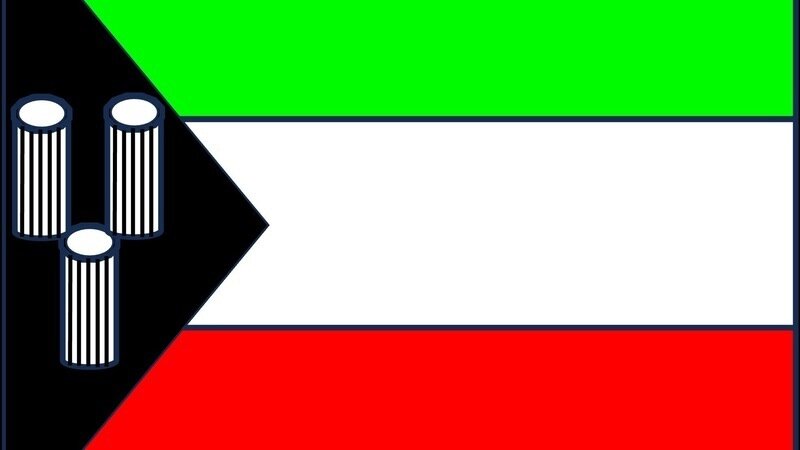
All of Nigeria’s many constitutions since 1914, perhaps bar one, the 1963 Republic Constitution, had been imposed so that no one really knew what Nigerians truly thought or wanted. Until 1 October 1960, Nigeria did not have a ‘sovereignty’; its ‘sovereignty’ was the independence gift from Britain to its colonial State of Nigeria. The ability to coerce was the Western tradition of ‘sovereignty’ whereas, kinshipism (Orilẹ ede) was the Yoruba tradition of ‘sovereignty’. The problem for the colonial State of Nigeria was that its peoples had stubbornly clung to their ideal of ‘sovereignty by kinship’ whilst at the same time they abhorred the western ‘sovereignty by coercion’. Nigeria’s 1999 Constitution was a particularly egregious manifestation of the ‘sovereignty by coercion’. The creation of states by Nigeria’s military dictators has had no dampening effect whatsoever on the adherence of the peoples of Nigeria to their tradition of ‘sovereignty by kinship’. Regionalism, to accommodate Nigeria’s multi-ethnic origins (introduced by the Richards Constitution of 1946), was in practice a version of ‘sovereignty by kinship’.
Obafemi Awolowo expressed the people’s reservation about the ‘sovereignty by coercion’ as follows:
‘Since the amalgamation all the efforts of the British Government have been
devoted to developing the country into a Unitary State. This is patently impossible; and it is astonishing that a Nation with wide political experience like Great Britain fell into such a palpable error.’
The question arising now was whether there were in existence specific constitutional and/or legal obstacles to prevent the Yoruba people from reclaiming their bona fide sovereignty. If none existed, as the Applicants assert with confidence, then the Yorubaland was entitled in law to reclaim its sovereignty unfettered. Further, the Yorubaland would have the choice of claiming the entitlement through an application to the UN for Membership, that is, under Article 4 of its Charter. The Soviet Republics reclaimed their sovereignty through the UN. The UN would be remising, at the very least, if it did not avail the same facility to the Yorubaland.