
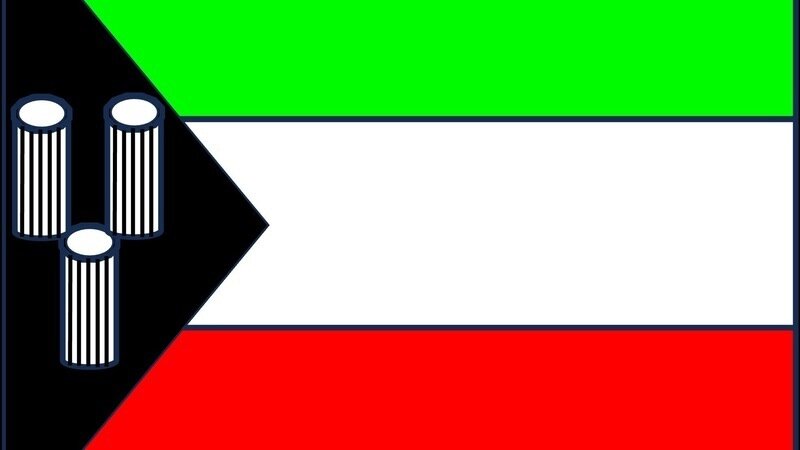
Salutations.
We Yoruba like the Jews have an ‘international certificate’ of suffering genocide and of displacement from our Homeland.
· Every year, the Jews receive billions and billions of dollars for the 2 million lives they lost in Germany. We Yoruba have received not one dime for the 10 million lives we lost over 400 years of the transatlantic slavery.
· The world knows about the Jews; the world knows nothing about the Yoruba. The world empathises with the Jews. The world does not empathise with us.
· Why the difference? The Jews have their own country, Israel to fight to them; we Yoruba are stateless. The view of the world of us will never unless and until we have our own independent Yoruba Nation.
I speak without shame as
1. A Yoruba Nationalist.
2. A Yoruba Traditionalist.
3. A Yoruba Monarchist.
Why an application to the UN is necessary
1. UN Membership = Independence – happened to Soviet republics
2. We need independence to achieve the ‘Yoruba dream’
‘that every Yoruba person was endowed by nature (Ayanmo) to achieve success in life.’
You here in the UK have achieved the `Yoruba dream’, but we want the ‘Yoruba dream’ to be realised at home too, not just here abroad!
3. The Yassa Arafat effect - bringing the matter to the attention of the world, forcing the world to make a decision
4. The Energising effect - 100 million Yoruba worldwide in UN Member States – ½ in West Africa, other ½ in Brazil, Cuba and Trinidad
Frequent claims that the UN cannot do anything is misinformed
· UNGA Resolution 1514 was the International Law of Decolonisation – without it many African colonies would have been denied independence
· UNGA Resolution 2625 was the International Law of Self-determination – why should we Yoruba not seek to benefit from it?
We have a God-given right to independence.
1. The Yoruba is one of the oldest civilisations in the world.
2. We were present when the world began; when the world was just water. It was Obatala that brought soil down from above to spread onto the water to make the earth.
As a practical matter, independence for the Yorubaland would mean
· Governance entirely by Yoruba law and custom
· Economic and community improvements
· Capacity to innovate within our cultural boundaries
· Psychological empowerment and self-actualisation
How did I become involved?
· In 2020, in response to the Lekki Tollgate massacre, I wrote a petition to the UN asking the organisation to actualise self-determination for the Yoruba people as was guaranteed to us by the Charters of the UN and the African Union.
· I proposed the Oduduwa Republic as name for the new nation.
· I published the petition online and asked likeminded people to sign. Over 10,000 have now signed. It is on the basis of those signatures that I am now preparing a formal application to the Security Council. The application is not yet ready but has so far reached 200 pages.
Where was my mandate?
· Traditionally, Yoruba representation was never based on the western concepts of political parties and elections.
· It is not relevant that I am not a politician.
1. I am Yoruba, born in Ibadan of Yoruba parents; I spent the 1st 25 years of my life in the Western Region.
2. I am a Yoruba chief – I have a cultural mandate (the chief was part of the Yoruba governance system), I have a traditional mandate (I am a nobleman, Oloye)
3. The Moremi mandate – when a matter was Yoruba-wide, the Yoruba spontaneously conferred leadership on anyone who to them had the most logical solution. Igboho was the most recent example of the exercise of the Moremi mandate.
· Application to the UN
1. Is the most logical solution to our incarceration in Nigeria
2. There are no other realistic options
o civil war is not an option, I’m a pacifist
o negotiation is not an option – Nigeria is not interested - letters to Buhari and to Tinubu have not been replied
What are the grounds for the UN application?
1. Yorubaland was a sovereign State under international law
2. Recognition in domestic laws of Britain and Nigeria
3. The Yoruba are entitled in law to reclaim their sovereignty
The Yorubaland was a State – the international law
1. The Doctrine of Treaties and the 1888 Britain-Yorubaland Treaty
2. The Doctrine of Continuity – occupation of land since time immemorial = Statehood
3. The Doctrine of State Recognition – formal recognition by an established State = Statehood
· 1888 Britain-Yorubaland Treaty = Documentary proof Yorubaland was a State
1. signed 23 July 1888, ratified by the Queen 16 June 1890
2. Defined territory as areas inhabited by ‘all Yoruba-speaking peoples’
3. ‘favoured partner’ treaty – proceeds of trade to be used to develop the Yorubaland
4. Non-cession treaty – Yorubaland retained its sovereignty
5. Formal contract – with consideration in payment to the Alaafin
· According to the 1888 Treaty
1. Yorubaland had an international personality
2. Treaty was binding and enforceable
3. Treaty was in perpetuity
The Yorubaland State is alive today despite usurpation by Britain (40 years) and by Nigeria (63 years)
· 1888 Treaty was ‘self-executing‘ - automatically domestic law - because it named persons whose rights it was protecting
a. ‘Yoruba-speaking peoples’,
b. ‘Subjects of Her Majesty’,
c. ‘Peoples of other nations and tribes visiting the markets’, and
d. The Alaafin (through promise of payment to him of a yearly stipend).
· 1888 Treaty was formally incorporated into British domestic law
a. the Treaty was made under the Foreign Jurisdiction Act 1843 (‘the FJA’),
b. the Treaty did not exceed the powers of the FJA, and
c. the FJA put in abeyance the prerogative power that made the Treaty.
· 1888 Treaty was incorporated into Nigerian domestic law
a. unfettered carry-over into the laws of the Colony of Nigeria (1913 and 1914),
b. unfettered carry-over into the laws of the ‘colonial State’ of Nigeria (1960, 1963 and 1999), and
c. unfettered existence within the Laws of the Federation of Nigeria (1990).
The Yoruba were entitled in law to reclaim their sovereignty
1. Yoruba sovereignty in abeyance only (not in use) - Loss of sovereignty was through the illegal act of ‘usurpation’
2. Nigeria’s 1999 anti-separatist constitution was a nullity – promulgated 3 months after election of 1999, not ratified
3. Dereliction of the British judiciary
4. The Critical Date Law – 16 June 1890 the day 1888 Treaty was ratified – anything Britain did after that day null and void eg Amalgamation
Call to action
· Bringing to court for Judicial Review, Colony of Nigeria Order 1913 and Amalgamation 1914 – pre-trial legal opinion and court costs would be at least £50,000
· Continue to sign my online petition (United Nations Security Council: Self-determination for the Yoruba people of Nigeria - Sign the Petition! https://chng.it/ZFhsGP94qr via @UKChange) – next target: 15,000 signatures
· Resume mega rallies to draw attention of British public to the Yorubaland
· Make any offers of help via the Yoruba Central Office