"Of more than local importance": request to Secretary of State to call in Wicklesham application

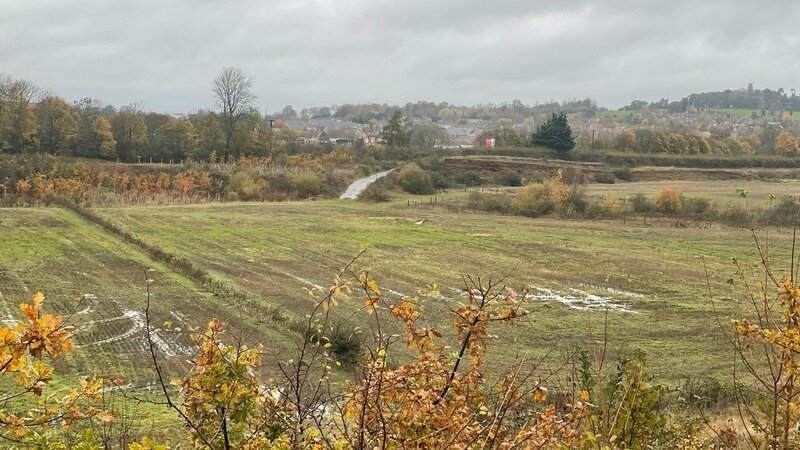
Fourteen months after an application for a major industrial / commercial development at Wicklesham Quarry SSSI was submitted to the Vale of White Horse District Council in June 2023 and subsequently withdrawn, there is still no indication when the re-submitted application will be determined by Oxfordshire County Council. The agenda for the Planning Committee on 2 September does not include it.
Almost four and half thousand people from Faringdon, the Western Vale and beyond have signed the petition to Protect Wicklesham Quarry from Development! Please help me to get the number to 5,000 by sharing this update in local social media, web pages and email circulars.
In three consultations on this proposal- one terminated early by the District Council, and two by the County Council - hundreds of local people, four Parish Councils, District Councillors, and organizations including the CPRE and the Geological Society have objected to the proposed development at Wicklesham Quarry. The grounds of opposition include:-
Destruction of the SSSI
Wicklesham Quarry, one of the oldest SSSIs in the country, has a world-famous reputation. Many of Wicklesham’s extraordinary fossils have never been found anywhere else on earth, because the conditions that occurred here have never happened anywhere else. Because of this, Wicklesham Quarry - a ‘type site’ - has made the name ‘Faringdon’ famous. In 1699 Sir Isaac Newton sponsored one of the earliest collections of fossils ever made- from Wicklesham Quarry. Wicklesham Quarry is 29 acres of unique geological history and scientific resources. As a ‘finite site’ its unique importance in the history of science should ensure it is protected for future generations. Access to the Faringdon sponge gravels, 50 metres deep at this location, must be preserved for future scientific research.
The misuse of a discredited neighbourhood plan
MISUSE? Only a Local Planning Authority can allocate strategic development sites under the Planning and Compulsory Purchase Act 2004. A neighbourhood plan policy (made under the Localism Act) cannot be used to justify a major strategic development. Faringdon neighbourhood plan’s policy to build on Wicklesham Quarry was promoted by documents written, and data invented, by the landowners/ developers themselves. Faringdon Council allowed the landowners to use the neighbourhood plan for their own purposes and failed to carry out due diligence. Unlike the objective processes and scrutiny involved in the Local Plan, neighbourhood planning lacks safeguards against landowners sitting on steering groups, making policies for their own land and inventing the evidence - with the support of their friends on a parish council. After the District Council repeatedly refused to include Wicklesham Quarry in the Local Plan, this is what happened in Faringdon.
(See the earlier update on ‘Our Faringdon Our Future’, written by the landowner, which can be downloaded from Faringdon Council’s neighbourhood plan documents. https://www.change.org/p/the-vale-of-white-horse-district-council-and-secretary-of-state-michael-gove-protect-wicklesham-quarry-from-development/u/32141218
DISCREDITED? Wicklesham Quarry is outside Faringdon’s development boundary (a strategic policy), and the policy to safeguard Wicklesham Quarry as employment land is in conflict with the Local Plan. In 2017 the High Court ruled that Faringdon neighbourhood plan was “in manifest conflict” with the strategic policies of the Local Plan. Faringdon neighbourhood plan has been discredited, and it is a source of anger to many Faringdon residents that the town council continues to support a landowner against the people of Faringdon, using a neighbourhood plan the principal aim of which was to flout the strategic policies of the Local Plan.*
A major development in a nationally designated site on the MidVale Ridge
Many people have expressed outrage on the grounds of the location. A Site of Special Scientific Interest in the National Character Area of the Midvale Ridgeis a staggeringly inappropriate location for industrial development. Thousands of people from Faringdon, Great Coxwell, Fernham and Little Coxwell regard the footpaths and bridleways that connect Faringdon with Wicklesham, Galley Hill, Ringdale, the Coxwells and Fernham as the finest in the area. They are incredibly peaceful, with magnificent views across the Vale and towards the White Horse, and a huge range of plants, wildlife and ancient trees. In early summer there are banks of pink pyramid orchids along the edge of the quarry, and at this time of year the footpaths are lined with ferns, blackberries, and oak trees in full leaf.
Wicklesham’s planning conditions (following completion of extraction around 2007) require it to be fully restored in keeping with its surroundings. Wicklesham Quarry is part of West Oxfordshire Heights Conservation Target Area, and it has Priority Habitat and a European Protected Species – Great Crested Newts. It is not, and never was, a ‘brownfield site’ as the neighbourhood plan’s ‘basic conditions’ statement claims, and as the applicants seek to suggest. In 2017 the High Court ordered the landowner to restore the quarry and carry out five years of agricultural aftercare to return it to farmland- after ten years of trying to avoid carrying out the restoration. Without local people’s hard work in bringing the Judicial Review the restoration and aftercare would not have been carried out.
Call-in request to the Secretary of State
A request has been made to the Secretary of State for Housing, Communities and Local Government at the Planning Casework Unit to call in the planning application, so that the final decision can be made by the Secretary of State on the grounds that this case is of “more than local importance”.
When the County Council has carried out its own processes involving the planning application, including sending it to Committee, the case will be passed to the Secretary of State, who will decide whether to order a public planning inquiry. In making the call-in request, we have cited the following reasons for the case being “of more than local importance”.
1. The case has important implications for the proper working of the Localism Act
- It involves an application for a major strategic development in which the applicants seek to rely on a neighbourhood plan policy.
- A Judicial Review in 2017 found that the neighbourhood plan was “in manifest conflict” with the Local Plan, because of the policy relating to Wicklesham Quarry.
- The proposal is in conflict with the spatial strategy and strategic policies of the Local Plan, and the site is outside the development boundary (a strategic policy).
2. The proposal conflicts with national policies
- The proposal is for an industrial/commercial development of 46,000 sq M (in revised documents) on a Site of Special Scientific Interest.
- The site is agricultural land in the National Character Area of the Midvale Ridge.
- It is also part of West Oxfordshire Heights Conservation Target Area and has Priority Habitat and a European Protected Species.
- The proposal conflicts with national policies for ‘Conserving and enhancing the natural environment’ (NPPF paragraphs 180, 181) and protecting ‘Habitats and biodversity’ (NPPF paragraphs 185, 186).
3. The site has been the subject of widespread controversy for ten years
- The site was repeatedly turned down by the District Council as a strategic employment site between 2008 and 2016.
- The aim of Faringdon neighbourhood plan was to flout the District Council and allocate the site as employment land.
- The High Court ruled in 2017 (as stated above) that the neighbourhood plan was in "manifest conflict" with the Local Plan. However, the NP had (by then) already been made and no remedy was awarded. This has created an anomaly in the development plan.
- The case has attracted the attention of legal and other observers and commentators over many years. Four and half thousand people across the Western Vale and beyond have signed an online petition to Protect Wicklesham Quarry from Development. (https://www.change.org/ProtectWickleshamQuarry
All the points above would appear to satisfy the single critical requirement for call-in by the Secretary of State: that the case is "of more than local importance".
In order to bring this case to a just and decisive conclusion, I believe that the only satisfactory way forward is for the Secretary of State to call it in.
You can support the call-in request through our MP
If you wish to ask local MP, Charlie Maynard to support the request to the Secretary of State for a call-in, drop an email to: charlie.maynard.mp@parliament.uk
Remember- the only criterion to justify a call-in by the Secretary of State is that the case is “of more than local importance”. The headline points listed above in bold (1) to (3) are suggested. (Issues regarded as ‘local’, such as traffic concerns, are not justifiable criteria, so don't include them.)
*While the Judicial Review was waiting to be heard, the District Council went ahead with a referendum on Faringdon neighbourhood plan in which around 12% of people voted. Most residents stayed away. Around 900 people voted in favour. As a result the neighbourhood plan was adopted as part of the Development Plan before the case was heard. This created a legal anomaly.