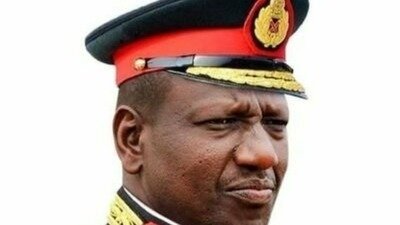

THE SITUATION IN KENYA - APPEAL TO THE INTERNATIONAL COMMUNITY
The Issue
THE SITUATION IN KENYA – APPEAL TO THE INTERNATIONAL COMMUNITY
Requesting Aid Review and Accountability Measures to Protect Kenyan Lives and Public Resources Ahead of the August 10, 2027 General Election
Addressed to: The Governments of the United States and the European Union; the United Nations; the World Bank; the International Monetary Fund; and the Bretton Woods Institutions
Summary
As Kenya enters the campaign period for its next General Election, scheduled for Tuesday, August 10, 2027, we, the undersigned Kenyan citizens, members of the diaspora, and concerned members of the international community, respectfully petition the United States, the European Union, the United Nations, the World Bank, the International Monetary Fund, and their affiliated institutions to review and consider withholding, suspending and or stopping ongoing financial and material support to the Government of Kenya under President William Ruto, and to consider Sanctions against officials implicated in serious human rights abuses and or corruption and large-scale diversion of public funds.
This petition sets out to highlight a pattern of politically motivated violence recorded in 2026 in the run-up to the 2027 election; ongoing regional insecurity; the mid-2025 "shoot to kill" and "shoot in the leg" directives by President William Ruto and his Cabinet Secretary of Interior Onesimus Kipchumba Murkomen, the two widely documented custodial and street killings; cross-border abductions and refugee-protection violations in 2024–2025; the killings, abductions, and enforced disappearances associated with the 2024 anti-Finance Bill protests; and, at its origin, the unresolved 2007–2008 post-election violence and ICC case. It also sets out a set of governance and financial-management abuses, including findings by Kenya's own Auditor-General, that we believe bear directly on how international assistance is being used. Our request is prophylactic and time-bound: we are not asking donors to abandon the Kenyan people, but to ensure that aid packages to Kenya’s government are not “death warrants” that finance murder, intimidation, violence, or graft during a period of heightened political risk, and to signal, through calibrated diplomatic and financial tools, including targeted sanctions where evidence supports them, that impunity carries a cost. Kenya’s situation is horrific, as reflected in the gut-wrenching plea of a grandmother begging Mr. Ruto to help return her missing grandson. She represents thousands of families who have lost loved ones to deadly atrocities committed by his regime since 2022. The urgency of this call for intervention cannot be overstated.
Calls for international intervention in Kenya are not unprecedented. During the late President Daniel Arap Moi’s rule, the United States, other Western governments, and multilateral institutions such as the World Bank and IMF played an important role in curbing the excesses of his regime by applying diplomatic pressure and restricting funding that enabled abuses. That pressure helped push Kenya toward multiparty democracy and ultimately contributed to Moi’s departure from office. Compared with that era, the abuses alleged under Mr. Ruto are even more urgent, making timely international engagement both necessary and appropriate. We therefore call on the international community to stand with Kenyans once again.
Mr. Ruto appears responsive only to international pressure, having stopped listening to Kenyans themselves. His path to retaining power solely depends on the international community looking the other away while he rigs elections and violently suppresses protests, following the example of neighboring authoritarian leaders in Tanzania and Uganda after disputed elections. His current conduct appears carefully choreographed to win international favor, including through paid lobbyists. We therefore appeal to Mr. Ruto’s allies, including French President Emmanuel Macron, to put the interests and safety of Kenyans first.
The situation in Kenya continues to deteriorate. In the past two weeks, reports have pointed to a worsening security climate, including surveillance-video evidence of the abduction of a Standard newspaper editor by the Ruto administration’s “Support Operations Unit”, a special police unit dedicated to cracking down on government critics, as well as a public declaration by Mr. Ruto.
Kidnapping of Standard Associate Editor: On September 1, 2026, Alex Kiprotich, an associate editor for Kenya's Standard Group, that publishes “The Standard” newspaper daily, was abducted by armed masked men. As the attached video footage shows, the nightmarish scene of his abduction by machine wielding men who waylaid him and cut him off and blocked his car near the Gilgil Weighbridge on his way to Nakuru by Four-armed men in a Subaru Forester blocked his car. The kidnappers believed to be state security agents held him captive for nine hours and demanded that he disclose to them the source of the confidential information published by the Newspaper. This flagrantly brazen operation and multiple others witnessed in the past three years can only be carried out by state security operatives and have become a hallmark of the Ruto government’s modus operandi of weaponizing his government’s police powers against political opponents and to intimidate and silence dissent. (https://www.reuters.com/business/media-telecom/kenyan-editor-found-safe-after-abduction-standard-group-says-2026-09-02/ ; (https://www.instagram.com/p/Dcx3UkYlmmc/
Threats on and incitement to violence against immigrants: A day later, on September 2, 2026, Mr. Ruto issued a startling directive targeting foreign-owned small businesses and hawkers, effectively calling for the removal of immigrants he accused of taking jobs from Kenyan traders and street vendors. The order risks inflaming hostility toward immigrant communities in a manner reminiscent of xenophobic violence in South Africa. It has already caused widespread fear among immigrants in Kenya, many of whom fled dangerous conditions in their home countries and survive through informal, hand-to-mouth work. The directive also contradicts Mr. Ruto’s earlier promises to secure overseas jobs for unemployed Kenyan youth through arrangements he claimed involved foreign governments, including the United States, Germany, and countries in the Middle East. Having failed to deliver those jobs, he now appears to be scapegoating immigrants for his own failures. Ruto’s saber rattling against immigrants must be taken seriously and is a deeply dangerous development that the international community should monitor closely.
These incidents are not isolated; they reflect a continuing pattern of misgovernance that threatens Kenya’s stability under Mr. Ruto’s leadership. For the reasons outlined below, we appeal to the international community to act, directly or indirectly, to help prevent the country from sliding into deeper crisis.
Part One: Political Context — The Road to August 10, 2027
President William Samoei Ruto, elected in 2022, is seeking a second term. Over the course of his first term, Ruto's popularity and public approval has waned, strained by a range of factors, including extra judicial murders blamed on his government, abductions and enforced disappearances of protesters and government critics, the cost of living, the 2024 Gen Z-led protests against tax legislation and their violent policing, and a series of corruption and fraud findings across major government programs as detailed below. The “WANTAM” (slang for ONE-TERM) expression of consigning Mr. Ruto to a one-term presidency has morphed from a slogan to a national rallying cry to REMOVE him from power next August. In response, Ruto has dug his eels to cling to power at any cost i.e., at the very taxpayers’ expense seeking to expel him from office. Opposition leaders, civil-society groups and large swaths of the population maintain that as the President's re-election prospects have narrowed, incidents of politically motivated violence against opposition figures and the general public gatherings have increased. Whereas the Government disputes characterizations that it sponsors such violence, there is clearly correlation and causality that directly links Ruto’s reelection bid to the rising incidents of violence.
It is against this backdrop that we ask the international community to apply heightened surveillance, not to prejudge the election's outcome, but to mitigate or eliminate in its entirety, the risk that state or state-sponsored violence, or the misuse of donor-funded programs, shapes it.
Ethnicization of Police and Key Sectors: Mr. Ruto’s strategy for remaining in power appears to depend on insulating the presidency from both the opposition and the broader public. To do so, he has filled key government posts with men and women from his Kalenjin community, a practice that has further strained ethnic relations in Kenya. More troubling, he has allegedly saturated the security apparatus, primarily the National Police Service and the military, with ethnic favoritism, placing a disproportionate number of Kalenjins across ranks compared with Kenya’s broader demographic makeup. He has also reportedly layered paramilitary units, the so called “goons” drawn from the same community to intimidate Kenyans, many of them are believed to be remnants of the 2007–2008 post-election violence militias and police returnees from Haiti. The “Special Operations Support” unit is widely believed to function as Mr. Ruto’s political enforcement arm within the Police Service, targeting critics and answering directly to him through Deputy Inspector General of Police Mr. Eliud Lagat, a fellow Kalenjin who, in practical terms, is said to run the Kenya Police Service. For example, Mr. Lagat is alleged to have ordered the abduction and killing of Albert Ojwang, a teacher and blogger accused of posting unfavorable claims about Mr. Lagat’s corruption and investments in the Middle East. The abduction and killing of Albert Ojwang illustrate the grave human-rights risks of such unchecked power. Although Mr. Lagat was publicly identified as having ordered Ojwang’s killing, he has never been held accountable. He initially “stepped aside,” Kenya's deputy police chief steps aside amid uproar over blogger's death which many members of the public understood as a resignation, but returned to office weeks later, stating that he had merely taken a “leave of absence”. Lagat: “I took leave, I did not resign from DIG post. This climate of impunity demands urgent domestic and international scrutiny. Under Mr. Ruto, police brutality has intensified, with taxpayer funds and international support sustaining these abuses. Impunity remains widespread, and continued political, financial, or security support for the regime are potential “DEATH WARRANTS” enabling further violations and placing innocent Kenyans in greater danger as it has been manifestly evident time and time again, it is only a matter of time before the next incident.
Pattern of Violence, Murders, Disappearances, and Repression — Most Recent to Oldest
Here, we summarize incidents that outline the pattern of violence, enforced disappearance, and cross-border repression that petitioners believe should inform how the international community calibrates its engagement with the Government of Kenya. We present it in reverse chronological order, from the most recent incidents back to 2007–2008, deliberately, to show decision-makers what a pattern of escalating and recurring conduct looks like when bad conduct goes an unanswered. It emboldens perpetrators and enables them to perpetuate it.
A. 2026: Escalating Violence Ahead of the General Election
The incidents below have been reported by Kenyan and international media in the twelve months preceding this petition, presented from most to least recent. Casualty figures and attributions of responsibility vary by source and, in most cases, are still contested or under investigation; we present the best-documented figures available and note where responsibility is alleged rather than established.
In August 2026, demonstrations marking the annual “Saba Saba” pro-democracy anniversary turned violent in Nairobi and other regions. Clashes between protesters and security forces were reported in parts of the country, with fatalities linked to gunfire.
Also in August 2026, tensions escalated in Homa Bay County when groups reportedly carrying crude weapons gathered ahead of an opposition event. Police and regional reports described clashes that resulted in injuries and fatalities, while opposition figures alleged that the groups involved had been sponsored by the Ruto government.
On July 12, 2026, rival youth groups clashed outside St Stephen’s ACK Cathedral in Kisumu during a church service attended by opposition figures, including Siaya Governor James Orengo and Nairobi Senator Edwin Sifuna. Police reported that one person was stabbed to death, another was seriously injured, and nine motorcycles were burned. Eight suspects were arrested, and both Orengo and Sifuna publicly accused state-linked actors of orchestrating the attack.
In July 2026, former Deputy President Rigathi Gachagua and his allies faced repeated disruptions at church gatherings in Nyeri County, including at ACK Witima Church in Othaya.
Between June and July 2026, a public-finance forum at All Saints Cathedral in Nairobi was disrupted by individuals who, according to media reports, later admitted to being paid by government operatives to interfere with the meeting.
In May 2026, opposition Senator Godfrey Osotsi was reportedly assaulted and robbed by a group of youths at a restaurant in Kisumu, after which he required hospitalization. No one has been publicly identified as having ordered the attack.
B. Ongoing: Al-Shabaab Activity in Northeastern Kenya
We note that Kenya’s northeastern border counties, particularly Mandera, continue to face renewed attacks attributed to Al-Shabaab, a U.S.-designated terrorist organization based in Somalia, causing casualties among civilians and security forces. This insecurity is a longstanding and well-documented regional problem that predates the current administration. However, many Kenyans and opposition figures allege that the latest resurgence is a staged or tolerated crisis, sanctioned by Mr. Ruto’s government, and that the official response is largely performative. According to these allegations, the situation serves two strategic purposes: first, facilitating the movement and registration of foreign voters to offset Mr. Ruto’s declining support elsewhere ahead of the 2027 election; and second, attracting counterterrorism funding from the United States and other Western partners under the banner of border security. Given these concerns, we ask donor governments supporting regional counterterrorism cooperation to independently verify that Kenya’s border-security and identity-document systems are functioning properly, especially in light of the implications for national security and electoral integrity ahead of 2027.
C. Mid-2025: "Shoot to Kill" Orders and Custodial Deaths
i. “Shoot to kill” orders
We consider the events of June–July 2025 a critical, and still largely unaddressed, escalation that came roughly a year after the 2024 crackdown described in below, evidence, petitioners believe, that the absence of accountability for 2024 directly enabled what followed in 2025. On June 26, 2025, in the aftermath of violent nationwide protests the day before, Interior Cabinet Secretary Kipchumba Murkomen publicly ordered police officers to shoot anyone approaching a police station with hostile intent, stating the directive came "from above”, a remark widely understood in Kenya as referring to President Ruto, Civil-society organizations, including Katiba Institute and the Kenya Human Rights Commission, subsequently petitioned Kenya's High Court to have Mr. Murkomen declared unfit for office over the remarks; that litigation remains pending.
Sources: CS Murkomen heckled after issuing shoot to kill order
ii. “Shoot in the leg” orders
Barely two weeks later, on July 9, 2025, Mr. Ruto himself directed police to shoot though not to kill, anyone caught looting or burning property during protests, telling officers to "shoot them in the leg”. In a later interview, Ruto said he did not regret the directive and maintained that Kenyan law permits police use of force to protect life and property. We note that while the President's July directive was, on its face, less severe than Mr. Murkomen's, human-rights groups and legal scholars have criticized both statements as authorizing extrajudicial punishment without trial. https://www.reuters.com/world/africa/kenyas-president-orders-police-shoot-violent-protesters-leg-2025-07-09/
iii. Murder of innocent youth on Ruto’s orders
On diverse dates in June and July of 2025 , Mr. Ruto’s government killed dozens of protesters peacefully protesting his regime’s campaign of atrocities, At least 31 dead, 532 arrested in Kenya’s antigovernment protests | Protests News | Al Jazeera ( https://www.aljazeera.com/news/2025/7/9/at-least-31-dead-532-arrested-in-kenyas-antigovernment-protests); On June 25, 2025, Ruto ordered the brutal suppression of peaceful and preliminary reports by the Kenya National Commission on Human Rights reported 31 deaths, 531 injuries, 15 enforced disappearances, 1500 arrests, 2 cases of individual rapes, 2 cases of gang rapes, and 1 attempted rape. The protests were triggered in part by notable murders of two young Kenyans by the police that were made public.
Kenya's own state-funded human rights commission (KNCHR) reported at least 21 people killed in the June 25, 2025 protests, and an initial count of at least 31 killed nationwide during the July 7, 2025 "Saba Saba" protest anniversary, a toll that rose over the following days to at least 38 confirmed dead and roughly 130 injured as KNCHR completed its count, alongside dozens of reported enforced disappearances and reports of sexual violence against protesters, including rape, in that period. The KNCHR has stated that approximately 115 people were killed in protests nationwide between June 2024 and July 2025 combined. As with the 2024 crackdown, accountability has been limited: Kenya's Independent Policing Oversight Authority reported bringing charges in only a small fraction of documented cases.
Sources: Kenya: Hold Authorities Accountable for Protesters’ Deaths | Saba Saba demos declared the deadliest yet as Kenya records 115 protest deaths in one year | JOINT STATEMENT ON THE AFTERMATH OF THE SABA SABA DEMONSTRATIONS AND NGONG INVESTIGATIVE FINDINGS
iv. Albert Ojwang Murder by Kenya Police
On Friday June 6, 2025, eight (8) senior Kenya Police Officers were dispatched from the capital city Nairobi to Homa Bay county, 350 Kilometers away, to arrest 31-year-old Albert Ojwang for supposedly posting defamatory information on the X (formerly Twitter) about Deputy Inspector General of Kenya National Police Service Eliud Arap Lagat. Lagat instructed police officers under his direct command to arrest and “discipline” Ojwang. They brought him to Nairobi’s Central Police Station and handed him over to Officer Commanding Station Samson Kiprotich Arap Talaam with whom Deputy Inspector General Arap Lagat had conspired in advance to murder Ojwang. Within hours of arrival at the station, Albert Ojwang was DEAD, murdered in police custody. Why the death of a blogger has put Kenya's police on trial
v. Boniface Mwangi Kariuki Murder by Kenya Police
Days later, on June 17. 2025. following Albert Ojwang’s murder, the public erupted in protest. To suppress the protests, riot police set on the crowds yet again. Boniface Kariuki, a mask vendor, who was sheltering from the police crack-down in Nairobi, was gunned down at close range by the police in one of the most macabre murders and display of impunity by the police captured on camera. Kariuki was taken to hospital and died from his injuries, Boniface Kariuki: Kenyan vendor shot by police during protests dies, (https://www.bbc.com/news/articles/cp9005z1pljo )
vi. Imprisoned/Detained Young GEN Z Political Prisoners
In yet another episode of blatant abuse of power not seen since the regime of President Daniel Arap Moi era, Ruto’s government resorted to imprisoning young GEN Zs as political prisoners to instill fear in Kenya’s young people. He invoked the “Prevention of Terrorism Act” to punish and crush dissent by young Kenyans while he himself actively cavorts and courts the world infamous Terrorist group Al Shabab. Ruto’s regime has detained, arrested, and charged more than 300 young innocent Kenyans with spurious charges of Terrorism. (see attached list). Ruto invoked terrorism charges against the young people to circumvent the law by keeping them in prison without bail for prolonged periods to maximize the trauma and fear. He simply profiled and picked up from their residences and imprisoned just to send a message of fear to young people across the country of what awaits them if they dare dissent to his leadership. The trauma these hundreds of young folks and their families are suffering due to Ruto’s atrocities are heart wrenching. We ask relevant UN human-rights mechanisms and Kenyan and international legal-aid organizations to examine the scale and legal basis of these detentions.
vii. Ruto Launches a Victims’ Compensation Commission
In anticipation of international scrutiny of human rights abuses Ruto announced a framework to compensate families of protest victims to pay their families for the deaths. https://www.the-star.co.ke/news/2025-08-08-ruto-establishes-framework-for-protest-victims-compensation We plead with the world not to be swayed with his trickery, this is yet one of his gimmicks designed to duck personal accountability, fool Kenyans and the world. He could have ordered investigations and prosecution of the perpetrators, but he could not because he ordered the killings. Kenyans want and deserve justice alongside compensation.
Mr. Ruto’s mindset appears convinced that killing innocent Kenyans can be remedied and settled by simply setting up a taxpayers’ funded compensation scheme, and why not, he has yet to be held accountable in any meaningful way for the murders and atrocities attributed to him personally. Whereas we welcome "compensation" for victims and their families, a compensation scheme is not a substitute for accountability or justice for the victims, there MUST be prosecution of those responsible for ordering or carrying out unlawful killings, and we ask the international community not to treat the compensation framework as evidence that accountability has been achieved.
D. 2024–2025: Cross-Border Abductions and Non-Refoulement Violations
i. Abduction and Repatriation of Uganda’s Opposition Leader
In November 2024, Ugandan opposition leader Dr. Kizza Besigye, a four-time presidential candidate and long-time critic of Ugandan President Yoweri Museveni, was abducted in Nairobi while visiting Kenya for a book launch and resurfaced days later in a cage before a military court in Kampala. Amnesty International described the episode as part of a 'growing and worrying trend of transnational repression.' It was later revealed that Dr. Besigye’s abduction and forced repatriation to Uganda was coordinated with Kenyan security officials at the request and behest of Uganda’s government of President Yoweri Museveni, a staunch Ruto ally. We note that while observing that the incident occurred on Kenyan soil and that Kenya has not, to our knowledge, opened a public investigation into how a foreign national was removed from the country without extradition proceedings. Sources: https://apnews.com/article/uganda-opposition-kizza-besigye-kidnapped-military-jail-af3b7599b92f443abe0c756e84f67fe2
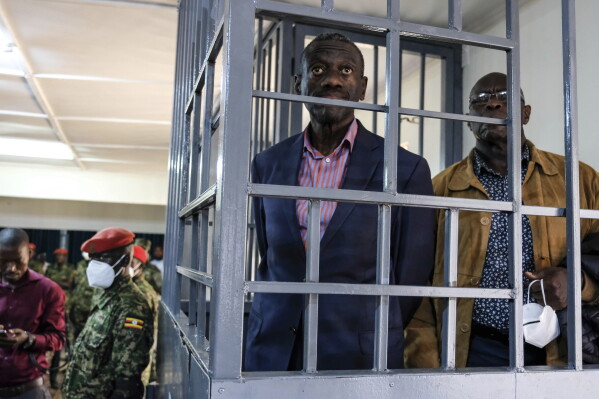
ii. Turkish Refugee Kidnappings and Repatriation
A month earlier, in October 2024, four Turkish nationals registered as asylum seekers in Kenya were abducted in Nairobi and forcibly returned to Turkey at the Turkish government's request. The Ruto government confirmed its security and foreign-affairs agencies' role in the operation. The UN refugee agency (UNHCR), Amnesty International, and the International Commission of Jurists all stated that the action violated the international-law principle of non-refoulement, which bars returning people to a country where they face a real risk of persecution. We note that a similar case involving a Turkish family arose again in December 2025, according to Amnesty International Kenya, meaning this pattern of cross-border rendition bookends, rather than precedes, the mid-2025 domestic escalation described above.
E. 2024 Gen-Z Murders – The Finance Bill Protests and Their Aftermath
As president, soon after returning to Kenya from the State visit to Washington DC at the invitation of then President Joe Biden, Mr. Ruto encountered strong opposition to the tax hike measure he was pushing in Parliament, the “2024 Finance Bill”. The public, led by young Kenyans, the “Gen Zs”, went to the streets nationally protesting against Ruto’s tax hike agenda and he responded by unleashing the Police and the Military against the young unarmed and defenseless Kenyans protesting his leadership. The brute force unleashed against them included shootings with live bullets and resulted in the deaths of hundreds of Kenyans, many more remain missing, unaccounted for, and presumed dead; Blood Parliament - BBC Africa Eye Documentary https://www.youtube.com/watch?v=qz0f1yyf_eA The extrajudicial killings became a globally visible flashpoint that negated Kenya’s once stellar reputation as an oasis of peace and stability, https://africanlegalstudies.blog/2024/07/11/behind-the-protests-mask-in-kenya-extrajudicial-killings-abductions-and-court-sanctioned-militarization-of-the-freedom-to-demonstrate/ Ruto then deflected the blame to distance himself and his role in the murderous rampage, https://www.voanews.com/a/ruto-paints-kenya-a-democracy-after-crashing-gen-z-protests-/7700331.html
According to Human Rights Watch and Kenya's own state-funded Kenya National Commission on Human Rights (KNCHR), security forces killed dozens of protesters and bystanders and abducted and arbitrarily detained dozens more perceived protest leaders, holding some in unlawful facilities without access to family or counsel. Broader tallies compiled by rights groups over 2024–2025, including protests marking the anniversary of the crackdown, put the combined death toll well over 500.
President Ruto ultimately withdrew the Finance Bill, but rights organizations, including Human Rights Watch, have found that the government has not meaningfully investigated or prosecuted those responsible for the killings and disappearances. Kenya's Independent Policing Oversight Authority reported in 2025 that it had charged only two cases despite dozens of documented killings. Journalists and filmmakers who documented the crackdown, including those behind a BBC Africa Eye documentary on the protests, have themselves faced prosecution. We regard the absence of accountability for these events, the pattern of impunity that runs through every incident described above, as the central, ongoing concern.
Sources: Human Rights Watch, "Kenya: Security Forces Abducted, Killed Protesters" (Nov. 6, 2024) | Al Jazeera, "Fear Stalks Kenya as Dozens of Government Critics Abducted" (Mar. 4, 2025) | BBC Africa Eye, "Blood Parliament" (documentary, YouTube) | VOA News, "Ruto Paints Kenya a Democracy After Crushing Gen Z Protests"
Abductions and Disappearances
Ruto has turned Kenya into the kidnapping capital of Africa. Spooked by the protests, waning public confidence in his leadership and the ensuing crackdown of the Gen Zs, Mr. Ruto followed it up with a sustained spate of abductions, disappearances, extrajudicial killings, unlawful detentions, among other atrocities, against young Kenyans to permanently silence them, Kenya: Security Forces Abducted, Killed Protesters | Human Rights Watch. It is believed that he set up a Secret Police unit only answerable to him and a handful of aides. Many of the kidnapped are presumed dead but the public is too scared to confront him. The kidnappings ignited widespread domestic and international uproar and whereas they appear to dissipate, they are very much alive. https://www.cfr.org/blog/accountability-gone-missing-kenya
A recent news article reported that mortuaries, especially the Nairobi City mortuary is, for the first time ever, at full capacity with unclaimed bodies https://www.citizen.digital/news/drama-as-city-mortuary-declines-to-receive-unidentified-bodies-delivered-by-police-n350728 Mr. Ruto gets excessively paranoid of dissent and has ordered a crackdown on dissenting voices for arrest and prosecution on spurious trumped charges and planted evidence. The media is not spared either, just last week, filmmakers who produced and released the British Broadcasting Corporation (BBC) documentary mentioned above were arrested and face 10-year imprisonment, State links four filmmakers to BBC story, seeks 10-year jail term, Sh20m fine | Daily Nation.
The world, including the United States, took notice of the atrocities and cautioned Ruto to stop the atrocities, Abductions must end! Abductions must end! US joins calls for respect for rule of law in Kenya . In what is widely considered to be an admission of his role in the abductions and disappearances of the young Kenyans during the recent visit of Finland's President Alexander Stubb, Ruto proclaimed that all abducted civilians had been returned to their families and that he had ordered an end to the kidnappings, President Ruto Says Abductees have been "returned to families" - The Standard.
F. 2007–2008: Post-Election Violence and the ICC Case
The violence that followed Kenya's disputed December 2007 presidential election, between incumbent President Mwai Kibaki and challenger Raila Odinga, killed an estimated thousands of people and displaced several hundred thousand more nationwide, with some of the worst violence concentrated in the Rift Valley where Mr. Ruto comes from. One of the most widely documented atrocities was the burning of a church in Kiambaa, near Eldoret, in which dozens of people sheltering inside were burned alive and killed, Kenyans recall the screams of the dying in burning church. The violence subsided only after sustained international mediation, led by former UN Secretary-General Kofi Annan and supported by the United States, the African Union, and European governments.
William Ruto, then a senior political figure in the Rift Valley, was subsequently among six Kenyans named by the International Criminal Court in connection with the violence, facing charges of crimes against humanity. The case against him was terminated by ICC judges in 2016 after witnesses were murdered and forcefully disappeared and the Trial Chamber found the prosecution's case had been critically undermined by witness tampering and intimidation, without the court making any finding on his innocence or guilt. To date, no one has been held criminally accountable domestically or internationally for the 2007–2008 violence, a phenomenon that has emboldened and enabled Mr. Ruto to operate with absolute impunity. We present this earliest episode last, not because it matters least, but because we believe it was the pinnacle of violence Ruto had been a sponsor and purveyor of since 1992, a pattern traced above: of orchestrating deadly political violence, followed by the elimination of witnesses, followed by no accountability at all. We are alarmed that, nearly two decades later, the same absence of accountability continues to repeat itself.
We also note, as a matter of public record, that Mr. Ruto's defense counsel at the ICC, Karim A. A. Khan, was elected the Court's Chief Prosecutor in 2021 and just recently removed. We argue that this prior professional relationship warrants heightened, independent scrutiny of why the ICC has not reopened inquiries into the more recent allegations set out above. We raise this as a transparency concern for the ICC's own governance bodies (including the Assembly of States Parties) to consider, not as an assertion of specific wrongdoing by Mr. Khan.
Sources: 'We told them to come out of the church, but they locked the door ... So we burned them' |The Guardian, "Kenya's Post-Election Violence" (Jan. 2, 2008) | https://www.nytimes.com/2008/01/02/world/africa/02kenya.htmlThe New York Times, coverage of the Kiambaa church attack (Jan. 2, 2008)
Part Three: Regional Destabilization and Electoral Manipulation
● Sudan and the Rapid Support Forces (RSF): Mr. Ruto has faced regional and international criticism, including reporting by Al Jazeera and others, for hosting political activities of Sudan's RSF, a paramilitary force accused of atrocities in Darfur, and for allegedly serving as a transit point for gold and arms linked to the conflict.
● South Sudan: Kenyan mediation efforts in South Sudan's internal conflict have been criticized by some observers as insufficiently even-handed; Ruto has taken sides to tip the political scales in the war-torn country and, in the process, exacerbated the conflict that has claimed millions of lives.
● Voter registration and border management: We have seen credible claims, including from opposition politicians, that identity-document vetting near the Kenya–Somalia border has been loosened in ways that could facilitate irregular voter registration ahead of 2027i.e., issuance of IDs and Voter cards to Somali citizens and other nationalities in a misguided ploy to vote for Mr. Ruto in the upcoming elections to make up for lost support, and that this coincides with tighter scrutiny of registration among Kenyan citizens elsewhere. This severely undermines confidence in voter-roll integrity, and we specifically ask the IEBC's international observers and partners such as IFES and or the Carter Center to examine voter-roll integrity and border-area registration data as part of standard 2027 election-observation work.
Part Four: Historical Context, Continued — Accountability Gaps
Taken together, petitioners believe the pattern traced above, from the 2026 pre-election violence, back through the 2025 shoot-to-kill escalation, the 2024–2025 cross-border abductions, the 2024 Finance Bill crackdown, and finally to the unresolved 2007–2008 matters, together with the regional and electoral assertions, illustrates a recurring failure of domestic accountability mechanisms, which is precisely why we are appealing to international rather than solely domestic institutions.
Part Five: Corruption, Governance and Economic Ruin
We are cognizant of widely circulated claims in Kenyan media and public discourse that President Ruto and people close to him have amassed considerable personal wealth and property, including through disputed land acquisitions from vulnerable landholders, that is disproportionate to any documented lawful income. Beyond physical violence, we are concerned that a pattern of fraud, waste, and politicized use of public and donor funds is weakening Kenya's institutions and disadvantaging fair political competition. The findings below draw substantially on reports by Kenya's own Auditor-General and parliamentary oversight bodies, which we consider more reliably documented than some of the violence-related allegations above; we note this distinction throughout.
Corruption, Self-Dealing and Odious debt
In Kenya, politics has become one of the most lucrative taxpayer-funded career paths, with politicians using public office for personal enrichment. We ask the international community to help close this pipeline of public funds that enables corruption.
Mr. Ruto has, in effect, turned Kenya’s economy into a vehicle for personal enrichment, essentially a one-man economy. Crony capitalism is the norm, projects presented as national initiatives are structured to benefit him and his associates, crowding out legitimate private-sector participation while concentrating reported economic gains among a small circle of favored cronies. Programs such as “affordable housing” appear designed less to serve the public than to generate profits for politically connected interests, even as ordinary Kenyans struggle. As a result, much of the funding flowing into Kenya risks being diverted for Mr. Ruto’s personal and political benefit. Soon after assuming office in 2022, Mr. Ruto allegedly acquired a controlling interest in Sidian Bank through proxies. The bank, a tier-three institution, has reportedly become a major conduit for laundering proceeds from illicit trade and other unlawful activity, redirecting state revenues and investments away from Kenya’s legitimate banking system. Its reported 500% profit growth in one year raises serious concerns about financial integrity and regulatory capture RUTO BUYS SIDIAN BANK AND IT SUDDENLY RECORDS 503% PROFIT!? HOW FAST! This conduct undermines confidence in Kenya’s monetary and fiscal governance.
Mr. Ruto is believed to have amassed and controls a personal fortune of more than one trillion shillings, nearly all allegedly diverted from legitimate public purposes to enrich himself and his associates. Having spent his career entirely in government rather than in private enterprise, such wealth raises serious concerns because it appears to have been built primarily with taxpayers’ money. Much of this funding appears to consist of odious debt that he has borrowed, and continues to borrow, leaving taxpayers with an astronomical burden that has grown far faster than under previous governments, with little public benefit to show beyond the enrichment of a small political circle. This accumulation of odious debt must be stopped and recovered, with the international community playing a role in ensuring accountability.
A. Politicization of Donor-Funded Programs
The World Bank's approximately $229 million National Youth Opportunities Towards Advancement (NYOTA) program was designed to fund youth economic opportunity nationwide. However, Mr. Ruto has politicized the and deployed it as a major campaign tool against opposition figures. Its rollout has been used disproportionately to benefit the President's political base and campaign network, rather than being distributed on a needs basis nationwide. It is also argued that most of the funds are not reaching the intended recipients on account of excessive overhead costs which are in fact funneled to Mr. Ruto’s campaign coffers. It is also alleged that recipients are compelled to give large percentages as kickbacks which in itself defeats the purpose the fund was set up in the first place. The World Bank is being taken for a ride. We argue that the World Bank is in effect tilting the political scales in Kenya in Mr. Ruto’s favor, wittingly or unwittingly and we therefore ask the World Bank to audit the program's implementation and consider suspending disbursements until after the 2027 election, or until independent monitoring can confirm politically neutral distribution.
B. Waste, Fraud and Mismanagement
● Waste: Mr. Ruto’s administration has repeatedly diverted public resources toward political patronage, including the frequent hosting of large delegations at State House to build support for his reelection campaign. These gatherings often involve thousands of participants, with public funds reportedly used for transportation, accommodation, meals, per diems, and other incentives. At an estimated cost of at least KSh 50,000 per person, the cumulative expense likely reaches billions of shillings. This pattern reflects poor stewardship of public resources and raises serious concerns about providing additional funding to his government. Kenyans would be better served if the president engaged citizens through more cost-effective public outreach, rather than relying on taxpayer-funded delegations to State House while also spending heavily on nationwide tours.
● Excessive Overseas Travel : Mr. Ruto has become known for his excessive and costly international itinerancy, reportedly spending billions of shillings even while restricting overseas travel for many other government officials. These trips appear to deliver limited value to the country while diverting scarce public resources from urgent needs such as education, healthcare, food security, and other essential programs. At a time when many Kenyans are struggling to meet basic needs, such spending reflects misplaced priorities and deepens concerns about wasteful use of public funds.
● Social Health Authority (SHA): Independent audits reported that the newly created SHA lost an estimated KSh 24 billion (roughly $185 million) in its first year to fraudulent claims, "ghost" facilities, and inflated patient numbers. The Auditor-General also raised concerns over the transparency of a related KSh 104.8 billion digital-health procurement contract.
● Public payroll fraud: A sample audit across just twelve state departments found an estimated KSh 6.2 billion (roughly $48 million) in payroll irregularities, including unauthorized record alterations and "ghost workers."
● Subsidized fertilizer program: Reports indicate that substandard material, described in multiple accounts as containing quarry dust or other non-fertilizer substances, was distributed to farmers through a program valued at roughly KSh 3.5 billion, prompting a parliamentary inquiry. The government blamed private suppliers and ordered compensation for affected farmers.
● Edible oil importation: Watchdogs have flagged an estimated KSh 6.6 billion in losses connected to duty-free edible oil import arrangements awarded to a small number of politically connected firms without competitive tender.
● Affordable Housing Fund: The Auditor-General has flagged missing land-ownership documentation and untraceable development loans connected to the mandatory housing levy deducted from Kenyan payslips.
● Withdrawal of corruption cases: ● Kenyans, Civil-society groups, including the Kenya Human Rights Commission, have criticized the dropping of several high-profile corruption and money-laundering cases against politically connected individuals shortly after the 2022 transition, citing a pattern of selective prosecution. Nearly all the withdrawn cases involved Ruto supporters or appeared to serve political patronage, seriously undermining the rule of law and the administration of justice.
C. Debt Sustainability
We are concerned about the pace of public borrowing by the Ruto administration relative to visible public benefit, and ask the IMF and World Bank, as part of ongoing program reviews, short of outright stoppage or suspension funding, to strengthen conditionality tied to transparency, competitive procurement, and measurable anti-corruption benchmarks, particularly for financing perceived as supporting Ruto’s re-election campaign.
Part Six: Requests to the International Community
In light of the above, we respectfully request that the United States, the European Union, the United Nations, the World Bank, the IMF, and other relevant multilateral institutions consider the following, calibrated, time-bound measures:
● Impose targeted individual Sanctions, including travel restrictions and asset freezes, on Mr. Ruto and senior officials for their roles in ordering or carrying out unlawful killings, torture, or enforced disappearances. Petitioners note as precedent that the United States and other governments applied travel restrictions on Kenyan officials implicated in the 2007–2008 violence and diplomatically distanced themselves from ICC-indicted officials during that period including Mr. Ruto himself; we ask that comparable individual-targeted measures be considered again now.
● Suspend, withhold, or stop funding to Kenya – Under Mr. Ruto, the Kenyan government has engaged in unchecked and reckless spending of taxpayer and borrowed funds. Much of this spending appears directed toward his reelection campaign, creating a high risk of waste, fraud, and abuse with little meaningful accountability. To reduce that risk, we urge the suspension of any further funding.
● Commission or support an independent, impartial investigation, through the UN Office of the High Commissioner for Human Rights or a comparable mechanism, into the pattern of politically linked violence documented in herein, with a mandate to determine individual responsibility where evidence supports it.
● Audit the implementation of World Bank-funded programs, including NYOTA, for politically discriminatory distribution, and consider pausing new disbursements pending the outcome of that audit or until after the 2027 election.
● Strengthen anti-corruption and procurement-transparency conditionality attached to IMF and World Bank lending, with clear, public benchmarks and consequences for non-compliance, and consider whether continued balance-of-payments or budget support should be conditioned on demonstrated accountability for the killings documented above.
● Fund and support independent domestic and international election observation missions well in advance of August 10, 2027, with a particular focus on the security environment for opposition gatherings and the neutrality of state security services.
● Support Kenyan civil-society organizations, Diaspora Organizations, journalists, and human-rights defenders documenting abuses, including through emergency protection funding where needed.
● Press and compel the Government of Kenya to fully account for the killings, disappearances, and abductions documented during the 2024 and 2025 protests, and related incidents in 2026, including by supporting the long-pending requests from UN Special Rapporteurs to visit and investigate, and by pressing for the prosecution, not merely the compensation, of those responsible.
● Hold the Ruto government accountable for violating its obligations under the 1951 Refugee Convention following the 2024 and 2025 non-refoulement incidents and obtain assurances against further forced returns of asylum seekers or extralegal cross-border renditions of foreign nationals, including opposition figures from neighboring states.
● Persuade the ICC's Assembly of States Parties to review, through its ordinary oversight processes, whether any conflict-of-interest safeguards are warranted considering the immediate former Chief Prosecutor's past representation of Mr. Ruto, in the interest of the Court's own credibility.
● Publicly and unambiguously condemn the "shoot to kill" and "shoot in the leg" directives issued by senior Kenyan officials in June–July 2025 and make clear that extrajudicial punishment of protesters and looters, regardless of the underlying property crime, is inconsistent with the rule of law and with continued unconditional support.
● Where bilateral partners, such as the United States, extend symbolic or high-profile diplomatic engagements (state visits, addresses to multilateral bodies, and similar honors) to President Ruto, we ask that such engagements be reconsidered or downgraded absent demonstrated progress on the accountability measures above, and that any such decision be communicated publicly so Kenyans can see that the international community has not forgotten them.
● Publicly and consistently communicate to the Government of Kenya, and to other governments in the region, that continued assistance is conditioned on the protection of the right to peaceful assembly, a transparent electoral process, and accountability for political violence, regardless of which side commits it.
We ask that these measures be applied promptly: if evidence emerges implicating opposition-aligned actors in political violence, we ask that the same standards of accountability apply to them. We also wish to be clear about the nature of this request: we are asking for conditional, evidence-based diplomatic and financial pressure and individual accountability measures, not for the international community to engineer a change of government in Kenya, which is a decision only Kenyans can make, through their own political process and at the ballot box in August 2027. What we ask is that that process be allowed to happen without violence, intimidation, or the misuse of public and donor resources.
Closing Statement
Kenyans are not asking the international community to choose a winner in 2027. We are asking it to help ensure that whoever wins does so through a process free of violence, intimidation, and the misuse of public and donor resources — and that where serious abuses are credibly documented, accountability follows regardless of who is in power. We thank you for your attention to this petition and welcome the opportunity to provide further documentation to support any of the concerns raised above.

26
The Issue
THE SITUATION IN KENYA – APPEAL TO THE INTERNATIONAL COMMUNITY
Requesting Aid Review and Accountability Measures to Protect Kenyan Lives and Public Resources Ahead of the August 10, 2027 General Election
Addressed to: The Governments of the United States and the European Union; the United Nations; the World Bank; the International Monetary Fund; and the Bretton Woods Institutions
Summary
As Kenya enters the campaign period for its next General Election, scheduled for Tuesday, August 10, 2027, we, the undersigned Kenyan citizens, members of the diaspora, and concerned members of the international community, respectfully petition the United States, the European Union, the United Nations, the World Bank, the International Monetary Fund, and their affiliated institutions to review and consider withholding, suspending and or stopping ongoing financial and material support to the Government of Kenya under President William Ruto, and to consider Sanctions against officials implicated in serious human rights abuses and or corruption and large-scale diversion of public funds.
This petition sets out to highlight a pattern of politically motivated violence recorded in 2026 in the run-up to the 2027 election; ongoing regional insecurity; the mid-2025 "shoot to kill" and "shoot in the leg" directives by President William Ruto and his Cabinet Secretary of Interior Onesimus Kipchumba Murkomen, the two widely documented custodial and street killings; cross-border abductions and refugee-protection violations in 2024–2025; the killings, abductions, and enforced disappearances associated with the 2024 anti-Finance Bill protests; and, at its origin, the unresolved 2007–2008 post-election violence and ICC case. It also sets out a set of governance and financial-management abuses, including findings by Kenya's own Auditor-General, that we believe bear directly on how international assistance is being used. Our request is prophylactic and time-bound: we are not asking donors to abandon the Kenyan people, but to ensure that aid packages to Kenya’s government are not “death warrants” that finance murder, intimidation, violence, or graft during a period of heightened political risk, and to signal, through calibrated diplomatic and financial tools, including targeted sanctions where evidence supports them, that impunity carries a cost. Kenya’s situation is horrific, as reflected in the gut-wrenching plea of a grandmother begging Mr. Ruto to help return her missing grandson. She represents thousands of families who have lost loved ones to deadly atrocities committed by his regime since 2022. The urgency of this call for intervention cannot be overstated.
Calls for international intervention in Kenya are not unprecedented. During the late President Daniel Arap Moi’s rule, the United States, other Western governments, and multilateral institutions such as the World Bank and IMF played an important role in curbing the excesses of his regime by applying diplomatic pressure and restricting funding that enabled abuses. That pressure helped push Kenya toward multiparty democracy and ultimately contributed to Moi’s departure from office. Compared with that era, the abuses alleged under Mr. Ruto are even more urgent, making timely international engagement both necessary and appropriate. We therefore call on the international community to stand with Kenyans once again.
Mr. Ruto appears responsive only to international pressure, having stopped listening to Kenyans themselves. His path to retaining power solely depends on the international community looking the other away while he rigs elections and violently suppresses protests, following the example of neighboring authoritarian leaders in Tanzania and Uganda after disputed elections. His current conduct appears carefully choreographed to win international favor, including through paid lobbyists. We therefore appeal to Mr. Ruto’s allies, including French President Emmanuel Macron, to put the interests and safety of Kenyans first.
The situation in Kenya continues to deteriorate. In the past two weeks, reports have pointed to a worsening security climate, including surveillance-video evidence of the abduction of a Standard newspaper editor by the Ruto administration’s “Support Operations Unit”, a special police unit dedicated to cracking down on government critics, as well as a public declaration by Mr. Ruto.
Kidnapping of Standard Associate Editor: On September 1, 2026, Alex Kiprotich, an associate editor for Kenya's Standard Group, that publishes “The Standard” newspaper daily, was abducted by armed masked men. As the attached video footage shows, the nightmarish scene of his abduction by machine wielding men who waylaid him and cut him off and blocked his car near the Gilgil Weighbridge on his way to Nakuru by Four-armed men in a Subaru Forester blocked his car. The kidnappers believed to be state security agents held him captive for nine hours and demanded that he disclose to them the source of the confidential information published by the Newspaper. This flagrantly brazen operation and multiple others witnessed in the past three years can only be carried out by state security operatives and have become a hallmark of the Ruto government’s modus operandi of weaponizing his government’s police powers against political opponents and to intimidate and silence dissent. (https://www.reuters.com/business/media-telecom/kenyan-editor-found-safe-after-abduction-standard-group-says-2026-09-02/ ; (https://www.instagram.com/p/Dcx3UkYlmmc/
Threats on and incitement to violence against immigrants: A day later, on September 2, 2026, Mr. Ruto issued a startling directive targeting foreign-owned small businesses and hawkers, effectively calling for the removal of immigrants he accused of taking jobs from Kenyan traders and street vendors. The order risks inflaming hostility toward immigrant communities in a manner reminiscent of xenophobic violence in South Africa. It has already caused widespread fear among immigrants in Kenya, many of whom fled dangerous conditions in their home countries and survive through informal, hand-to-mouth work. The directive also contradicts Mr. Ruto’s earlier promises to secure overseas jobs for unemployed Kenyan youth through arrangements he claimed involved foreign governments, including the United States, Germany, and countries in the Middle East. Having failed to deliver those jobs, he now appears to be scapegoating immigrants for his own failures. Ruto’s saber rattling against immigrants must be taken seriously and is a deeply dangerous development that the international community should monitor closely.
These incidents are not isolated; they reflect a continuing pattern of misgovernance that threatens Kenya’s stability under Mr. Ruto’s leadership. For the reasons outlined below, we appeal to the international community to act, directly or indirectly, to help prevent the country from sliding into deeper crisis.
Part One: Political Context — The Road to August 10, 2027
President William Samoei Ruto, elected in 2022, is seeking a second term. Over the course of his first term, Ruto's popularity and public approval has waned, strained by a range of factors, including extra judicial murders blamed on his government, abductions and enforced disappearances of protesters and government critics, the cost of living, the 2024 Gen Z-led protests against tax legislation and their violent policing, and a series of corruption and fraud findings across major government programs as detailed below. The “WANTAM” (slang for ONE-TERM) expression of consigning Mr. Ruto to a one-term presidency has morphed from a slogan to a national rallying cry to REMOVE him from power next August. In response, Ruto has dug his eels to cling to power at any cost i.e., at the very taxpayers’ expense seeking to expel him from office. Opposition leaders, civil-society groups and large swaths of the population maintain that as the President's re-election prospects have narrowed, incidents of politically motivated violence against opposition figures and the general public gatherings have increased. Whereas the Government disputes characterizations that it sponsors such violence, there is clearly correlation and causality that directly links Ruto’s reelection bid to the rising incidents of violence.
It is against this backdrop that we ask the international community to apply heightened surveillance, not to prejudge the election's outcome, but to mitigate or eliminate in its entirety, the risk that state or state-sponsored violence, or the misuse of donor-funded programs, shapes it.
Ethnicization of Police and Key Sectors: Mr. Ruto’s strategy for remaining in power appears to depend on insulating the presidency from both the opposition and the broader public. To do so, he has filled key government posts with men and women from his Kalenjin community, a practice that has further strained ethnic relations in Kenya. More troubling, he has allegedly saturated the security apparatus, primarily the National Police Service and the military, with ethnic favoritism, placing a disproportionate number of Kalenjins across ranks compared with Kenya’s broader demographic makeup. He has also reportedly layered paramilitary units, the so called “goons” drawn from the same community to intimidate Kenyans, many of them are believed to be remnants of the 2007–2008 post-election violence militias and police returnees from Haiti. The “Special Operations Support” unit is widely believed to function as Mr. Ruto’s political enforcement arm within the Police Service, targeting critics and answering directly to him through Deputy Inspector General of Police Mr. Eliud Lagat, a fellow Kalenjin who, in practical terms, is said to run the Kenya Police Service. For example, Mr. Lagat is alleged to have ordered the abduction and killing of Albert Ojwang, a teacher and blogger accused of posting unfavorable claims about Mr. Lagat’s corruption and investments in the Middle East. The abduction and killing of Albert Ojwang illustrate the grave human-rights risks of such unchecked power. Although Mr. Lagat was publicly identified as having ordered Ojwang’s killing, he has never been held accountable. He initially “stepped aside,” Kenya's deputy police chief steps aside amid uproar over blogger's death which many members of the public understood as a resignation, but returned to office weeks later, stating that he had merely taken a “leave of absence”. Lagat: “I took leave, I did not resign from DIG post. This climate of impunity demands urgent domestic and international scrutiny. Under Mr. Ruto, police brutality has intensified, with taxpayer funds and international support sustaining these abuses. Impunity remains widespread, and continued political, financial, or security support for the regime are potential “DEATH WARRANTS” enabling further violations and placing innocent Kenyans in greater danger as it has been manifestly evident time and time again, it is only a matter of time before the next incident.
Pattern of Violence, Murders, Disappearances, and Repression — Most Recent to Oldest
Here, we summarize incidents that outline the pattern of violence, enforced disappearance, and cross-border repression that petitioners believe should inform how the international community calibrates its engagement with the Government of Kenya. We present it in reverse chronological order, from the most recent incidents back to 2007–2008, deliberately, to show decision-makers what a pattern of escalating and recurring conduct looks like when bad conduct goes an unanswered. It emboldens perpetrators and enables them to perpetuate it.
A. 2026: Escalating Violence Ahead of the General Election
The incidents below have been reported by Kenyan and international media in the twelve months preceding this petition, presented from most to least recent. Casualty figures and attributions of responsibility vary by source and, in most cases, are still contested or under investigation; we present the best-documented figures available and note where responsibility is alleged rather than established.
In August 2026, demonstrations marking the annual “Saba Saba” pro-democracy anniversary turned violent in Nairobi and other regions. Clashes between protesters and security forces were reported in parts of the country, with fatalities linked to gunfire.
Also in August 2026, tensions escalated in Homa Bay County when groups reportedly carrying crude weapons gathered ahead of an opposition event. Police and regional reports described clashes that resulted in injuries and fatalities, while opposition figures alleged that the groups involved had been sponsored by the Ruto government.
On July 12, 2026, rival youth groups clashed outside St Stephen’s ACK Cathedral in Kisumu during a church service attended by opposition figures, including Siaya Governor James Orengo and Nairobi Senator Edwin Sifuna. Police reported that one person was stabbed to death, another was seriously injured, and nine motorcycles were burned. Eight suspects were arrested, and both Orengo and Sifuna publicly accused state-linked actors of orchestrating the attack.
In July 2026, former Deputy President Rigathi Gachagua and his allies faced repeated disruptions at church gatherings in Nyeri County, including at ACK Witima Church in Othaya.
Between June and July 2026, a public-finance forum at All Saints Cathedral in Nairobi was disrupted by individuals who, according to media reports, later admitted to being paid by government operatives to interfere with the meeting.
In May 2026, opposition Senator Godfrey Osotsi was reportedly assaulted and robbed by a group of youths at a restaurant in Kisumu, after which he required hospitalization. No one has been publicly identified as having ordered the attack.
B. Ongoing: Al-Shabaab Activity in Northeastern Kenya
We note that Kenya’s northeastern border counties, particularly Mandera, continue to face renewed attacks attributed to Al-Shabaab, a U.S.-designated terrorist organization based in Somalia, causing casualties among civilians and security forces. This insecurity is a longstanding and well-documented regional problem that predates the current administration. However, many Kenyans and opposition figures allege that the latest resurgence is a staged or tolerated crisis, sanctioned by Mr. Ruto’s government, and that the official response is largely performative. According to these allegations, the situation serves two strategic purposes: first, facilitating the movement and registration of foreign voters to offset Mr. Ruto’s declining support elsewhere ahead of the 2027 election; and second, attracting counterterrorism funding from the United States and other Western partners under the banner of border security. Given these concerns, we ask donor governments supporting regional counterterrorism cooperation to independently verify that Kenya’s border-security and identity-document systems are functioning properly, especially in light of the implications for national security and electoral integrity ahead of 2027.
C. Mid-2025: "Shoot to Kill" Orders and Custodial Deaths
i. “Shoot to kill” orders
We consider the events of June–July 2025 a critical, and still largely unaddressed, escalation that came roughly a year after the 2024 crackdown described in below, evidence, petitioners believe, that the absence of accountability for 2024 directly enabled what followed in 2025. On June 26, 2025, in the aftermath of violent nationwide protests the day before, Interior Cabinet Secretary Kipchumba Murkomen publicly ordered police officers to shoot anyone approaching a police station with hostile intent, stating the directive came "from above”, a remark widely understood in Kenya as referring to President Ruto, Civil-society organizations, including Katiba Institute and the Kenya Human Rights Commission, subsequently petitioned Kenya's High Court to have Mr. Murkomen declared unfit for office over the remarks; that litigation remains pending.
Sources: CS Murkomen heckled after issuing shoot to kill order
ii. “Shoot in the leg” orders
Barely two weeks later, on July 9, 2025, Mr. Ruto himself directed police to shoot though not to kill, anyone caught looting or burning property during protests, telling officers to "shoot them in the leg”. In a later interview, Ruto said he did not regret the directive and maintained that Kenyan law permits police use of force to protect life and property. We note that while the President's July directive was, on its face, less severe than Mr. Murkomen's, human-rights groups and legal scholars have criticized both statements as authorizing extrajudicial punishment without trial. https://www.reuters.com/world/africa/kenyas-president-orders-police-shoot-violent-protesters-leg-2025-07-09/
iii. Murder of innocent youth on Ruto’s orders
On diverse dates in June and July of 2025 , Mr. Ruto’s government killed dozens of protesters peacefully protesting his regime’s campaign of atrocities, At least 31 dead, 532 arrested in Kenya’s antigovernment protests | Protests News | Al Jazeera ( https://www.aljazeera.com/news/2025/7/9/at-least-31-dead-532-arrested-in-kenyas-antigovernment-protests); On June 25, 2025, Ruto ordered the brutal suppression of peaceful and preliminary reports by the Kenya National Commission on Human Rights reported 31 deaths, 531 injuries, 15 enforced disappearances, 1500 arrests, 2 cases of individual rapes, 2 cases of gang rapes, and 1 attempted rape. The protests were triggered in part by notable murders of two young Kenyans by the police that were made public.
Kenya's own state-funded human rights commission (KNCHR) reported at least 21 people killed in the June 25, 2025 protests, and an initial count of at least 31 killed nationwide during the July 7, 2025 "Saba Saba" protest anniversary, a toll that rose over the following days to at least 38 confirmed dead and roughly 130 injured as KNCHR completed its count, alongside dozens of reported enforced disappearances and reports of sexual violence against protesters, including rape, in that period. The KNCHR has stated that approximately 115 people were killed in protests nationwide between June 2024 and July 2025 combined. As with the 2024 crackdown, accountability has been limited: Kenya's Independent Policing Oversight Authority reported bringing charges in only a small fraction of documented cases.
Sources: Kenya: Hold Authorities Accountable for Protesters’ Deaths | Saba Saba demos declared the deadliest yet as Kenya records 115 protest deaths in one year | JOINT STATEMENT ON THE AFTERMATH OF THE SABA SABA DEMONSTRATIONS AND NGONG INVESTIGATIVE FINDINGS
iv. Albert Ojwang Murder by Kenya Police
On Friday June 6, 2025, eight (8) senior Kenya Police Officers were dispatched from the capital city Nairobi to Homa Bay county, 350 Kilometers away, to arrest 31-year-old Albert Ojwang for supposedly posting defamatory information on the X (formerly Twitter) about Deputy Inspector General of Kenya National Police Service Eliud Arap Lagat. Lagat instructed police officers under his direct command to arrest and “discipline” Ojwang. They brought him to Nairobi’s Central Police Station and handed him over to Officer Commanding Station Samson Kiprotich Arap Talaam with whom Deputy Inspector General Arap Lagat had conspired in advance to murder Ojwang. Within hours of arrival at the station, Albert Ojwang was DEAD, murdered in police custody. Why the death of a blogger has put Kenya's police on trial
v. Boniface Mwangi Kariuki Murder by Kenya Police
Days later, on June 17. 2025. following Albert Ojwang’s murder, the public erupted in protest. To suppress the protests, riot police set on the crowds yet again. Boniface Kariuki, a mask vendor, who was sheltering from the police crack-down in Nairobi, was gunned down at close range by the police in one of the most macabre murders and display of impunity by the police captured on camera. Kariuki was taken to hospital and died from his injuries, Boniface Kariuki: Kenyan vendor shot by police during protests dies, (https://www.bbc.com/news/articles/cp9005z1pljo )
vi. Imprisoned/Detained Young GEN Z Political Prisoners
In yet another episode of blatant abuse of power not seen since the regime of President Daniel Arap Moi era, Ruto’s government resorted to imprisoning young GEN Zs as political prisoners to instill fear in Kenya’s young people. He invoked the “Prevention of Terrorism Act” to punish and crush dissent by young Kenyans while he himself actively cavorts and courts the world infamous Terrorist group Al Shabab. Ruto’s regime has detained, arrested, and charged more than 300 young innocent Kenyans with spurious charges of Terrorism. (see attached list). Ruto invoked terrorism charges against the young people to circumvent the law by keeping them in prison without bail for prolonged periods to maximize the trauma and fear. He simply profiled and picked up from their residences and imprisoned just to send a message of fear to young people across the country of what awaits them if they dare dissent to his leadership. The trauma these hundreds of young folks and their families are suffering due to Ruto’s atrocities are heart wrenching. We ask relevant UN human-rights mechanisms and Kenyan and international legal-aid organizations to examine the scale and legal basis of these detentions.
vii. Ruto Launches a Victims’ Compensation Commission
In anticipation of international scrutiny of human rights abuses Ruto announced a framework to compensate families of protest victims to pay their families for the deaths. https://www.the-star.co.ke/news/2025-08-08-ruto-establishes-framework-for-protest-victims-compensation We plead with the world not to be swayed with his trickery, this is yet one of his gimmicks designed to duck personal accountability, fool Kenyans and the world. He could have ordered investigations and prosecution of the perpetrators, but he could not because he ordered the killings. Kenyans want and deserve justice alongside compensation.
Mr. Ruto’s mindset appears convinced that killing innocent Kenyans can be remedied and settled by simply setting up a taxpayers’ funded compensation scheme, and why not, he has yet to be held accountable in any meaningful way for the murders and atrocities attributed to him personally. Whereas we welcome "compensation" for victims and their families, a compensation scheme is not a substitute for accountability or justice for the victims, there MUST be prosecution of those responsible for ordering or carrying out unlawful killings, and we ask the international community not to treat the compensation framework as evidence that accountability has been achieved.
D. 2024–2025: Cross-Border Abductions and Non-Refoulement Violations
i. Abduction and Repatriation of Uganda’s Opposition Leader
In November 2024, Ugandan opposition leader Dr. Kizza Besigye, a four-time presidential candidate and long-time critic of Ugandan President Yoweri Museveni, was abducted in Nairobi while visiting Kenya for a book launch and resurfaced days later in a cage before a military court in Kampala. Amnesty International described the episode as part of a 'growing and worrying trend of transnational repression.' It was later revealed that Dr. Besigye’s abduction and forced repatriation to Uganda was coordinated with Kenyan security officials at the request and behest of Uganda’s government of President Yoweri Museveni, a staunch Ruto ally. We note that while observing that the incident occurred on Kenyan soil and that Kenya has not, to our knowledge, opened a public investigation into how a foreign national was removed from the country without extradition proceedings. Sources: https://apnews.com/article/uganda-opposition-kizza-besigye-kidnapped-military-jail-af3b7599b92f443abe0c756e84f67fe2
ii. Turkish Refugee Kidnappings and Repatriation
A month earlier, in October 2024, four Turkish nationals registered as asylum seekers in Kenya were abducted in Nairobi and forcibly returned to Turkey at the Turkish government's request. The Ruto government confirmed its security and foreign-affairs agencies' role in the operation. The UN refugee agency (UNHCR), Amnesty International, and the International Commission of Jurists all stated that the action violated the international-law principle of non-refoulement, which bars returning people to a country where they face a real risk of persecution. We note that a similar case involving a Turkish family arose again in December 2025, according to Amnesty International Kenya, meaning this pattern of cross-border rendition bookends, rather than precedes, the mid-2025 domestic escalation described above.
E. 2024 Gen-Z Murders – The Finance Bill Protests and Their Aftermath
As president, soon after returning to Kenya from the State visit to Washington DC at the invitation of then President Joe Biden, Mr. Ruto encountered strong opposition to the tax hike measure he was pushing in Parliament, the “2024 Finance Bill”. The public, led by young Kenyans, the “Gen Zs”, went to the streets nationally protesting against Ruto’s tax hike agenda and he responded by unleashing the Police and the Military against the young unarmed and defenseless Kenyans protesting his leadership. The brute force unleashed against them included shootings with live bullets and resulted in the deaths of hundreds of Kenyans, many more remain missing, unaccounted for, and presumed dead; Blood Parliament - BBC Africa Eye Documentary https://www.youtube.com/watch?v=qz0f1yyf_eA The extrajudicial killings became a globally visible flashpoint that negated Kenya’s once stellar reputation as an oasis of peace and stability, https://africanlegalstudies.blog/2024/07/11/behind-the-protests-mask-in-kenya-extrajudicial-killings-abductions-and-court-sanctioned-militarization-of-the-freedom-to-demonstrate/ Ruto then deflected the blame to distance himself and his role in the murderous rampage, https://www.voanews.com/a/ruto-paints-kenya-a-democracy-after-crashing-gen-z-protests-/7700331.html
According to Human Rights Watch and Kenya's own state-funded Kenya National Commission on Human Rights (KNCHR), security forces killed dozens of protesters and bystanders and abducted and arbitrarily detained dozens more perceived protest leaders, holding some in unlawful facilities without access to family or counsel. Broader tallies compiled by rights groups over 2024–2025, including protests marking the anniversary of the crackdown, put the combined death toll well over 500.
President Ruto ultimately withdrew the Finance Bill, but rights organizations, including Human Rights Watch, have found that the government has not meaningfully investigated or prosecuted those responsible for the killings and disappearances. Kenya's Independent Policing Oversight Authority reported in 2025 that it had charged only two cases despite dozens of documented killings. Journalists and filmmakers who documented the crackdown, including those behind a BBC Africa Eye documentary on the protests, have themselves faced prosecution. We regard the absence of accountability for these events, the pattern of impunity that runs through every incident described above, as the central, ongoing concern.
Sources: Human Rights Watch, "Kenya: Security Forces Abducted, Killed Protesters" (Nov. 6, 2024) | Al Jazeera, "Fear Stalks Kenya as Dozens of Government Critics Abducted" (Mar. 4, 2025) | BBC Africa Eye, "Blood Parliament" (documentary, YouTube) | VOA News, "Ruto Paints Kenya a Democracy After Crushing Gen Z Protests"
Abductions and Disappearances
Ruto has turned Kenya into the kidnapping capital of Africa. Spooked by the protests, waning public confidence in his leadership and the ensuing crackdown of the Gen Zs, Mr. Ruto followed it up with a sustained spate of abductions, disappearances, extrajudicial killings, unlawful detentions, among other atrocities, against young Kenyans to permanently silence them, Kenya: Security Forces Abducted, Killed Protesters | Human Rights Watch. It is believed that he set up a Secret Police unit only answerable to him and a handful of aides. Many of the kidnapped are presumed dead but the public is too scared to confront him. The kidnappings ignited widespread domestic and international uproar and whereas they appear to dissipate, they are very much alive. https://www.cfr.org/blog/accountability-gone-missing-kenya
A recent news article reported that mortuaries, especially the Nairobi City mortuary is, for the first time ever, at full capacity with unclaimed bodies https://www.citizen.digital/news/drama-as-city-mortuary-declines-to-receive-unidentified-bodies-delivered-by-police-n350728 Mr. Ruto gets excessively paranoid of dissent and has ordered a crackdown on dissenting voices for arrest and prosecution on spurious trumped charges and planted evidence. The media is not spared either, just last week, filmmakers who produced and released the British Broadcasting Corporation (BBC) documentary mentioned above were arrested and face 10-year imprisonment, State links four filmmakers to BBC story, seeks 10-year jail term, Sh20m fine | Daily Nation.
The world, including the United States, took notice of the atrocities and cautioned Ruto to stop the atrocities, Abductions must end! Abductions must end! US joins calls for respect for rule of law in Kenya . In what is widely considered to be an admission of his role in the abductions and disappearances of the young Kenyans during the recent visit of Finland's President Alexander Stubb, Ruto proclaimed that all abducted civilians had been returned to their families and that he had ordered an end to the kidnappings, President Ruto Says Abductees have been "returned to families" - The Standard.
F. 2007–2008: Post-Election Violence and the ICC Case
The violence that followed Kenya's disputed December 2007 presidential election, between incumbent President Mwai Kibaki and challenger Raila Odinga, killed an estimated thousands of people and displaced several hundred thousand more nationwide, with some of the worst violence concentrated in the Rift Valley where Mr. Ruto comes from. One of the most widely documented atrocities was the burning of a church in Kiambaa, near Eldoret, in which dozens of people sheltering inside were burned alive and killed, Kenyans recall the screams of the dying in burning church. The violence subsided only after sustained international mediation, led by former UN Secretary-General Kofi Annan and supported by the United States, the African Union, and European governments.
William Ruto, then a senior political figure in the Rift Valley, was subsequently among six Kenyans named by the International Criminal Court in connection with the violence, facing charges of crimes against humanity. The case against him was terminated by ICC judges in 2016 after witnesses were murdered and forcefully disappeared and the Trial Chamber found the prosecution's case had been critically undermined by witness tampering and intimidation, without the court making any finding on his innocence or guilt. To date, no one has been held criminally accountable domestically or internationally for the 2007–2008 violence, a phenomenon that has emboldened and enabled Mr. Ruto to operate with absolute impunity. We present this earliest episode last, not because it matters least, but because we believe it was the pinnacle of violence Ruto had been a sponsor and purveyor of since 1992, a pattern traced above: of orchestrating deadly political violence, followed by the elimination of witnesses, followed by no accountability at all. We are alarmed that, nearly two decades later, the same absence of accountability continues to repeat itself.
We also note, as a matter of public record, that Mr. Ruto's defense counsel at the ICC, Karim A. A. Khan, was elected the Court's Chief Prosecutor in 2021 and just recently removed. We argue that this prior professional relationship warrants heightened, independent scrutiny of why the ICC has not reopened inquiries into the more recent allegations set out above. We raise this as a transparency concern for the ICC's own governance bodies (including the Assembly of States Parties) to consider, not as an assertion of specific wrongdoing by Mr. Khan.
Sources: 'We told them to come out of the church, but they locked the door ... So we burned them' |The Guardian, "Kenya's Post-Election Violence" (Jan. 2, 2008) | https://www.nytimes.com/2008/01/02/world/africa/02kenya.htmlThe New York Times, coverage of the Kiambaa church attack (Jan. 2, 2008)
Part Three: Regional Destabilization and Electoral Manipulation
● Sudan and the Rapid Support Forces (RSF): Mr. Ruto has faced regional and international criticism, including reporting by Al Jazeera and others, for hosting political activities of Sudan's RSF, a paramilitary force accused of atrocities in Darfur, and for allegedly serving as a transit point for gold and arms linked to the conflict.
● South Sudan: Kenyan mediation efforts in South Sudan's internal conflict have been criticized by some observers as insufficiently even-handed; Ruto has taken sides to tip the political scales in the war-torn country and, in the process, exacerbated the conflict that has claimed millions of lives.
● Voter registration and border management: We have seen credible claims, including from opposition politicians, that identity-document vetting near the Kenya–Somalia border has been loosened in ways that could facilitate irregular voter registration ahead of 2027i.e., issuance of IDs and Voter cards to Somali citizens and other nationalities in a misguided ploy to vote for Mr. Ruto in the upcoming elections to make up for lost support, and that this coincides with tighter scrutiny of registration among Kenyan citizens elsewhere. This severely undermines confidence in voter-roll integrity, and we specifically ask the IEBC's international observers and partners such as IFES and or the Carter Center to examine voter-roll integrity and border-area registration data as part of standard 2027 election-observation work.
Part Four: Historical Context, Continued — Accountability Gaps
Taken together, petitioners believe the pattern traced above, from the 2026 pre-election violence, back through the 2025 shoot-to-kill escalation, the 2024–2025 cross-border abductions, the 2024 Finance Bill crackdown, and finally to the unresolved 2007–2008 matters, together with the regional and electoral assertions, illustrates a recurring failure of domestic accountability mechanisms, which is precisely why we are appealing to international rather than solely domestic institutions.
Part Five: Corruption, Governance and Economic Ruin
We are cognizant of widely circulated claims in Kenyan media and public discourse that President Ruto and people close to him have amassed considerable personal wealth and property, including through disputed land acquisitions from vulnerable landholders, that is disproportionate to any documented lawful income. Beyond physical violence, we are concerned that a pattern of fraud, waste, and politicized use of public and donor funds is weakening Kenya's institutions and disadvantaging fair political competition. The findings below draw substantially on reports by Kenya's own Auditor-General and parliamentary oversight bodies, which we consider more reliably documented than some of the violence-related allegations above; we note this distinction throughout.
Corruption, Self-Dealing and Odious debt
In Kenya, politics has become one of the most lucrative taxpayer-funded career paths, with politicians using public office for personal enrichment. We ask the international community to help close this pipeline of public funds that enables corruption.
Mr. Ruto has, in effect, turned Kenya’s economy into a vehicle for personal enrichment, essentially a one-man economy. Crony capitalism is the norm, projects presented as national initiatives are structured to benefit him and his associates, crowding out legitimate private-sector participation while concentrating reported economic gains among a small circle of favored cronies. Programs such as “affordable housing” appear designed less to serve the public than to generate profits for politically connected interests, even as ordinary Kenyans struggle. As a result, much of the funding flowing into Kenya risks being diverted for Mr. Ruto’s personal and political benefit. Soon after assuming office in 2022, Mr. Ruto allegedly acquired a controlling interest in Sidian Bank through proxies. The bank, a tier-three institution, has reportedly become a major conduit for laundering proceeds from illicit trade and other unlawful activity, redirecting state revenues and investments away from Kenya’s legitimate banking system. Its reported 500% profit growth in one year raises serious concerns about financial integrity and regulatory capture RUTO BUYS SIDIAN BANK AND IT SUDDENLY RECORDS 503% PROFIT!? HOW FAST! This conduct undermines confidence in Kenya’s monetary and fiscal governance.
Mr. Ruto is believed to have amassed and controls a personal fortune of more than one trillion shillings, nearly all allegedly diverted from legitimate public purposes to enrich himself and his associates. Having spent his career entirely in government rather than in private enterprise, such wealth raises serious concerns because it appears to have been built primarily with taxpayers’ money. Much of this funding appears to consist of odious debt that he has borrowed, and continues to borrow, leaving taxpayers with an astronomical burden that has grown far faster than under previous governments, with little public benefit to show beyond the enrichment of a small political circle. This accumulation of odious debt must be stopped and recovered, with the international community playing a role in ensuring accountability.
A. Politicization of Donor-Funded Programs
The World Bank's approximately $229 million National Youth Opportunities Towards Advancement (NYOTA) program was designed to fund youth economic opportunity nationwide. However, Mr. Ruto has politicized the and deployed it as a major campaign tool against opposition figures. Its rollout has been used disproportionately to benefit the President's political base and campaign network, rather than being distributed on a needs basis nationwide. It is also argued that most of the funds are not reaching the intended recipients on account of excessive overhead costs which are in fact funneled to Mr. Ruto’s campaign coffers. It is also alleged that recipients are compelled to give large percentages as kickbacks which in itself defeats the purpose the fund was set up in the first place. The World Bank is being taken for a ride. We argue that the World Bank is in effect tilting the political scales in Kenya in Mr. Ruto’s favor, wittingly or unwittingly and we therefore ask the World Bank to audit the program's implementation and consider suspending disbursements until after the 2027 election, or until independent monitoring can confirm politically neutral distribution.
B. Waste, Fraud and Mismanagement
● Waste: Mr. Ruto’s administration has repeatedly diverted public resources toward political patronage, including the frequent hosting of large delegations at State House to build support for his reelection campaign. These gatherings often involve thousands of participants, with public funds reportedly used for transportation, accommodation, meals, per diems, and other incentives. At an estimated cost of at least KSh 50,000 per person, the cumulative expense likely reaches billions of shillings. This pattern reflects poor stewardship of public resources and raises serious concerns about providing additional funding to his government. Kenyans would be better served if the president engaged citizens through more cost-effective public outreach, rather than relying on taxpayer-funded delegations to State House while also spending heavily on nationwide tours.
● Excessive Overseas Travel : Mr. Ruto has become known for his excessive and costly international itinerancy, reportedly spending billions of shillings even while restricting overseas travel for many other government officials. These trips appear to deliver limited value to the country while diverting scarce public resources from urgent needs such as education, healthcare, food security, and other essential programs. At a time when many Kenyans are struggling to meet basic needs, such spending reflects misplaced priorities and deepens concerns about wasteful use of public funds.
● Social Health Authority (SHA): Independent audits reported that the newly created SHA lost an estimated KSh 24 billion (roughly $185 million) in its first year to fraudulent claims, "ghost" facilities, and inflated patient numbers. The Auditor-General also raised concerns over the transparency of a related KSh 104.8 billion digital-health procurement contract.
● Public payroll fraud: A sample audit across just twelve state departments found an estimated KSh 6.2 billion (roughly $48 million) in payroll irregularities, including unauthorized record alterations and "ghost workers."
● Subsidized fertilizer program: Reports indicate that substandard material, described in multiple accounts as containing quarry dust or other non-fertilizer substances, was distributed to farmers through a program valued at roughly KSh 3.5 billion, prompting a parliamentary inquiry. The government blamed private suppliers and ordered compensation for affected farmers.
● Edible oil importation: Watchdogs have flagged an estimated KSh 6.6 billion in losses connected to duty-free edible oil import arrangements awarded to a small number of politically connected firms without competitive tender.
● Affordable Housing Fund: The Auditor-General has flagged missing land-ownership documentation and untraceable development loans connected to the mandatory housing levy deducted from Kenyan payslips.
● Withdrawal of corruption cases: ● Kenyans, Civil-society groups, including the Kenya Human Rights Commission, have criticized the dropping of several high-profile corruption and money-laundering cases against politically connected individuals shortly after the 2022 transition, citing a pattern of selective prosecution. Nearly all the withdrawn cases involved Ruto supporters or appeared to serve political patronage, seriously undermining the rule of law and the administration of justice.
C. Debt Sustainability
We are concerned about the pace of public borrowing by the Ruto administration relative to visible public benefit, and ask the IMF and World Bank, as part of ongoing program reviews, short of outright stoppage or suspension funding, to strengthen conditionality tied to transparency, competitive procurement, and measurable anti-corruption benchmarks, particularly for financing perceived as supporting Ruto’s re-election campaign.
Part Six: Requests to the International Community
In light of the above, we respectfully request that the United States, the European Union, the United Nations, the World Bank, the IMF, and other relevant multilateral institutions consider the following, calibrated, time-bound measures:
● Impose targeted individual Sanctions, including travel restrictions and asset freezes, on Mr. Ruto and senior officials for their roles in ordering or carrying out unlawful killings, torture, or enforced disappearances. Petitioners note as precedent that the United States and other governments applied travel restrictions on Kenyan officials implicated in the 2007–2008 violence and diplomatically distanced themselves from ICC-indicted officials during that period including Mr. Ruto himself; we ask that comparable individual-targeted measures be considered again now.
● Suspend, withhold, or stop funding to Kenya – Under Mr. Ruto, the Kenyan government has engaged in unchecked and reckless spending of taxpayer and borrowed funds. Much of this spending appears directed toward his reelection campaign, creating a high risk of waste, fraud, and abuse with little meaningful accountability. To reduce that risk, we urge the suspension of any further funding.
● Commission or support an independent, impartial investigation, through the UN Office of the High Commissioner for Human Rights or a comparable mechanism, into the pattern of politically linked violence documented in herein, with a mandate to determine individual responsibility where evidence supports it.
● Audit the implementation of World Bank-funded programs, including NYOTA, for politically discriminatory distribution, and consider pausing new disbursements pending the outcome of that audit or until after the 2027 election.
● Strengthen anti-corruption and procurement-transparency conditionality attached to IMF and World Bank lending, with clear, public benchmarks and consequences for non-compliance, and consider whether continued balance-of-payments or budget support should be conditioned on demonstrated accountability for the killings documented above.
● Fund and support independent domestic and international election observation missions well in advance of August 10, 2027, with a particular focus on the security environment for opposition gatherings and the neutrality of state security services.
● Support Kenyan civil-society organizations, Diaspora Organizations, journalists, and human-rights defenders documenting abuses, including through emergency protection funding where needed.
● Press and compel the Government of Kenya to fully account for the killings, disappearances, and abductions documented during the 2024 and 2025 protests, and related incidents in 2026, including by supporting the long-pending requests from UN Special Rapporteurs to visit and investigate, and by pressing for the prosecution, not merely the compensation, of those responsible.
● Hold the Ruto government accountable for violating its obligations under the 1951 Refugee Convention following the 2024 and 2025 non-refoulement incidents and obtain assurances against further forced returns of asylum seekers or extralegal cross-border renditions of foreign nationals, including opposition figures from neighboring states.
● Persuade the ICC's Assembly of States Parties to review, through its ordinary oversight processes, whether any conflict-of-interest safeguards are warranted considering the immediate former Chief Prosecutor's past representation of Mr. Ruto, in the interest of the Court's own credibility.
● Publicly and unambiguously condemn the "shoot to kill" and "shoot in the leg" directives issued by senior Kenyan officials in June–July 2025 and make clear that extrajudicial punishment of protesters and looters, regardless of the underlying property crime, is inconsistent with the rule of law and with continued unconditional support.
● Where bilateral partners, such as the United States, extend symbolic or high-profile diplomatic engagements (state visits, addresses to multilateral bodies, and similar honors) to President Ruto, we ask that such engagements be reconsidered or downgraded absent demonstrated progress on the accountability measures above, and that any such decision be communicated publicly so Kenyans can see that the international community has not forgotten them.
● Publicly and consistently communicate to the Government of Kenya, and to other governments in the region, that continued assistance is conditioned on the protection of the right to peaceful assembly, a transparent electoral process, and accountability for political violence, regardless of which side commits it.
We ask that these measures be applied promptly: if evidence emerges implicating opposition-aligned actors in political violence, we ask that the same standards of accountability apply to them. We also wish to be clear about the nature of this request: we are asking for conditional, evidence-based diplomatic and financial pressure and individual accountability measures, not for the international community to engineer a change of government in Kenya, which is a decision only Kenyans can make, through their own political process and at the ballot box in August 2027. What we ask is that that process be allowed to happen without violence, intimidation, or the misuse of public and donor resources.
Closing Statement
Kenyans are not asking the international community to choose a winner in 2027. We are asking it to help ensure that whoever wins does so through a process free of violence, intimidation, and the misuse of public and donor resources — and that where serious abuses are credibly documented, accountability follows regardless of who is in power. We thank you for your attention to this petition and welcome the opportunity to provide further documentation to support any of the concerns raised above.
Petition Updates
Share this petition
Petition created on September 2, 2026