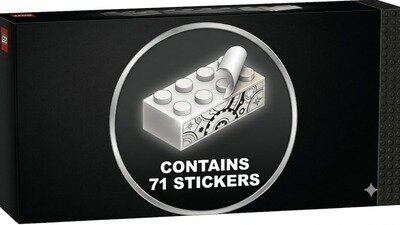

The Right to Know: Require LEGO to Disclose Stickers on Retail Boxes and Online!
The Issue
The Right to Know: Require LEGO to Disclose Stickers on Retail Boxes and Online!
The Issue
For adult fans of LEGO (AFOLs) and casual consumers alike, purchasing a premium LEGO set is an investment in quality, longevity, and a premium building experience. However, The LEGO Group continues to obscure a critical piece of product information on its retail packaging and online storefronts: whether the graphic elements of a set are achieved via high-quality printed bricks or adhesive vinyl stickers.
Consumers have a fundamental right to product transparency. Because stickers degrade, peel, and crack over time, forcing a buyer to purchase a set before discovering the presence of stickers is a failure of corporate accountability.
We are calling on The LEGO Group to introduce a standardized icon on all retail boxes and explicit technical specifications on LEGO.com disclosing the exact number of stickers included in every set.
Case Study 1: The 17-Page Digital Scavenger Hunt (Set 40811)
To demonstrate how systemic this lack of transparency is, we analyzed Set 40811 (Altar of the Dead). This set serves as a perfect example of how the current packaging and digital documentation ecosystem actively hides sticker usage from the consumer until it is too late.
When condensed, the consumer journey reveals a multi-layered failure of transparency:
Phase 1: The Purchase - Zero Exterior Disclosure
The box art and official online marketing materials present a flawless, high-resolution final model. There is no indicator, text warning, or icon on the packaging to inform a buyer that these graphic details rely on physical sticker application rather than pre-printed elements.
Phase 2: The Unboxing - Omission from Official Inventories
If a consumer attempts to verify the contents of the set before tearing open the plastic, they will find nothing. The official parts inventory printed at the back of the instruction manual entirely omits the sticker sheet. According to the set's own piece manifest, these stickers do not officially "exist," rendering the physical inventory useless for transparency.
Phase 3: The Build - The Digital Instruction Scavenger Hunt
The final blow to consumer transparency occurs in the building steps themselves. For Set 40811, a builder must flip through 17 pages of instructions before encountering the very first sticker callout. To make matters worse, the stickers are introduced in a non-chronological order relative to their numbers on the sheet.
Case Study 2: The Manufactured Illusion (Speed Champions Set 76922)
If a 17-page scavenger hunt isn't enough, look no further than Set 76922 (BMW M Motorsport), an infamous release packed with an overwhelming, nightmare-inducing sheet of exactly 71 stickers. This set perfectly illustrates how LEGO actively misleads the consumer's eye through a confusing blend of factory prints and heavy sticker layouts:
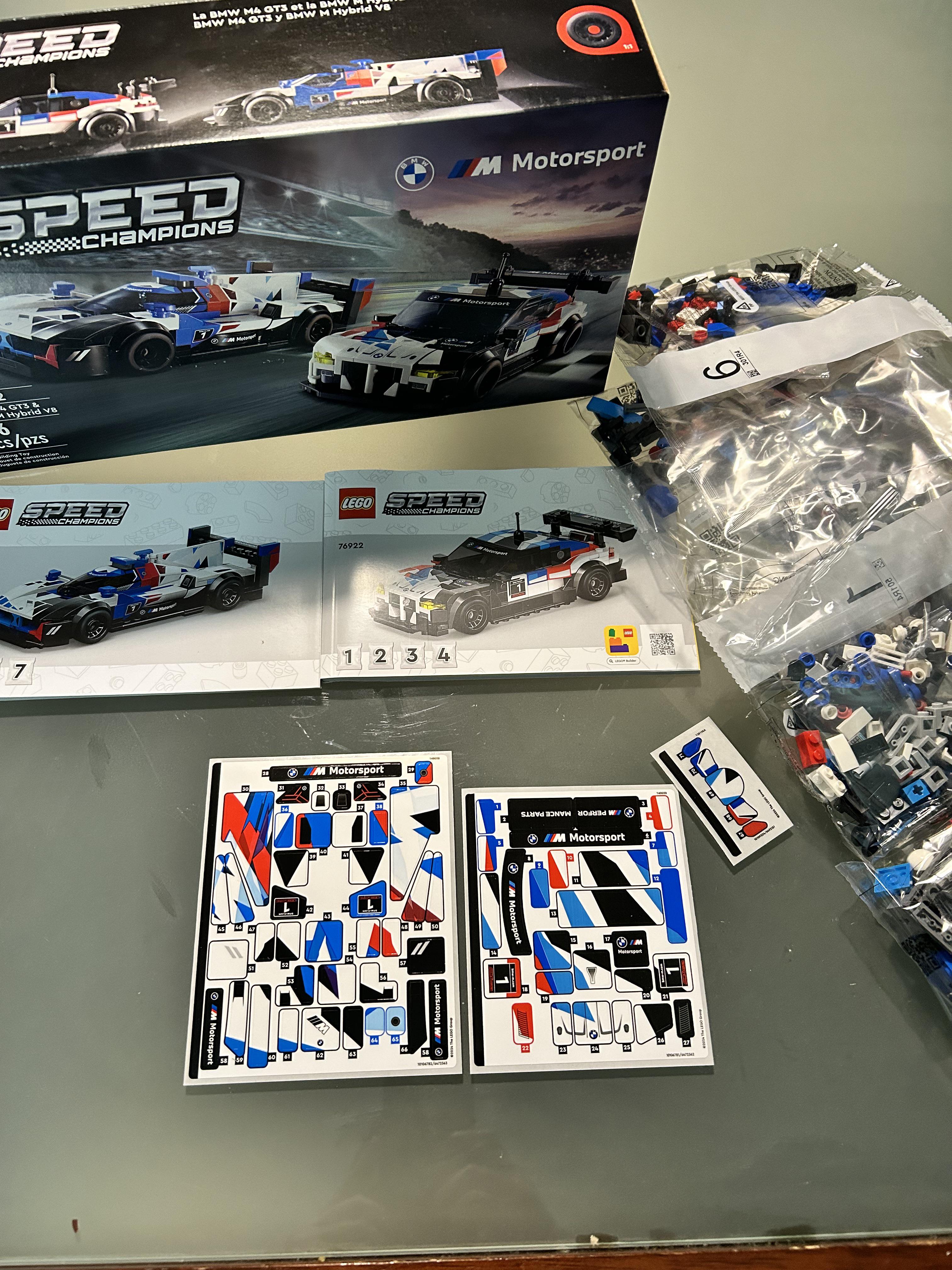
(Image Credit: Reddit user Master_Quiet224)
The Printed Illusion: On the BMW M Hybrid V8, the large cockpit canopy arrives as a premium, heavily pre-printed piece straight out of the bag, showcasing white windshield frames and driver branding.
The Deceptive Reality: Because LEGO's official product photography seamlessly blends the factory-printed canopy pieces with adjacent, heavily stickered body panels, a casual buyer has no way of knowing where the premium printing ends and the nightmarish sticker sheet begins.
The Cost-Cutting Compromise: By rendering high-detail racing liveries through massive sticker sheets instead of fully printed elements, the premium display quality is offloaded entirely onto the builder's ability to perfectly align dozens of delicate stickers.
The Double Standard (Proof of Capability): What makes this cost-cutting so frustrating is that LEGO has already proven they can eliminate stickers entirely when they want to. In lines targeted at younger builders, such as 4+ (Juniors) sets, LEGO maintains a strict internal policy that mandates 100% printed elements and zero stickers to prevent frustration. Adult fans are paying premium, top-tier prices, yet they are penalized with massive sticker sheets while entry-level products receive the luxury of fully printed parts.
The Collective Takeaway: Between hidden 17-page digital hunts and complex, mixed-media illusions on premium display models, the consumer is left completely in the dark. A buyer must purchase the set, open the box, and hunt through the instructions just to confirm what is printed and what is a sticker. This hidden reality degrades the premium experience and borders on deceptive marketing.
Our Demands:
We demand that The LEGO Group respect its consumer base by implementing two simple, data-driven solutions:
1. Implement a clear, standardized icon or matrix on the exterior of every retail box indicating the presence and total count of adhesive stickers.
2. Include a dedicated "Decoration Method" metric under the product details on LEGO.com, explicitly listing the number of prints vs. stickers before a consumer adds the item to their digital cart.
Simple, upfront honesty is a fundamental expectation. Let’s bring transparency back to the brick.
Sign the petition to demand sticker transparency from LEGO!
Disclaimer:
We are not affiliated with, authorized, or endorsed by The LEGO Group. All LEGO® product names, logos, and brands are the property of their respective owners.
While this petition was developed with the assistance of AI tools for organization and drafting, all ideas, arguments, and content presented herein are our own and represent the collective voice of our community.

21
The Issue
The Right to Know: Require LEGO to Disclose Stickers on Retail Boxes and Online!
The Issue
For adult fans of LEGO (AFOLs) and casual consumers alike, purchasing a premium LEGO set is an investment in quality, longevity, and a premium building experience. However, The LEGO Group continues to obscure a critical piece of product information on its retail packaging and online storefronts: whether the graphic elements of a set are achieved via high-quality printed bricks or adhesive vinyl stickers.
Consumers have a fundamental right to product transparency. Because stickers degrade, peel, and crack over time, forcing a buyer to purchase a set before discovering the presence of stickers is a failure of corporate accountability.
We are calling on The LEGO Group to introduce a standardized icon on all retail boxes and explicit technical specifications on LEGO.com disclosing the exact number of stickers included in every set.
Case Study 1: The 17-Page Digital Scavenger Hunt (Set 40811)
To demonstrate how systemic this lack of transparency is, we analyzed Set 40811 (Altar of the Dead). This set serves as a perfect example of how the current packaging and digital documentation ecosystem actively hides sticker usage from the consumer until it is too late.
When condensed, the consumer journey reveals a multi-layered failure of transparency:
Phase 1: The Purchase - Zero Exterior Disclosure
The box art and official online marketing materials present a flawless, high-resolution final model. There is no indicator, text warning, or icon on the packaging to inform a buyer that these graphic details rely on physical sticker application rather than pre-printed elements.
Phase 2: The Unboxing - Omission from Official Inventories
If a consumer attempts to verify the contents of the set before tearing open the plastic, they will find nothing. The official parts inventory printed at the back of the instruction manual entirely omits the sticker sheet. According to the set's own piece manifest, these stickers do not officially "exist," rendering the physical inventory useless for transparency.
Phase 3: The Build - The Digital Instruction Scavenger Hunt
The final blow to consumer transparency occurs in the building steps themselves. For Set 40811, a builder must flip through 17 pages of instructions before encountering the very first sticker callout. To make matters worse, the stickers are introduced in a non-chronological order relative to their numbers on the sheet.
Case Study 2: The Manufactured Illusion (Speed Champions Set 76922)
If a 17-page scavenger hunt isn't enough, look no further than Set 76922 (BMW M Motorsport), an infamous release packed with an overwhelming, nightmare-inducing sheet of exactly 71 stickers. This set perfectly illustrates how LEGO actively misleads the consumer's eye through a confusing blend of factory prints and heavy sticker layouts:
(Image Credit: Reddit user Master_Quiet224)
The Printed Illusion: On the BMW M Hybrid V8, the large cockpit canopy arrives as a premium, heavily pre-printed piece straight out of the bag, showcasing white windshield frames and driver branding.
The Deceptive Reality: Because LEGO's official product photography seamlessly blends the factory-printed canopy pieces with adjacent, heavily stickered body panels, a casual buyer has no way of knowing where the premium printing ends and the nightmarish sticker sheet begins.
The Cost-Cutting Compromise: By rendering high-detail racing liveries through massive sticker sheets instead of fully printed elements, the premium display quality is offloaded entirely onto the builder's ability to perfectly align dozens of delicate stickers.
The Double Standard (Proof of Capability): What makes this cost-cutting so frustrating is that LEGO has already proven they can eliminate stickers entirely when they want to. In lines targeted at younger builders, such as 4+ (Juniors) sets, LEGO maintains a strict internal policy that mandates 100% printed elements and zero stickers to prevent frustration. Adult fans are paying premium, top-tier prices, yet they are penalized with massive sticker sheets while entry-level products receive the luxury of fully printed parts.
The Collective Takeaway: Between hidden 17-page digital hunts and complex, mixed-media illusions on premium display models, the consumer is left completely in the dark. A buyer must purchase the set, open the box, and hunt through the instructions just to confirm what is printed and what is a sticker. This hidden reality degrades the premium experience and borders on deceptive marketing.
Our Demands:
We demand that The LEGO Group respect its consumer base by implementing two simple, data-driven solutions:
1. Implement a clear, standardized icon or matrix on the exterior of every retail box indicating the presence and total count of adhesive stickers.
2. Include a dedicated "Decoration Method" metric under the product details on LEGO.com, explicitly listing the number of prints vs. stickers before a consumer adds the item to their digital cart.
Simple, upfront honesty is a fundamental expectation. Let’s bring transparency back to the brick.
Sign the petition to demand sticker transparency from LEGO!
Disclaimer:
We are not affiliated with, authorized, or endorsed by The LEGO Group. All LEGO® product names, logos, and brands are the property of their respective owners.
While this petition was developed with the assistance of AI tools for organization and drafting, all ideas, arguments, and content presented herein are our own and represent the collective voice of our community.

Petition Updates
Share this petition
Petition created on June 26, 2026