Support Student Technology Training Funding in Higher Education

Support Student Technology Training Funding in Higher Education
The Issue
"The greatest trick ever played on higher education is the belief that students did not need technology training"
Librarians are this nation's first technology teachers! As an educator and library digital literacy specialist, I have witnessed firsthand the struggles faced by students who lack adequate technology training in higher education. It is disheartening to see these individuals being asked to use unfamiliar technology platforms while simultaneously trying to grasp the content of their courses. This dual burden often has a negative impact on their learning experience, hindering their academic performance and potentially limiting their future opportunities.
Every semester, a significant percentage of students find themselves in need of technology training at community colleges across the country. These students come from diverse backgrounds and may not have had access to advanced technological resources during their earlier education. As they enter higher education institutions, they are expected to navigate complex software programs, online learning platforms, and digital tools without an official centralized place for support.
Listen to this podcast on the phenomenon 'Invisibilization of student demand" and 'fundless' student technology training system design in higher education:
https://open.spotify.com/episode/1vcU9noOhHTxPsbc8wl1DK?si=50a9thb4Q6affPPoSfu76w
"Several factors contribute to lower community college completion rates, including the fact that many students attend part-time. Institutional factors also contribute to poor outcomes, including the “cafeteria college” model on many campuses. Cafeteria colleges give students many options but provide little structure or support to students." (E. Ganga 2021). Providing technology training structure for faculty and staff, but not for students would be considered a side effect of a cafeteria college. This phenomenon highlights the pressing need for comprehensive technology training programs within these educational institutions.
Furthermore, research from a report entitled Digital Divide Among College Students: Lessons Learned From the COVID-19 Emergency Transition indicates a connection between lack of training and academic performance. " College students with inadequate technology struggled more with the transition to remote learning. For example, they reported a sharper increase in difficulty meeting deadlines and a steeper decline in their sense of success as college students. In addition, regardless of their academic or demographic background, students with inadequate technology were substantially more likely to opt for a “Pass / No-Pass” grade in spring 2020, which signaled that students were struggling with their online coursework."
"For some academic institutions the digital literacy training demand is an inconvenient truth."
It is crucial that we address this issue head-on and provide our students with the necessary resources and support they need to succeed academically. By equally funding comprehensive technology training support at community colleges nationwide, we can ensure that all students have equal opportunities affecting upward mobility and academic achievement.
WHY IS THIS IMPORTANT?
1. Poor technology training, unprepared technical workforce
2. Unprepared technical workforce, no or low upward mobility
3. Low or no upward mobility leads to an impoverished existence
4. An impoverished existence, leads to a new 'digital underclass' with the same problems as the existing underclass.
Essential Questions Provide Insight to Funding Need:
1. Who is responsible for creating campus student training videos and materials?
2. Who is responsible for vetting student technology training videos for pedagogical clarity and competency?
3. Who represents students needs when training budgets are formulated?
4. Who is responsible for presenting technology introductions to students?
5. Who is responsible and accountable for the analytics on the effectiveness of student technology training?
6. Who is responsible for being the point person for procurement regarding student technology training purchases and evaluation of the delivery of services?
We call upon policymakers, administrators, educators, and stakeholders within higher education institutions to prioritize funding for robust and centralized technology training initiatives. These initiatives should include establishing responsible and accountable staff to advocate for student technology training, hold individual training and workshops or courses specifically designed to teach essential digital skills such as navigating online platforms effectively, utilizing productivity tools efficiently, accessing reliable information sources online responsibly, protecting personal data privacy online securely, and critically evaluating digital content.
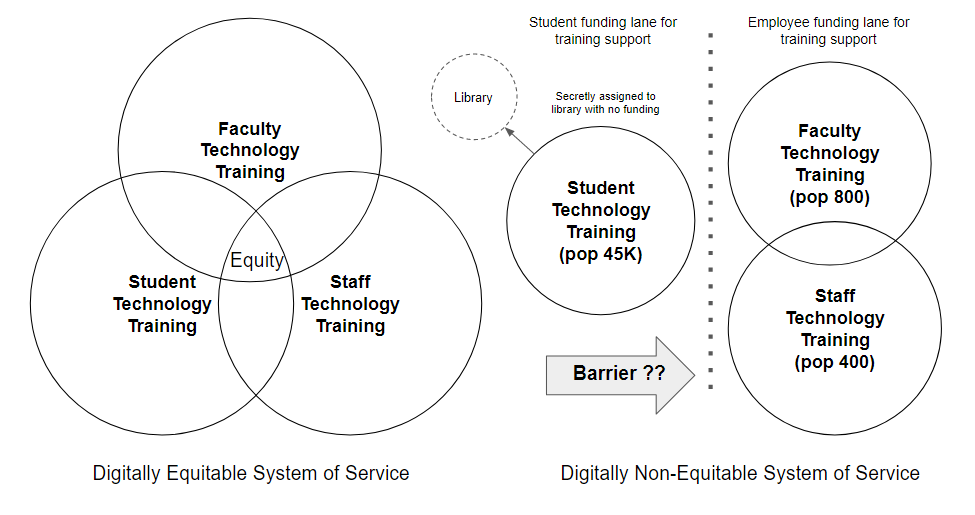
How to Achieve Technology Training Parity
1. Create a centralized department to be responsible for all student training
2. This student training department will be an advocate for all student training including technology training; along with the stakeholders listed in #4
3. Rethink procurement procedures for technology orders, and assure they have training funding planned and included in the proposal
4. Have these departments work in tandem to assure high quality training experiences for students: Information Technology Department, Center for Teaching and Learning (faculty), and Talent Development (staff).
5. Create an equitable line of institutional funding for student technology training
6. Make equitable training and partible funding a part of the campus outcomes.
By signing this petition, you are advocating for the rights of students to receive adequate technology training in higher education. Together, let us strive towards creating an inclusive and supportive learning environment where every student has the opportunity to thrive academically and prepare for their future careers.
Thank you for your support in empowering our students with the necessary digital fluency skills they need to succeed. Together, we can teach students 'to learn' how to learn technology, and make our workforce self-sufficient!
Bibliography:
Jaggers, S. (2021). Digital Divide Among College Students:,Lessons Learned From the COVID-19 Emergency Transition. Midwestern Higher Education Compact. https://www.mhec.org/sites/default/files/resources/2021The_Digital_Divide_among_College_Students_1.pdf
Ganga, E. (2021). An introduction to community colleges and their students. Community College Research Center. https://ccrc.tc.columbia.edu/publications/introduction-community-colleges-students.html
Photo by William Fortunato : https://www.pexels.com/photo/group-of-multiethnic-coworkers-discussing-startup-project-on-laptops-together-6140676/

403
The Issue
"The greatest trick ever played on higher education is the belief that students did not need technology training"
Librarians are this nation's first technology teachers! As an educator and library digital literacy specialist, I have witnessed firsthand the struggles faced by students who lack adequate technology training in higher education. It is disheartening to see these individuals being asked to use unfamiliar technology platforms while simultaneously trying to grasp the content of their courses. This dual burden often has a negative impact on their learning experience, hindering their academic performance and potentially limiting their future opportunities.
Every semester, a significant percentage of students find themselves in need of technology training at community colleges across the country. These students come from diverse backgrounds and may not have had access to advanced technological resources during their earlier education. As they enter higher education institutions, they are expected to navigate complex software programs, online learning platforms, and digital tools without an official centralized place for support.
Listen to this podcast on the phenomenon 'Invisibilization of student demand" and 'fundless' student technology training system design in higher education:
https://open.spotify.com/episode/1vcU9noOhHTxPsbc8wl1DK?si=50a9thb4Q6affPPoSfu76w
"Several factors contribute to lower community college completion rates, including the fact that many students attend part-time. Institutional factors also contribute to poor outcomes, including the “cafeteria college” model on many campuses. Cafeteria colleges give students many options but provide little structure or support to students." (E. Ganga 2021). Providing technology training structure for faculty and staff, but not for students would be considered a side effect of a cafeteria college. This phenomenon highlights the pressing need for comprehensive technology training programs within these educational institutions.
Furthermore, research from a report entitled Digital Divide Among College Students: Lessons Learned From the COVID-19 Emergency Transition indicates a connection between lack of training and academic performance. " College students with inadequate technology struggled more with the transition to remote learning. For example, they reported a sharper increase in difficulty meeting deadlines and a steeper decline in their sense of success as college students. In addition, regardless of their academic or demographic background, students with inadequate technology were substantially more likely to opt for a “Pass / No-Pass” grade in spring 2020, which signaled that students were struggling with their online coursework."
"For some academic institutions the digital literacy training demand is an inconvenient truth."
It is crucial that we address this issue head-on and provide our students with the necessary resources and support they need to succeed academically. By equally funding comprehensive technology training support at community colleges nationwide, we can ensure that all students have equal opportunities affecting upward mobility and academic achievement.
WHY IS THIS IMPORTANT?
1. Poor technology training, unprepared technical workforce
2. Unprepared technical workforce, no or low upward mobility
3. Low or no upward mobility leads to an impoverished existence
4. An impoverished existence, leads to a new 'digital underclass' with the same problems as the existing underclass.
Essential Questions Provide Insight to Funding Need:
1. Who is responsible for creating campus student training videos and materials?
2. Who is responsible for vetting student technology training videos for pedagogical clarity and competency?
3. Who represents students needs when training budgets are formulated?
4. Who is responsible for presenting technology introductions to students?
5. Who is responsible and accountable for the analytics on the effectiveness of student technology training?
6. Who is responsible for being the point person for procurement regarding student technology training purchases and evaluation of the delivery of services?
We call upon policymakers, administrators, educators, and stakeholders within higher education institutions to prioritize funding for robust and centralized technology training initiatives. These initiatives should include establishing responsible and accountable staff to advocate for student technology training, hold individual training and workshops or courses specifically designed to teach essential digital skills such as navigating online platforms effectively, utilizing productivity tools efficiently, accessing reliable information sources online responsibly, protecting personal data privacy online securely, and critically evaluating digital content.
How to Achieve Technology Training Parity
1. Create a centralized department to be responsible for all student training
2. This student training department will be an advocate for all student training including technology training; along with the stakeholders listed in #4
3. Rethink procurement procedures for technology orders, and assure they have training funding planned and included in the proposal
4. Have these departments work in tandem to assure high quality training experiences for students: Information Technology Department, Center for Teaching and Learning (faculty), and Talent Development (staff).
5. Create an equitable line of institutional funding for student technology training
6. Make equitable training and partible funding a part of the campus outcomes.
By signing this petition, you are advocating for the rights of students to receive adequate technology training in higher education. Together, let us strive towards creating an inclusive and supportive learning environment where every student has the opportunity to thrive academically and prepare for their future careers.
Thank you for your support in empowering our students with the necessary digital fluency skills they need to succeed. Together, we can teach students 'to learn' how to learn technology, and make our workforce self-sufficient!
Bibliography:
Jaggers, S. (2021). Digital Divide Among College Students:,Lessons Learned From the COVID-19 Emergency Transition. Midwestern Higher Education Compact. https://www.mhec.org/sites/default/files/resources/2021The_Digital_Divide_among_College_Students_1.pdf
Ganga, E. (2021). An introduction to community colleges and their students. Community College Research Center. https://ccrc.tc.columbia.edu/publications/introduction-community-colleges-students.html
Photo by William Fortunato : https://www.pexels.com/photo/group-of-multiethnic-coworkers-discussing-startup-project-on-laptops-together-6140676/
403
The Decision Makers
Petition Updates
Share this petition
Petition created on August 24, 2023